Attending the conference were Ambassador Extraordinary and Plenipotentiary of the Republic of India to Vietnam Tshering W. Sherpa, Chairman of the Hanoi Union of Friendship Organizations Nguyen Ngoc Ky, along with scholars, diplomats, experts, and business representatives from both countries.
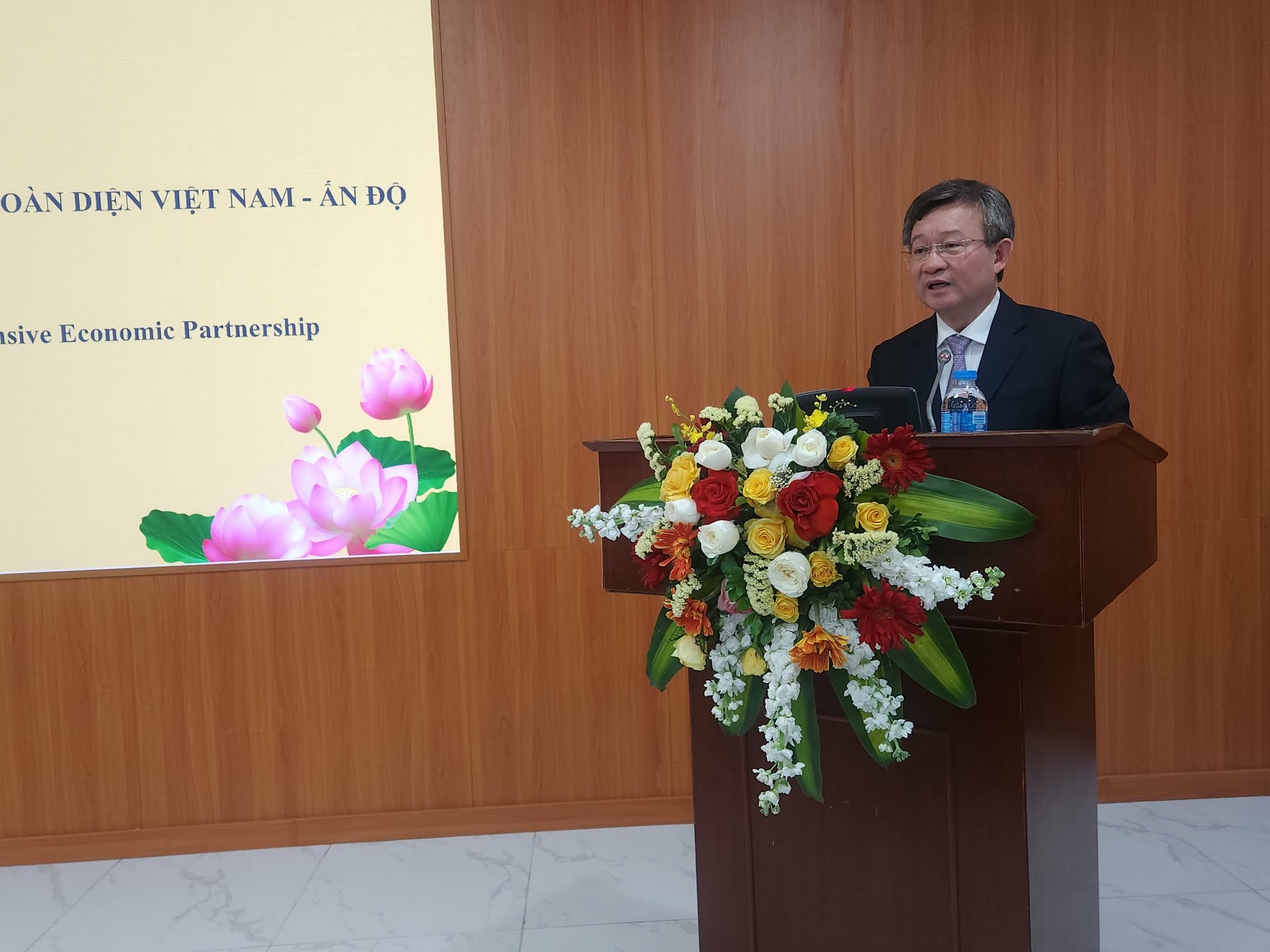
Chairman of the Hanoi Union of Friendship Organizations Nguyen Ngoc Ky speaks at the conference.
Opening the event, Nguyen Ngoc Ky, Chairman of the Hanoi Union of Friendship Organizations, said the conference was held at a particularly meaningful time for Vietnam–India relations.
The year 2026 marks the 10th anniversary of the Vietnam–India Comprehensive Strategic Partnership (2016–2026) and 54 years since the establishment of diplomatic relations between the two countries (1972–2026).
Over more than half a century of development, Vietnam and India have built a traditional friendship based on trust and increasingly broad cooperation across many sectors. In recent years, economic cooperation between the two countries has continued to expand steadily.
Bilateral trade reached about US$16.5 billion in 2025, the highest level ever recorded. The two economies possess many complementary strengths, opening significant opportunities to expand cooperation in technology, innovation, trade, investment, and high-quality services.
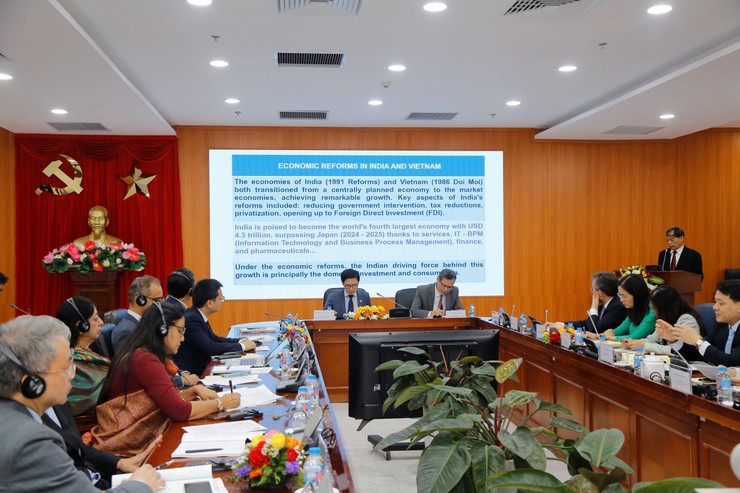
Overview of the conference.
Ky emphasized that Hanoi, as the capital of Vietnam, is not only the nation's political and administrative center but also an important hub for international relations.
Over the past three decades, the Hanoi Union of Friendship Organizations has played a key role in implementing people-to-people diplomacy activities for the capital city.
In relations with India, the union, together with the Hanoi Vietnam–India Friendship Association, has closely coordinated with the Embassy of India in Vietnam to organize numerous cultural exchanges and people-to-people activities. These efforts have strengthened mutual understanding and reinforced friendship between the two peoples, while creating a favorable social foundation for economic and trade cooperation.
Ky expressed his hope that the presentations and discussions at the conference would help clarify cooperation opportunities and propose practical initiatives to further deepen and enhance Vietnam–India economic relations in the coming period.
Speaking at the event, Associate Professor Dr. Ta Minh Tuan, Vice President of the Vietnam Academy of Social Sciences, said that in an increasingly uncertain world, strengthening bilateral economic cooperation is not only about trade but also about development security and strategic autonomy.
"If we do not proactively upgrade economic relations, we risk missing an important historical opportunity," Tuan said.
From a research perspective, Tuan noted that moving toward a Vietnam–India Comprehensive Economic Partnership framework should be considered from three key dimensions.
First is the economic structure and complementarity. The two economies have distinct strengths that can connect effectively. India's advantages in information technology, pharmaceuticals, defense industries, renewable energy, and the digital economy can combine with Vietnam's strengths in manufacturing, logistics, and market networks.
Second is economic security and strategic autonomy. In an increasingly fragmented world, diversifying partners and strengthening shared economic interests are crucial to reducing risks and enhancing resilience. Deeper economic relations between Vietnam and India would also strengthen the material foundation of their political and security ties.
Third is the regional and interregional dimension. Vietnam plays an important role in ASEAN, while India is a key pillar of the Indo-Pacific architecture. Closer economic cooperation between the two countries could help form a new axis of cooperation that contributes to balance and stability in the region.
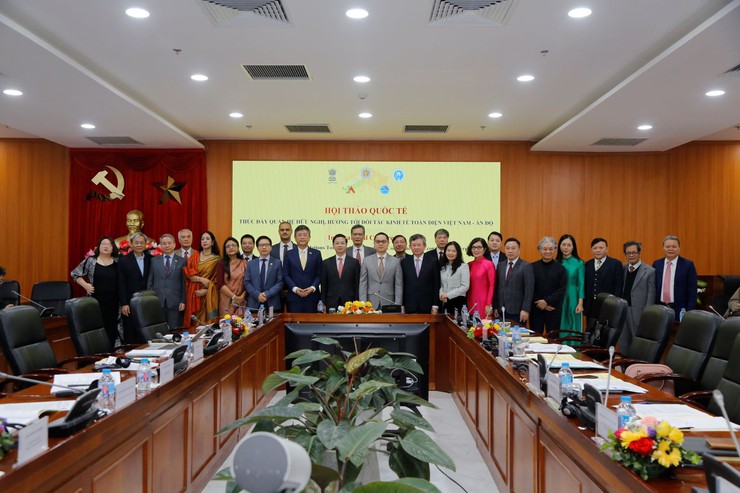 Delegates attend the conference.
Presentations at the conference focused on solutions to strengthen business connectivity, promote investment, and especially expand people-to-people exchanges.
In particular, Hanoi's people-to-people diplomacy is expected to continue serving as a bridge, helping create favorable conditions for economic cooperation between Vietnam in general, Hanoi in particular, and India in the coming years.