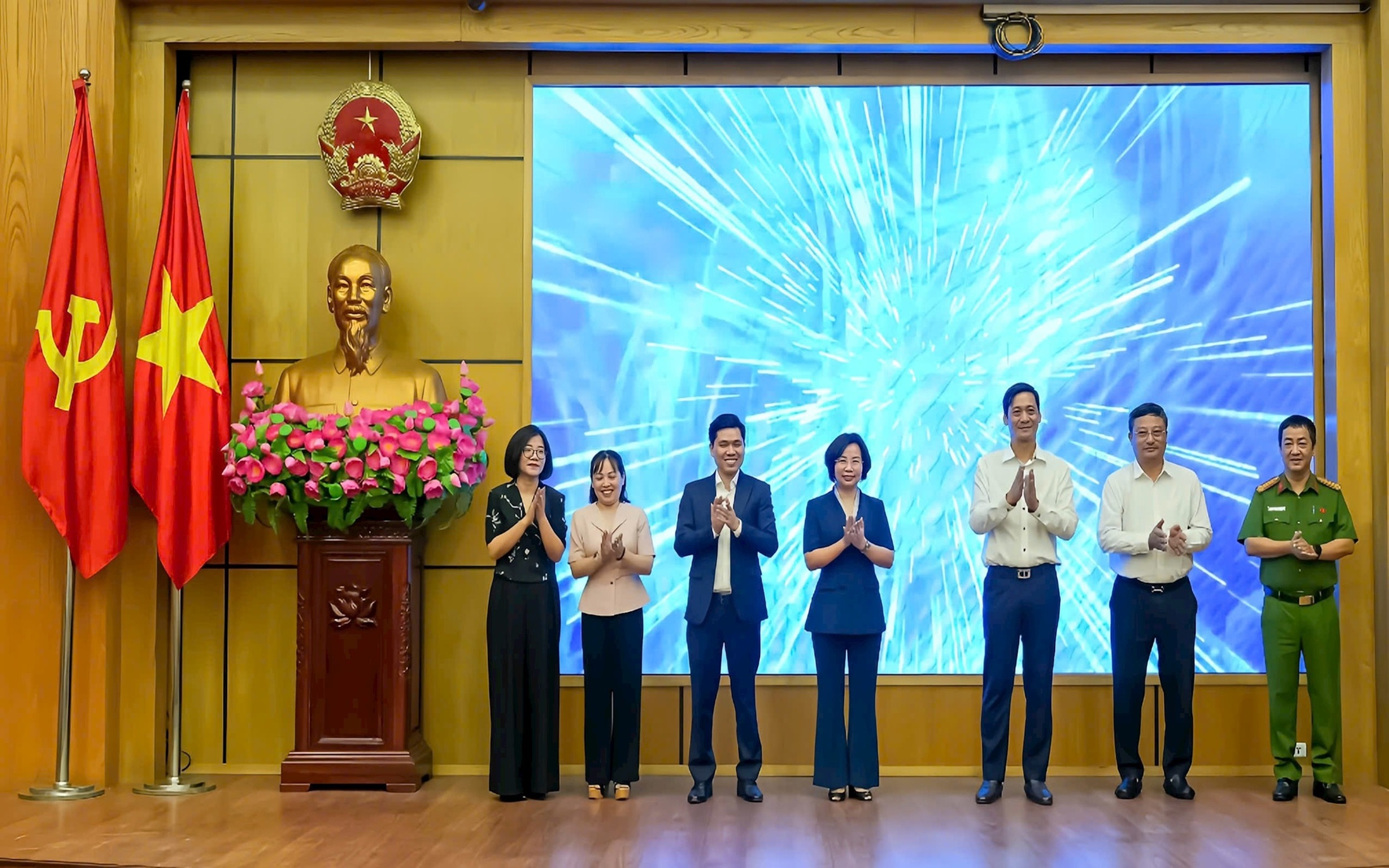
Chairwoman of the Hanoi Fatherland Front Committee Bui Huyen Mai and local leaders perform the launch ceremony of the model.
Dang Viet Trinh, Vice Chairman of the Ngoc Ha Ward Fatherland Front Committee and Secretary of the ward's Youth Union, said the model is designed to modernize Front operations in the context of digital transformation, in line with Resolution No. 57-NQ/TW issued on December 22, 2024, by the Politburo on breakthroughs in science, technology, innovation, and national digital transformation, as well as the city's target of building "digital Front officials."
The model focuses on four key pillars: personalized virtual assistants to support officials, the HanoiWork digital operating platform, an interactive channel "Listening to the People" via QR code under the "Ngoc Ha Feedback" system, and the promotion of "digital literacy for all" across the community.
Its implementation roadmap is divided into four phases, starting within the Front system and gradually expanding to residential areas and the broader grassroots political system. In the first phase, 100% of Front officials and ward police officers will be trained in digital transformation and AI applications, aiming for 70–80% of their work to be supported by AI tools.
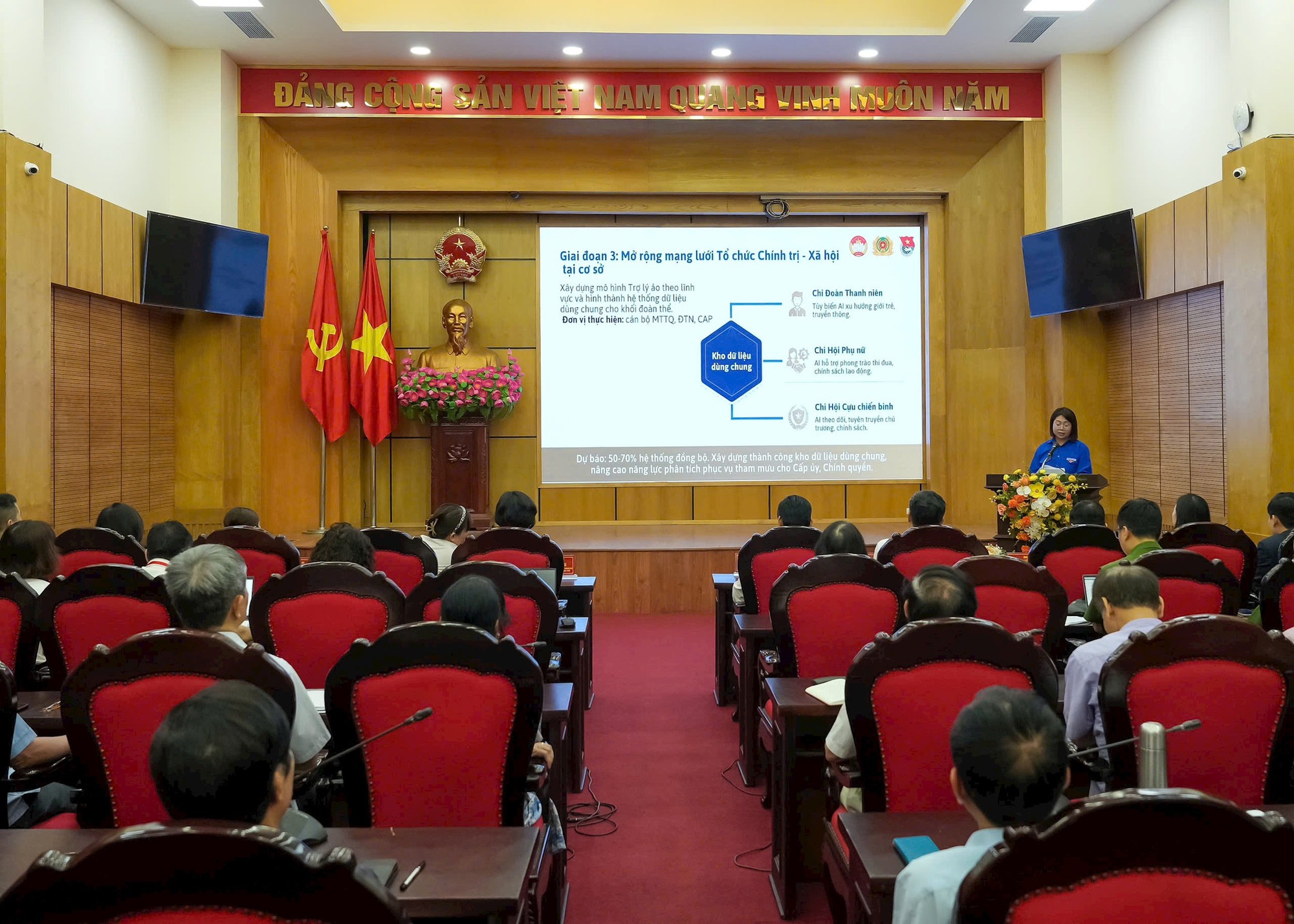
Overview of the launch event.
The second phase will extend to heads of Front working groups in residential areas, using a hands-on approach and integrating the QR-based "Listening to the People" model to improve feedback collection and synthesis.
The third phase will expand across socio-political organizations, moving toward sector-specific virtual assistants and the development of shared data systems.
The fourth phase will scale the model to the wider community through a "digital literacy for all" campaign, equipping residents with digital skills, encouraging participation in digital services, and enabling feedback through online platforms. From May 2026 onward, the model will be evaluated, refined, and replicated.
Responding to the initiative, Nguyen Thi On, Vice Chairwoman of the Ngoc Ha Ward Women's Union, affirmed that the organization will adopt a practical, action-oriented approach, applying AI in communication through visual and accessible products and developing modern digital interaction channels.
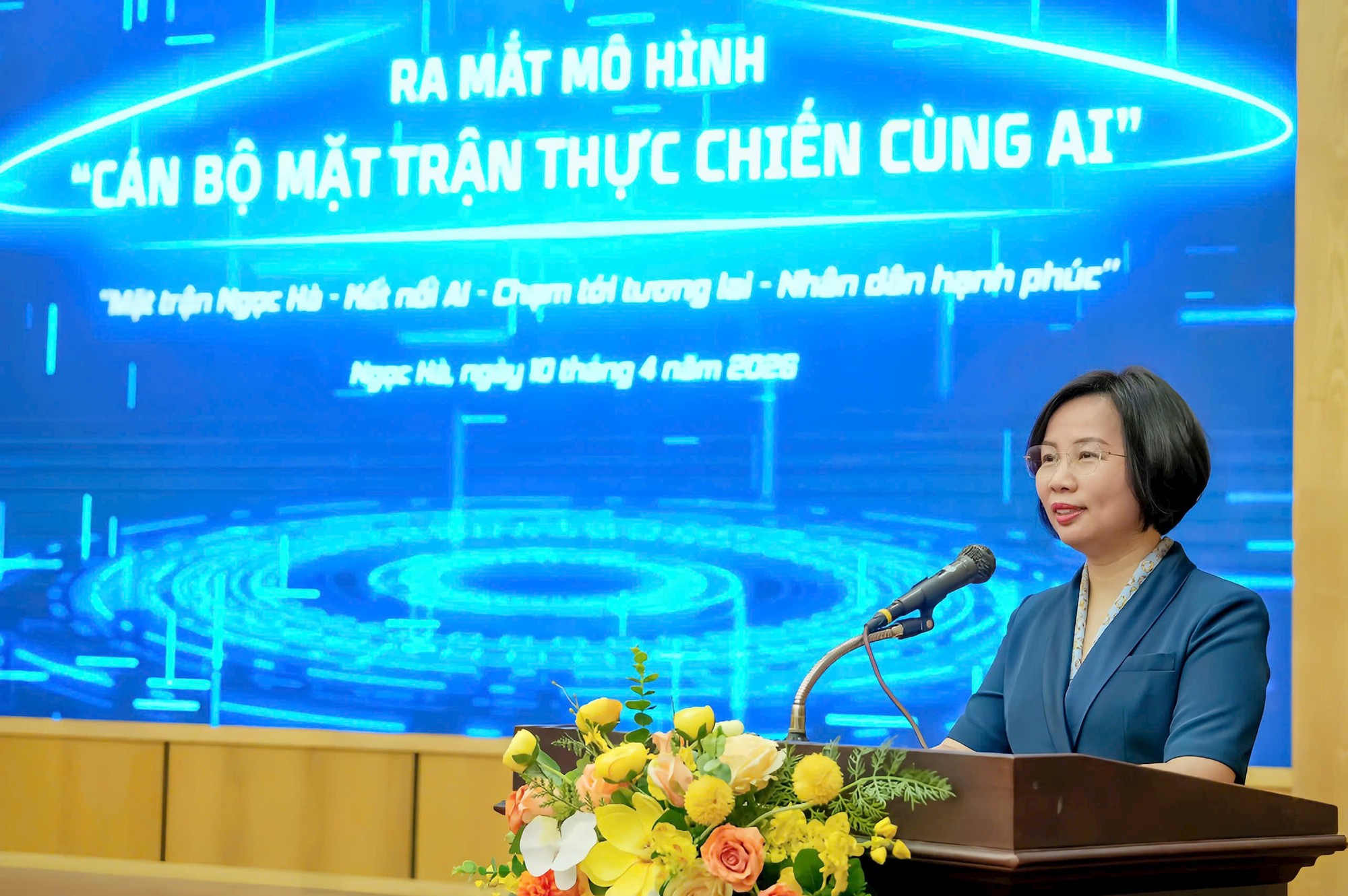
Chairwoman of the Hanoi Fatherland Front Committee Bui Huyen Mai speaks at the event.
Speaking at the event, Chairwoman of the Hanoi Fatherland Front Committee Bui Huyen Mai praised Ngoc Ha Ward for proactively piloting digital transformation in Front activities, while recognizing the dedication and responsibility of grassroots officials. She also expressed appreciation for the close guidance from the ward's Party Committee and People's Committee, which she described as a decisive factor in bringing the initiative into practice.
Mai emphasized that Front work must shift decisively toward practical and effective digital transformation, strengthening its role as a trusted bridge between the Party, the State, and the people.
To ensure effectiveness, she called on relevant agencies to continue supporting the development of integrated and user-friendly infrastructure, turning the model into a flagship example within the Front system. At the grassroots level, officials were urged to modernize methods of capturing public opinion, actively using digital platforms and QR codes to "listen to the people" in a timely and practical manner.
She expressed confidence that with coordinated efforts and strong commitment from all levels, the model will help modernize Front operations, making them more professional and responsive to the Capital's development needs.
At the event, all officials of the ward's Fatherland Front Committee and the ward police's digital transformation team participated in a training session on digital transformation awareness, the role of artificial intelligence, and the use of AI tools in their work.