Joining the working session were Vice Chairman of the Hanoi People's Committee Bui Duy Cuong, representatives from several city departments and agencies, officials from Suoi Hai and Tung Thien communes and wards, AMACCAO Group executives, and related units.
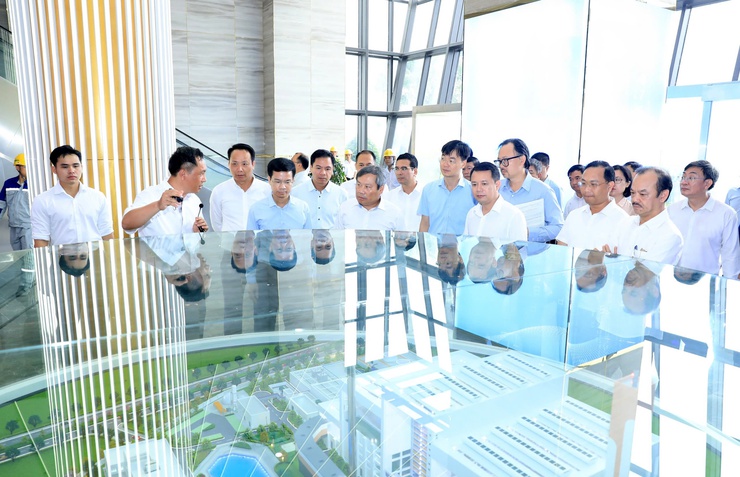 Hanoi People's Committee Chairman Vu Dai Thang and the city delegation listen to a report from a representative of the Seraphin waste-to-energy plant developed by AMACCAO Group. Photo: Le Hai
Building a modern environmental treatment ecosystem at Xuan Son
Reporting at the meeting, Nguyen Van Vinh, Chairman and CEO of AMACCAO Group, said the company is proposing an integrated environmental ecosystem at the Xuan Son solid waste treatment complex with four main components: a waste treatment and construction material recycling complex, a fly ash landfill, the AMACCAO - Thanh Cong waste-to-energy plant, and the Xuan Son ecological complex project combined with environmental restoration of old landfill sites.
According to Vinh, the Seraphin waste-to-energy plant currently generates around 300 tons of ash and slag each day. Under the intended technological process, this material should be reused for producing construction materials or road foundations. However, public investment projects have yet to approve recycled materials in official construction standards, creating a bottleneck for output demand.
From that reality, the company proposed building an ash recycling plant combined with construction waste treatment for the city.
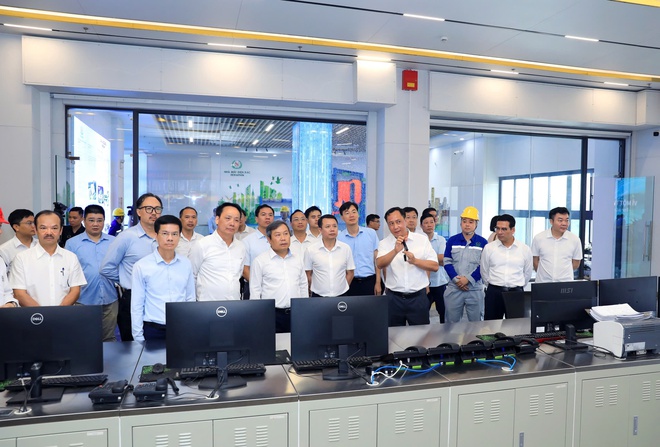
Hanoi People's Committee Chairman Vu Dai Thang and the delegation visit the central control room of the Seraphin waste-to-energy plant, which oversees the plant's entire operation. Photo: Le Hai
AMACCAO executives said integrating the two treatment lines is technologically compatible, helping both utilize recycled materials and address the large volume of construction waste generated during Hanoi's urban renovation and redevelopment process.
Regarding fly ash, a hazardous waste generated at around 60 tons per day from waste incineration, Vinh said the company is currently relying on a temporary 1.57-hectare storage area supported by the city.
The company urged Hanoi authorities to soon approve investment in a technically compliant fly ash landfill to ensure continuous and safe plant operations.
For the AMACCAO - Thanh Cong waste-to-energy plant project with a capacity of 1,000 tons per day, the company said site preparation has largely been completed and resources, financing, and equipment are ready for construction immediately after city approval.
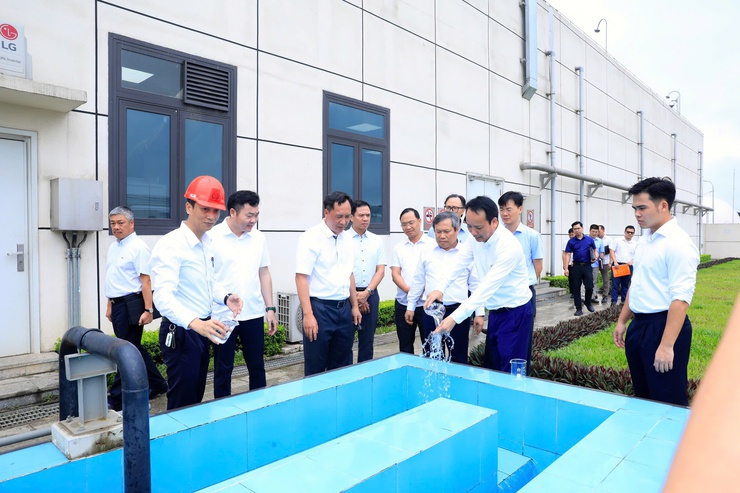 Hanoi People's Committee Chairman Vu Dai Thang and the delegation visit the leachate treatment area at the Seraphin waste-to-energy plant, where treated water meets Vietnam's highest environmental standards and is clear and odorless like natural water. Photo: Le Hai
Notably, AMACCAO leaders warned that Hanoi is facing an "environmental paradox." Total waste-to-energy capacity from existing and planned plants is expected to exceed 14,000 tons per day, while actual waste generation by 2030 is projected at only 9,000-9,500 tons per day.
That means waste-to-energy plants could face a shortfall of 4,500-5,000 tons of waste daily.
According to the company, the long-term solution is to allow the treatment of old buried waste accumulated over many years at Xuan Son and Nam Son landfill sites.
The Xuan Son area alone currently contains around 4 million tons of old waste, creating major environmental pressure, leachate pollution, and negative impacts on investment attraction in western Hanoi.
If handled comprehensively, the city could not only resolve environmental pollution but also gradually free up land for future ecological spaces, public parks, and service developments.
Focusing on mechanisms for handling old waste, fly ash, and slag
Speaking at the meeting, Vice Chairman of the Hanoi People's Committee Bui Duy Cuong said Hanoi, with support from businesses, has now successfully operated two major waste-to-energy plants: the Soc Son waste-to-energy plant in Soc Son district and the Seraphin plant in Xuan Son.
Together, the facilities process around 6,500 tons of waste per day out of the city's total daily waste generation of more than 8,000 tons. However, Hanoi still has to landfill more than 1,000 tons of waste daily, mainly at Nam Son.
According to Cuong, the operation of waste-to-energy plants has significantly reduced pressure for new landfill sites, but Hanoi still faces huge volumes of legacy waste accumulated over many years.
Nam Son alone contains about 30 million tons of old waste, while Xuan Son has around 4 million tons.
The city's strategy is to simultaneously handle newly generated waste and gradually process old landfill waste to improve the environment, recover land resources, and create new socio-economic development momentum for communities long affected by pollution.
Regarding AMACCAO's proposals, Bui Duy Cuong said the city generally supports them in principle.
For phase two of the AMACCAO - Thanh Cong waste-to-energy plant project, with a capacity of 1,000 tons per day, Hanoi requested the investor to quickly complete procedures and begin construction in early June 2026, with completion targeted for 2027.
On fly ash treatment, the vice chairman described the issue as urgent because the current storage space is nearly exhausted.
The city agreed in principle to allow research into building a fly ash landfill within the waste treatment complex and assigned the company to complete documentation for review by the Department of Finance.
Hanoi also supports recycling ash and slag into construction materials to maximize recycled resources for the city's growing construction demand.
Regarding the plan to process old buried waste, Bui Duy Cuong said this is a necessary and effective direction.
The Department of Agriculture and Environment is currently working with related units to develop treatment pricing mechanisms as the basis for implementation.
Under technical procedures, only about 30% of old waste can be screened and reused as fuel for incineration plants. The remaining sludge and inert materials would be treated on-site.
The city will study suitable investment models for old waste treatment projects while considering effective land use after environmental restoration, including green parks, services, tourism, culture, and sports facilities.
Moving from "end-of-pipe treatment" to comprehensive environmental management
Concluding the meeting, Chairman of the Hanoi People's Committee Vu Dai Thang praised the efforts of environmental companies, especially AMACCAO Group and the Seraphin waste-to-energy plant, for supporting Hanoi in addressing years of environmental pollution in Xuan Son.
Thang noted that only a few years ago, Xuan Son and Nam Son were considered pollution "hotspots" plagued by garbage odors that severely affected local residents' lives.
However, since waste-to-energy plants began operating, environmental conditions have improved significantly and living spaces are gradually becoming "more peaceful and closer to residents again," he said.
Regarding business proposals, Thang affirmed the city's support in principle, stressing that "anything serving environmental treatment should receive the fastest possible support."
For the fly ash landfill project, he instructed departments and agencies to urgently complete procedures because delays could force plant operations to halt once storage capacity runs out.
Thang also strongly supported the direction of recycling ash, slag, construction waste, and sludge under a circular economy model serving Hanoi's urban redevelopment needs.
He welcomed the proposal for the Xuan Son ecological complex, combined with a comprehensive treatment of old landfill waste, describing it as a fundamental solution for environmental restoration and effective post-treatment land use.
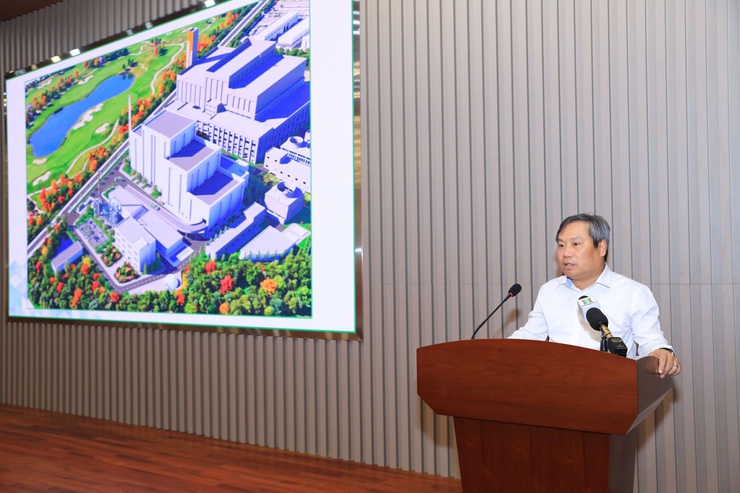 Hanoi People’s Committee Chairman Vu Dai Thang speaks at the meeting. Photo: Le Hai
Citing international examples, including Singapore, where restored landfill sites have been converted into public spaces for residents, Thang said Hanoi could pursue a similar model if old waste sites at Nam Son and Xuan Son are successfully treated.
He added that waste treatment currently represents only the "final stage" in Hanoi's broader waste management chain.
The city still faces many challenges involving collection, transportation, transfer stations, odor control, dust pollution, and urban environmental management. He specifically highlighted worsening dust pollution as Hanoi accelerates large-scale urban redevelopment and reconstruction.
The chairman assigned the Department of Agriculture and Environment to lead the development of comprehensive environmental pollution control solutions, particularly for air pollution and urban dust, while studying more suitable management models for large-scale environmental services instead of fragmented local management.
The department was also instructed to continue cooperating with environmental companies such as AMACCAO and Thien Y to research and apply new technologies for waste treatment, dust control, and improving residents' living conditions.
According to the Department of Agriculture and Environment, Hanoi currently generates around 8,400 tons of household solid waste each day. Of that amount, approximately 7,250 tons are processed through waste-to-energy technology at plants in Xuan Son and Nam Son, while more than 1,000 tons still go to landfill sites.
The city aims to ensure that by the end of 2027, 100% of household waste will be treated through waste-to-energy technology, ending direct landfill disposal.