Attending the meeting were Le Thi Hong Van, Director General of the Department of Foreign Affairs and Cultural Diplomacy under the Ministry of Foreign Affairs; Vice Chairman of the Hanoi People's Committee Do Anh Tuan; and members of the Organizing Committee and its supporting team.
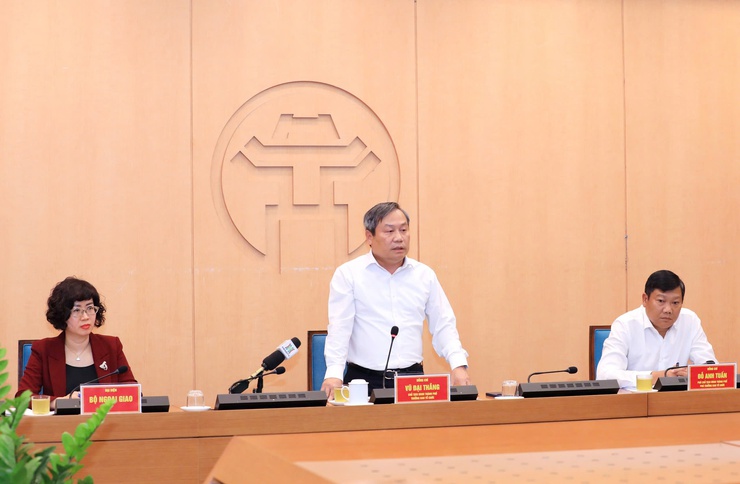 Chairman of Hanoi People's Committee Vu Dai Thang chairs the Organizing Committee meeting on May 28.
During the meeting, members of the Organizing Committee and representatives from city departments and agencies reported on preparations related to conference content, agenda, event scenarios, facilities and organizational arrangements. They also proposed several initiatives to further improve implementation and event management.
Commending the city's preparation efforts, Director General of the Department of Foreign Affairs and Cultural Diplomacy Le Thi Hong Van said units under the Ministry of Foreign Affairs had worked closely with the Hanoi People's Committee and relevant agencies in carrying out assigned tasks. She reaffirmed the ministry's commitment to continuing close coordination with Hanoi in organizing the upcoming event.
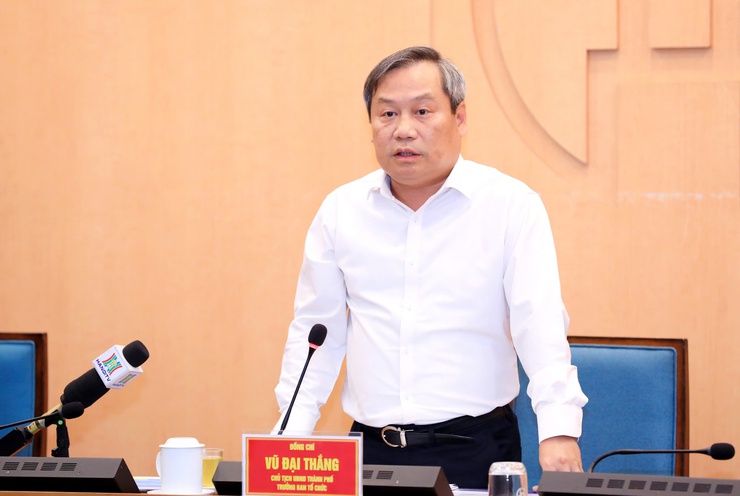 Chairman of Hanoi People's Committee Vu Dai Thang delivers remarks at the meeting.
Summarizing the discussions, Chairman of the Hanoi People's Committee Vu Dai Thang stressed that the ASEAN Cities Leadership Conference is an important initiative aimed at strengthening connections among ASEAN member states in socioeconomic development and cultural exchange.
The conference also marks an expansion of ASEAN cooperation at the local level and highlights the role of cities and capital capitals as key growth engines of their respective countries, he said.
As host city, Hanoi must ensure that all preparations are carried out professionally, effectively and with appropriate ceremony. According to Thang, reviews to date have demonstrated strong coordination between Hanoi agencies and the Ministry of Foreign Affairs.
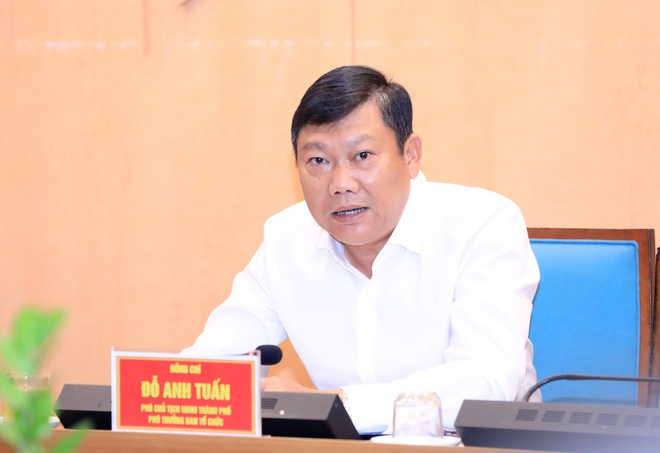 Vice Chairman of Hanoi People's Committee Do Anh Tuan exchanges views during the meeting.
The Hanoi chairman also emphasized the need for city departments and agencies to continue working closely with the Ministry of Foreign Affairs to highlight the significance of the conference.
In addition to cultural and artistic exchange activities, the event should promote trade and investment connectivity and facilitate discussions on shared challenges facing ASEAN cities, with the goal of generating collaborative initiatives for sustainable development.
According to city leaders, the conference will also provide an important opportunity to promote the image of Hanoi and Vietnam as dynamic, fast-growing and opportunity-rich destinations, helping attract additional investment resources, economic partners and cultural and people-to-people exchanges.
The city is therefore considering adding programs and networking spaces to strengthen cultural and business connections between Hanoi and international partners.
Held under the theme "Advancing the Future Through Smart, Sustainable and Connected Cities," the ASEAN Cities Leadership Conference is jointly organized by the Hanoi People's Committee and the Ministry of Foreign Affairs, in coordination with the ASEAN Secretariat and the ASEAN and East Asia Economic Research Institute (ERIA).
The conference is one of Vietnam's key external affairs events and is expected to contribute to the overall success of the ASEAN Future Forum 2026, which Vietnam will host.
The Hanoi People's Committee has already issued and begun implementing Plan No. 194/KH-UBND, dated May 16, 2026, which assigns detailed responsibilities to departments, agencies and relevant units involved in organizing the conference. Approximately 350 domestic and international delegates are expected to attend.
The conference agenda will include networking sessions between leaders of Vietnamese localities and ASEAN cities, a plenary opening session and thematic workshops on urban development in the digital era and the construction of green, climate-resilient cities.
Discussion sessions will focus on practical topics such as the application of artificial intelligence to improve urban governance, citizen-centered digital transformation and the sharing of solutions for sustainable urban development.