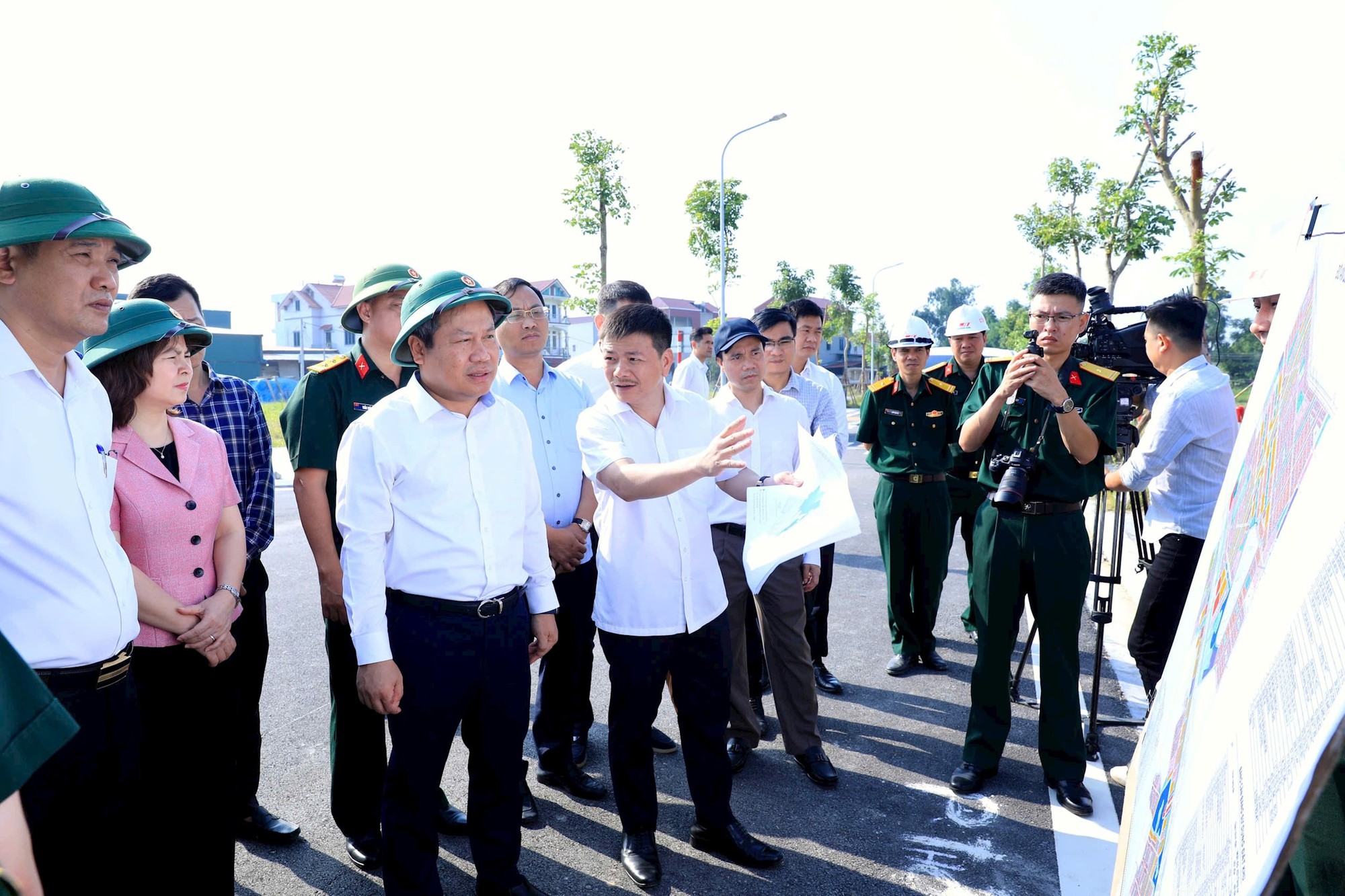
 Chairman of Hanoi People's Committee Vu Dai Thang inspects the project site and receives updates on the multi-purpose urban development project in Thu Lam and Dong Anh communes. Photo: Le Hai.
Land clearance expected to be largely completed before June 30
Reporting on the independent compensation, support and resettlement project serving the multi-purpose urban development in Thu Lam and Dong Anh communes, Chairman of Thu Lam Commune People's Committee Pham Trong La said the project requires the acquisition of approximately 373.4 hectares, including about 274 hectares of agricultural land and 99.4 hectares of public and non-agricultural land managed by local authorities.
The project affects around 2,800 households in Lo Giao, Lo Khe, Kinh No and Luong Quy villages of Thu Lam Commune, as well as Doai and Trung villages in Dong Anh Commune.
As of June 1, 2026, authorities had completed land clearance for 792 households, covering 166.25 hectares of the total project area.
Compensation and support payments have reached approximately VND1.2538 trillion (US$48.2 million), representing 44.52% of the planned total.
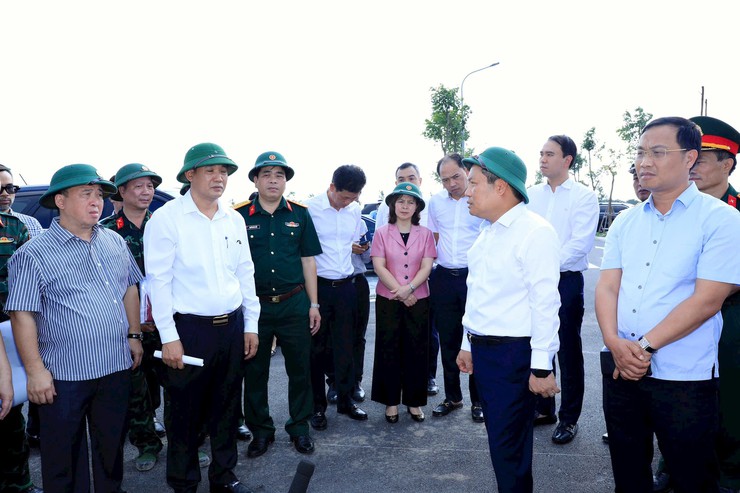 Chairman of Hanoi People's Committee Vu Dai Thang reviews project progress in Thu Lam and Dong Anh communes. Photo: Le Hai
According to La, authorities aim to complete land clearance for agricultural land allocated under Decree 64/CP in Lo Khe Village and substantially complete clearance in Doai and Trung villages before June 15.
For Kinh No and Luong Quy villages, local officials are finalizing documentation, compensation plans and payment procedures, with the goal of largely completing land clearance before June 30.
Several challenges remain, including issues related to the verification of land-use origins, the correction of land-use right certificates affected by historical administrative errors, and compensation policies for households occupying public land under legacy contracts signed with the former Dong Anh District authorities.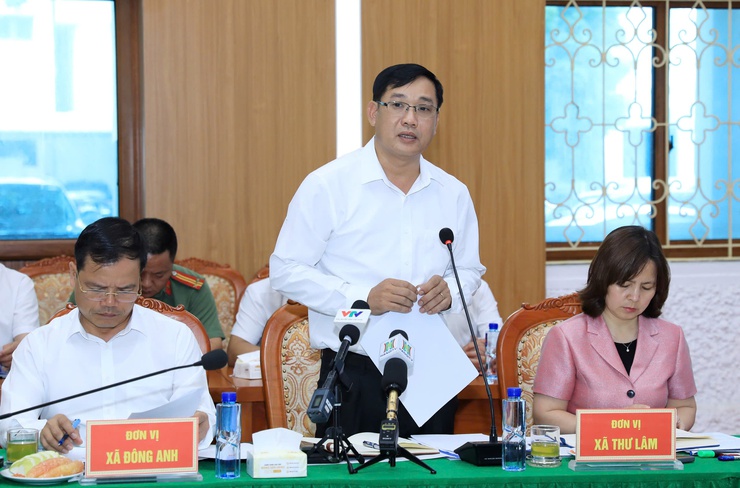 Thu Lam Commune Chairman Pham Trong La reports at the meeting. Photo: Le Hai.
To maintain progress, Thu Lam authorities have agreed to use cadastral maps and technical land records prepared by the investor for land clearance activities.
However, surveying and ownership verification remain slow, particularly in Kinh No and Luong Quy villages, affecting the overall project schedule.
The commune has proposed adding qualified surveying contractors to accelerate measurement and ownership verification work.
Local authorities have also requested that Hanoi allocate more than 100 hectares of cleared land to the investor in advance so construction can begin while land clearance continues elsewhere.
In addition, they proposed that the Department of Finance develop a land-use fee collection plan to help balance local revenues and expenditures.
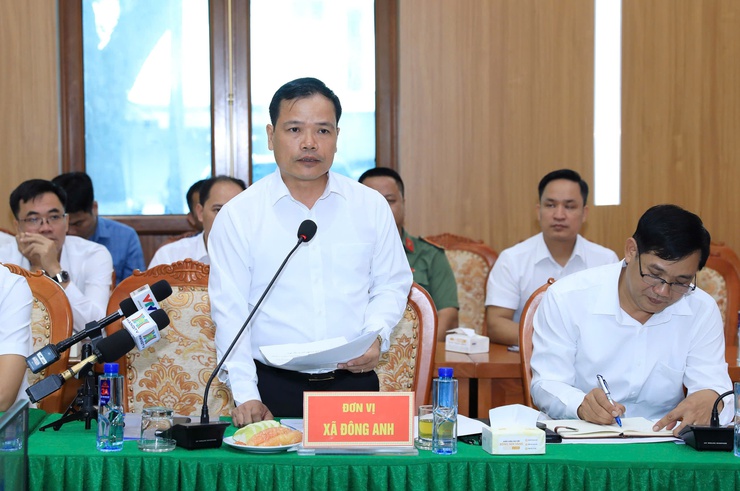 Dong Anh Commune Chairman Nguyen Van Thieng presents an implementation update. Photo: Le Hai.
Leaders of Thu Lam, Dong Anh, Thien Loc, Phuc Thinh and Me Linh communes also provided updates on project implementation and land clearance efforts, highlighting challenges encountered since construction began.
Representatives of Song Hong Future JSC, Hanoi Housing Development and Investment Corporation (Handico) and a consortium comprising Sunshine Group, SHome Real Estate Investment JSC, Thai Nam Land JSC and Potamos Real Estate JSC also presented progress reports and recommendations to city authorities.
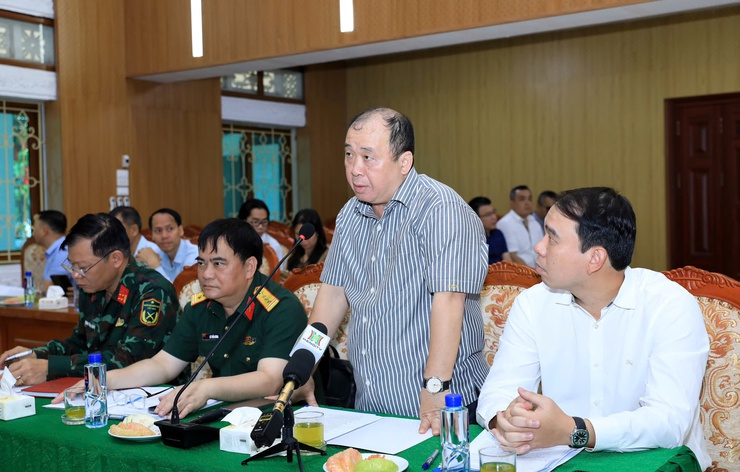 A representative of Song Hong Future JSC, on behalf of the investor consortium, reports on the project implementation in Thu Lam and Dong Anh communes. Photo: Le Hai.
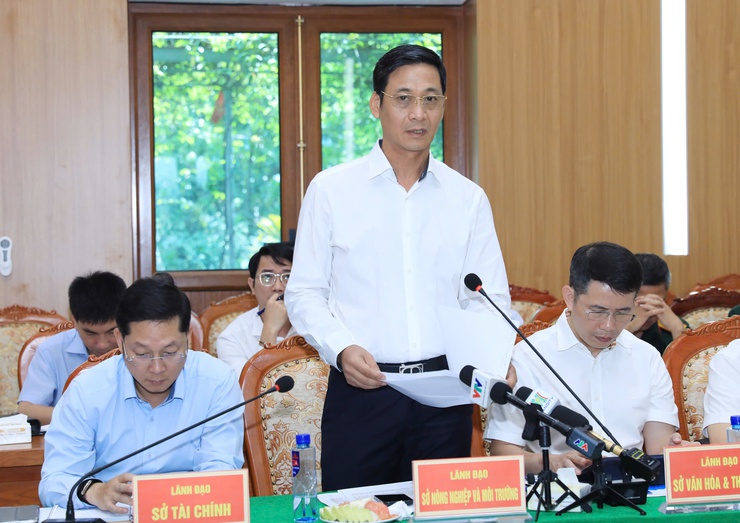 Hanoi Department of Agriculture and Environment Director Le Thanh Nam addresses the meeting. Photo: Le Hai.
Leaders of the Departments of Planning and Architecture, Finance, Construction and Culture and Sports discussed factors affecting project progress and proposed dividing implementation into phases for land clearance and land allocation.
Because the projects do not require construction permits, the Department of Construction recommended carrying out technical reviews, including fire prevention and safety assessments, on a phased basis to avoid delays.
Priority placed on delivering cleared land and integrated infrastructure
Speaking at the meeting, Chairman of the Hanoi People's Committee Vu Dai Thang said Hanoi's long-term urban development experience has demonstrated the need for integrated, modern urban models capable of meeting housing, employment and social development needs simultaneously.
This vision led the city to develop the concept of multi-purpose urban areas, combining urban development with social housing, resettlement housing and synchronized technical and social infrastructure.
"These projects are not simply residential developments. They are community spaces where residents can access jobs, education, healthcare and essential public services," the chairman said.
According to Thang, the model has received strong support from central authorities.
The two projects officially broke ground on February 2 and are expected to become key future growth centers for Hanoi.
In addition to commercial and residential functions, they will support urban renewal, land clearance and resettlement programs for major city projects.
The city also plans to develop the areas as smart and ecological urban centers while maintaining reasonable land prices and investor profit margins to ensure housing remains affordable and the market develops sustainably.
"This is one of Hanoi's most important strategic initiatives for implementing the 100-year Capital Master Plan, Politburo Resolution No. 02, the 2026 Capital Law and the city's urban development programs," Thang said.
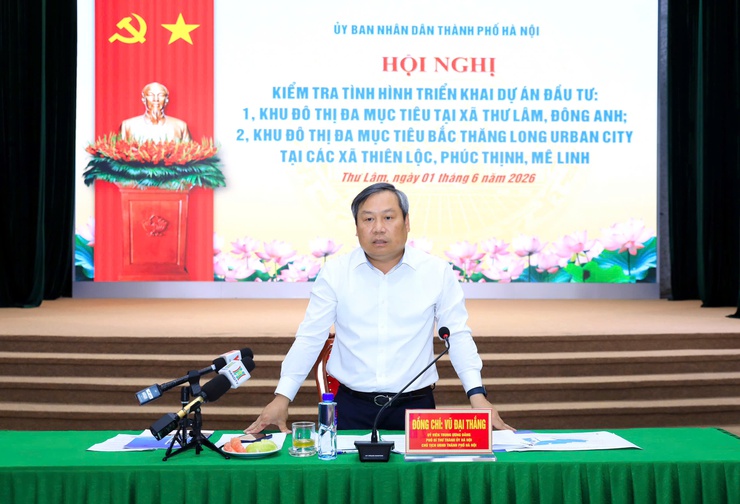 Hanoi Chairman Vu Dai Thang speaks at the working session. Photo: Le Hai.
The chairman praised the efforts of local authorities, city agencies and investors.
Although implementation began only four months ago, he noted that significant progress has already been achieved in planning, project preparation and land clearance.
More than 160 hectares have already been cleared, reflecting strong determination among all stakeholders involved.
Following the inspection, Thang instructed agencies to accelerate implementation further, prioritizing the delivery of cleared land for synchronized development of technical infrastructure, social infrastructure, resettlement zones, social housing and supporting educational and service facilities.
"The objective is to quickly establish modern, integrated urban areas that support economic growth, meet housing demand and strengthen Hanoi's future land clearance and resettlement capacity," he said.
Long-term livelihoods for affected residents remain a priority
Looking ahead, Thang directed city departments and local authorities to expedite administrative procedures needed to begin construction on cleared land as soon as possible.
"Residents have already handed over more than 160 hectares. Delays in construction would waste valuable resources. Procedures related to investment approval, land allocation, technical reviews and other requirements must be completed as quickly as possible while fully complying with legal regulations," he said.
The chairman also urged investors to continue coordinating closely with local authorities, particularly regarding resettlement areas, social housing and supporting infrastructure.
Under city plans, approximately 40-50% of housing stock within the multi-purpose urban projects will be reserved for resettlement purposes, initially serving major urban renewal and infrastructure projects across Hanoi.
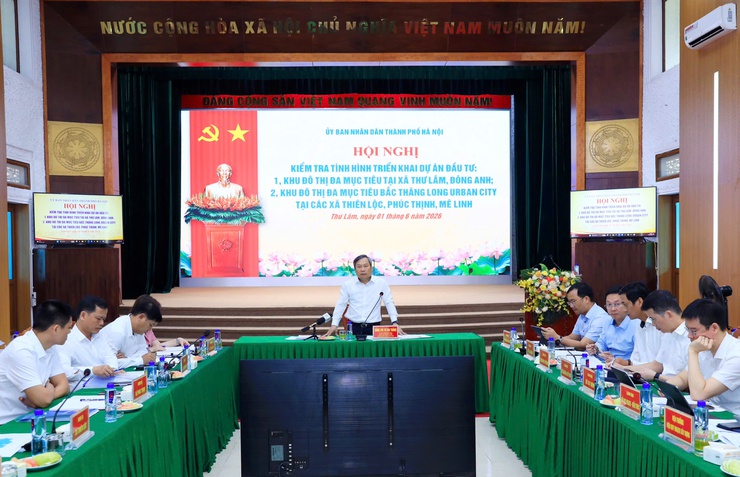 Overview of the working session. Photo: Le Hai.
According to Thang, the early delivery of high-quality resettlement areas will help build public trust and support for future city projects.
"We must create resettlement communities with complete infrastructure and services where residents can clearly see that their new living conditions are better than before. This will encourage people to accompany the city in future urban development programs," he said.
The chairman also instructed the Department of Culture and Sports, local authorities and media organizations to strengthen public communication efforts, helping residents better understand Hanoi's urban development strategy and the quality standards being applied to new urban and resettlement projects.
At the same time, local authorities were urged to preserve community cultural values and maintain traditional neighborhood ties when arranging resettlement plans.
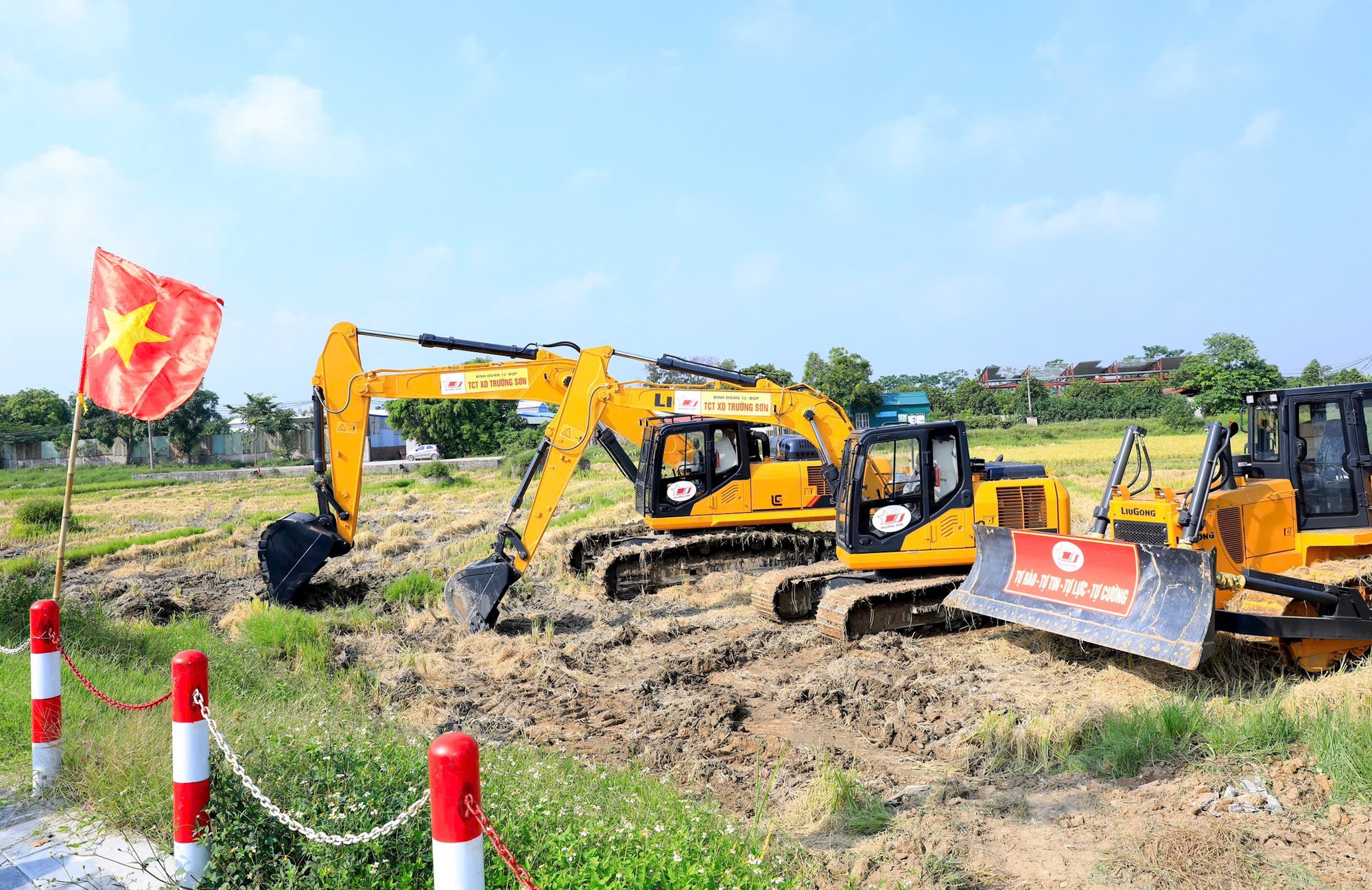 The multi-purpose urban development project in Thu Lam and Dong Anh communes has completed land clearance for 792 households. Photo: Pham Linh.
For households losing agricultural land, Thang emphasized the importance of vocational transition programs, employment creation and long-term livelihood support.
The city plans to simultaneously develop industrial zones, commercial centers and service hubs to generate additional local employment opportunities for affected residents.
Concluding the meeting, the chairman called on all agencies, local governments and investors to continue working with urgency and determination while fully complying with legal requirements.
"These projects are of exceptional importance to Hanoi's future development. The city has committed to specific timelines with the central government, and we must fulfill those commitments," he said.