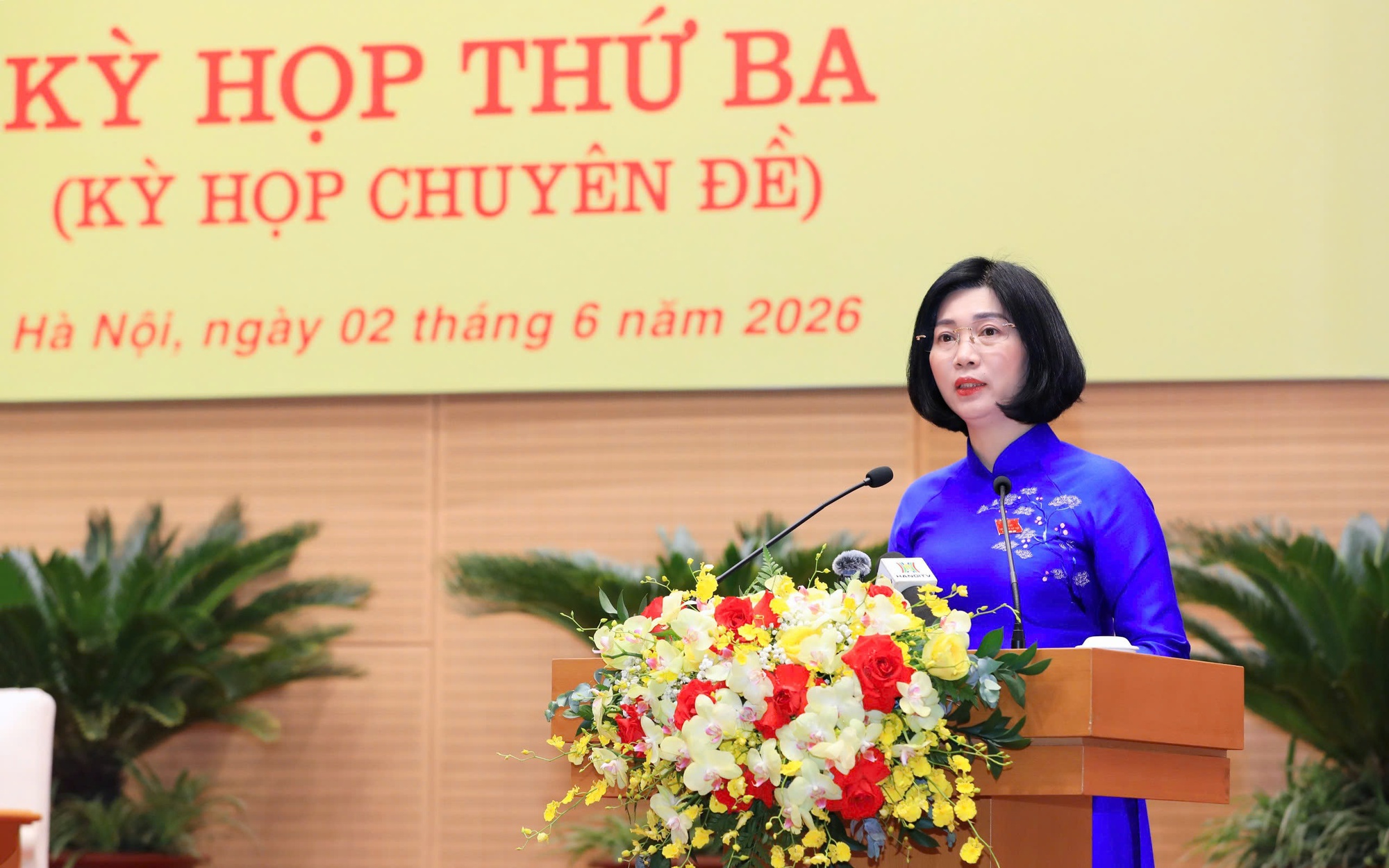
 Hanoi People's Council Chairwoman Phung Thi Hong Ha delivers the opening remarks. (Photo: Le Hai)
Opening the session, Chairwoman of Hanoi People's Council Phung Thi Hong Ha said each council session addresses matters within its authority and responds to practical needs. However, the third session carries a broader mission, laying the groundwork for a new phase of Hanoi's development.
According to Ha, just before the session, at the National Conference on the Operations of People's Councils for the 2026-2031 term, the innovations introduced by the Hanoi People's Council, particularly its vision of building a "smart representative body," were recognized and highly appreciated by the National Assembly. The recognition is both an honor and a call for greater responsibility, determination and action as Hanoi enters a new development stage.
Ha said the city is working intensively to bring the 2026 Capital Law into practice as quickly as possible, in line with directives from the central government, the National Assembly and the Hanoi Party Committee. The process requires both urgency and a strong focus on quality, practicality and effectiveness in every policy mechanism introduced.
To prepare for the session, the Standing Committee of the Hanoi People's Council worked closely with the Hanoi People's Committee and the Vietnam Fatherland Front Committee of Hanoi to thoroughly prepare all agenda items. Council committees also reviewed numerous important proposals, including new policies expected to have broad impacts on the city's development and residents' lives.
A key focus of the session will be continued discussions and consultations on major policies before they are submitted for approval under the two-session legislative process.
These include a draft resolution on supporting the transition of road vehicles powered by fossil fuels to clean energy, policies encouraging the use of public transportation and measures to limit high-emission vehicles.
Other topics include the proposal to establish a Low Emission Zone (LEZ) within the Ring Road 1 area, as well as policies related to underground development, low-altitude airspace development and transit-oriented development (TOD).
To improve the quality of discussions and maximize collective expertise, the Standing Committee decided to divide delegates into five discussion groups. The arrangement balances sectoral expertise, geographic representation and practical experience, while ensuring adequate representation from communes and wards following the implementation of the two-tier local government model.
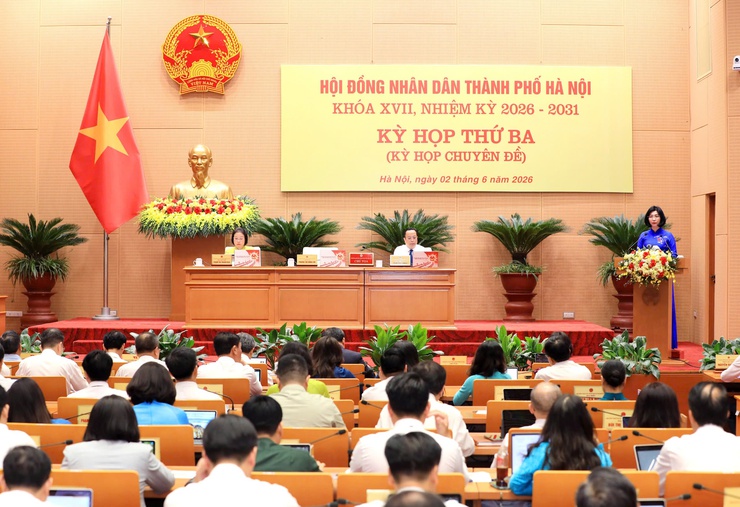 Overview of the session. Photo: Le Hai
Ha urged delegates to demonstrate the highest sense of responsibility toward voters and Hanoi residents by engaging in in-depth discussions on issues where differing opinions remain. She called for comprehensive assessments of the impacts of each policy and mechanism to ensure that approved resolutions are practical, feasible and quickly translated into real-world results.
Emphasizing that every stage of Hanoi's progress has been linked to timely and effective policy decisions, Ha said the resolutions under consideration are intended not only to address immediate challenges but also to lay a foundation for the capital's long-term development.
She reaffirmed that the Hanoi People's Council will continue working closely with the Hanoi People's Committee to develop and refine policies that better serve residents and businesses.
With a spirit of democracy, unity, innovation and responsibility, Ha expressed confidence that the third session of the 17th Hanoi People's Council will complete its agenda with high-quality outcomes, helping bring the Capital Law into effect and generating new momentum for Hanoi's rapid and sustainable development.