The move is considered an important step ahead of July 1, 2026, when the Hanoi People's Committee is scheduled to officially take over direct management of the cultural complex under Government Resolution No. 126/NQ-CP dated May 11, 2026.
The meeting was attended by Deputy Minister of Culture, Sports and Tourism Trinh Thi Thuy; leaders of the Department of Ethnic Culture of Vietnam; representatives from Hanoi departments and agencies; and leaders of Ba Vi, Doai Phuong, and Yen Bai communes.
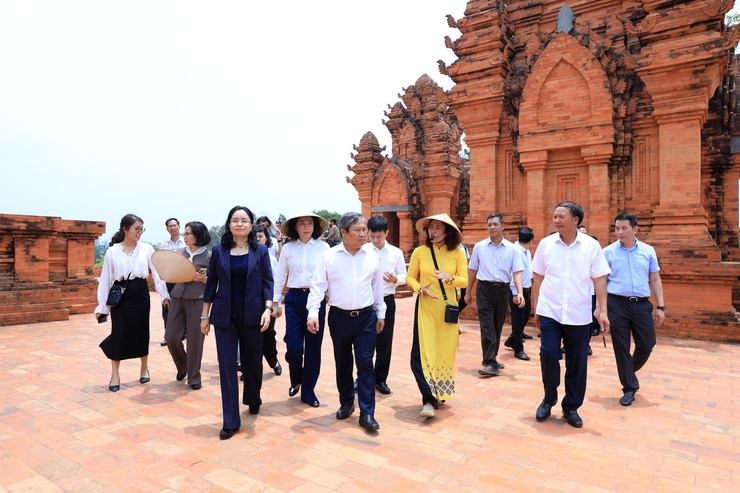 Chairman of the Hanoi People's Committee Vu Dai Thang and Deputy Minister of Culture, Sports and Tourism Trinh Thi Thuy inspect the Vietnam National Village for Ethnic Culture and Tourism. Photo: Le Hai
Preserving and promoting ethnic cultural values
According to the Department of Ethnic Culture of Vietnam, the Vietnam National Village for Ethnic Culture and Tourism was approved by the Prime Minister in 1997 as a national cultural center dedicated to preserving, showcasing, and promoting the traditional cultural values of Vietnam's 54 ethnic groups.
The project covers a total area of 1,544 hectares, including 606 hectares of land and 939 hectares of water surface, and is divided into seven functional zones. These include ethnic cultural spaces, sports and cultural centers, tourism and service areas, marina parks, and green-water landscapes around Dong Mo Lake.
To date, approximately 95% of site clearance work has been completed. The Vietnamese Ethnic Villages zone, considered the core and "soul" of the project, has largely been completed with reconstructed cultural spaces representing ethnic groups from across the country. Key infrastructure, operational areas, village gateways, and staff housing facilities have also been put into operation.
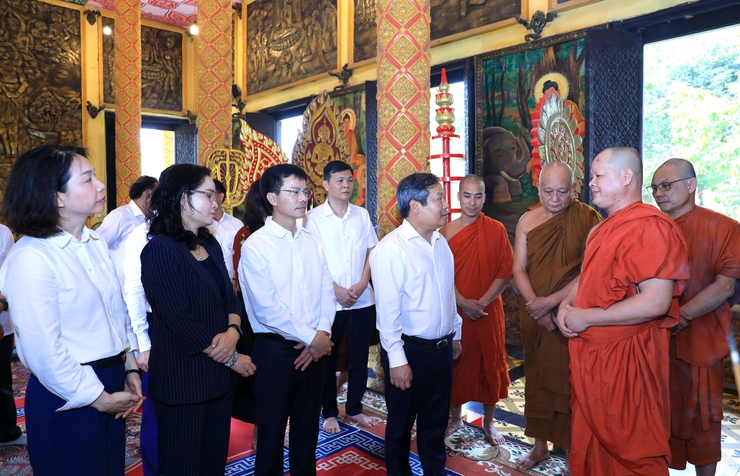 Chairman of the Hanoi People's Committee Vu Dai Thang and Deputy Minister Trinh Thi Thuy speak with Buddhist monks at the Khmer Pagoda inside the Vietnam National Village for Ethnic Culture and Tourism. Photo: Le Hai
The Department of Ethnic Culture of Vietnam said the complex has organized a wide range of activities to preserve and promote ethnic cultural heritage, including major national events such as "Spring Colors Across the Homeland," Vietnam Ethnic Groups Culture Day on April 19, and the "Great National Unity - Vietnamese Cultural Heritage" week.
The site welcomes around 600,000 visitors each year, nearly half of them students and young people. On average, more than 70 ethnic communities, involving over 1,000 ethnic minority participants and about 200 traders from more than 50 localities, take part annually in cultural festivals, craft demonstrations, culinary events, and traditional customs showcases.
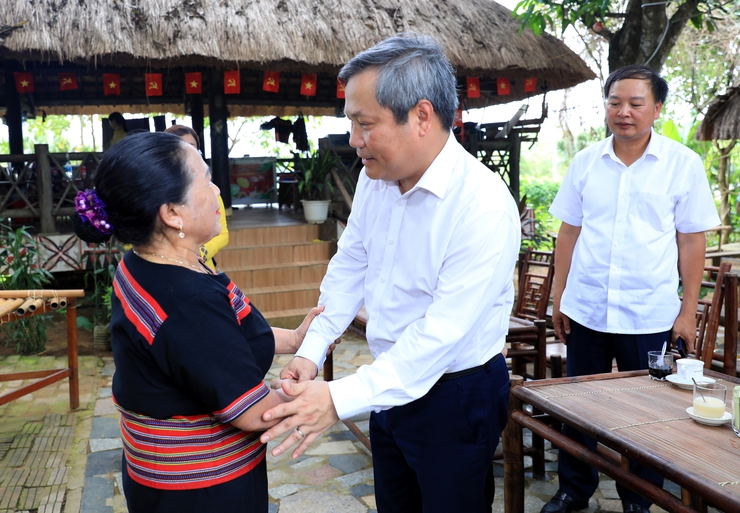 Chairman of the Hanoi People's Committee Vu Dai Thang visits the Xo Dang ethnic cultural space at the Vietnam National Village for Ethnic Culture and Tourism. Photo: Le Hai
According to the Department of Ethnic Culture of Vietnam, these achievements have reinforced the role of the complex as a "common home" for Vietnam's 54 ethnic groups and helped it gradually develop into a national cultural and tourism center in line with Party and State orientations.
Regarding the transfer process, the department said it has proactively coordinated with Hanoi authorities to prepare necessary conditions and ensure the handover proceeds on schedule under government directives. The department also proposed that Hanoi quickly finalize the transfer plan and issue regulations on functions, duties, and the new organizational structure to ensure stable operations from July 1, 2026.
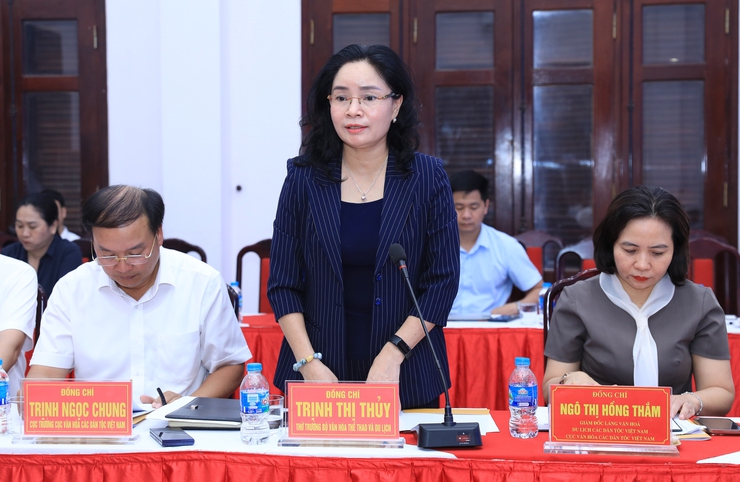 Deputy Minister of Culture, Sports and Tourism Trinh Thi Thuy speaks at the meeting.
Strategic Importance for Hanoi's Next Development Phase
Speaking at the meeting, Deputy Minister Trinh Thi Thuy said the ministry had developed a transfer plan and sent it to Hanoi authorities for review and feedback before completing the next steps.
Thuy noted that the timeline for the transfer is tight while the workload remains extensive, involving organizational restructuring, facilities, finance, personnel, and operational mechanisms. She said the ministry hoped to continue receiving support and coordination from Hanoi to ensure the transfer process is conducted efficiently without disrupting operations at the Vietnam National Village for Ethnic Culture and Tourism.
Concluding the meeting, Chairman Vu Dai Thang emphasized that the government's decision to transfer the complex to Hanoi management is a major policy with strategic significance for the capital's development in the next phase.
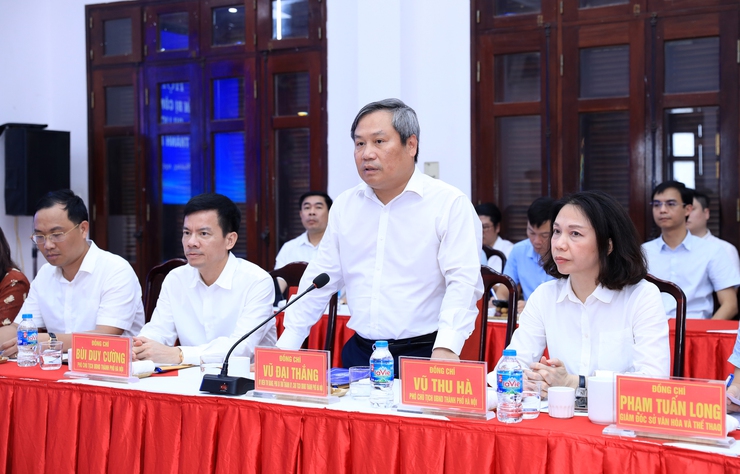 Chairman of the Hanoi People's Committee Vu Dai Thang delivers concluding remarks at the meeting. Photo: Le Hai
Thang said the official transfer of management rights to Hanoi from July 2026 is not simply an administrative change, but an opportunity to unlock the full development potential of western Hanoi.
According to Thang, as Hanoi simultaneously implements Politburo Resolution No. 02-NQ/TW dated March 17, 2026, on building and developing the capital in a new era, alongside the capital's 100-year master plan and broader strategies for culture, tourism, and creative industries, taking over the Vietnam National Village for Ethnic Culture and Tourism will help create a new growth pole for western Hanoi.
"When integrated with Ba Vi National Park, Dong Mo Lake, strategic transport corridors, modern cultural-tourism-sports infrastructure, and new urban areas, this zone will become a multi-functional development space for the capital, preserving ethnic cultural values while promoting tourism, services, cultural industries, and the green economy," Thang said.
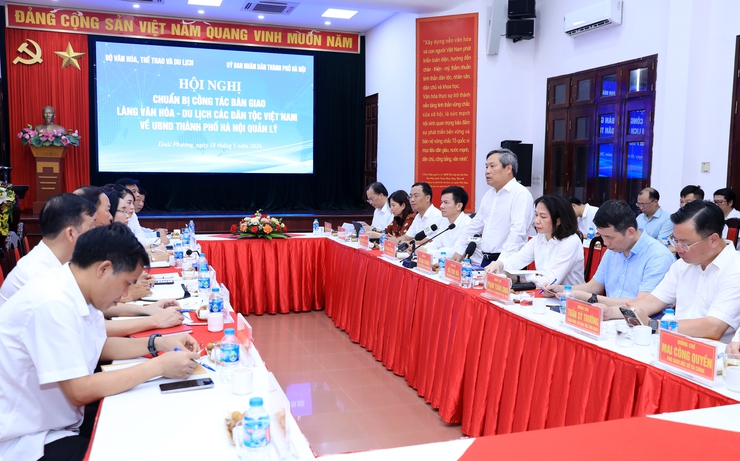 Hanoi plans to gradually develop the Vietnam National Village for Ethnic Culture and Tourism into a regional-level national cultural and tourism exchange center. Photo: Le Hai
Thang also praised the efforts and dedication of the Ministry of Culture, Sports and Tourism and staff at the cultural complex over many years in building and operating the national cultural institution.
He affirmed that Hanoi would preserve and build upon the achievements already made while maintaining the current organizational structure and creating favorable conditions in terms of mechanisms, policies, facilities, finance, and personnel to ensure stable and continuous operations.
Thang assigned Hanoi departments and agencies to coordinate closely with the Ministry of Culture, Sports and Tourism and the Department of Ethnic Culture of Vietnam to comprehensively review issues related to planning, organizational structure, investment, land, financial mechanisms, personnel, and future operation plans for the site's functional zones after the transfer.
At the same time, Hanoi plans to study policies to attract non-budget investment and develop tourism, service, resort, and cultural industry spaces linked with preserving and promoting ethnic cultural heritage. The long-term goal is to gradually transform the complex into a regional cultural and tourism exchange center.
The government's decision to officially transfer management of the Vietnam National Village for Ethnic Culture and Tourism to Hanoi from July 2026, together with plans to integrate development with Ba Vi National Park and the launch of Metro Line No. 5 connecting Van Cao and Hoa Lac, is viewed as a strategic turning point. The move is expected not only to reshape the management model but also to unlock the full development potential of Hanoi's western growth corridor, turning it into a new socio-economic engine for the capital.