The initiative is aimed at advancing cooperation on green transportation, clean energy, and sustainable development.
Speaking at the ceremony, Vice Chairman of the Hanoi People's Committee Truong Viet Dung said green transition and energy conversion in transportation have become urgent priorities for Hanoi.
Dung welcomed the cooperation between the Hanoi Department of Construction, LG Energy Solution, and Honda Motor, calling it an important starting point that reflects a shared commitment to building a greener, more modern, and sustainable Hanoi.
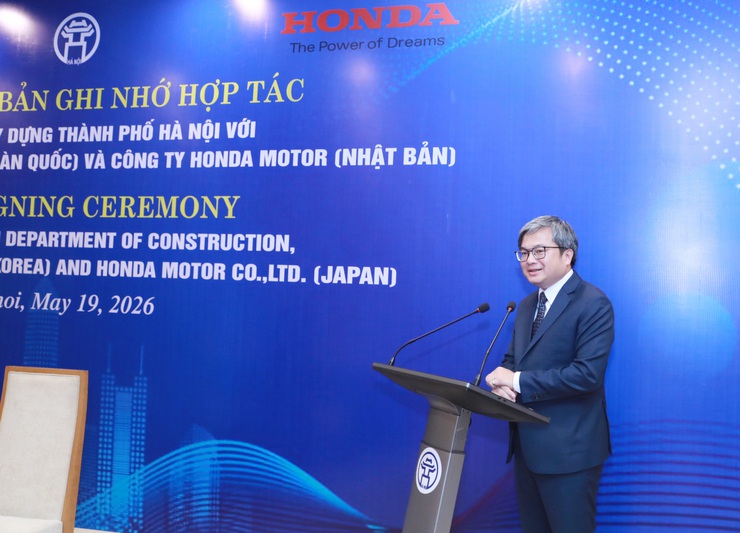 Vice Chairman of the Hanoi People's Committee Truong Viet Dung speaks at the ceremony.
Dung said Hanoi hopes the battery swap system will be built on an integrated and compatible platform capable of connecting with multiple vehicle models, describing interoperability as the project's most essential requirement.
He also asked the Hanoi Department of Construction to coordinate with operators and building owners to place charging and battery swap stations not only along roads and at public parking areas, but also at shopping malls, apartment complexes, and public service locations to improve convenience for users.
At the same time, he stressed the need for battery recycling solutions to ensure safety and optimize product life cycles. Dung said the successful implementation of the project could provide not only a solution for Hanoi's green transition, but also a model for many cities and countries around the world.
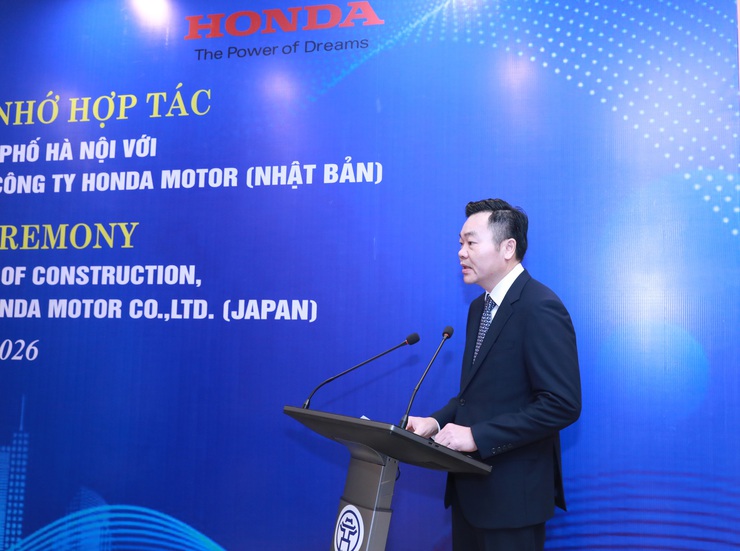 Dao Viet Long, Deputy Director of the Hanoi Department of Construction, speaks at the ceremony.
Speaking at the signing event, Dao Viet Long, Deputy Director of the Hanoi Department of Construction, said Hanoi plans to pilot a low-emission zone within Ring Road 1 from July 1, 2026, as part of efforts to address pollution from about eight million road vehicles.
Long said switching to electric vehicles is a key solution, but major obstacles remain, particularly charging infrastructure and battery costs. As a result, the public battery swap station model is viewed as a breakthrough solution.
He said the combination of LG Energy Solution's battery technology and Honda Motor's vehicle platform could help create a complete ecosystem covering vehicles, batteries, infrastructure, and operations, providing the foundation needed for battery swap stations to become part of daily life in Hanoi.
Therefore, the project will be built around three main areas of cooperation:
First, developing optimized battery swap cabinet solutions and building a supply chain suited to Hanoi's conditions.
Second, creating a public electric motorcycle platform business model aligned with sustainable transportation goals and public demand.
Third, establishing a cooperation mechanism to support policy development and propose broader collaboration models consistent with Hanoi's regulations and development strategies.
And, the project will be implemented in two phases:
Phase 1, the pilot phase beginning in the third quarter of 2026, will install 50 battery swap stations in central Hanoi, prioritizing areas near Hoan Kiem Ward, where traffic density is high and low-emission regulations will first take effect.
Commercial vehicles will be prioritized during the initial stage to maximize usage frequency and collect operational data. The platform will be developed with an open architecture so electric motorcycle manufacturers from multiple countries, including Vietnamese companies, can participate.
Phase 2, expected from the third quarter of 2027, will be considered after a full evaluation of the pilot phase and review by the Hanoi People's Committee. The expansion plan envisions around 1,000 battery swap stations across the city based on market demand.
"The project is expected to create positive impacts on multiple fronts. Today's signing marks the beginning of a practical new model for green transport infrastructure cooperation in Hanoi, especially as the city moves closer to implementing low-emission zone policies," Long said.
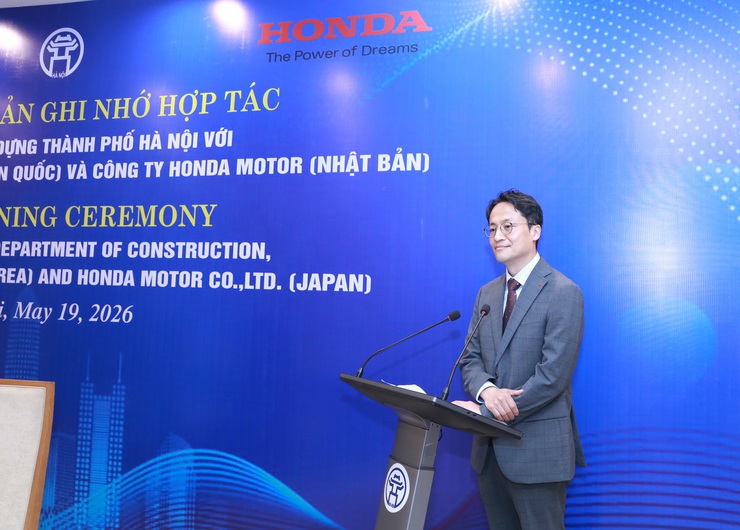 Jae Kwon Kim, Vice President and Head of the Mobility and IT Battery Business Division at LG Energy Solution, speaks at the ceremony.
Speaking at the event, Jae Kwon Kim, Vice President and Head of the Mobility and IT Battery Business Division at LG Energy Solution, said the company was pleased to participate as a partner in the electric motorcycle system and related infrastructure project in Hanoi.
As a battery solutions provider, Kim said LG Energy Solution is committed to contributing actively to Hanoi's green transportation policies.
The company pledged to provide high-performance batteries and safe technology solutions while also expanding the platform to encourage broader participation from Vietnamese businesses and consumers.
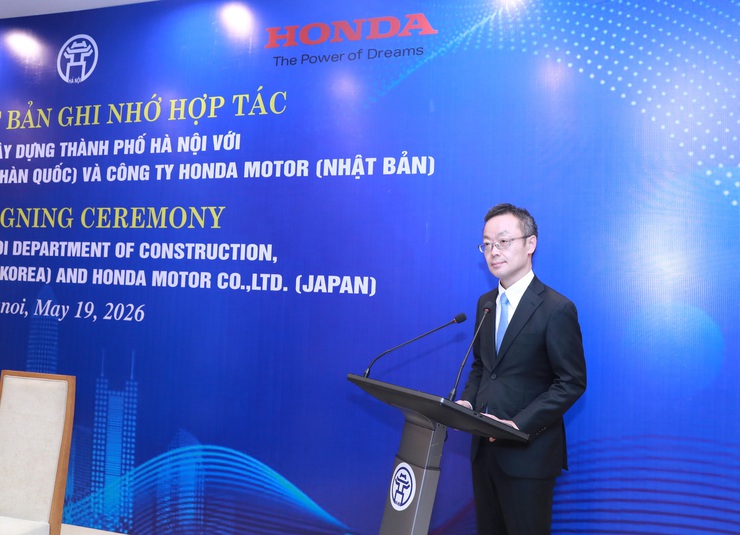 Yusuke Kawabata, Director and Assistant Vice President of the MPP Business Division at Honda Motor, speaks at the ceremony.
Yusuke Kawabata, Director and Assistant Vice President of the MPP Business Division at Honda Motor, said urban transportation electrification has become increasingly important as countries intensify efforts to reduce environmental impacts.
For a rapidly developing city like Hanoi, he said building a sustainable transportation model will be essential for future growth.
Kawabata added that cooperation on both battery systems and infrastructure is critical for Honda Motor, making the partnership with Hanoi authorities and LG Energy Solution highly significant for the company.
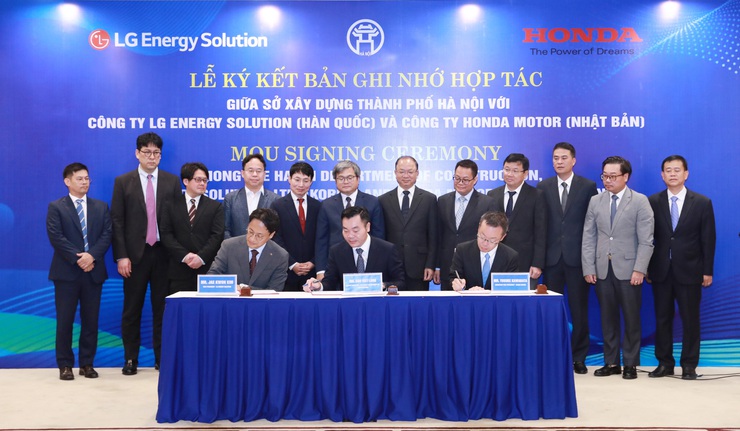 Representatives of the Hanoi Department of Construction, LG Energy Solution, and Honda Motor sign a memorandum of understanding.
Kawabata said Honda plans to strengthen cooperation activities in the coming period to support wider adoption of electric mobility and reduce environmental impacts in Hanoi.
"We hope this initiative will become a model not only for Vietnam but for all of Asia," Kawabata said.
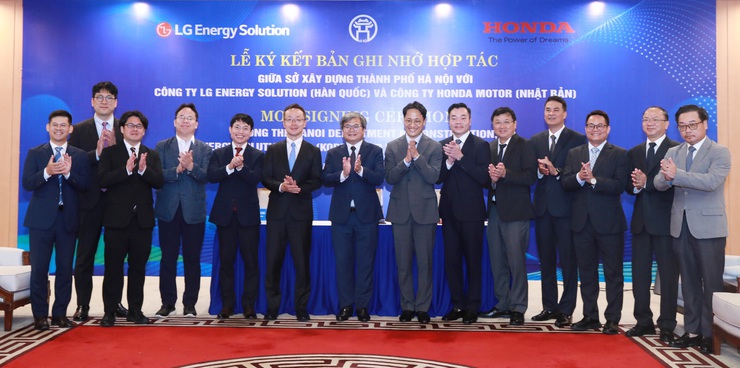 Vice Chairman of the Hanoi People's Committee Truong Viet Dung and delegates pose for a commemorative photo.