TBM No. 1, known as Than Toc, started its journey from Station S9 in Kim Ma on July 30, 2024. It has now finished tunneling through Stations S9, S10 in Cat Linh, S11 in Van Mieu, and S12 at Hanoi Station. This is the first time in the capital that TBM technology has been used to tunnel beneath the dense urban core, passing through areas with high population density, complex technical infrastructure and important cultural heritage.
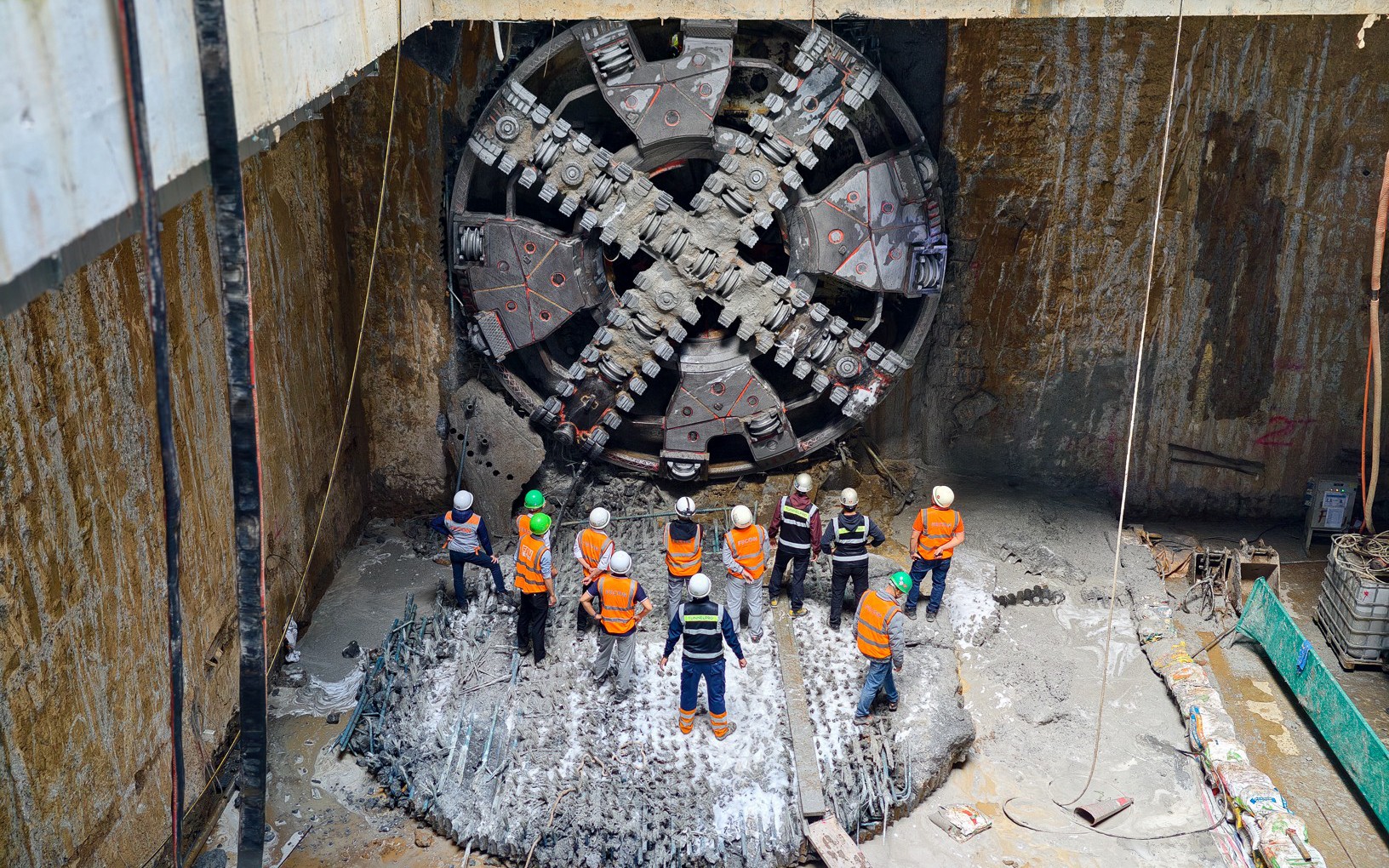
TBM No. 1, named Than Toc, has arrived at Station S12 – Hanoi Station
Throughout the journey, TBM Than Toc operated safely and installed 1,720 tunnel rings in strict compliance with technical, safety and environmental standards. It ensured the safety of surface structures, especially when passing through crowded neighborhoods and heritage zones. After completing tunneling at Station S12, the cutterhead of the TBM will be dismantled at this station, while the remaining auxiliary systems will be pulled back and disassembled at Station S9 in Kim Ma.
At the same time, TBM No. 2, named Tao Bao, is continuing its tunneling on the remaining section and is now heading toward Station S11. As of December 1, 2025, overall progress on Package CP03, which covers the tunnels and underground stations, has reached more than 72 percent. A total of 3,395 out of 3,495 tunnel rings have been cast, ensuring sufficient supply for both TBMs.
TBM technology is the most advanced tunneling method in use today and is being applied in Hanoi for the first time.
Nguyen Ba Son, Deputy Director of the Hanoi Metropolitan Railway Management Board, said that the arrival of TBM No. 1 at Station S12 marks a historic milestone. He noted that it not only confirms the completion of the first tunnel section but also reflects the commitment and sustained effort of the entire project team.
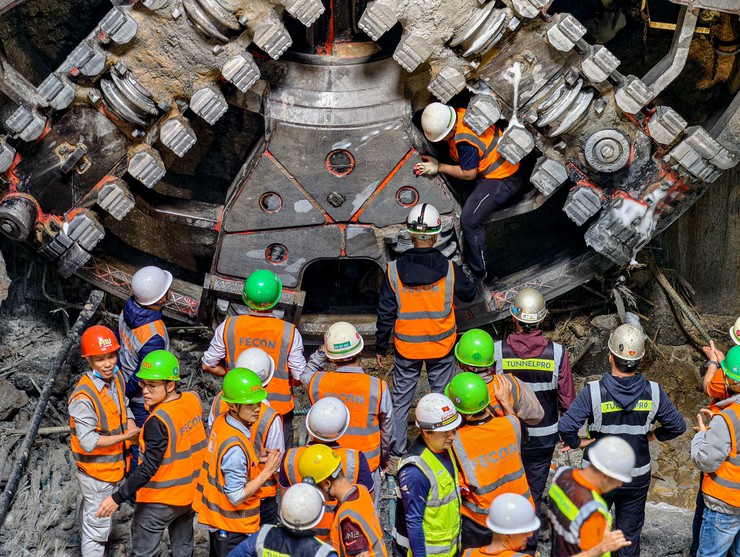
TBM technology is the most advanced tunneling method today and this is the first time it has been used in Hanoi.
Park Young Ill, Project Director and representative of the Hyundai–Ghella joint venture, said that TBM technology is the most advanced tunneling method currently available and this is its first application in Hanoi. He emphasized that the city’s geological conditions are complex, with a wide range of surface structures that include new and old buildings and cultural and historical sites.
Faced with these challenges, the project team carried out careful and scientific preparation.
Tunneling was implemented with high technical expertise and full compliance with safety requirements, supported by leading specialists from major projects worldwide. Thanks to this preparation, all challenges were resolved effectively and the team achieved excellent results. He added that the success of TBM No. 1 provides strong confidence in the progress of TBM No. 2, which is tunneling between Stations S10 and S11.
The Nhon – Hanoi Station metro line is one of Hanoi’s key transport projects and is expected to help reduce traffic congestion, improve public transport and enhance the urban environment. The tunneling works are being carried out with strong determination to meet the planned safety, quality and schedule requirements.
During the entire TBM tunneling process, monitoring was conducted carefully to track ground movement, subsidence and the stability of buildings and structures along the route. These measures ensure timely responses to potential issues and safeguard the safety of existing structures while maintaining construction quality.