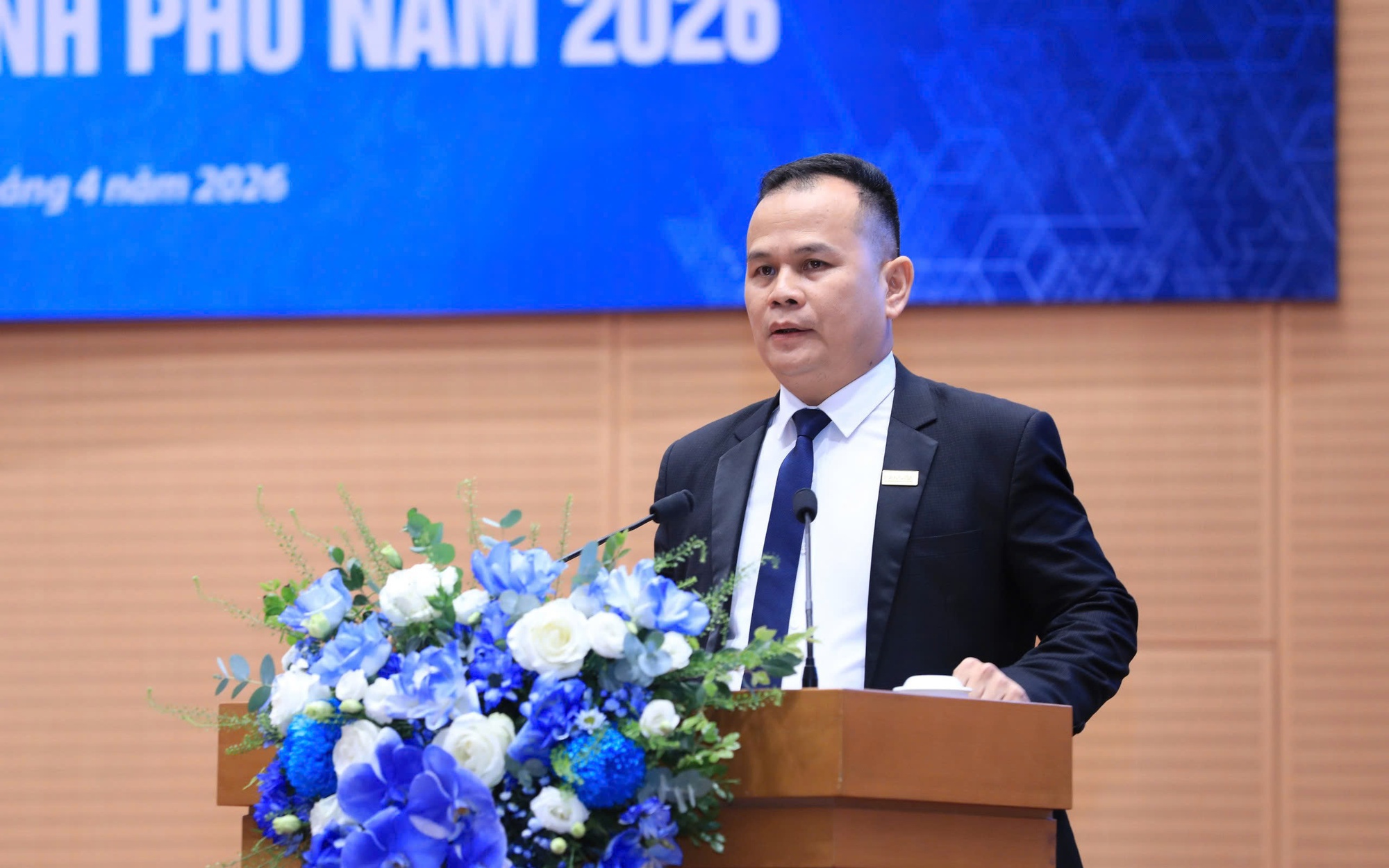
 Tran Van Minh, Vice Chairman and Secretary General of the Hanoi Young Business Association, presents at the conference. Photo: Le Hai
Speaking at the conference, Minh noted that the association currently represents more than 3,300 enterprises across various sectors of the economy. In recent years, the young business community has expressed strong appreciation for the city leadership’s support, reflected in the issuance and implementation of numerous practical mechanisms and policies.
Notably, the city has approved the SME support program for the 2026–2030 period, issued Plan No. 323/KH-UBND on the provision of fully online public services, restructured 293 administrative procedures, and promoted the development of the local logistics system. In addition, direct dialogue between authorities and businesses has been maintained on a regular basis, from rapid response groups to specialized conferences, helping to promptly address emerging issues.
“These efforts demonstrate the city’s strong commitment and responsibility toward the business community. We truly appreciate and value them,” Minh emphasized.
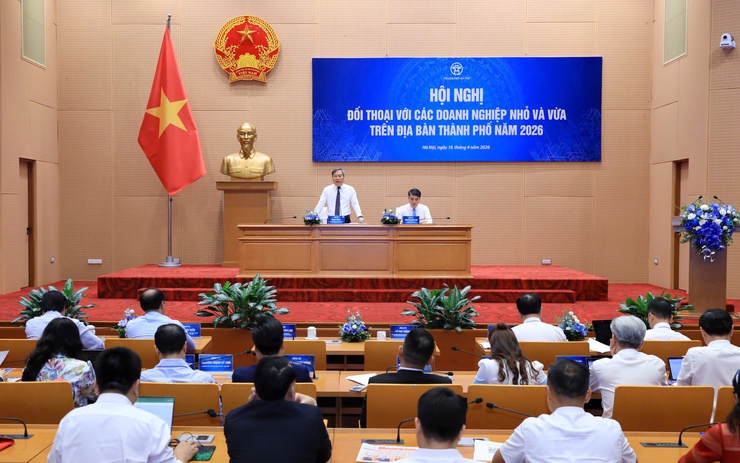 Conference overview. Photo: Le Hai
However, alongside these positive outcomes, the presentation also pointed out a number of persistent bottlenecks hindering the development of SMEs, which are considered the backbone of the capital's economy.
The first issue is access to capital and production space. According to the association, land and facility costs account for up to 25% of total investment. Meanwhile, land leased with annual payments cannot be used as collateral for bank loans, leaving many businesses financially constrained after building factories, with limited capacity to invest in technology or expand production.
Access to finance remains a long-standing challenge. As interest rates trend upward and credit limits tighten, securing funding has become even more difficult. Despite existing support measures, businesses stress that policy stability and predictability are crucial for long-term planning.
Another notable bottleneck is digital transformation. Many SMEs are currently facing a “three no’s” situation: insufficient financial resources for structured investment, lack of clear direction leading to misguided consulting, and absence of IT personnel to operate systems. As a result, although businesses recognize the importance of digital transformation, implementation remains limited.
Policy stability and administrative reform were also highlighted. While the city has made significant efforts, some policies still change rapidly without clear roadmaps, making it difficult for businesses to plan operations. For instance, frequent adjustments in tax regulations over a short period have directly affected business operations.
From these realities, the Hanoi Young Business Association proposed several concrete recommendations within the city’s authority.
Regarding capital and land, the association suggested allowing enterprises to use annual land lease rights as collateral for loans, or establishing specialized credit guarantee programs for medium- and long-term financing for technology investment. It also proposed maintaining and expanding rent support policies, with reductions of around 50% for manufacturing and science-technology enterprises in high-tech zones and innovation centers.
In addition, the city was urged to explore alternative funding channels to help businesses diversify capital sources and reduce reliance on the banking system.
For digital transformation, the association recommended building a catalog of verified and standardized digital solutions tailored to different sectors and enterprise sizes. Based on this, a pilot Digital Operations Support Service Center could be developed, providing subscription-based services at low cost, operated by domestic technology firms. This model would support system monitoring, incident handling, and cybersecurity, addressing the shortage of IT personnel.
In terms of administrative reform, businesses called for stronger application of technology, minimizing direct contact, increasing automation and transparency, and shortening processing times.
Beyond recommendations, the Hanoi Young Business Association reaffirmed its commitment to accompanying the city in economic development. The association will continue to act as a bridge between businesses and authorities, proactively collecting and reflecting feedback from the grassroots level.
In the coming period, it plans to co-organize the Private Economic Forum in September 2026, along with initiatives such as “Entrepreneur Coffee,” young business leader forums, and large-scale trade promotion programs. The association also expressed readiness to participate in advisory groups and policy review councils of the city, contributing the expertise and resources of the young business community.
Concluding the presentation, Minh emphasized that although SMEs are limited in scale, they play a crucial role in sustaining the vitality and growth momentum of the capital's economy. With decisive leadership from the city, coordinated support from departments, and the self-driven efforts of businesses, existing bottlenecks can be resolved, laying the foundation for stronger growth and contributing to Hanoi's goals of high, rapid, and sustainable development.