Tu Liem Ward reported that immediately after the two-tier local government model came into operation, the ward moved quickly to carry out the tasks assigned by the city to ensure smooth administration. It implemented 49 delegated tasks and 10 authorized tasks, creating an uninterrupted administrative workflow.
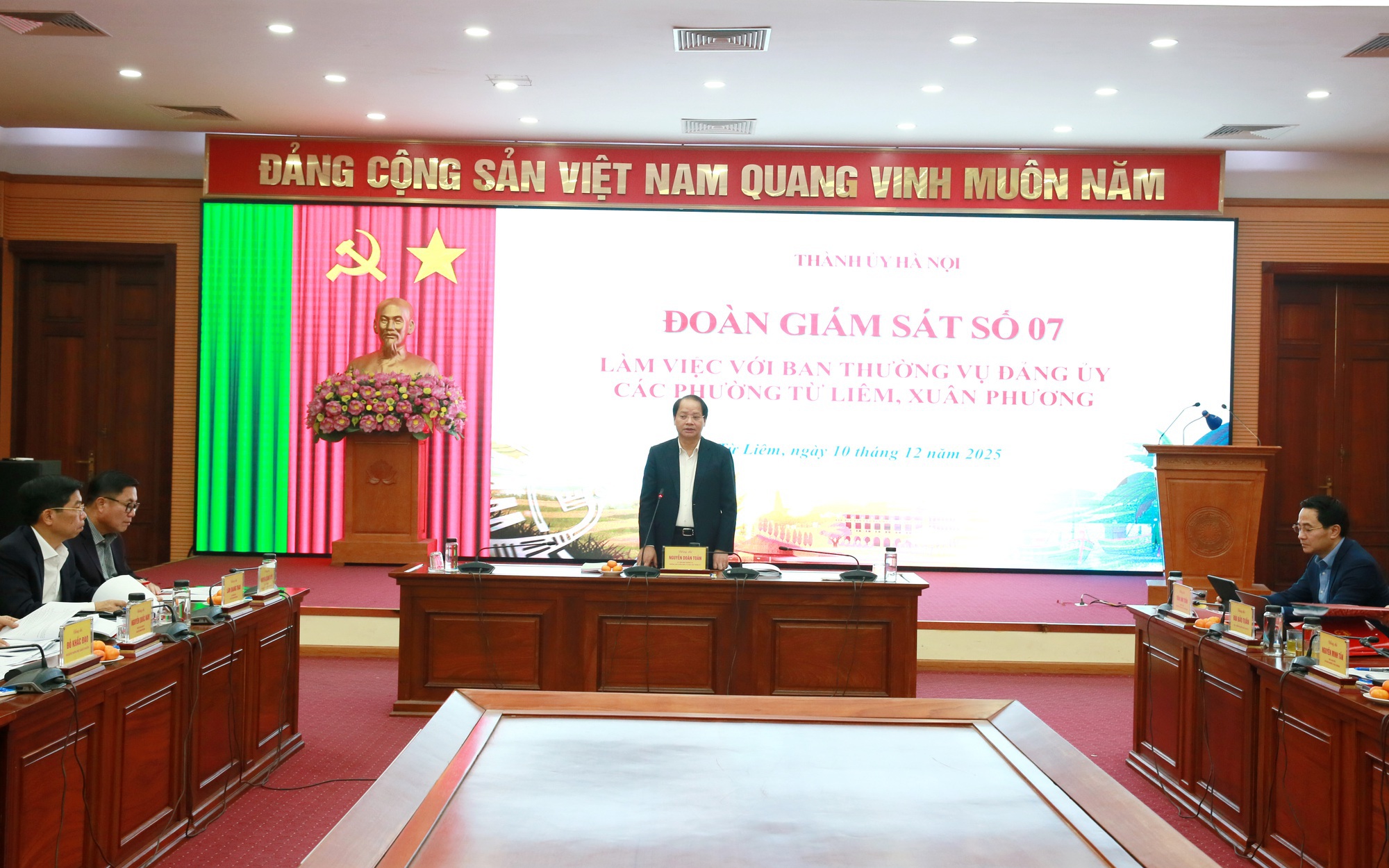
Overview of the meeting.
The rate of early and on-time processing reached 90.13 percent, and the ward established 76 community digital-transformation teams to build a solid base for digital government, digital economy, and digital society.
In socio-economic management, the ward’s total budget revenue is expected to reach 103.5 percent of the target assigned by the city. Public investment disbursement is expected to reach 99.8 percent of the allocated capital by the end of the year. However, ground clearance and the handling of delayed projects remain bottlenecks that require more decisive action.
Tu Liem Ward handled 180 cases of sidewalk and roadway encroachment and cleared nine of sixteen spontaneous markets. Environmental sanitation remained stable, with 100 percent of daily waste collected without backlog. Public assets, staffing arrangements and personnel management were stabilized after the administrative restructuring. The year-end review was carried out with seriousness and objectivity.
Xuan Phuong Ward reported that after more than five months operating under the two-tier local government model, the ward achieved all twelve socio-economic targets. Total budget revenue is estimated at VND89,462 million ($3.58 million), or 182 percent of the target. Per capita income is estimated at VND114.2 million ($4,568), and living conditions continue to improve. The ward completed ground clearance for two of thirteen ongoing projects and aims to meet the city’s disbursement schedule.
With an on-time administrative processing rate of 98.11 percent, Xuan Phuong also became a pioneer in operating online meeting rooms at neighborhood units, with nearly 91 percent of outgoing documents digitized. The ward addressed five key public concerns by preventing local flooding, conducting twenty enforcement campaigns on urban order, and maintaining 100 percent daily waste collection. Public assets and staffing were managed according to regulations without loss or waste.
In concluding remarks, Nguyen Doan Toan, Member of the Standing Committee and Head of the Commission for Publicity, Education and Mass Mobilization Commission, praised both wards for their results after more than five months under the two-tier administrative structure. He recognized their strong performance in meeting and surpassing planned socio-economic targets and highlighted their progress in administrative reform and digital transformation.
He noted remaining shortcomings and asked both wards to continue implementing delegated authority and digital transformation with clear responsibility and accountability. He stressed the need to raise officials’ awareness and shift from many staff handling a single task to one staff member handling multiple tasks through digital tools. The city will continue to support digital infrastructure to help both wards meet assigned tasks.
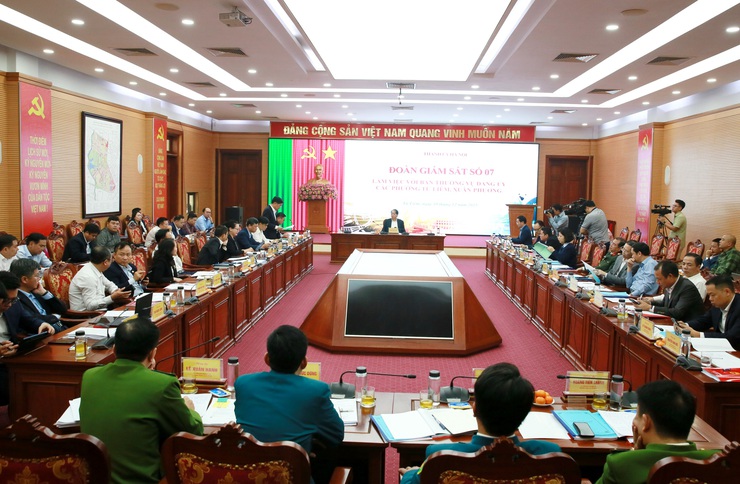
Delegates at the meeting.
Regarding ground clearance, he emphasized that this is one of the most difficult areas for many localities. Since Tu Liem Ward has a large portfolio of assigned projects, its Party Committee must prepare a dedicated report that clearly defines responsibilities, staffing, timeline, and progress. All delayed projects should be reviewed in coordination with the Department of Natural Resources and Environment for city-level action.
He also asked the wards to manage public assets closely, prevent loss and misuse, and prioritize allocating premises for judicial agencies. Local leaders must resolve urgent public issues so residents can live safely and comfortably.
Since Hanoi aims for double-digit economic growth in 2026, he asked both wards to identify specific solutions to expand local service-sector growth and support enterprises and household businesses through better access to capital and infrastructure, creating a transparent and attractive investment environment.
He requested that the 2025 year-end reviews be practical and focused, providing clear direction for 2026.
In the review of the Standing Committees, he noted that both wards have shown strong leadership during the first months of the two-tier government model. He urged local leaders to be closer to residents and ensure that public concerns reach the Party and government bodies in a timely manner.
He also assigned both wards to fully consolidate recommendations beyond their authority following the principle of clear tasks, clear causes, clear responsible agencies, clear individual responsibility, and clear deadlines, so the supervisory team can report to the Party Committee’s Standing Board and coordinate solutions with relevant city departments.