The delegation was led by Phung Thi Hong Ha, Deputy Secretary of the Hanoi Party Committee, Chairwoman of the Hanoi People's Council, and Deputy Head of Hanoi's National Assembly delegation.
The delegation also included Duong Duc Tuan, Member of the Standing Committee of the Hanoi Party Committee and Permanent Vice Chairman of the Hanoi People's Committee, along with representatives from the People's Council committees, city departments, the Office of the Hanoi People's Committee, and local wards and communes.
According to the working schedule, on the morning of May 14, the Hanoi delegation held talks with D. Ikhbayar, Chairman of the Ulaanbaatar City Council, and representatives of the council's agencies. Representatives from the Vietnamese Embassy in Mongolia also attended the meeting.
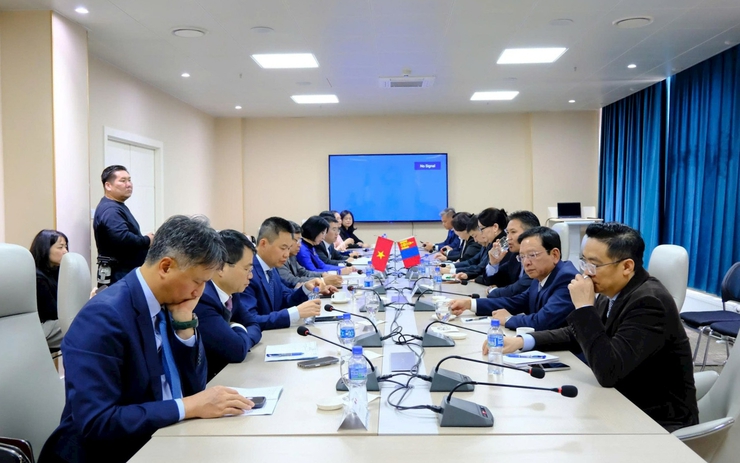
Chairwoman of the Hanoi People's Council Phung Thi Hong Ha holds talks with D. Ikhbayar, Chairman of the Ulaanbaatar City Council.
During the meeting, Ha thanked the Chairman of the Ulaanbaatar City Council and his colleagues for welcoming the delegation and taking time to work with them. She expressed hope that the visit would open a new chapter in the friendship and cooperation between the two capitals.
The Chairwoman of the Hanoi People's Council affirmed that Vietnam and Mongolia share a long-standing traditional friendship. Over the past 70 years, the two countries have maintained close ties across many sectors and provided each other with sincere and selfless support. In 2024, the two capitals signed a memorandum of understanding to strengthen friendship and cooperation, creating a foundation for broader collaboration in politics, economics, culture, and people-to-people exchanges.
Sharing an overview of Hanoi's socio-economic development, Ha said Hanoi currently maintains friendship and cooperation ties with more than 100 cities and capitals worldwide and is a member of many prestigious international organizations. In 2026, the city continued to effectively implement tasks assigned by the central government and achieved notable results across multiple sectors.
In particular, in April 2026, Vietnam's National Assembly passed the 2026 Capital Law, granting Hanoi greater autonomy to accelerate policymaking and meet the capital's development demands in the new period, in line with the recently approved 100-year master plan for the capital.
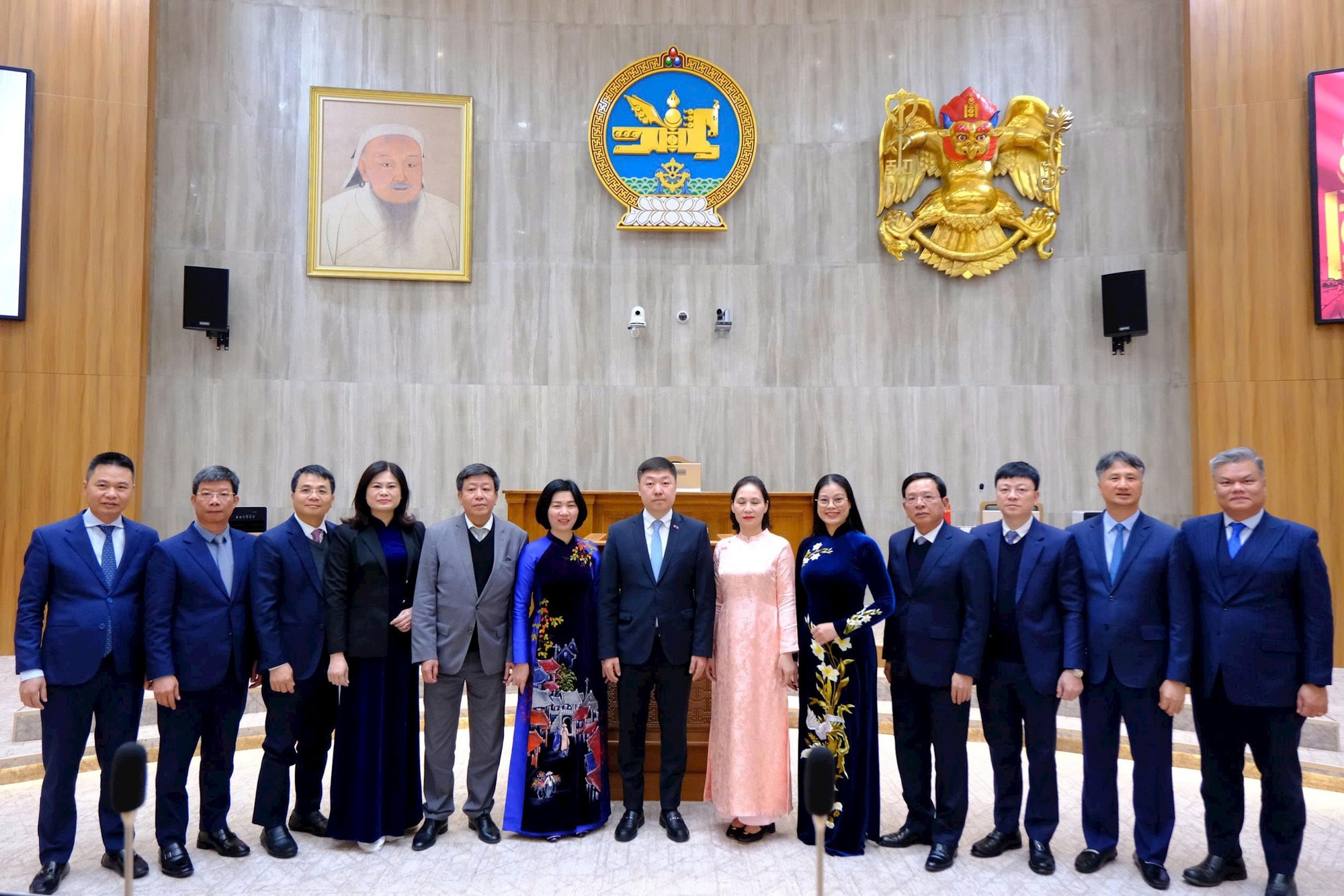
The Hanoi delegation visits and works at the headquarters of the Ulaanbaatar City Council.
According to Ha, Hanoi and Ulaanbaatar signed an agreement on friendship and cooperation in 1998, focusing on urban planning and management, economic development, human resources development, and tourism cooperation. The two sides have also established cooperation partnerships between Hoan Kiem District (now Hoan Kiem Ward) and Bayanzurkh District in 2023, and between Tay Ho District (now Tay Ho Ward) and Khan-Uul District in 2024.
The signing of the memorandum on strengthening friendship and cooperation has created a suitable framework to promote practical cooperation between Hanoi and Ulaanbaatar in line with development orientations and conditions in the new phase.
Based on the memorandum, the two sides discussed cooperation in healthcare, education, cultural exchanges, tourism, agriculture, environmental protection, trade, economics, and small- and medium-sized enterprise development, depending on the conditions and resources of both cities.
The two capitals also agreed to maximize their strengths by facilitating business connections, market research, and cooperation opportunities in high-tech agriculture, trade, and education.
D. Ikhbayar, Chairman of the Ulaanbaatar City Council, agreed with the proposals raised by Hanoi's leadership and emphasized that Mongolia highly values Vietnam's position as well as the friendship, cooperation, and potential between the two countries.
As both capitals face the challenges of rapid urbanization, discussions on sustainable transport infrastructure, environmental protection, and preservation of traditional cultural heritage have become highlights on the shared agenda.
The transition from written commitments to concrete actions has reaffirmed the role of the two capitals as important bridges of friendship, contributing to stronger and more effective comprehensive partnership ties between Vietnam and Mongolia.
On behalf of Hanoi's leadership, Ha invited leaders of the Ulaanbaatar City Council and the city's government to visit Hanoi at an appropriate time to continue implementing and concretizing the memorandum signed between the two sides.
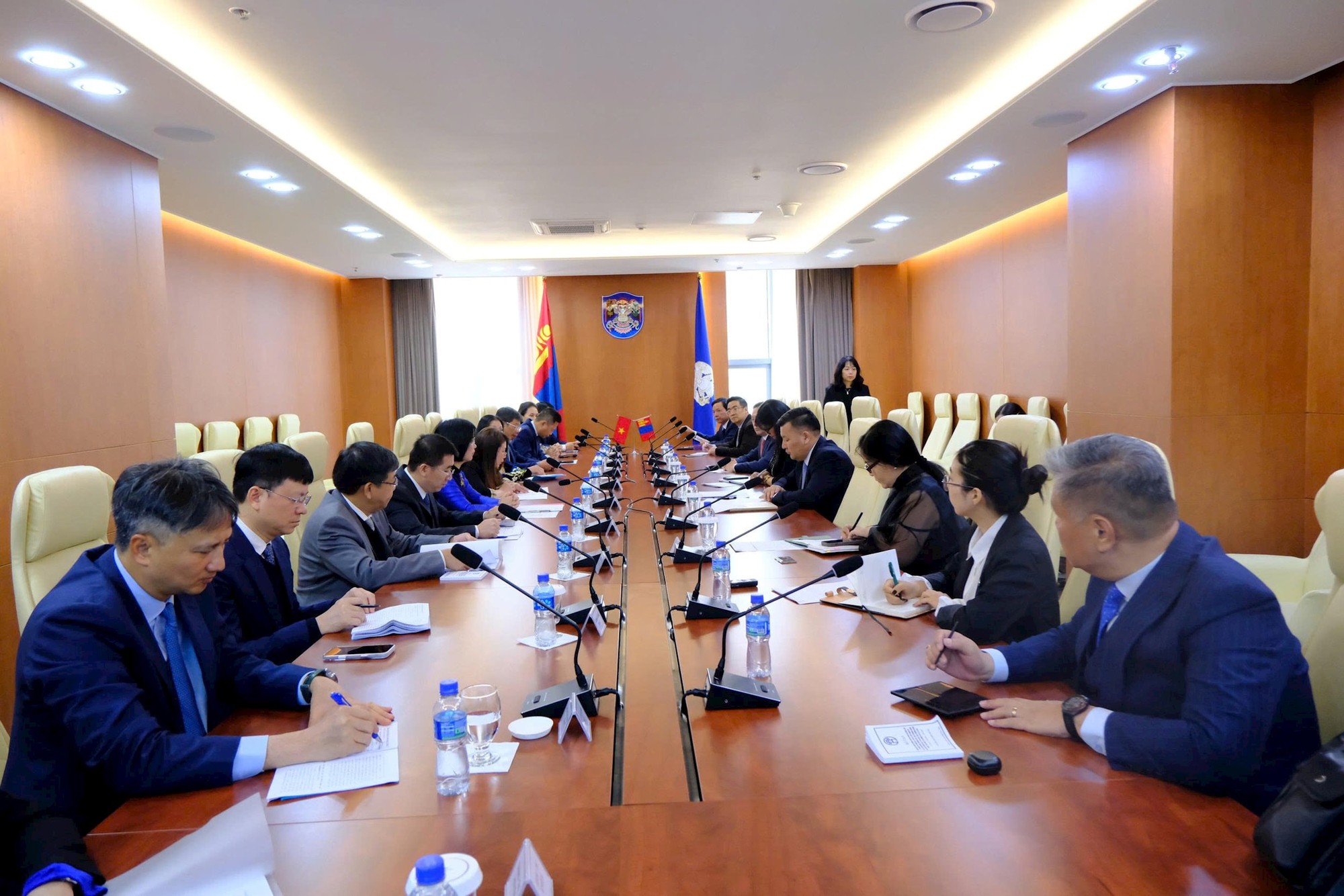 The Hanoi delegation works with Galsangiin Jargalsaikhan, First Deputy Mayor of Ulaanbaatar.
As part of the program, the Hanoi delegation also met and worked with Galsangiin Jargalsaikhan, First Deputy Mayor of Ulaanbaatar.
At the meeting, Ha and Permanent Vice Chairman of the Hanoi People's Committee Duong Duc Tuan held talks with the First Deputy Mayor of Ulaanbaatar on issues of mutual interest, including urban planning, green development, environmental pollution treatment, and social welfare.
Sharing information on Hanoi's socio-economic achievements in 2025 and the first months of 2026, city leaders affirmed that Hanoi has a synchronized and developed infrastructure system, making it a safe investment destination with a stable political environment for foreign investors.
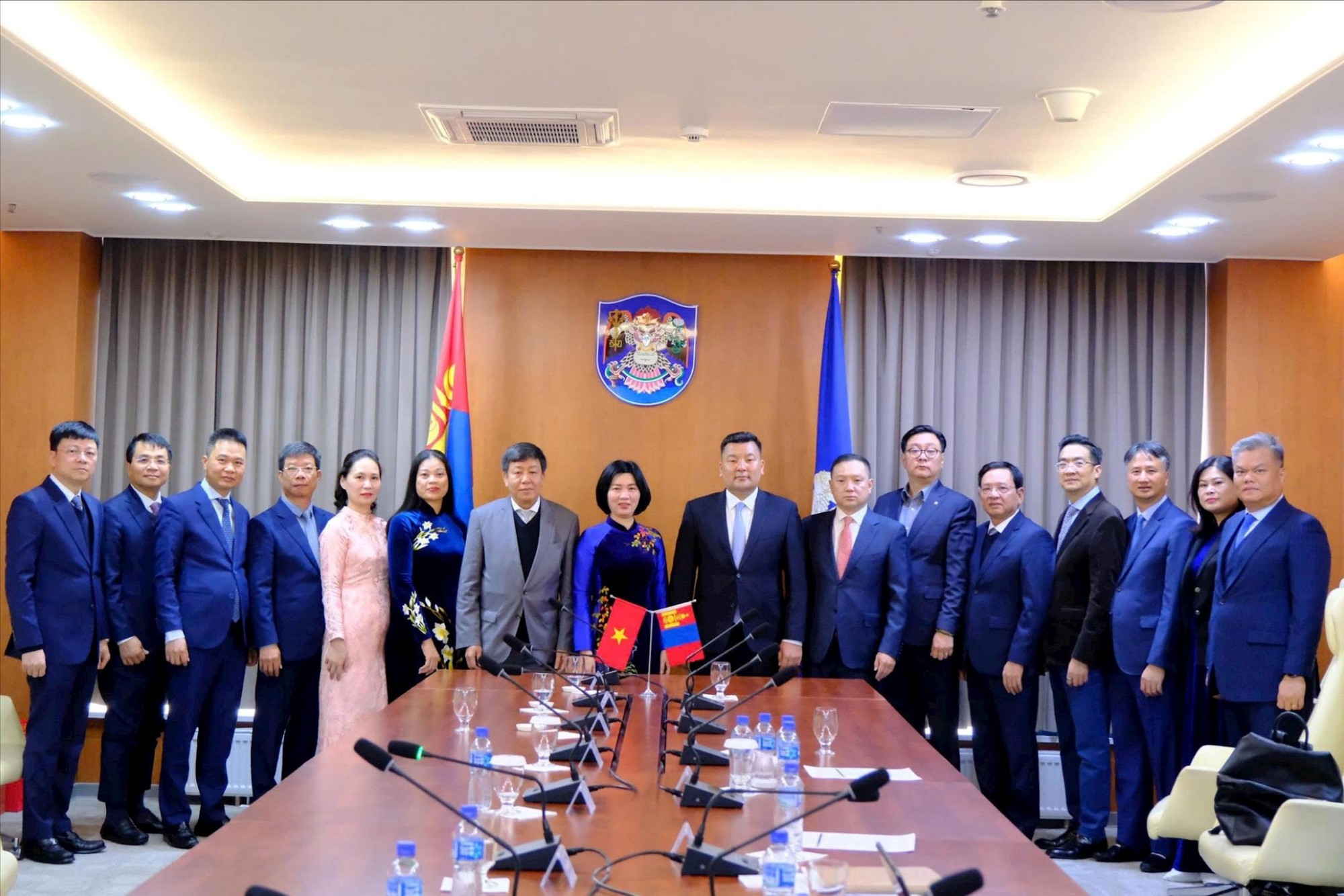 The Hanoi delegation works at the headquarters of the Ulaanbaatar city government.
The two capitals currently share concerns over urbanization-related challenges such as traffic congestion, heritage preservation, environmental pollution, green and sustainable development, public transport-oriented urban growth, and the application of technology in urban management, healthcare, education, and agriculture.
The two cities agreed that urbanization should go hand in hand with urban renewal. They pledged to strengthen exchanges in social development, green growth, and environmental protection; share experience in transit-oriented development, electric vehicle transition roadmaps, and green energy; apply technology to optimize energy use and reduce carbon emissions; and exchange expertise in real-time monitoring technology, waste sorting at source, waste-to-energy technology, and implementation of green growth strategies.
The two cities also agreed to strengthen exchanges of medical experts, share experience in epidemic prevention, and improve social welfare for vulnerable groups during urbanization.
Both sides plan to take advantage of the direct Hanoi-Ulaanbaatar flight route, expected to launch in 2026, to boost tourism and strengthen cultural understanding and social ties between residents of the two capitals.
During the visit, the Hanoi delegation attended a ceremony marking the 136th birthday of President Ho Chi Minh at School No. 14, named after Ho Chi Minh, in Ulaanbaatar.
Ha and the delegation laid flowers at the Ho Chi Minh Monument on the school grounds. Vietnamese Ambassador to Mongolia Nguyen Tuan Thanh also attended.
After the flower-laying ceremony, the delegation visited the Ho Chi Minh traditional room, which displays images of generations of Vietnamese leaders visiting Mongolia.
Chairwoman of the Hanoi People's Council Phung Thi Hong Ha and Vietnamese Ambassador to Mongolia Nguyen Tuan Thanh also laid flowers at the Ho Chi Minh Monument at School No. 14.
Ha wrote in the guestbook, expressing emotion during the visit to the school named after President Ho Chi Minh. Witnessing the school's development and the affection Mongolian students and teachers have for Vietnam and its people, she said the school serves not only as a place nurturing Mongolia's future talents, but also as a special bridge of friendship helping strengthen the traditional ties between the two nations.
Speaking at the ceremony commemorating the 136th birthday of President Ho Chi Minh at School No. 14, Ha expressed appreciation for the affection generations of teachers and students have shown toward President Ho Chi Minh and the Vietnamese people.
On behalf of Hanoi's leadership and residents, she thanked the school's board and teachers for preserving and promoting these valuable traditions.
During the visit, the delegation also attended an award ceremony for students from Bayanzurkh District who won prizes in the "Paintings About Vietnam" competition.
Continuing the program, the delegation visited and worked with the Vietnamese Embassy and met with the Vietnamese community in Mongolia.
At the meeting, Ha shared updates on Hanoi's socio-economic development, especially the breakthrough provisions in the 2026 Capital Law designed to create special mechanisms for sustainable development.
She expressed hope that the embassy would continue serving as an important bridge to promote Hanoi's image and potential to Mongolian partners and support the city in expanding cooperation opportunities in agriculture, culture, education and training, and tourism.
Emphasizing the role of overseas Vietnamese in preserving cultural identity and promoting Vietnam's image abroad, Hanoi's leaders highlighted incentive policies in the 2026 Capital Law aimed at attracting intellectual resources from overseas Vietnamese communities.
City leaders affirmed that Hanoi is always ready to listen and create favorable conditions for overseas Vietnamese in Mongolia to contribute to the sustainable development of the capital in the new period and further strengthen the traditional friendship between the two peoples.