The event recreated traditional Tet rituals of the ancient Thang Long royal court, including the Royal Calendar Presentation Ceremony, the Carp Releasing Ritual, the Neu Pole Erection Ceremony, and the Guard Changing Ceremony.
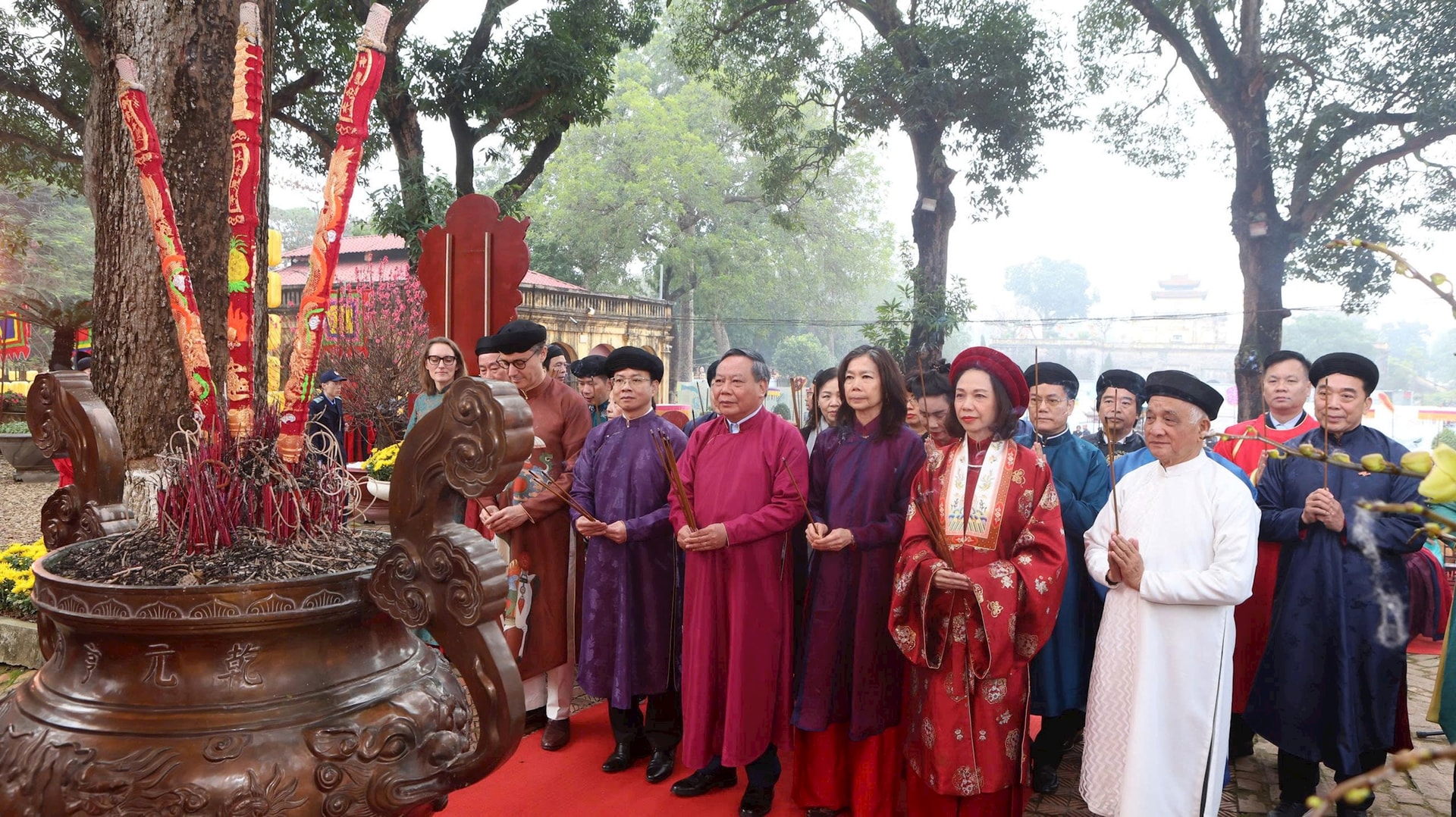
Overview of the event.
Attending the event were Nguyen Van Phong, Permanent Deputy Secretary of the Hanoi Party Committee; Ngo Le Van, Deputy Minister of Foreign Affairs and Chairman of the Vietnam National Commission for UNESCO; Hoang Dao Cuong, Deputy Minister of Culture, Sports and Tourism; Vu Thu Ha, Vice Chairwoman of the Hanoi People's Committee; Jonathan Wallace Baker, UNESCO Representative to Vietnam; and representatives from central and city agencies.
Preserving and promoting the legacy of the ancient capital
Speaking at the event, Vice Chairwoman Vu Thu Ha emphasized that the Thang Long Imperial Citadel, a UNESCO World Cultural Heritage Site, is not only a place preserving the glorious imprints of history but also the spiritual heart of the thousand-year-old Capital. The organization of traditional court rituals demonstrates Hanoi's determination to preserve and promote national cultural values while promoting the image of a "Civilized – Distinctive – Creative" Capital.
She highlighted that the achievements in preserving and promoting heritage values have been made possible thanks to the close and effective cooperation of the Ministry of Foreign Affairs, the Vietnam National Commission for UNESCO, scientific advisors, and the support of international partners. This strategic collaboration has helped the cultural values of Thang Long–Hanoi shine more brightly and serve as a bridge of friendship between Vietnam and the international community.
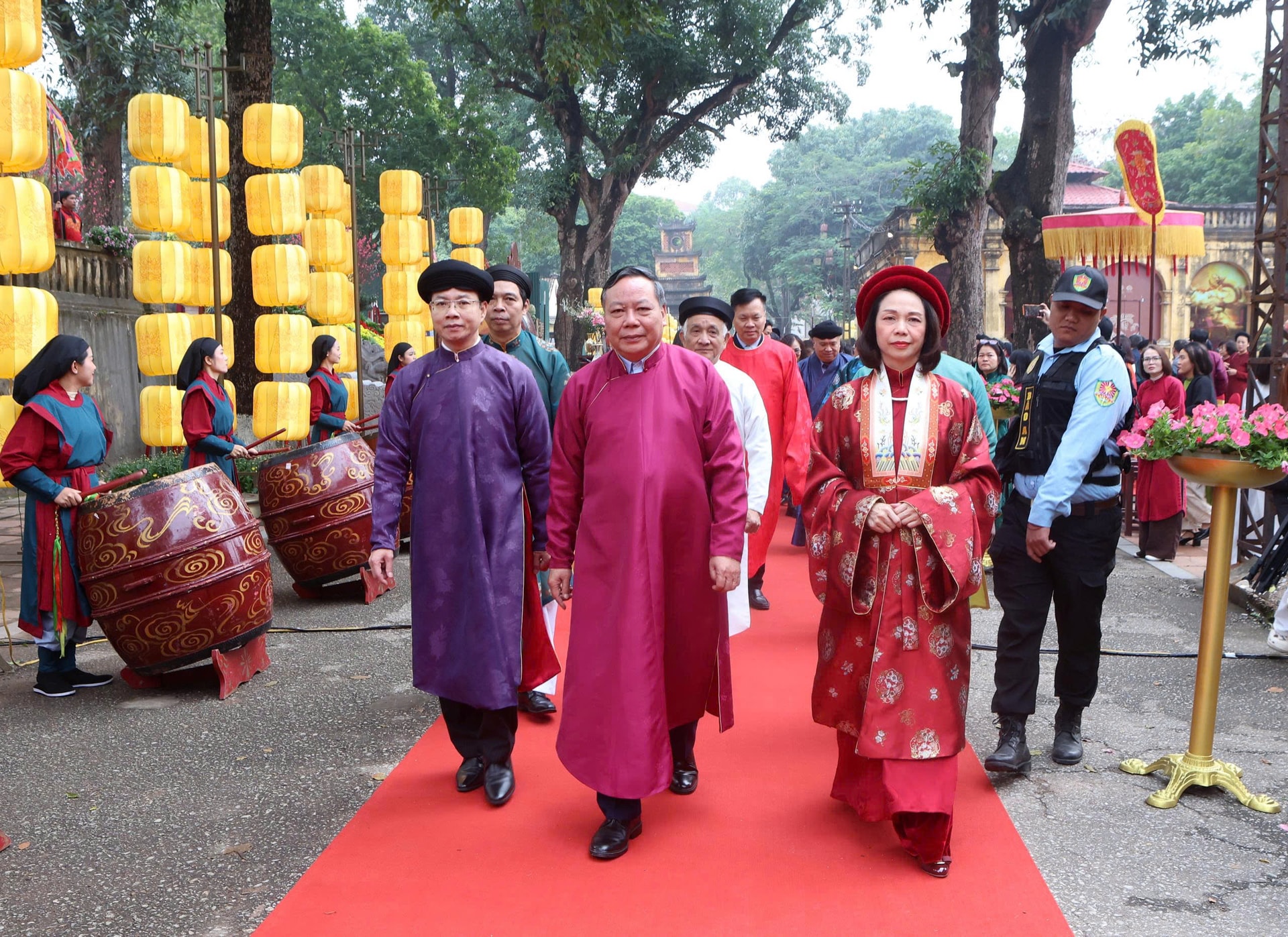
Overview of the event.
"We are proud to share with you the beauty of traditional Vietnamese Tet in this heritage space. The presence of distinguished delegates, international guests, scholars, residents and visitors not only demonstrates the vitality of Vietnamese culture but also affirms our shared commitment to safeguarding and promoting heritage values — invaluable assets of humanity," Ha said.
Head of the UNESCO Representative Office in Vietnam Jonathan Wallace Baker praised the event as a meaningful and harmonious combination of traditional royal rituals and contemporary cultural experiences.
Through the Kitchen Gods' farewell ritual — a spiritual practice deeply rooted in Vietnamese life — the event honored intangible cultural values passed down through generations. He noted that such rituals reflect the close bond between people, their families, ancestors and nature, while expressing hopes for a fresh and auspicious beginning in the new year.
UNESCO, he added, highly values initiatives that preserve and promote cultural heritage in a vibrant, accessible and community-centered manner. The integration of traditional rituals, heritage space and active public participation in the program clearly demonstrates that intangible cultural heritage is not only safeguarded but continues to evolve and adapt within modern urban life. UNESCO remains committed to accompanying Vietnam in preserving and promoting its rich cultural heritage for present and future generations.
New highlights in the "Tong cuu nghinh tan" ritual
This year's ceremony featured several new elements. The Imperial Citadel was adorned with a vibrant flower road stretching from Doan Mon Gate to Kinh Thien Palace, creating an attractive check-in destination for residents and visitors.
The 2026 Tet Flower Road was implemented through cooperation between the Thang Long–Hanoi Heritage Conservation Center, SOVICO Group and Phu Long Real Estate Joint Stock Company. This marked the first time a Tet flower road was organized within the Imperial Citadel, requiring careful planning to harmonize the spring landscape with heritage conservation, ensuring full respect for the site's historical, architectural and spatial values.
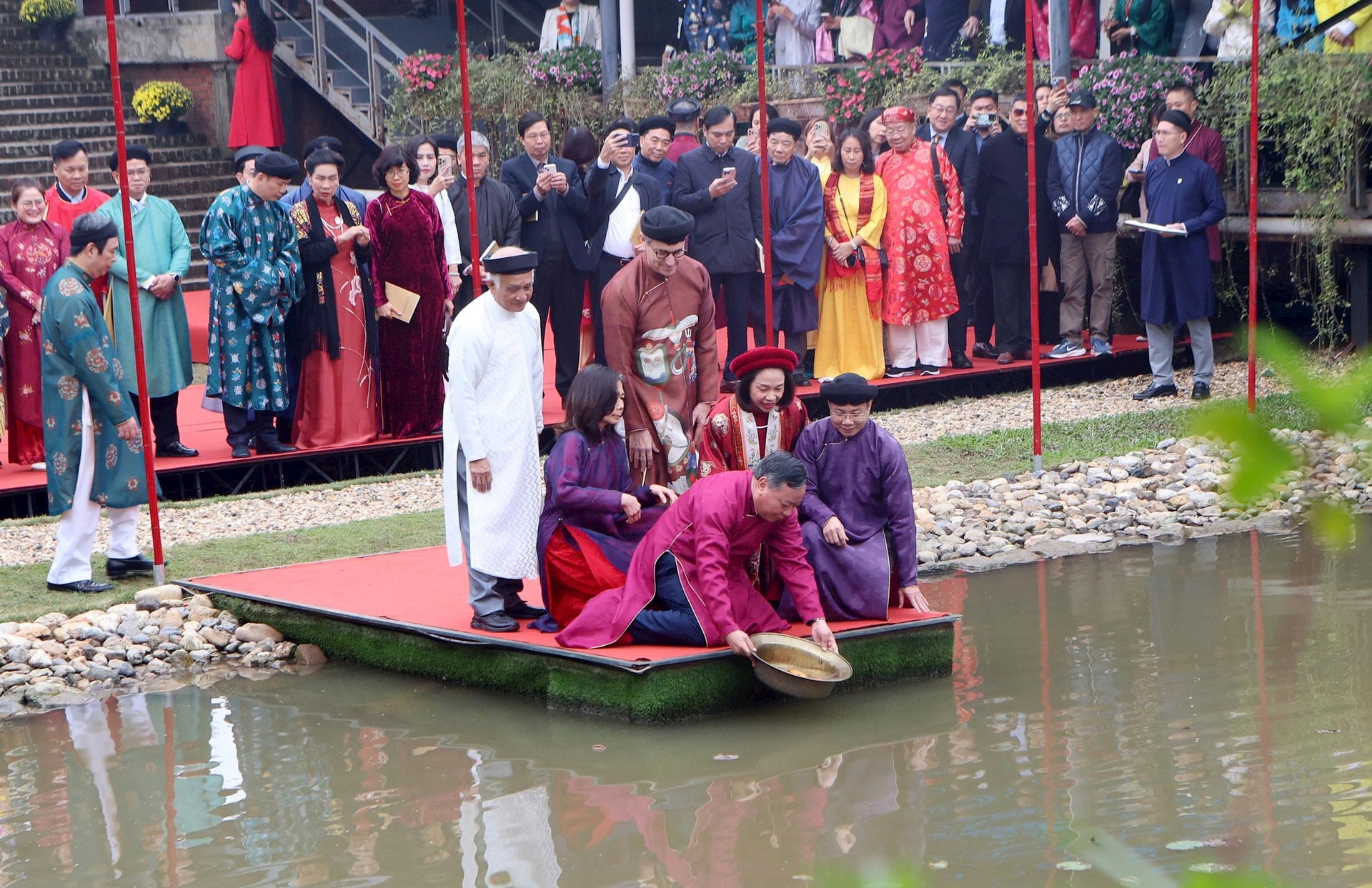
Overview of the event.
Under the theme "Dawn of Aspiration," the flower road symbolized the transition between the thousand-year-old capital's legacy and Hanoi's aspirations for development in a new era. The experiential space was structured into four thematic chapters — Capital, Grandeur, Aspiration and Festivity — guiding visitors through layers of heritage memory, historical depth and a forward-looking spirit.
According to traditional beliefs, the Lunar New Year begins on the 23rd day of the twelfth lunar month and concludes on the seventh day of the first lunar month. During this period, numerous rituals are solemnly conducted both in the royal court and among the people. In the thousand-year-old imperial land of Thang Long — present-day Hanoi — Tet culture is particularly rich and distinctive, reflecting a harmonious blend of royal and folk traditions. Court rituals not only carried spiritual significance but also symbolized royal authority and the social order of the feudal era.
During the Later Le Dynasty, the Tet court ritual system was meticulously organized, running from late December of the old year to the seventh day of the new year. Key ceremonies included the Kitchen Gods' ritual, Royal Calendar Presentation, Spring Buffalo Procession, Seal Cleansing and Sealing Ceremony, Ancestor Invitation Ceremony, Neu Pole Erection, New Year's Eve Ritual, Ancestral Worship, Lunar New Year Audience, Longevity Wishes to the King, Heaven Worship Ceremony, Neu Pole Lowering Ceremony, and Seal Opening Ceremony.
Among them, the Royal Calendar Presentation, Spring Buffalo Procession, Neu Pole Erection, and Lunar New Year Audience were considered the four most important Tet rituals of the royal court.
At the "Tong cuu nghinh tan" program, delegates and visitors experienced these rituals through staged performances and interactive activities. After observing the Royal Calendar Presentation Ceremony, participants took part in the carp-releasing ritual and the erection of the neu pole in front of Doan Mon Gate, symbolizing prayers for peace, favorable weather and abundant harvests in the new year, followed by the guard-changing ceremony and an artistic performance.
Today, through research, restoration and public presentation at the Thang Long Imperial Citadel, ancient royal Tet rituals are gradually being revived. These efforts help the public gain deeper insight into the distinctive cultural and historical values of Thang Long–Hanoi while contributing to the preservation and promotion of Vietnam's traditional cultural heritage.