The two‑tier local government model is being rolled out nationwide, including in Hanoi. How would you assess its advantages compared to the three-tier system?

Hanoi from above.
First, we must acknowledge that the three-tier system—commune, district, province—has served our nation throughout our long history of liberation and nation-building. It played a vital role in local development, security, and national defense. However, as Vietnam enters a new phase of growth, our administrative apparatus must evolve to be leaner, more modern, and more effective. It's time to transition from the historical three-tier model to a two-tier system to meet contemporary demands and achieve closer service to citizens.
When evaluating the change, it's not just about which model is better—it's about aligning with present needs. Every system has its role in its time. With the two-tier model, we preserve the legacy of the previous structure while making meaningful advancements.
The new model offers several improvements. It enables stronger decentralization, allowing local authorities greater decision-making power according to the principle: "What the local level can decide, let them decide and take responsibility." This fosters a more responsive government.
It also removes the distinction between commune and provincial civil servants, unifying the civil service into one integrated, efficient system under the amended Civil Servants Law.
In the age of Industry 4.0, this structure encourages digital governance, e‑services, and artificial intelligence to improve public service delivery, accelerate administrative reform, increase transparency, and reduce operational costs for both government and citizens.
A leaner structure also demands higher competence and responsibility from every civil servant, prompting ongoing professional development and better performance.
Finally, the model abandons the outdated notion that local government must mirror central structures. It empowers local authorities to design their own organizational framework based on actual needs—demonstrating flexibility, autonomy, and accountability in local governance.
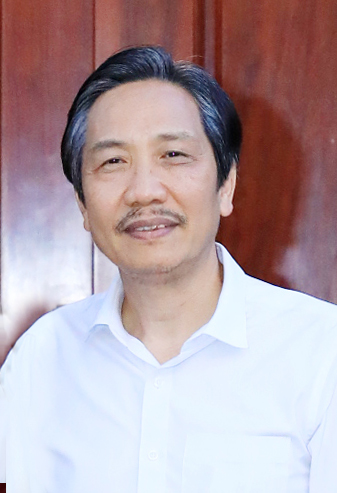
Dr. Tran Anh Tuan, Chairman of the Vietnam Administrative Science Association and former Deputy Minister of Home Affairs
Some worry that the lighter structure might overload grassroots officials, who may end up responsible for four or five domains. What's your view?
That concern is understandable. But the two-tier reform embodies the vision of a lean, powerful, and efficient government. Yes, initial challenges, including resistance to change, will arise. But the key is transforming mindsets. If civil servants embrace innovation and digital tools, concerns of overload can be overcome.
In recent years, the quality of our civil servants has steadily improved. Many are already working beyond office hours to meet public needs. Once we adopt new operating mechanisms and digital solutions, workloads can be better distributed and managed efficiently, significantly easing the burden on individuals.
Digital administration—allowing citizens to submit requests, track progress, and receive results remotely—will reduce in-person demands and boost productivity. Initial hurdles are natural, but with flexibility, adaptation, and technology, the system can work better, not harder.
Hanoi expects around 11,000 surplus staff after administrative restructuring. The city plans vocational training for this group. How should this policy be implemented to achieve real impact?
I commend Hanoi's proactive plan from the Department of Home Affairs. It demonstrates responsibility and concern for civil servants who remain of working age after leaving the public sector.
To be effective, the training should be based on thorough labor market analysis. Identify industries with high demand in the private and non-state sectors and tailor training accordingly to ensure participants can find suitable jobs quickly and sustainably.
Given national priorities on science, technology, innovation, and digital transformation, training should include these areas. There is demand for skilled labor in technology and digital fields. Including updated and tech-relevant content will make the program more feasible and effective.
Such training strengthens high-quality human resources in Hanoi and supports the nation's broader industrialization and modernization efforts.
Thank you very much for your insights!