The event marks an important milestone, signaling the creation of a new development space for the capital where science, technology, and innovation are placed at the center. It is envisioned as a hub bringing together intellectual resources, advanced technology, high-quality human capital, and modern development models.
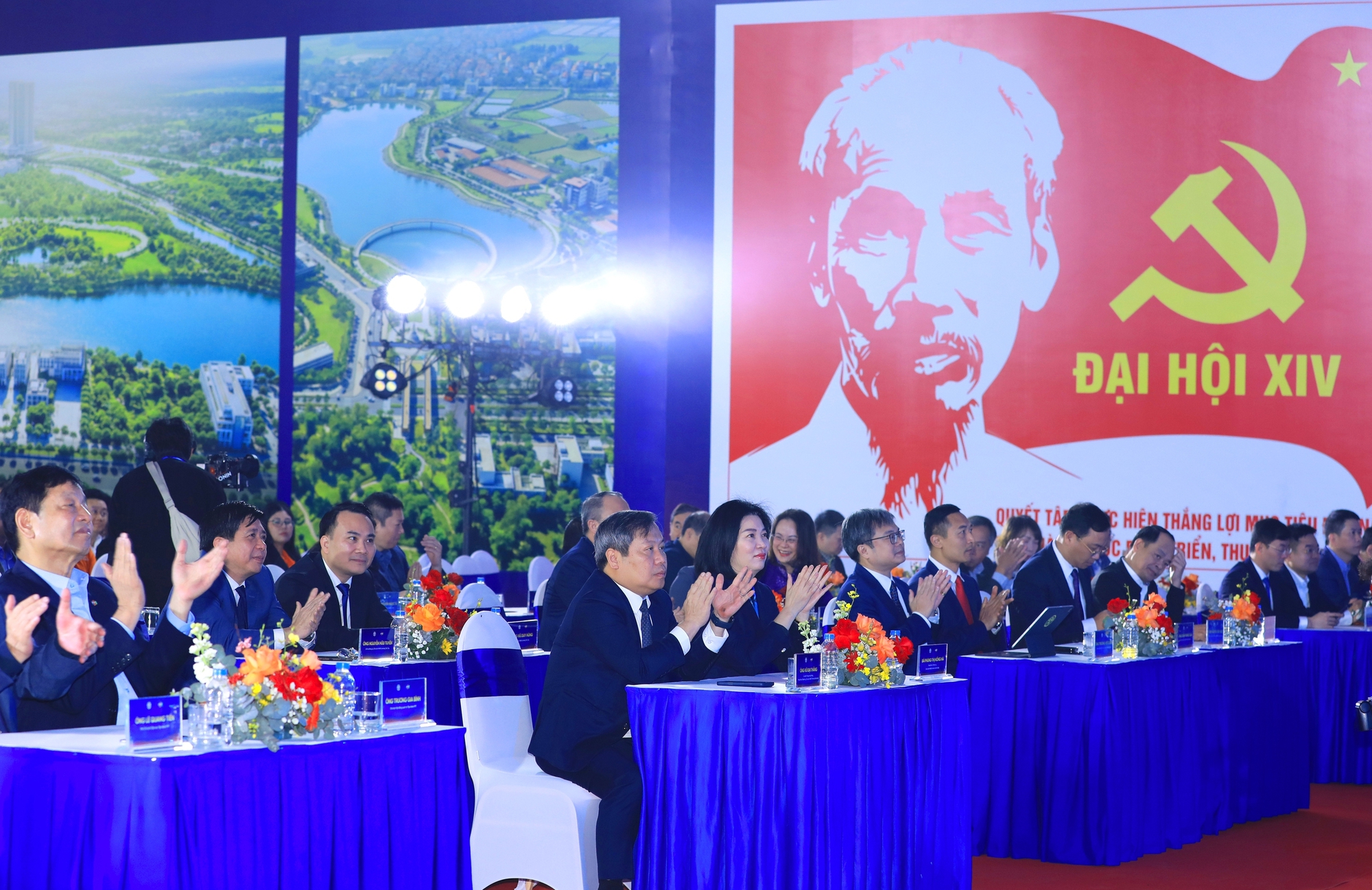
Delegates at the meeting.
Attending the ceremony were Vu Dai Thang, member of the Party Central Committee, Deputy Secretary of the Hanoi Party Committee, and Chairman of the Hanoi People's Committee; Phung Thi Hong Ha, Deputy Secretary of the Hanoi Party Committee and Chairwoman of the Hanoi People's Council; Truong Viet Dung, Vice Chairman of the Hanoi People's Committee; and Truong Gia Binh, Chairman of the Board of Directors of FPT Corporation, along with other leaders.
Speaking at the ceremony, Vice Chairman Truong Viet Dung said that at a working session with the Standing Committee of the Hanoi Party Committee on January 10, 2026, the General Secretary clearly emphasized that Hanoi must take the lead in forming new development models with new thinking.
The capital is required to pursue development based on knowledge, science and technology, innovation, digital transformation, and high-quality human resources, and to become a driving force and growth pole for the Capital Region and the entire country. Hanoi will also be provided with maximum conditions, including legal space, tools, and authority, to fully perform this role.
Closely following this direction, the Hanoi Party Committee Executive Committee meeting on the morning of January 14, 2026, reached a strong consensus on immediately implementing the project and applying special mechanisms and policies in accordance with National Assembly Resolution No. 258 dated December 11, 2025.
Vice Chairman Dung recalled that exactly three months earlier, on October 16, 2025, at the 18th Hanoi Party Congress, city leaders had committed before the Party, the State, and the Government to start construction of the project before January 19, 2026, in celebration of the 14th National Party Congress.
Today, that political commitment has been fully realized through concrete action. Hanoi has spoken and delivered, acting swiftly, correctly, effectively, and decisively, affirming the city's political determination and responsibility in bringing major Party guidelines into practice.
The Digital Technology Park is oriented to become a key nucleus in Hanoi's innovation ecosystem, aligned with the goal of building the capital into a major national center for science, technology, and the digital economy. With a land area of nearly 200 hectares and total investment exceeding $2 billion, the project is expected to accommodate around 60,000 digital technology experts, engineers, innovation professionals, and supporting workers once operational.
More importantly, the project represents a new implementation model with the potential to create a strong leading impact and provide momentum for Hanoi to improve workforce quality and form a sufficiently large innovation community with citywide spillover effects.
It is envisioned as a space for "real work and real value creation" within the digital technology ecosystem, covering research, testing, and development of strategic technologies such as artificial intelligence, big data, the Internet of Things, and blockchain, as well as key digital products and services, including software, digital services, digital data, and digital platforms.
This approach aims to strengthen linkages between research, training, production, and services, contributing to the formation of new value chains for the capital's digital economy.
Dung highly appreciated the proactive approach, strong sense of responsibility, and serious cooperation shown by FPT Corporation and the Tay Tuu Ward authorities throughout the research, proposal, and project preparation process.
He stressed that a domestic technology enterprise making bold, long-term investments and aligning its development strategy with the national goal of mastering core technologies reflects a far-sighted vision and deep responsibility toward both the capital and the country.
The city expects the investor to continue leveraging its capacity, experience, and reputation to implement the project in line with approved orientations, ensuring quality, efficiency, and full legal compliance.
The project is expected to make meaningful contributions to Hanoi's sustainable development goals and align with the vision set out in the Capital Master Plan with a 100-year outlook. Its success will serve as a vivid example of the "three-party" cooperation model between the State, enterprises, and scientists, in which the State plays a facilitating and guiding role, enterprises organize implementation, and experts and scientists provide core intellectual resources.
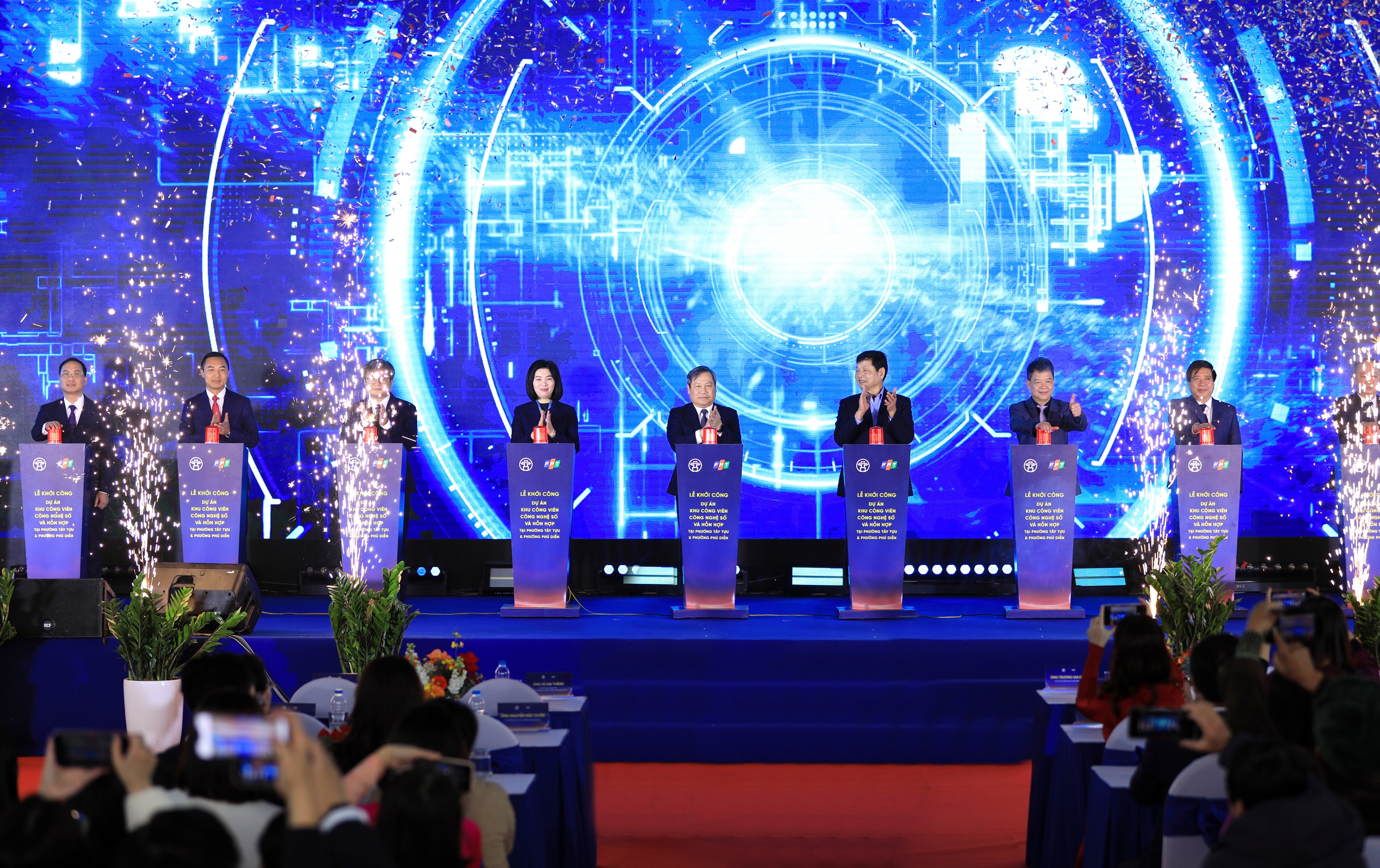
Overview of the event.
Hanoi is committed to continuing close coordination and creating favorable conditions in accordance with regulations to ensure the project is implemented smoothly and effectively.
The city also expressed hope that the project will soon generate substantive value, spread the spirit of innovation, and contribute to improving growth quality and people's living standards.
Vice Chairman Truong Viet Dung voiced confidence that the Digital Technology and Mixed-Use Park Project will be successfully implemented, opening a new phase of dynamic and sustainable development for Hanoi, where technology ignites creativity, knowledge drives progress, and people remain at the center of development.
From the investor's perspective, FPT Chairman Truong Gia Binh expressed deep gratitude to Hanoi's leaders and residents and committed that the technology park would become a center helping affirm Hanoi's position as the nation's science and technology hub.
Looking further ahead, he said the project would gradually realize Vietnam's aspiration for a "Silicon Valley." He emphasized that for people to research, develop, and master technology, the most important condition is a worthy space and a genuine environment for work, learning, and creativity, precisely what this project aims to provide.
According to FPT Corporation, the project contributes to implementing Politburo Resolution No. 15-NQ/TW on building Hanoi into a major center for economics, culture, education, training, science, technology, and international integration, ensuring rapid and sustainable development with regional and national spillover effects.
It also concretizes Politburo Resolution No. 57-NQ/TW, which identifies science, technology, innovation, and national digital transformation as decisive factors for building a prosperous and powerful country in the new era.
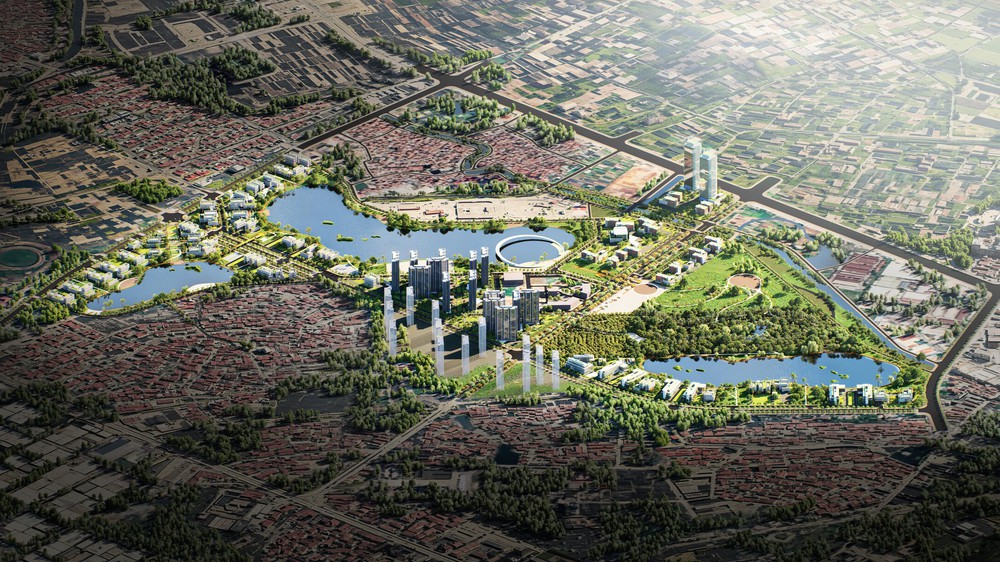
Design of the project.
The project has a total scale of 196.8 hectares and is designed, built, and operated in line with green building standards and sustainable development goals. It aims to establish an integrated work-live-innovate environment.
The core component is a concentrated digital technology, innovation, and digital transformation park covering about 168.9 hectares. The remaining area will be developed as an open park with internal transport infrastructure, green spaces, and water features, creating a high-quality environment for work, research, and living.
Project implementation is scheduled from 2026 to 2031, with the first components targeted for completion and operation in 2027.
The announcement of the project's groundbreaking by the Hanoi People's Committee and FPT Corporation in Tay Tuu and Phu Dien marks an important milestone in the development of the capital's digital technology infrastructure.
Over the long term, the project is expected to further strengthen Hanoi's role as the nation's political and administrative center while leading the country in science, technology, and innovation. It is envisioned as a place for policy innovation, technology testing, talent development, and the birth of ideas that drive national development.