Current Situation in Da Phuc Commune
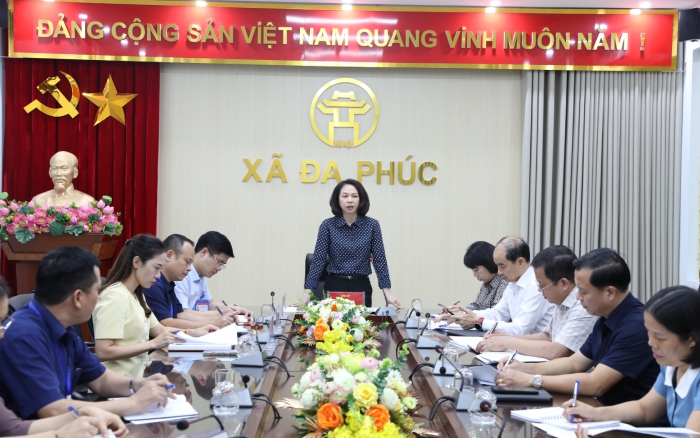
Overview of the meeting.
According to the Hanoi Department of Health, Da Phuc Commune comprises 12 hamlets, with 588 households and 2,439 residents affected by flooding. The Tan Hung Commune Health Station was submerged. Fortunately, no fatalities or injuries were reported.
Two hamlets — Ngo Dao and Dao Thuong — remain isolated. Local authorities have relocated residents to village cultural houses, primary schools, and the former commune People's Committee headquarters. The Tan Hung Health Station has been temporarily moved to the former Tan Hung Commune Police Office within Da Phuc's jurisdiction.
Environmental Sanitation and Epidemic Prevention
The Department of Health assigned the Hanoi Center for Disease Control (CDC) to lead the response, providing technical guidance and direct support to the Da Phuc Commune Health Station in sanitation, epidemic prevention, clean water management, and medical waste treatment during and after the floods.
CDC teams have carried out three rounds of field inspections and training for medical staff in Da Phuc and Trung Gia communes, distributed 50 kilograms of Chloramine B, and will supply more disinfectant as needed.
The Hanoi Food Safety and Hygiene Sub-Department is also tasked with monitoring food quality, ensuring that spoiled, expired, or contaminated food does not reach affected residents.
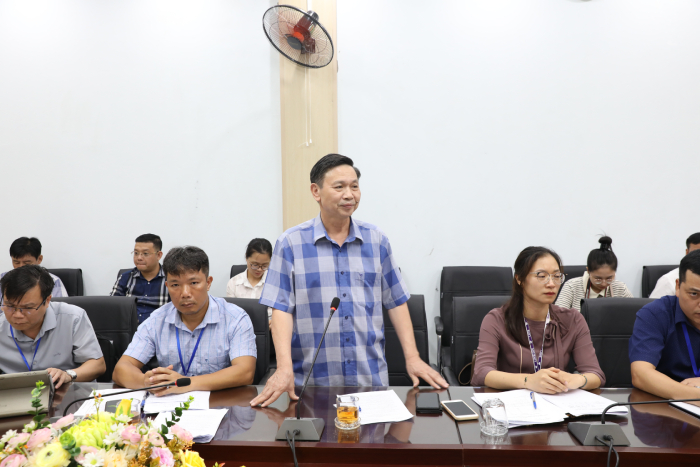
Delegates at the meeting.
Healthcare Services and Emergency Response
The Department of Health directed all local health facilities to ensure 24/7 emergency readiness, maintain medical outreach, and prioritize vulnerable groups — the elderly, children, people with chronic diseases, pregnant women, and persons with disabilities. Hospitals were instructed to stock essential medicines for chronic and flood-related illnesses and to prepare mobile medical teams for isolated areas.
Soc Son General Hospital was assigned to coordinate with the Da Phuc Commune Health Station to provide medical support during and after the floods, maintaining mobile emergency and surgical response teams on standby.
Vice Chairwoman's Directives
Vice Chairwoman Vu Thu Ha emphasized that Da Phuc is a low-lying area where floodwaters recede slowly, requiring a comprehensive sanitation plan immediately after the water subsides. She instructed agencies to organize large-scale clean-up, disinfection, and vector control operations to prevent disease outbreaks and restore normal life.
She requested that the Hanoi CDC maintain a 24-hour presence in Da Phuc Commune to monitor water quality, guide residents in disinfection and hygiene practices, and oversee medicine distribution. Residents should also be trained to use disinfectant chemicals safely and effectively.
The Da Phuc Commune Health Station was tasked with maintaining detailed health records for residents in flooded areas, ensuring the timely distribution of medicines to patients with chronic conditions, and organizing emergency care when necessary.
The Food Safety Sub-Department was instructed to strictly monitor all food donations, especially those from charitable organizations, to prevent the distribution of expired or spoiled goods. Ha also urged close supervision of communal kitchens in isolated areas to guarantee food safety and hygiene, reminding residents to "eat cooked food, drink boiled water, and avoid consuming dead livestock or poultry."
Ensuring Health and Safety for Residents
Finally, Ha directed the Soc Son General Hospital and Da Phuc Commune Health Station to promptly treat residents suffering from flood-related health issues such as eye and skin infections, while ensuring that regular medical services continue uninterrupted.
Medical staff were advised to clearly instruct residents on proper medication use and maintain ongoing health monitoring to prevent public dissatisfaction or health risks in the post-flood recovery period.