Attending the meeting on the Hanoi side were Standing Committee member of the Hanoi Party Committee and Vice Chairman of the Hanoi People's Committee Duong Duc Tuan, along with representatives of city departments and agencies.
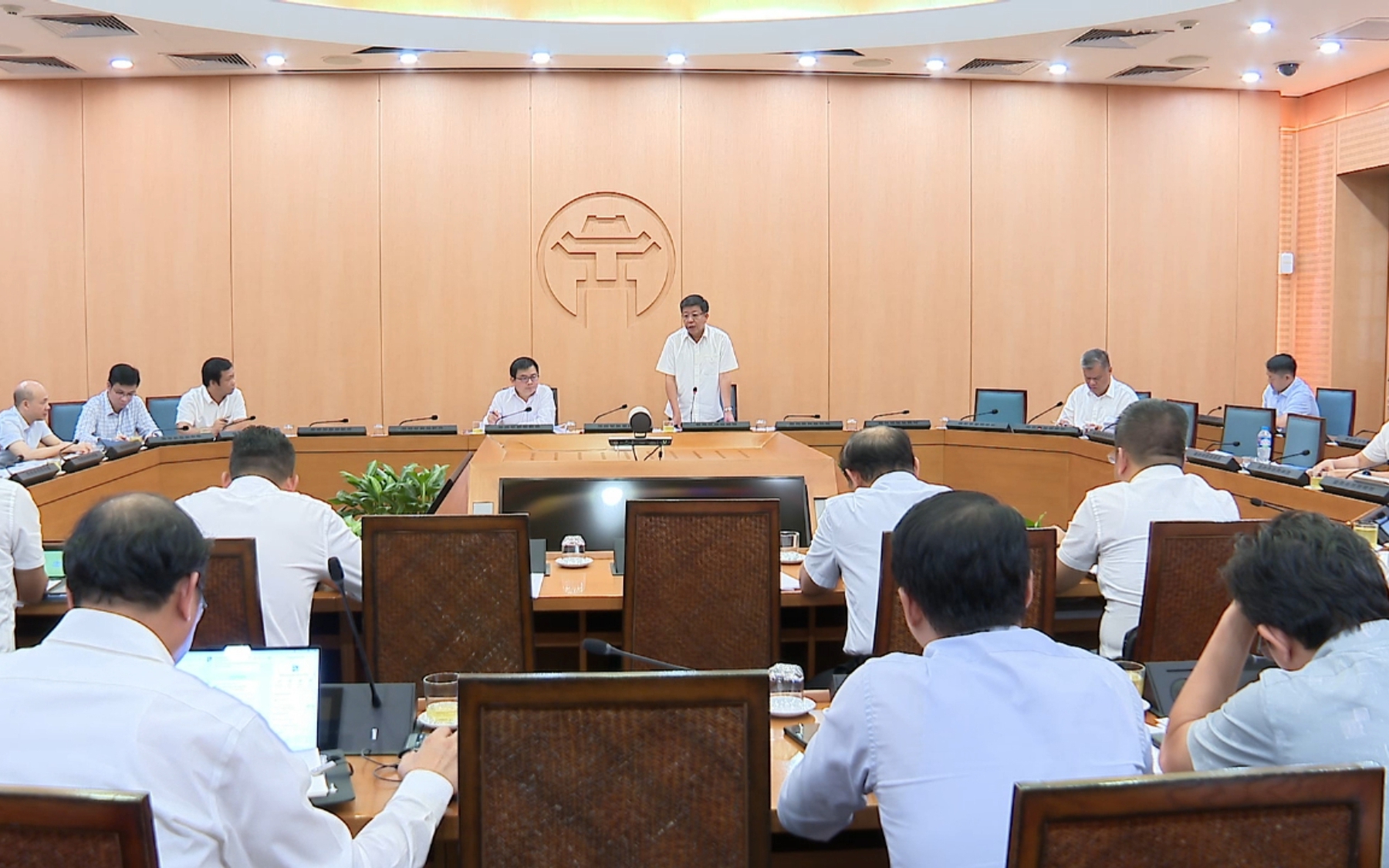
Overview of the meeting.
According to the draft scheme, Vietnam aims to develop a modern and comprehensive railway industry capable of independently designing, manufacturing, and maintaining urban railways and interregional railways of speeds under 200 kilometers per hour, moving toward mastering high-speed railway technology.
By 2035, the goal is to establish a domestic industry that covers consulting, design, and project management; locomotives and carriages; traction power supply systems; rails, switches, and materials; information, signaling, and control systems; and railway system maintenance. Domestic design and production will provide equipment for six urban railway projects and two interregional railway projects.
Localization targets include 70 percent for consulting, design, project management, and technical services; 50 percent for locomotives, carriages, materials, and equipment; 50 percent for traction power systems; 50 percent for information and control systems; and 100 percent for rails and switches for railways up to 200 kilometers per hour.
By 2050, for railways up to 200 kilometers per hour, Vietnamese organizations and enterprises are expected to achieve full independence in consulting, design, project management, and technical services, as well as in producing carriages, materials, equipment, and power systems.
They will reach 90 percent self-sufficiency in information and control systems, and 70 percent in locomotives. For high-speed railways, the targets include 70 percent independence in consulting, design, project management, and technical services; 90 percent in trains, materials, equipment, and power systems; 70 percent in information and control systems; and 100 percent in maintenance and repair of railway vehicles and infrastructure.
At the meeting, Hanoi departments, agencies, and businesses, along with representatives from the Vietnam Railway Authority, contributed ideas and proposed solutions for the development scheme.
Vice Chairman of the Hanoi People's Committee Duong Duc Tuan stated that under the Capital Master Plan and the revised General Planning of the Capital, approved by the Prime Minister, Hanoi's urban railway network will consist of 14 lines with a total length of about 619 kilometers.
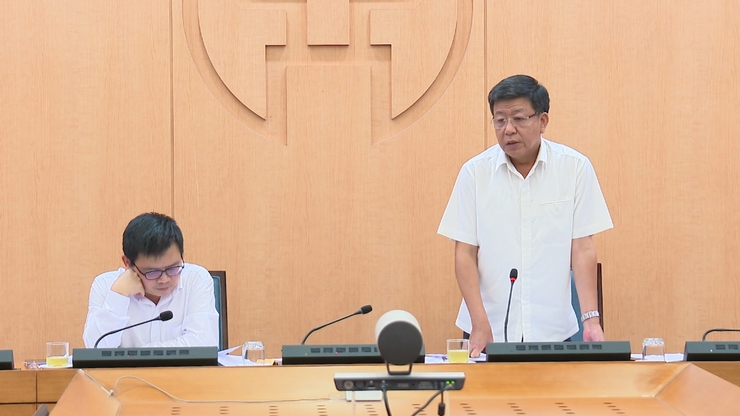
Vice Chairman of the Hanoi People's Committee Duong Duc Tuan at the meeting.
By 2030, approximately 96.8 kilometers are expected to be in operation, with 301 kilometers by 2035, and the full network completed by 2045. The total estimated investment is about US$55.4 billion, with operating costs of US$6.82 billion for all 14 lines by 2045. For rolling stock alone, the city will need about 4,292 carriages, valued at between US$8 and US$10 billion. Currently, most machinery and equipment for urban rail projects are imported at high cost.
In addition, several national railway projects, with a combined length of about 200 kilometers, will pass through Hanoi, including the Lao Cai–Hanoi–Hai Phong line, the North–South high-speed railway, the Eastern ring railway, the upgraded North–South railway, and the Western ring railway.
These will be supported by large facilities such as the 250-hectare Ngoc Hoi station complex and a 250-hectare railway industrial park. Hanoi views its dependence on foreign technology as a major bottleneck for urban rail projects.
Vice Chairman Tuan affirmed that the city supports the need to build a scheme for developing the railway industry to gradually master technology, create a domestic market, and form an ecosystem of Vietnamese enterprises involved in railway and urban railway development.
Based on discussions at the meeting, he assigned the Department of Construction to take the lead, in coordination with the Departments of Industry and Trade, Finance, and Planning and Architecture, as well as the Hanoi Urban Railway Management Board and other agencies, to provide direct input into the scheme.
After the Ministry of Industry and Trade submits the draft to the Government, the Department of Construction will continue to lead, working as a task force in coordination with the Ministry's task force to finalize the scheme.
Concluding the meeting, Deputy Minister Truong Thanh Hoai stated that the Ministry would incorporate Hanoi's input into the scheme. He emphasized that once approved, the scheme would provide a highly feasible framework for provinces and cities to implement effectively.