The conference was attended by Nguyen Trong Khoa, Deputy Director of the Medical Services Administration under the Ministry of Health, leaders of the Hanoi Department of Health, public and private hospitals and hospitals under central ministries and agencies located in Hanoi.
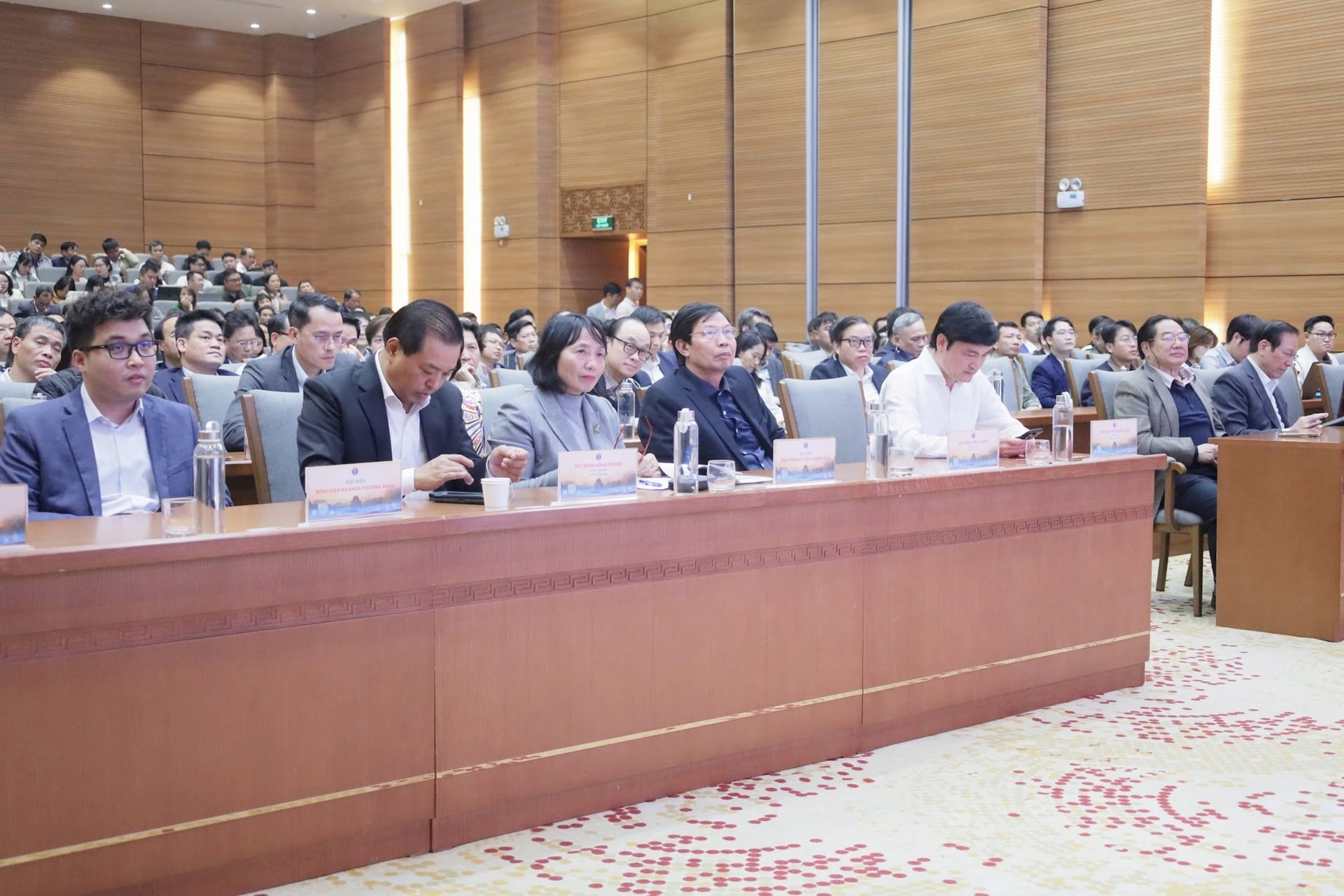
Overview of the event.
At present, the city-managed public healthcare system includes 42 hospitals, 11 social assistance facilities and 126 commune-level health stations.
Hanoi has three specialized hospitals, Hanoi Heart Hospital, Hanoi Oncology Hospital and Hanoi Obstetrics and Gynecology Hospital, all of which have deployed many advanced techniques on par with regional and international standards. Digital health transformation has delivered important results, with 100% of public hospitals implementing electronic medical records and more than 8.4 million electronic health records created, gradually forming a smart hospital model.
Total human resources across public service units under the Hanoi health sector now exceed 28,100 people, including more than 5,400 doctors. At the same time, the capital's health sector has strengthened international cooperation with countries that have advanced medical systems such as France, Germany, the United States, Australia, Japan, South Korea and Singapore, contributing to improved quality of medical examination and treatment.
Hanoi is also home to 35 hospitals under the central ministries and agencies. These hospitals have actively supported the city through training, transfer of advanced techniques and medical services for residents.
Many cutting-edge techniques have been implemented at regional and international levels at major hospitals such as 108 Military Central Hospital, Hospital 103, Bach Mai Hospital and Viet Duc Hospital.
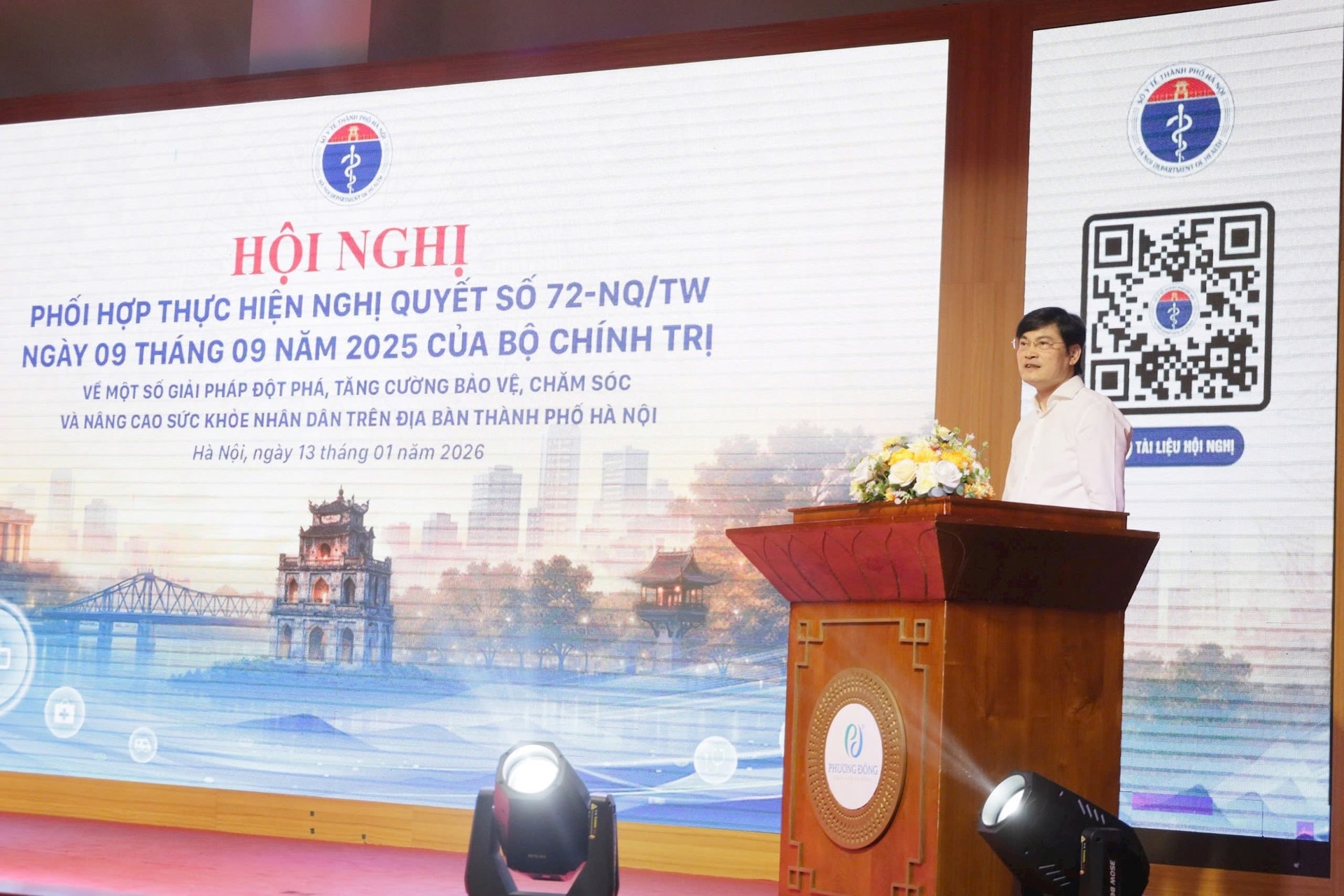
Director of the Hanoi Department of Health Nguyen Trong Dien at the event.
The private healthcare system continues to grow strongly, with two hospitals meeting international standards and many others on track to achieve accreditation. About 5,000 private medical examination and treatment facilities and 10,000 private pharmaceutical businesses have helped reduce pressure on the public system and ensure medicine supply for residents.
Preventive medicine and population work have achieved positive results, with expanded immunization coverage maintained above 95% and many diseases effectively controlled. Average life expectancy in the capital has reached 76.5 years, while healthy life expectancy stands at 67 years, underscoring the central role of the Hanoi health sector in protecting and improving public health.
Politburo Resolution No. 72-NQ/TW identifies strengthening the protection, care and improvement of public health as a strategic breakthrough. This requires the capital's healthcare system to pursue strong innovation in thinking, synchronized investment and improved quality and efficiency to meet new demands.
At the conference, participants focused on key topics including pre-hospital emergency care, the Hanoi citywide health data coordination system, development of medical tourism and professional support for healthcare providers at all levels. These discussions aimed to highlight Hanoi's strengths in advancing public health in the new context.
Speaking at the conference, Nguyen Trong Dien, Director of the Hanoi Department of Health, emphasized that in recent years, Hanoi has been one of the localities with strong development in specialized healthcare.
The city benefits from a concentration of medical and pharmaceutical universities, research institutes and specialized hospitals under central ministries and agencies, as well as tertiary hospitals of the capital. This provides an important foundation for improving medical service quality and mastering advanced medical techniques.
On that basis, the health sector has advised the Hanoi People's Committee and the Hanoi Party Committee in developing and preparing to issue an action program to implement Politburo Resolution No. 72-NQ/TW.
To effectively implement the resolution, he stressed the need for close and coordinated cooperation across the entire healthcare system in the capital with ministries, agencies, localities and research institutes, especially by fully leveraging Hanoi's high-quality medical workforce.
With regard to specialized healthcare, he noted that while many hospitals have adopted advanced medical techniques, efforts to build a healthcare brand linked to medical tourism remain fragmented.
He expressed hope that hospitals would strengthen dialogue and propose concrete solutions to develop a branded healthcare network for the capital, enabling both domestic residents and visitors to choose Hanoi as a destination for routine medical checkups and long-term healthcare services.
Currently, Hanoi has 126 wards and communes with large populations and wide administrative areas, while grassroots healthcare capacity remains limited. Politburo Resolution No. 72-NQ/TW sets a clear objective of strengthening healthcare delivery at the grassroots level, with a focus on primary care and life-cycle health management.
From 2026, the city aims to ensure that every resident receives at least one periodic health checkup or thematic screening each year. Achieving this target will require sustained, comprehensive and regular support from higher-level hospitals and major medical institutions across the capital.
Looking ahead, Dien called on all medical examination and treatment facilities in Hanoi to integrate clinical data into the city's health data repository and gradually link medical data to residents' electronic health records.
He also urged units to contribute high-quality medical personnel to establish a centralized database of skilled human resources to maximize their use in training and professional support for all facilities, with mechanisms to mobilize this workforce on a daily and hourly basis to support the capital's healthcare network and residents.
He further called for hospitals to register comprehensive support for commune-level health stations, participate in the pre-hospital emergency network, intensify health education communication and strengthen counseling on organ donation and transplantation.