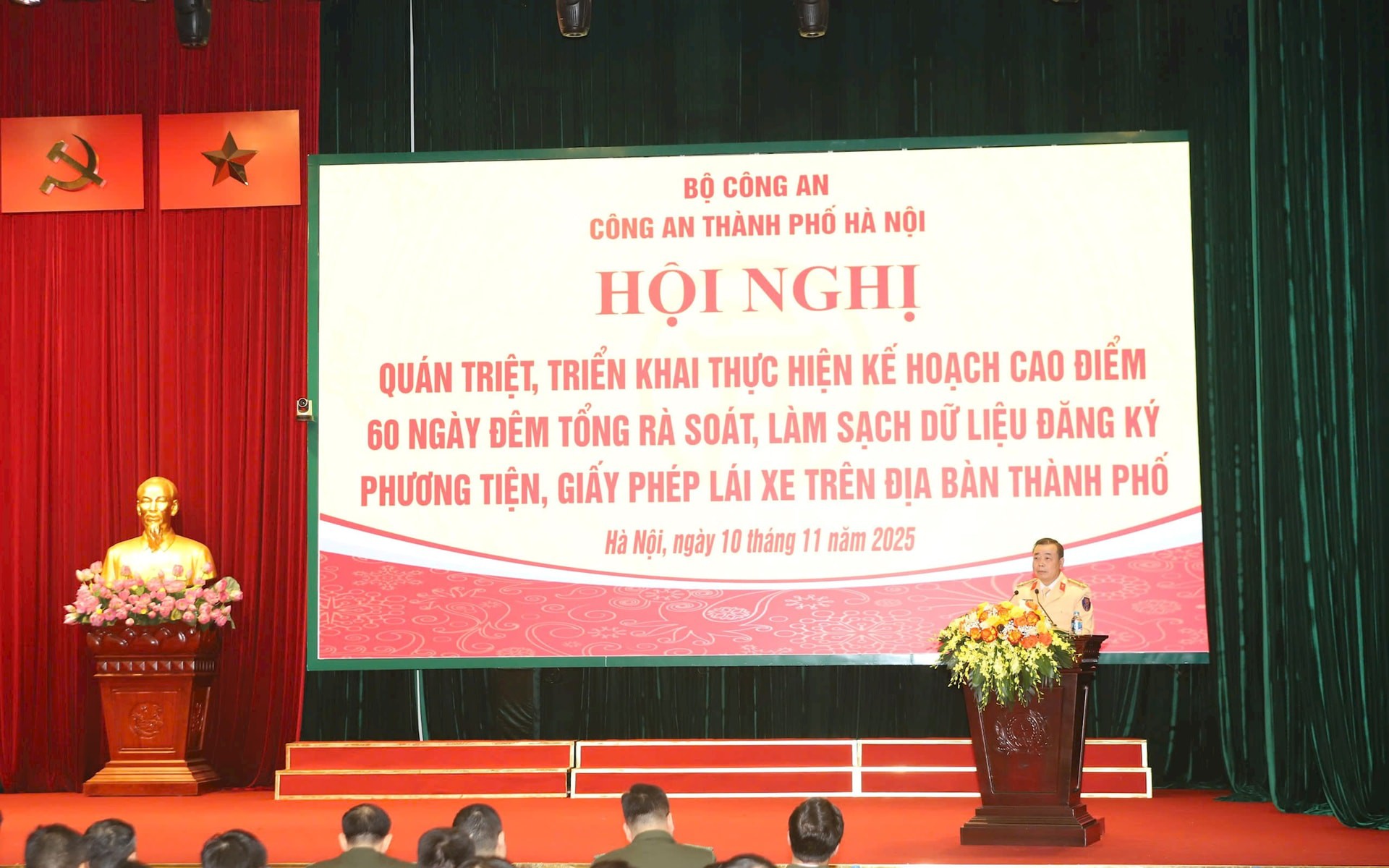
 Overview of the conference.
Hanoi Police Department on the morning of November 10 organized a conference to implement a 60-day-and-night intensive plan to review and cleanse vehicle registration and driver's license data across the capital.
The plan aims to carry out tasks and solutions to build a comprehensive Traffic Vehicle Database and a Driver’s License Database that ensure data is “accurate, complete, clean, and live.”
This effort contributes to improving state management of motor vehicles and drivers, while enabling integration with the National Data Center for effective data sharing within and beyond the police sector.
For 27,001 vehicles that have exceeded their service life or are no longer in use, the Traffic Police Department under the Ministry of Public Security will update information on the registration system and notify local police units.
Based on this, the Hanoi Traffic Police Division will instruct dossier-managing units (district-level teams and commune-level police) to separate and manage the original documents of expired or inactive vehicles.
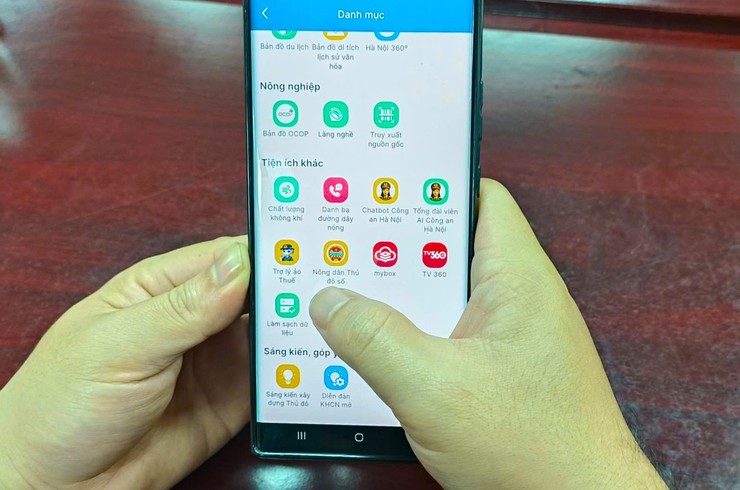 Residents review and update vehicle registration and driver’s license data via the iHanoi application.
For 3,896,641 cases where vehicle owner information matches the National Population Database, and 3,871,031 cases where it does not, verification, updates, and data supplementation will be carried out via the iHanoi application and direct checks at places of residence.
Regarding driver’s license data, functional units will cleanse approximately 130,000 records transferred from the Traffic Police Department and add records of motorcycle licenses issued on paper cards that have not yet been entered into the Driver’s License Database.
The intensive campaign will run continuously for 60 days and nights, from November 1 to December 31, 2025.
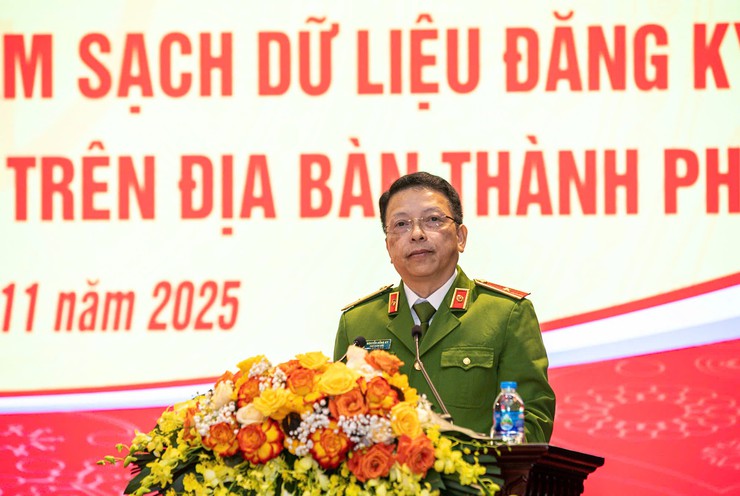 Hanoi Police Deputy Director delivers remarks at the conference.
Speaking at the conference, Major General Nguyen Hong Ky, Deputy Director of the Hanoi Police Department, noted that the Traffic Police Department of the Ministry of Public Security had issued a plan to comprehensively review and cleanse vehicle registration and driver’s license data and to digitize registration dossiers.
Accordingly, the Hanoi Police Department must review and cleanse nearly 8 million vehicle records, 130,000 driver’s license records, and digitize 8 million vehicle registration dossiers currently under its management.
The Hanoi Police Department has worked with the municipal Public Administrative Service Center to develop a method for collecting, reviewing, and updating vehicle registration and driver’s license data by shifting from manual processing to information technology–based processing through the iHanoi digital platform.
This approach will significantly reduce manual workload and processing time for officers and save printing costs.
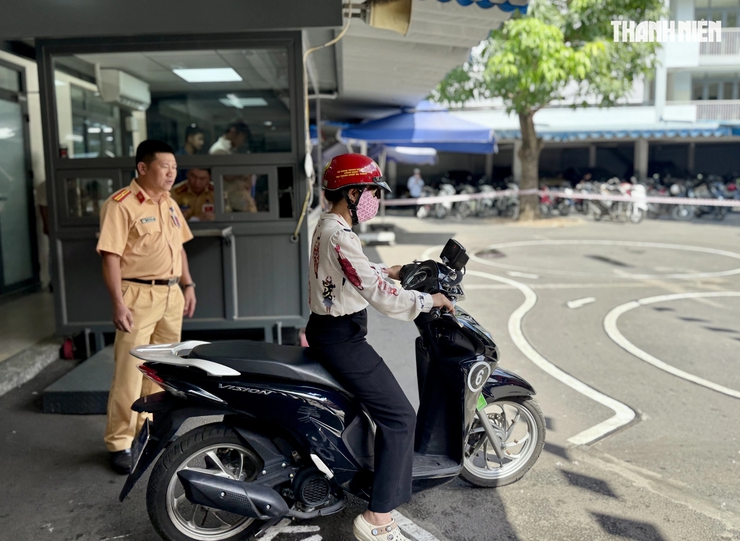 Traffic police guide candidates during the A1 driver’s license examination.
“Hanoi is the only locality taking the lead in applying information technology to collect and cleanse vehicle and driver’s license data, as well as to digitize vehicle registration dossiers,” Major General Ky emphasized.
To ensure timely and effective implementation and secure public support, the Deputy Director requested all units to strengthen communication efforts, encouraging residents to install the iHanoi application and self-declare vehicle and driver’s license information.
Commune and ward-level police must actively diversify communication methods and coordinate with community digital transformation teams to reach every neighborhood, residential group, and household so residents understand, support, and cooperate with the plan.
The Deputy Director also urged officers to take the lead in submitting their own information early, closely monitor collection progress, and “work by day and take advantage of the night,” demonstrating determination to accelerate and achieve targets ahead of schedule.
He also requested the Traffic Police Division to provide thorough guidance and maximum support to subordinate units regarding professional procedures.