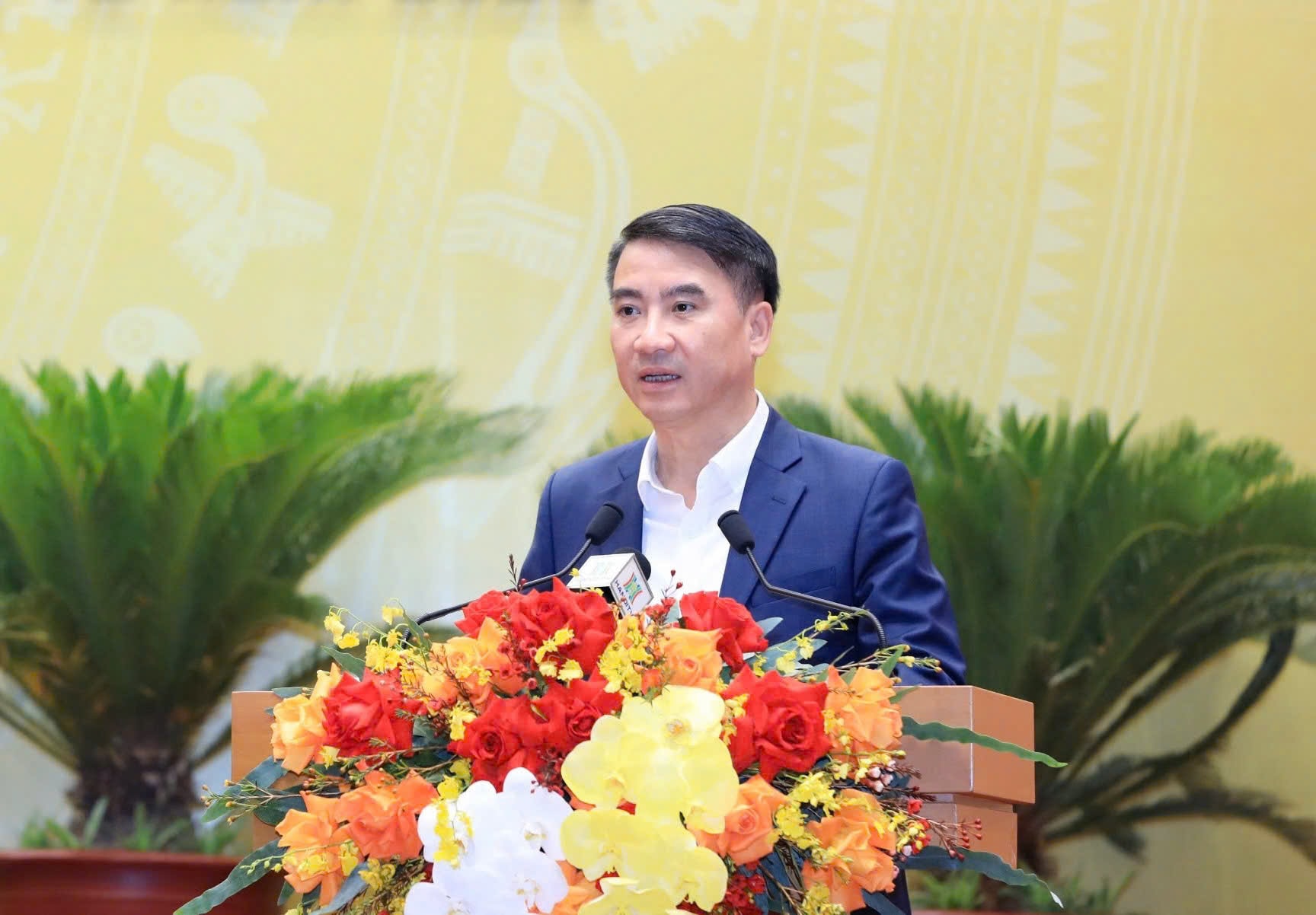
 Member of the Hanoi Party Standing Committee and Vice Chairman of the Hanoi People's Committee Nguyen Xuan Luu.
The 2024 Capital Law is being proposed for revision and supplementation to address obstacles and create more special and breakthrough mechanisms for Hanoi. Why is this revision considered necessary and urgent in the current development context of the country and Hanoi?
The 2024 Capital Law was the result of a thorough and serious preparation process, reflecting the special attention of the Party and the State toward Hanoi. The city appreciates the strong guidance and coordination of central agencies, especially the National Assembly's Committee on Legal Affairs and Justice and the Ministry of Justice, in developing policies and working with Hanoi to submit the Capital Law 2024 to the National Assembly.
The 2024 Capital Law is an important legal foundation for the next development phase of Hanoi. However, the legal system has changed significantly in recent years. Many laws and National Assembly resolutions have been issued with new approaches, making many provisions that were previously unique to the capital now common nationwide.
Currently, the country and the capital are entering a new development stage that requires strong innovation in growth models, institutional reform and rapid and sustainable development. The operation of the two-tier local government system requires stronger decentralization and delegation of authority, while also requiring pilot governance models in urban management, science and technology, innovation and digital transformation.
At the same time, according to the direction of General Secretary To Lam, the capital needs a "sufficient legal space" to achieve double-digit growth and fully play its leading and spillover role. The revision of the Capital Law also aims to develop the capital in line with the long-term master plan with a 100-year vision and the Politburo's resolution on building and developing Hanoi in a new era.
The requirement for institutional reform also comes from the strategic goals and new development vision of the capital. Hanoi must be built as a "Cultured – Civilized – Modern – Happy" capital, the national political and administrative center, a development-creating center that leads new development models and new national thinking, and gradually enhances its role and position regionally and internationally. Hanoi is expected to become a comprehensive economic center with high added value, the core of the capital region and a national leader in key sectors such as culture, science, education and innovation, gradually becoming a globally connected capital.
Therefore, revising the Capital Law is not only urgent but also inevitable and strategic, aimed at upgrading policy design and improving the legal framework to ensure the capital has sufficient authority, tools and institutional space to implement its long-term development vision and leadership role in the new context.
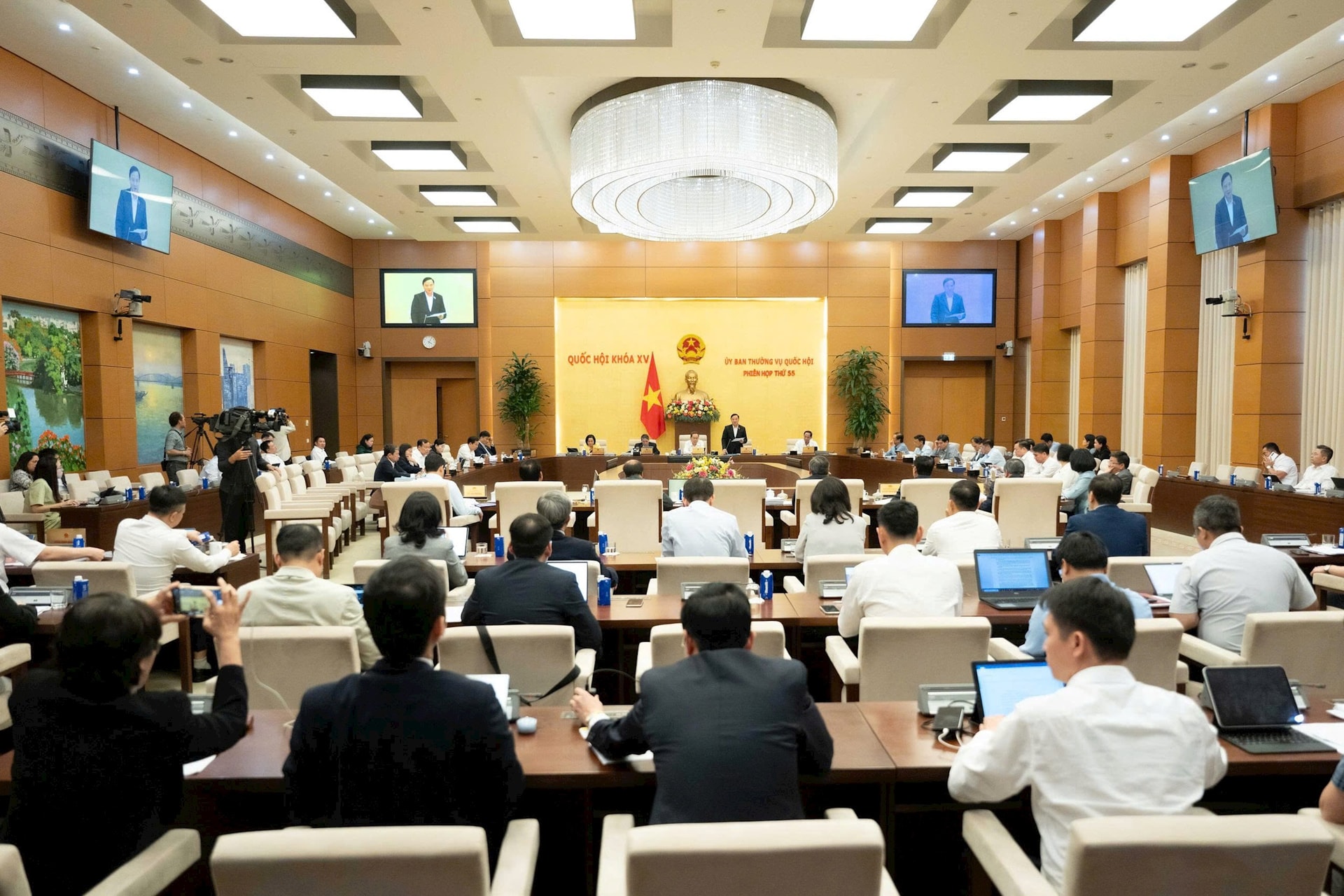
The National Assembly Standing Committee discusses the draft revised Capital Law at its 55th session on March 18.
Could you share the major policies proposed in the draft revised Capital Law?
Based on the implementation of the Capital Law and major policy directions of Party and State leaders, this revision is being approached with innovative thinking and a long-term vision to create a stronger legal framework that allows Hanoi to fully utilize its unique potential and advantages.
The revised Capital Law will not only implement policies but will also be given the role of designing policies at a higher level to meet development goals and expectations in the new era. At the same time, the city will be allowed to pilot new models and new approaches while still ensuring discipline, transparency and power control mechanisms.
The guiding principle of the draft law is comprehensive decentralization and delegation of authority combined with accountability, transparency and power control, in line with the principle that Hanoi decides, Hanoi implements and Hanoi takes responsibility.
The draft revised Capital Law submitted to the National Assembly proposes several major policies, including:
Affirming the special legal status of the capital as the national political and administrative center, where central Party and State agencies, diplomatic missions and international organizations are located, and as a major economic center leading the country and reaching regional and international levels in culture, science, technology, innovation, digital transformation, education, healthcare and international transactions.
Allowing the municipal People's Council and municipal People's Committee to adjust procedures, processes and authority defined in higher-level legal documents and to issue special mechanisms to implement laws and National Assembly resolutions differently from regulations issued by the Government, the Prime Minister and ministries. The city may also pilot new mechanisms and policies to create legal frameworks for new development and management models.
Expanding authority in organizational structure, staffing, income mechanisms, autonomy for public service units and policies for attracting and utilizing high-quality human resources.
Giving the city more autonomy in budget revenue and expenditure structure, credit decisions and establishing financial funds for development investment. The city will also have authority in managing and utilizing land, forest resources and public assets and implementing public-private partnership mechanisms.
Developing modern urban governance based on digital data, artificial intelligence and modern technology platforms, and allowing the city to regulate data integration, sharing and utilization mechanisms.
Issuing new policies and development models in science and technology, culture, education and training, healthcare and social welfare.
Issuing policies related to planning, urban development, green and smart urban development, transit-oriented development and urban renovation and redevelopment.
Issuing policies related to free economic zones, free trade zones and new economic models.
Allowing the city to implement special measures for social order, environmental protection and urgent administrative measures suitable to the role and position of the capital.
Affirming Hanoi's role as the core and driving force for regional development and defining principles for regional coordination, regional projects and environmental protection of the capital region.

The city will be proactive in developing policies and solutions for green and smart urban development.
One of the key principles of the revised Capital Law is stronger decentralization and delegation of authority. What additional powers will Hanoi receive to be more proactive in governance and development?
One of the main objectives of the revised Capital Law is to strengthen decentralization and delegation of authority for the city government, allowing Hanoi to be more proactive in governance and development. According to the draft law, Hanoi will be granted additional authority in planning management, finance and budget management, public investment, land management and urban governance.
The draft law institutionalizes strong and comprehensive decentralization for the capital government, with many state management powers delegated from central agencies to the city government.
Hanoi will be able to proactively develop and approve pilot mechanisms and policies in areas that are not yet regulated or differ from current regulations in order to remove development bottlenecks.
This decentralization will allow the capital government to be more proactive in making decisions and implementing socio-economic development policies, urban management, infrastructure investment and public service delivery.
However, decentralization will be accompanied by strict power control mechanisms to ensure human rights, social fairness, sustainable development, preservation of cultural identity and compliance with the Constitution and national macroeconomic stability and national security and foreign affairs policies.
The core principle of the draft law is stronger authority for Hanoi combined with greater accountability, enabling the capital to better perform its role as the country's political, economic and cultural center.

The draft revised Capital Law allows Hanoi to develop special mechanisms to promote the innovation ecosystem.
The revised Capital Law aims to make Hanoi a leading center for science, technology, innovation and digital transformation. What policies and mechanisms will be designed to achieve this goal?
To achieve this goal, the draft law includes several breakthrough mechanisms and policies.
First, the draft law allows Hanoi to develop special mechanisms to promote the innovation ecosystem, including policies to attract high-quality human resources and develop research centers, innovation centers and high-tech zones. The city will also have more authority to issue policies supporting science and technology enterprises and innovative startups.
Another important point is the development of urban governance models based on digital data, artificial intelligence and modern technology platforms. This is considered an important foundation for digital transformation in state management and for improving public services for residents and businesses.
The draft law also creates mechanisms for Hanoi to mobilize social resources for science and technology development and promote cooperation among research institutes, universities and businesses. This will help increase research capacity and technology application and contribute to the development of new knowledge-based and innovation-driven industries.
With these special mechanisms, Hanoi will have favorable conditions to develop into a regional innovation center, contributing significantly to economic growth and national competitiveness.
What legal policies are proposed in the draft revised Capital Law to address development bottlenecks such as traffic congestion, environmental pollution and flooding?
One of the goals of the revised Capital Law is to create a legal framework for the city to address development bottlenecks such as traffic congestion, environmental pollution, infrastructure overload and flooding.
One important tool is increasing the city's authority in planning, land management, infrastructure investment and mobilizing resources for urban development projects. With greater authority, Hanoi can shorten approval procedures and be more proactive in implementing transport projects, environmental treatment projects and technical infrastructure development.
The draft law also proposes regional coordination mechanisms, with Hanoi acting as the central coordinator for development of the Capital Region, the Red River Delta and the Northern Midlands and Mountainous Region. These mechanisms are intended to address regional issues such as transport, environment and resource management.
With these new legal tools, Hanoi will have better conditions to address urban challenges and move toward becoming a modern, green and rapidly developing sustainable city.
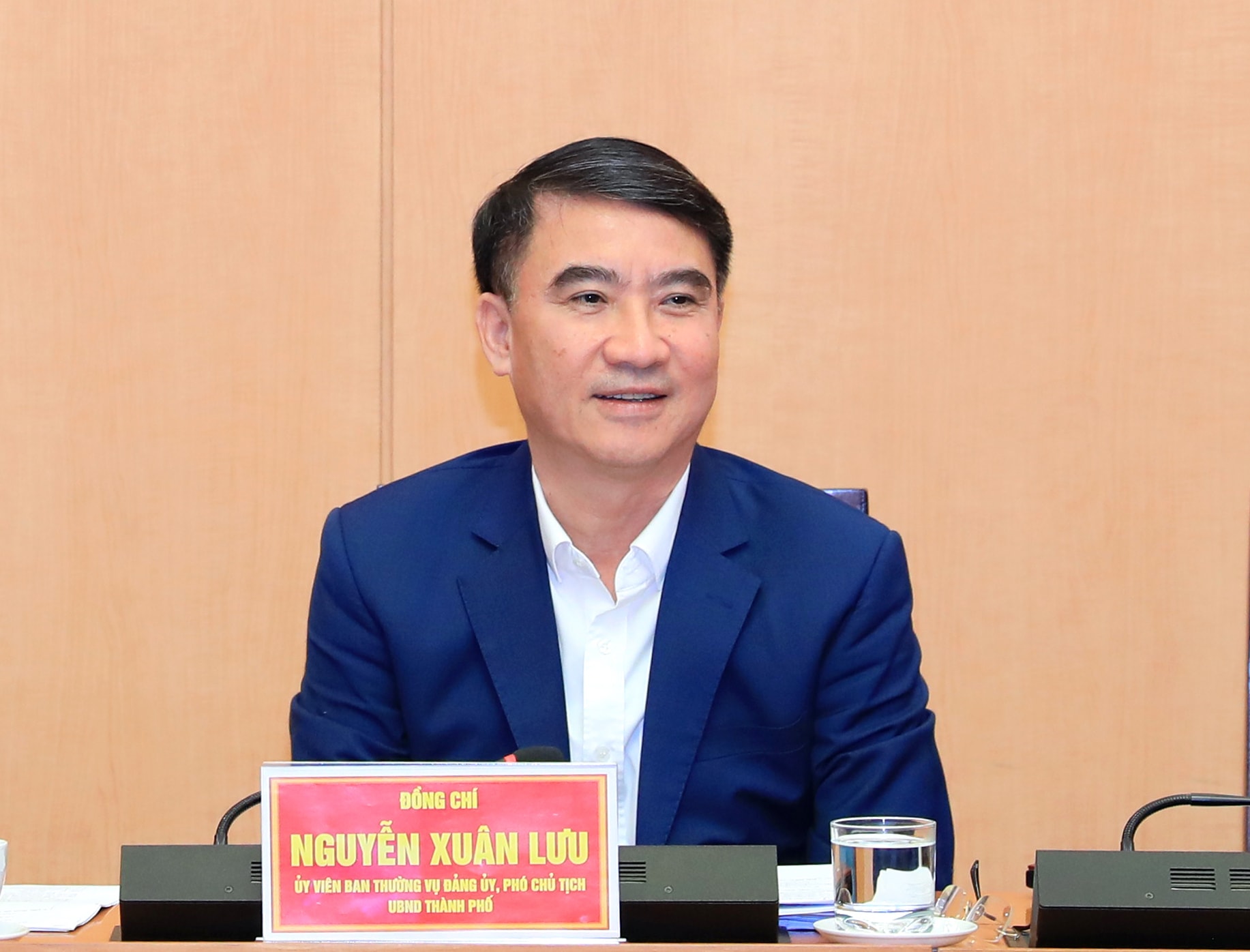
Member of the Hanoi Party Standing Committee and Vice Chairman of the Hanoi People's Committee Nguyen Xuan Luu chairs a meeting on the draft revised Capital Law.
The draft revised Capital Law is expected to be submitted to the National Assembly at its first session of the 16th National Assembly. What does Hanoi expect when the law is passed and what impact will it have on the long-term development of the capital?
The revised Capital Law is extremely important for the long-term and sustainable development of the capital. We expect that once the law is passed, it will help improve the institutional framework for capital development in line with major Party and State policies and provide Hanoi with strong and stable legal tools to unlock new growth drivers and achieve continuous double-digit growth in line with the Politburo's resolution on developing Hanoi in the new era.
More importantly, the mechanisms and policies in the law will allow the capital to effectively utilize development resources such as public assets, land, finance and especially high-quality human resources. With greater autonomy in urban governance and policy implementation, the city government will be able to improve governance efficiency and better serve residents and businesses.
We believe that with the support of the National Assembly, the Government, provinces and cities and the trust and support of National Assembly deputies and the public, the revised Capital Law to be issued in 2026 will become an important driver for Hanoi's rapid, strong and sustainable development and help the capital fulfill its pioneering role in the new development stage of the country.
Hanoi will continue to be the development center of the Red River Delta and northern region, a major economic and financial center, a leading center in culture, education, healthcare, science, technology and innovation, with stable politics and society, a peaceful city, happy citizens and a globally connected city.
Thank you for your time!