Reporting on progress, Dao Viet Long, Deputy Director of the Hanoi Department of Construction, said the department has been coordinating with agencies and businesses to gradually replace fossil fuel vehicles with electric and clean energy alternatives. Initial results have been achieved, although several obstacles still need to be resolved.
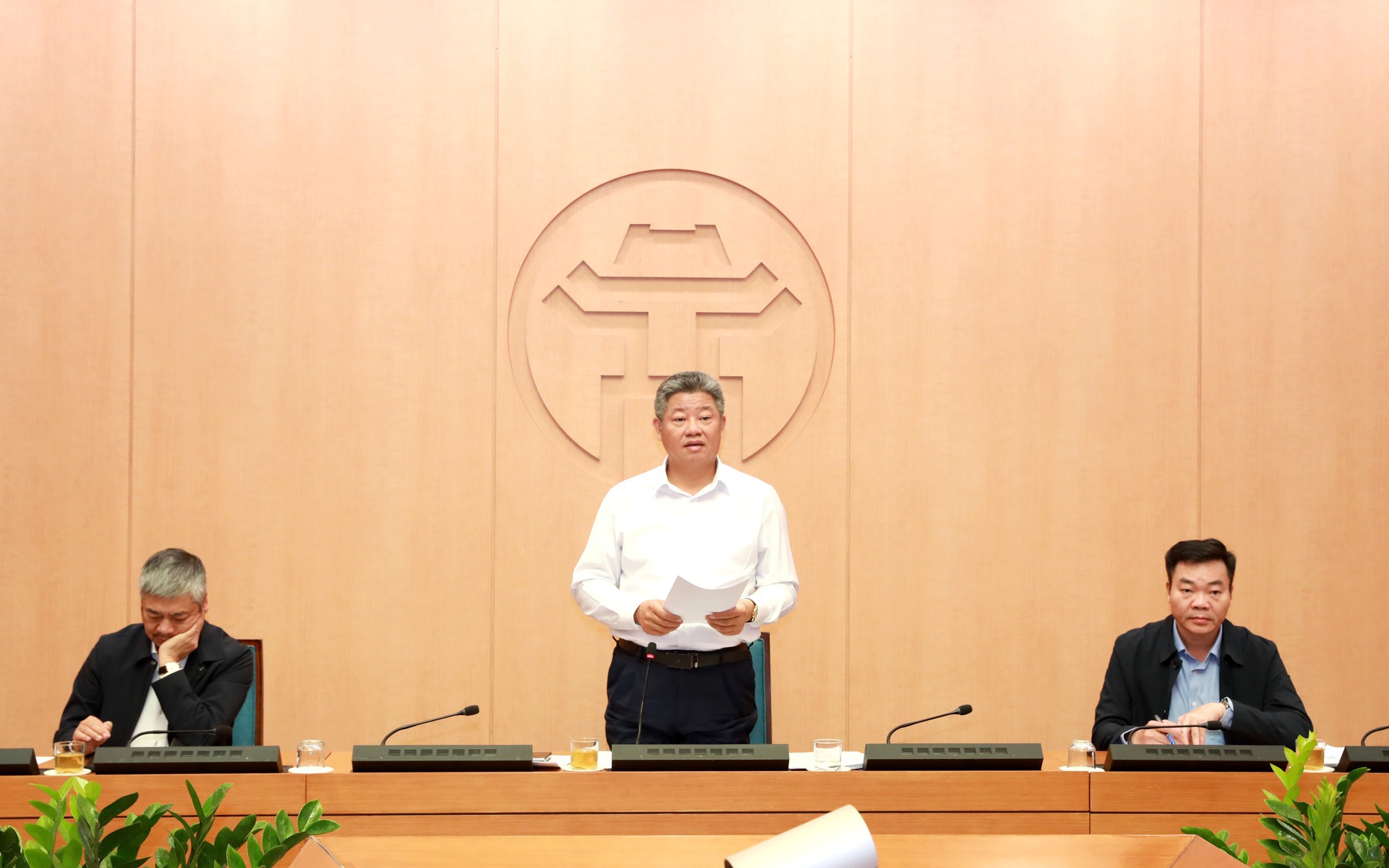
Vice Chairman of the Hanoi People's Committee Nguyen Manh Quyen.
In public bus transport, Hanoi is implementing a plan to develop electric and green energy buses in line with the Prime Minister's decision and city action plans.
During 2025 and 2026, the city is prioritizing support mechanisms for enterprises, expanding the electric bus network, investing in charging infrastructure, and strengthening technology use in operations and management.
Under the roadmap, electric and green buses are expected to account for about 10 percent in 2025 and 20 to 23 percent in 2026, with full conversion targeted by 2030. From early 2025 to date, Hanoi has put seven additional electric bus routes into operation with 108 vehicles, bringing the total to 17 of 128 routes with 256 buses, or nearly 13.5 percent of the fleet.
In December 2025, Lien Ninh Transport replaced all 111 diesel buses in operation with electric buses. By the end of 2025, the city had 23 electric bus routes with about 367 vehicles, accounting for nearly 20 percent of total buses, and plans to convert about 200 more buses in 2026.
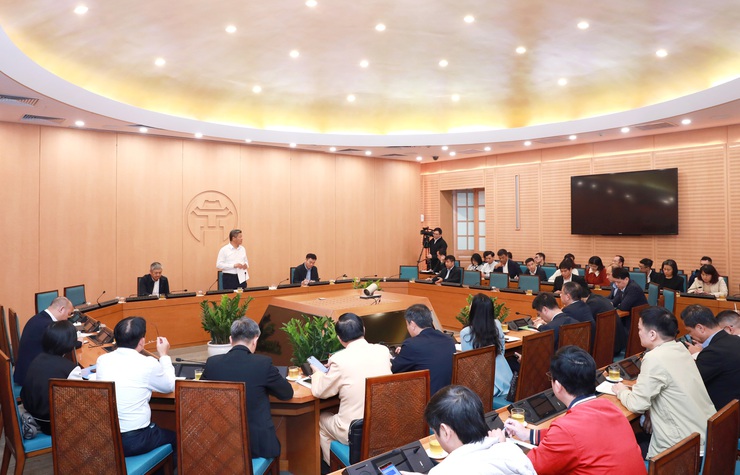
Delegates at the meeting.
Alongside subsidized buses, the conversion of tourist buses is also underway according to a defined schedule. Some City Tour operators have developed plans to gradually switch to electric vehicles, aiming for completion during the period from 2028 to 2030.
In the taxi sector, the Department of Construction has worked with the Hanoi Taxi Association and operators to build up a conversion roadmap. The city currently has more than 14,300 taxis in operation, of which nearly 8,800 are already electric, while about 13,600 vehicles are idle and awaiting replacement.
The total number of taxis requiring conversion by 2030 is nearly 28,000. Taxi operators have agreed to complete the transition from gasoline and diesel taxis to electric and green energy taxis by 2030, with the share increasing each year to reach full conversion.
The Department of Construction is also developing a set of service quality criteria for taxi transport. These criteria cover vehicle quality, driver standards, traffic safety, and technology application to improve service quality and promote fair competition.
For motorcycles and motorbikes used in app-based services, major companies support green conversion and compliance with low-emission zone regulations. However, they emphasized the need for a suitable roadmap and specific support policies because most riders are low-income workers using privately owned vehicles.
Several special vehicle types, such as tourist cyclo services, three-wheeled vehicles used by war veterans, and boats serving Huong Pagoda tourism, have also been included in the conversion roadmap.
The Department of Construction noted challenges related to technical standards, designs, investment costs and compliance. Pilot models and support measures are being considered where appropriate.
Regarding the pilot installation of charging stations and battery swap cabinets at public parking sites managed by Hanoi Parking Management Company, the city aims to gradually complete the infrastructure for green transport conversion. Under the proposal, V-Green Global Charging Station Development JSC will coordinate with the parking operator to pilot installations at 39 sites citywide, including 15 locations planned for deployment in 2025.
Selected sites are licensed parking areas with available space on convenient transport corridors to improve access and reduce infrastructure costs. Most agencies agreed on the necessity of developing a charging network in line with green energy transition goals, emissions reduction, and urban environmental improvement.
They stressed that implementation must comply with regulations on planning, electrical safety, fire prevention, traffic safety and environmental hygiene, and ensure shared use by multiple vehicle types without creating monopolies.
The Department of Construction proposed that the city approve the pilot in principle to assess effectiveness and gradually expand the charging network.
Concluding the meeting, Vice Chairman of Hanoi People's Committee Nguyen Manh Quyen praised agencies and units for their proactive efforts in green transport conversion. He highlighted that the bus sector has completed green conversion targets set for 2026, one year ahead of schedule.
To keep progress on track, he assigned the Department of Construction to promptly submit proposals on support mechanisms and pricing norms for city approval. On charging infrastructure, he emphasized a comprehensive approach, starting with suitable pilot locations and scaling up based on results.
He also called on banks and the Hanoi Development Investment Fund to guide and support enterprises in accessing capital and interest rate incentives for green vehicle conversion. He reaffirmed the city's goal to complete green conversion by 2030, with most progress achieved by 2029, noting that strong policies, especially on finance and interest rates, would enable businesses to accelerate the transition.