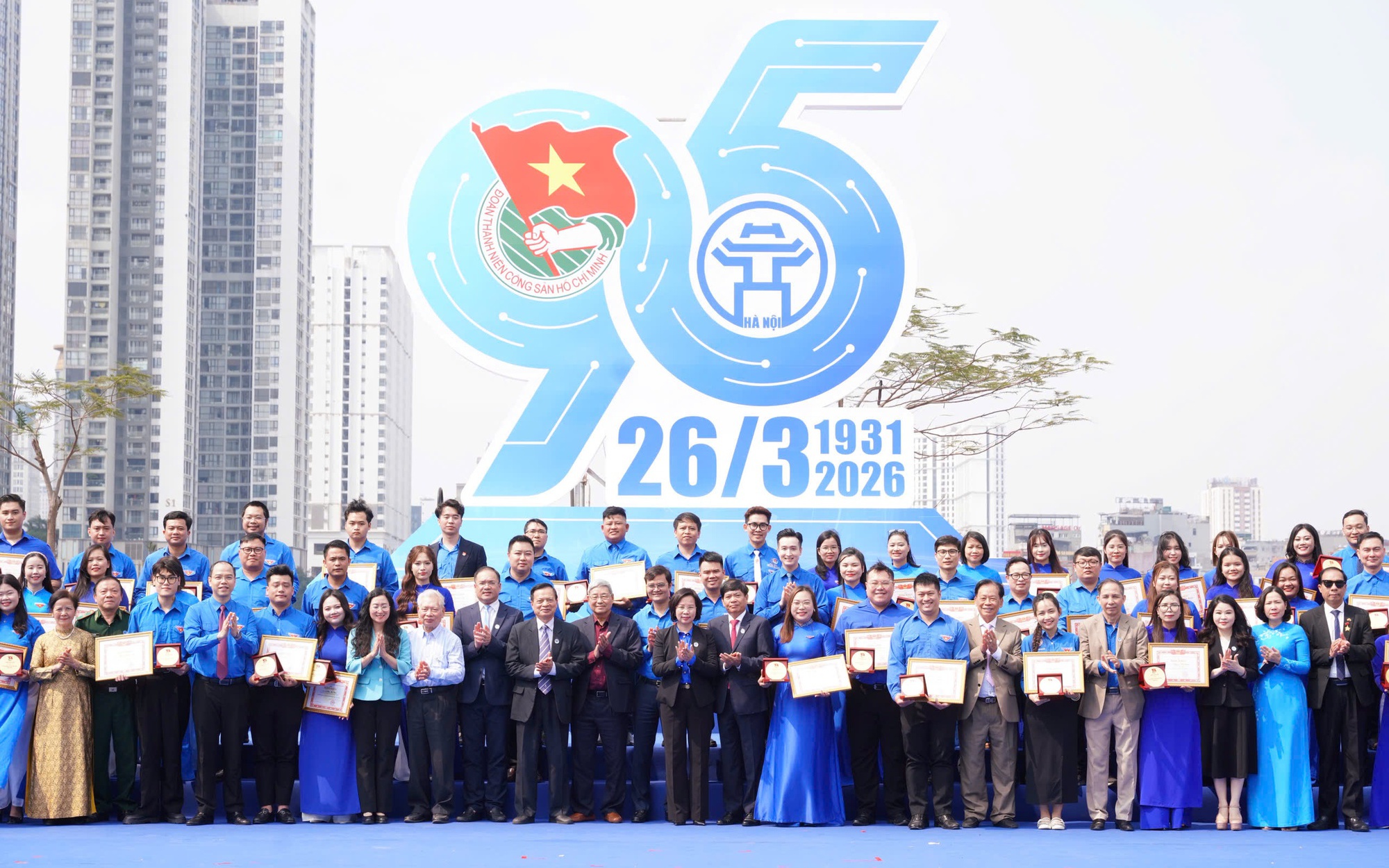
Central and city leaders commend outstanding Youth Union officials at the program "Aspiration of Hanoi Youth," celebrating the 95th anniversary of the Ho Chi Minh Communist Youth Union (March 26, 1931 – March 26, 2026).
On the occasion of the 95th anniversary of the Ho Chi Minh Communist Youth Union, reporters from the Hanoi City Portal spoke with Nguyen Tien Hung, Member of the Hanoi Party Committee, Vice Chairman of the Vietnam Fatherland Front Committee of Hanoi, and Secretary of the Hanoi Youth Union, about the journey of "digitizing patriotism" among the capital's youth.
Choosing a difficult path with long-term value
Two years in a row, your projects were recognized as outstanding national youth projects, which is very impressive. Why did the Hanoi Youth Union choose the more difficult path of digitizing history to engage young people, instead of simpler activities that could spread more easily?
We did not choose the easy path. We chose the path with long-term value. Digitizing history is not just a technical choice, but a choice driven by responsibility.
The history of Thang Long – Hanoi cannot only be recalled during anniversaries, major ceremonies, or through slogans. History must live in the digital space, where young people spend much of their time today. If history is not embedded in that space, it may fade from the interests of younger generations.
We believe that for youth development, young people must be connected to their roots and origins. For youth movements to develop sustainably, they must have depth. And for history to live forever, it must be brought into the future. Those are the principles we kept in mind when implementing these projects.
Encoding historical sites: Three years of persistent work to rediscover history
The project "Encoding Historical Sites" has made a strong impression because with just a QR code scan, an entire historical space appears in the user's hand. Behind the modern technology is a very intensive process of data collection and processing. Could you share more about this?
This is truly a project created with great dedication by Hanoi's youth. Our team worked for three years to complete it.
So far, we have built not only a book but more importantly a digital map and digital system covering 310 revolutionary historical sites across the city, including many images and valuable documents, along with bilingual narration and VR 360 experiences. This allows viewers to experience these historical sites in a vivid and realistic way.
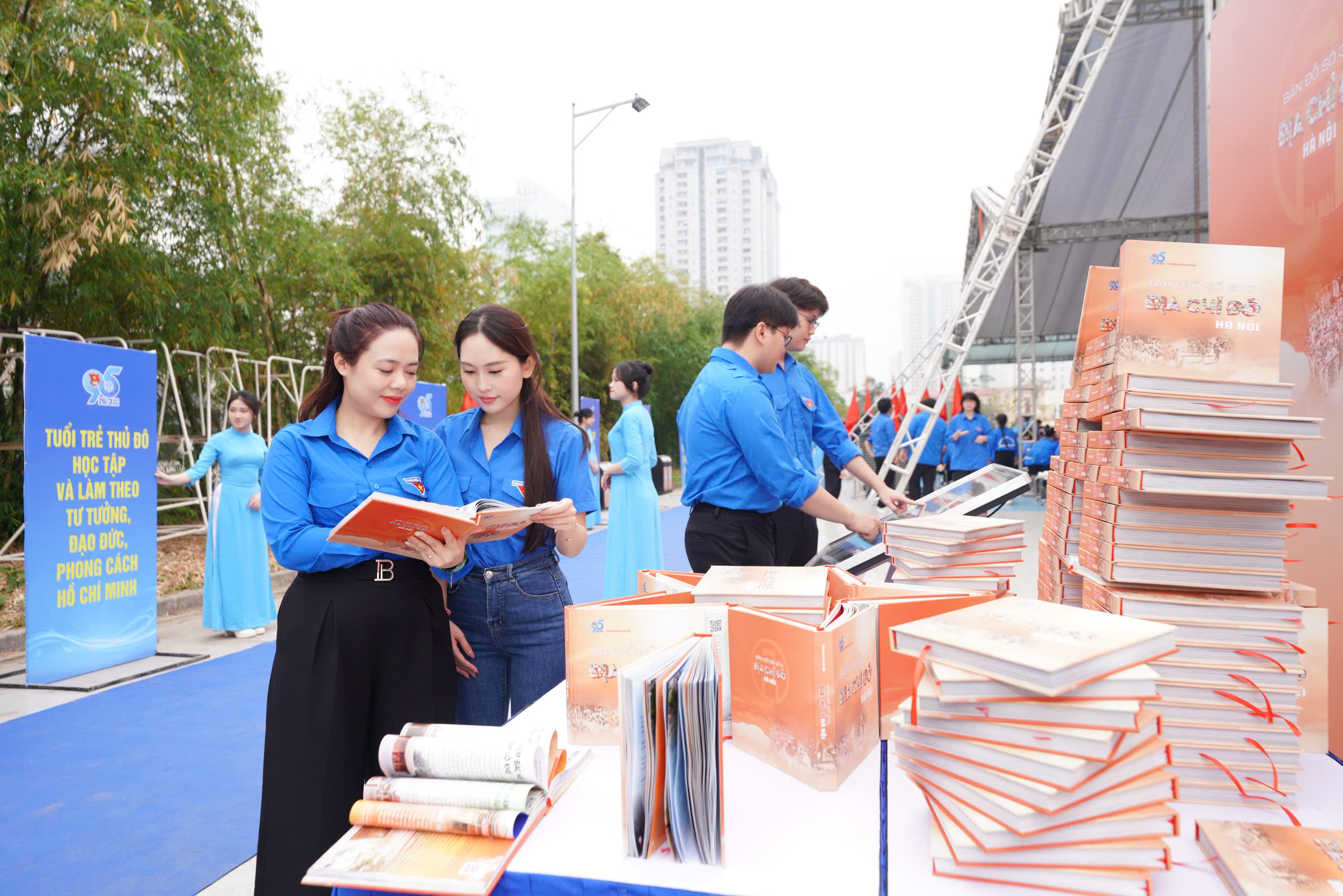
In the photo, Youth Union members and former Youth Union officials read the book "Digital Map of 310 Historical Sites in Hanoi" at the program "Aspiration of Hanoi Youth – Celebrating the 95th anniversary of the Ho Chi Minh Communist Youth Union," organized by the Hanoi Youth Union on March 22, 2026.
The data collection process was not easy. Many locations were public works or government offices, but some were private homes managed by individuals. Contacting owners, obtaining filming permission, recording footage, and collecting documents involved many difficulties. However, through persistent efforts and various approaches, we gradually gathered enough data to create a relatively comprehensive picture of the capital's revolutionary historical sites.
Interestingly, in many local areas, people were initially curious when they saw young teams using drones and modern equipment for filming. But once we explained the purpose and showed demo products, curiosity quickly turned into support and cooperation.
Of course, there were also regrets. Some locations now exist only in books and narration because their physical structures have disappeared or changed significantly over time. That made us even more determined to work quickly and systematically to preserve as many historical traces as possible.
The project to restore portraits of fallen soldiers is a journey of gratitude, responsibility, and love for the country. With youth, creativity, and dedication, Hanoi's young generation is building a bridge connecting the past with the present.
Restoring portraits of fallen soldiers: Technology is a tool, gratitude is the core
While the “Encoding Historical Sites” project created a strong impact in the community, the “Restoring Portraits of Fallen Soldiers” project touches a deeper humanitarian level, reviving memories for the families of fallen soldiers. Some people wonder whether the use of artificial intelligence could reduce the authenticity or the sacred value of these keepsakes?
When we started this project, we thought a lot about that issue. Nearly three years of implementation meant nearly three years of asking ourselves whether families would accept the final products and whether the memories would truly return to them.
But if we did nothing, the remaining memories might continue to fade over time until they could no longer be restored. In reality, when the restored photos were returned to families, many tears were shed. Tears of gratitude for fallen heroes, tears of reunion, and tears of memories revived after decades. Some wives and children of fallen soldiers saw clear images of their husbands and fathers for the first time after many years of only having blurred photos.
We always believe technology is just a tool. Gratitude is the core. In the early stages, we used AI for support, but the final restoration work was done entirely by hand by young volunteers. During the restoration process, they spent quiet moments not only coloring and sharpening images but also imagining the wartime context and the stories behind each photograph.
Thanks to that emotional connection, each restored photo is not just the return of a face from the past, but also a message of gratitude from today's young generation. It is a bridge between past and present, between those who sacrificed and those who live today, bringing memories of fallen soldiers back to their families.
Motivation from family memories and responsibility to the community
Why did the Hanoi Youth Union choose the task of restoring portraits of fallen soldiers instead of other directions?
Beyond the general meaning of gratitude toward previous generations who sacrificed for the country, this is also a personal story for me. My great-grandfather was a fallen soldier during the resistance war against the French, and my grandfather was a fallen soldier during the resistance war against the United States.
For my great-grandfather, we have no photos left to restore. For my grandfather, there was a photo, but it had faded over time and had previously been restored using traditional portrait painting. My family still uses that photo for worship today.
From that experience, I realized many other families are in similar situations and also wish to have clear and complete portraits of their relatives who sacrificed their lives. That became our motivation to use new technologies as quickly and effectively as possible to help families obtain the most authentic and respectful portraits.
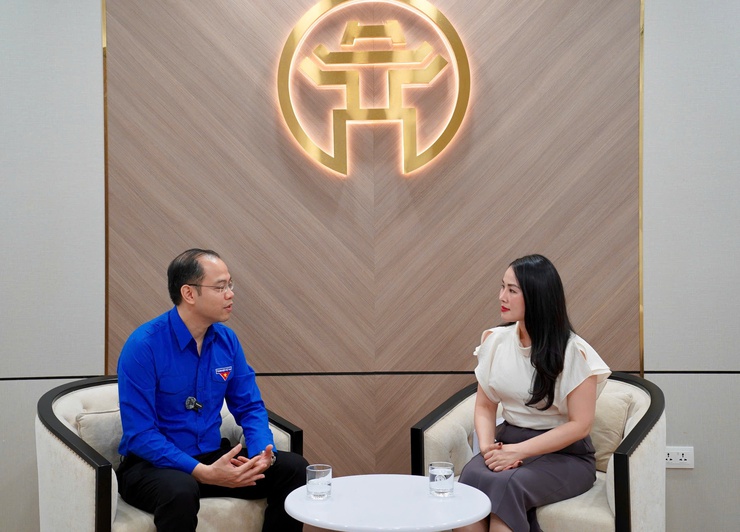
Hanoi City Portal interviews Nguyen Tien Hung, Member of the Hanoi Party Committee, Vice Chairman of the Vietnam Fatherland Front Committee of Hanoi, and Secretary of the Hanoi Youth Union, about the journey of digitizing patriotism among Hanoi's youth.
Turning youth projects into part of the smart city ecosystem
With these achievements, Hanoi's youth have contributed to building a "Cultured – Civilized – Modern – Happy" Hanoi as outlined in the City Party Resolution. Looking back, what will the Hanoi Youth Union do to ensure youth projects become part of the smart city ecosystem rather than just award-winning initiatives?
As the entire Party, people, and armed forces celebrate the 95th anniversary of the Ho Chi Minh Communist Youth Union, young people across the country are continuing a proud journey. For the Hanoi Youth Union, our focus is implementing the movement "Hanoi Youth Pioneer in the New Era," focusing on two pillars: innovation and digital transformation.
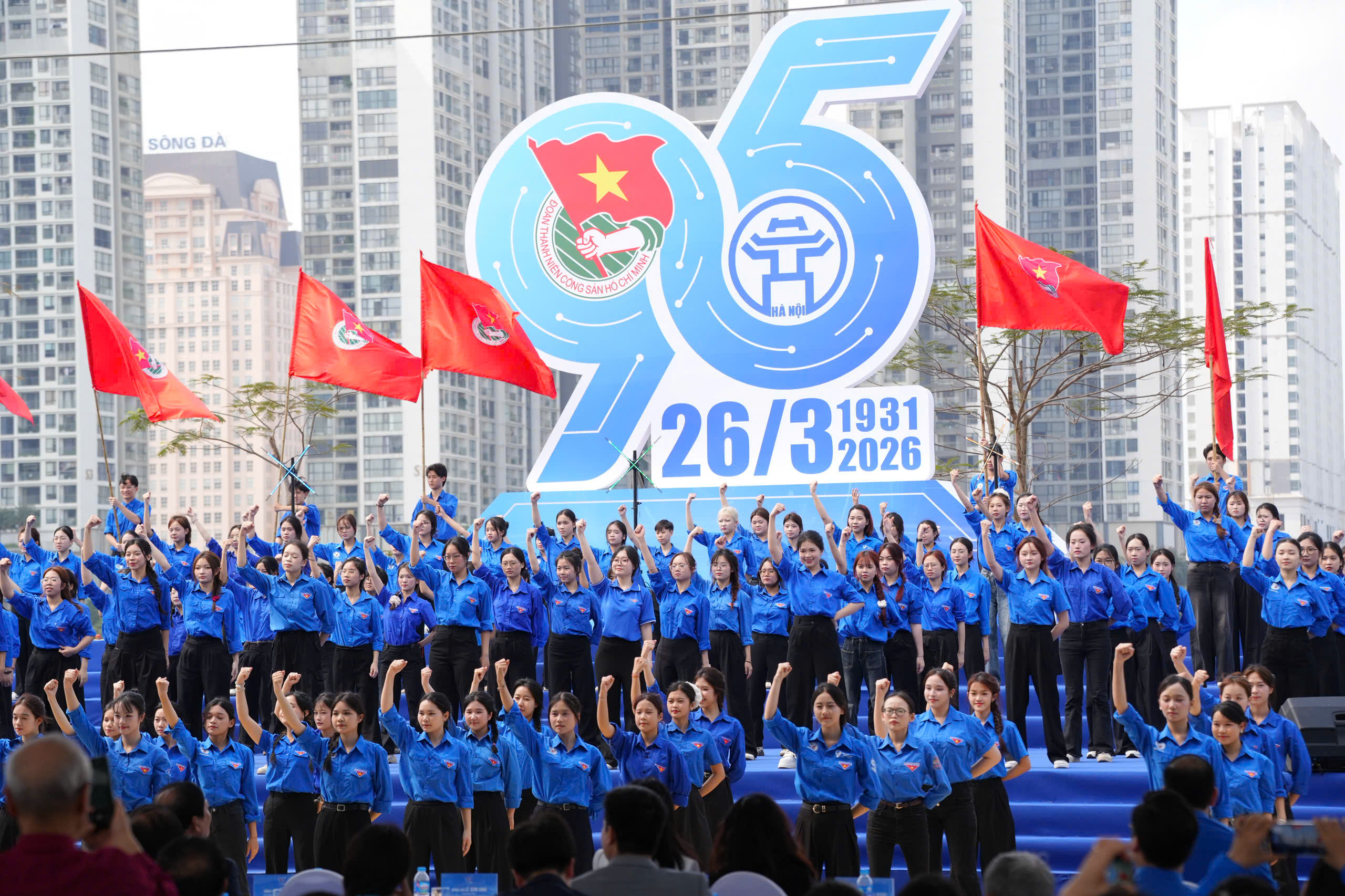
A flashmob performance titled "Proud Youth in the New Era" by nearly 500 Youth Union members in Hanoi highlighted the aspiration to contribute and portrayed a generation of young people who are confident, creative, and ready to take on challenges in the new era.
From the organizational perspective, we are developing and operating a digital platform to manage youth movements across the capital, ensuring all youth events and activities are digitized, connected, transparent, easy to monitor, and easy to evaluate.
For volunteer activities, we closely link youth tasks with the development needs of each locality and community, especially focusing on supporting community digital transformation and improving the effectiveness of government operations at all levels, contributing to building digital government, digital society, and digital citizens.
Our goal is that each youth project and activity will not just be a product of a campaign or movement season, but will become useful components operating effectively within the smart city ecosystem of the capital.
Thank you for your thoughtful sharing. Hopefully, with intelligence, enthusiasm, and love for Hanoi, future generations of Hanoi youth will continue to create meaningful projects that help preserve the spirit of Thang Long – Hanoi in the digital era.