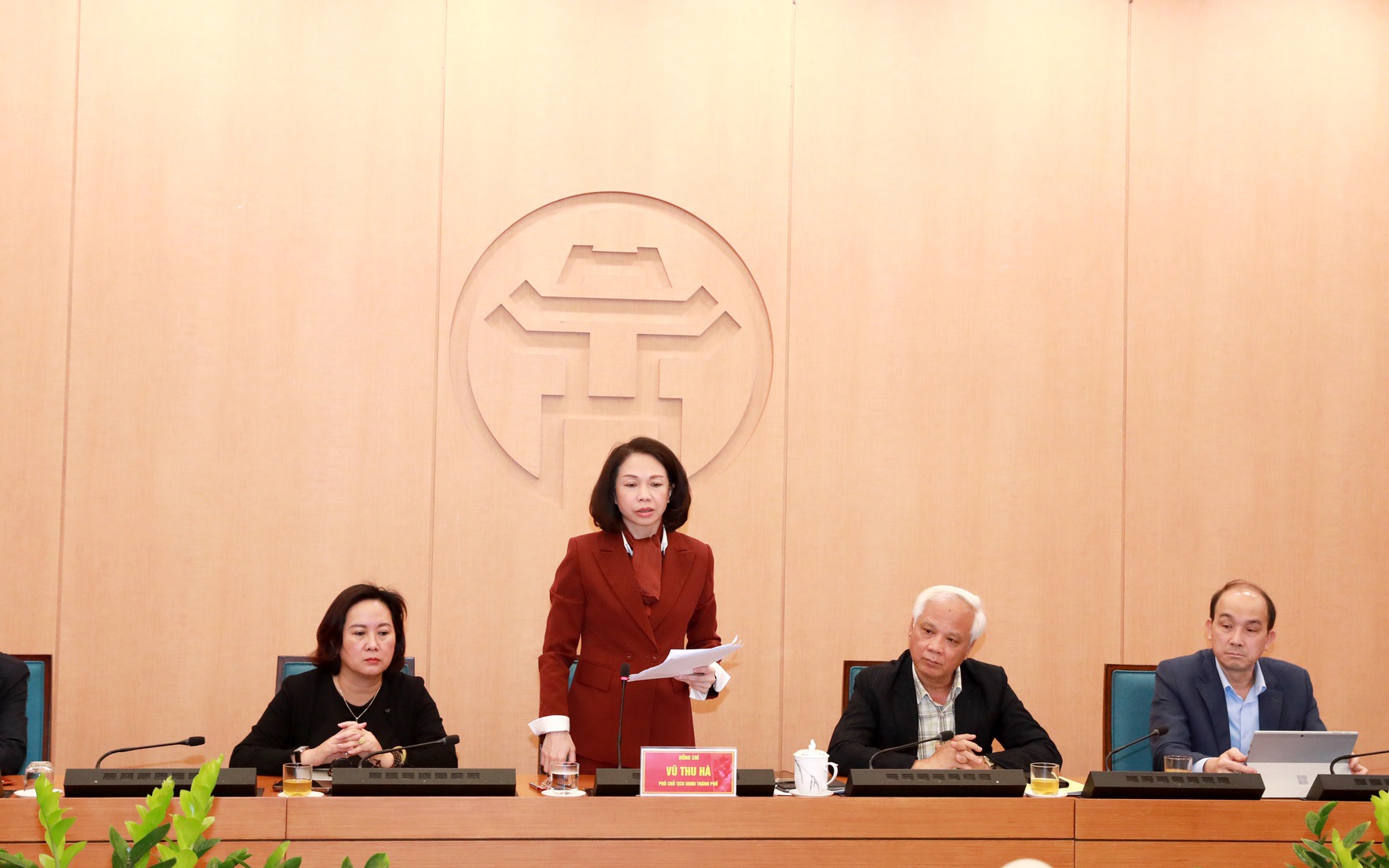
Vice Chairwoman of the Hanoi People's Committee Vu Thu Ha delivers remarks at the conference
The event was jointly organized by the Vietnam Association of the Elderly, the Ministry of Health and relevant agencies, connecting online from Government Headquarters to provinces and cities nationwide. Also attending was Deputy Prime Minister Le Thanh Long, Chairman of the National Committee on the Elderly.
The Hanoi meeting point was chaired by Vice Chairwoman of the Hanoi People's Committee Vu Thu Ha, head of the Hanoi Committee for Elderly Affairs.
Older adults contribute actively to socio-economic development
Speaking at the conference, Ha said Hanoi has been implementing a range of measures to promote the role of older adults in socio-economic development while developing healthcare models, services and policy mechanisms aligned with the trend of population aging.

Overview of the conference at Government Headquarters
According to Ha, Hanoi has implemented multiple initiatives in recent years and has also assigned certain services to the city's Association of the Elderlyr. In practice, these activities have produced clear and positive results.
Currently, older adults account for about 16.8% of Hanoi's population. The Association of the Elderly operates across the entire city through a well-organized and coordinated system. To date, 100% of communes and wards, totaling 126 units, have established elderly associations, forming a structured network that operates effectively.
Older adults also continue to demonstrate an active role in economic activities. Across the city, nearly 10,000 older adults are business owners, household business operators, or farm owners with legally registered operations. In addition, more than 16,000 older adults have been recognized for outstanding economic performance in fields such as agriculture, industry, construction, handicrafts, services, and tourism. Their production and business activities have created jobs for around 76,000 workers.
"These figures show that older adults are not only a group requiring care and support but also a force making important contributions to local socio-economic development," Ha said.
Expanding models to care for and empower older adults
Based on practical needs and development requirements, Ha said Hanoi has recently focused on implementing multiple initiatives to improve care and promote the role of older adults.
First, the city has prioritized the development of specialized healthcare models for older adults. This includes the establishment of a Geriatric Hospital to provide specialized care. At the same time, Hanoi has launched a project to develop integrated centers for elderly care, therapy, and rehabilitation. The project officially broke ground on January 17, 2026.
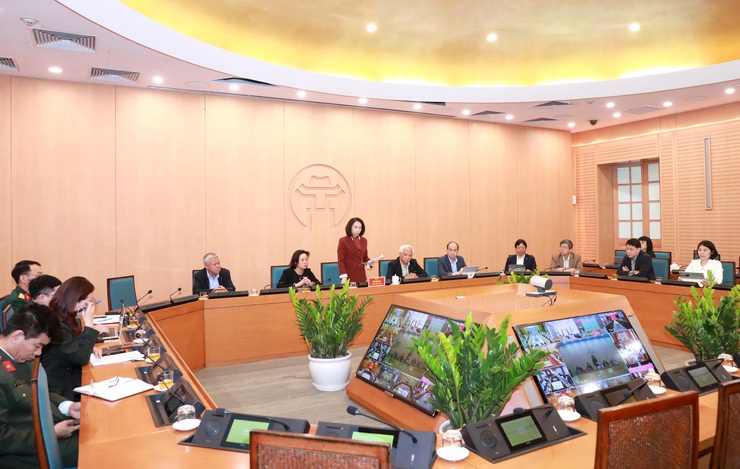 Overview of the conference at the Hanoi meeting point
In addition, Hanoi is piloting a daytime healthcare model for older adults at the commune and ward levels. After administrative restructuring, several unused government buildings are being studied for use in these programs.
Local authorities have been tasked with selecting pilot sites to provide services such as healthcare, rehabilitation, psychological counseling, nutrition consultation, cultural activities, sports programs, and other community activities.
Another key task is the development of healthcare services, rehabilitation programs, long-term care services, home care, and community-based care systems. On that basis, the city aims to gradually develop new service products, including wellness tourism models that combine healthcare and travel. Hanoi is also mobilizing social resources, particularly through public-private partnerships, to support these initiatives.
At the same time, the city is strengthening the application of science and technology in elderly healthcare. Hanoi is working with technology and innovation institutions to develop solutions for health monitoring and management. Several common chronic conditions among older adults, including hypertension, cardiovascular diseases, Alzheimer's disease, and osteoporosis, have been selected for monitoring. The city plans to pilot free health monitoring services for approximately 500 to 1,000 older adults before evaluating and expanding the model.
Alongside these initiatives, Hanoi is continuing to refine mechanisms and policies to encourage older adults to participate in socio-economic activities, business operations, and community engagement.
Notably, the intergenerational self-help club model has been maintained and expanded effectively. The model has been highly praised by the Ministry of Health. Hanoi currently has 532 active clubs, with an additional 70 to 100 new clubs established each year. The model is not limited to older adults but connects multiple generations within the community, helping them support one another while strengthening social cohesion.
Proposals to strengthen the development of the silver economy
Drawing from practical experience, Hanoi has also proposed several recommendations to further promote the development of the silver economy in the coming years.
According to Ha, Hanoi hopes the government and central agencies will provide clearer guidance on a national strategy for developing the silver economy, creating a foundation for local authorities to design effective mechanisms, policies, and implementation plans.
The city also recommended improving policy frameworks to encourage businesses and organizations to participate in developing products and services tailored to older adults, while increasing investment in healthcare systems and related social services.
In addition, Hanoi emphasized the need to expand social participation and mobilize broader societal resources to support and empower older adults. The city also called for stronger application of information technology, digital transformation, and science and technology in healthcare management, service delivery, and coordination of support activities.
Ha also highlighted the growing need to protect older adults from fraud, particularly online scams. Older individuals are often targeted by criminals, making it necessary to implement coordinated solutions through both policy frameworks and communication campaigns.
"Caring for and promoting the role of older adults is not only a matter of social welfare but also an important driver for developing the silver economy, in line with the aging population trend and sustainable development requirements in the new era," Ha emphasized.