The first Resolution addresses fines for violations of environmental protection. It targets both domestic and foreign individuals and organizations operating within Hanoi. These regulations apply unless international treaties to which Vietnam is a party stipulate otherwise. Authorities empowered by law to handle administrative environmental violations are responsible for enforcement, along with other agencies, organizations, and individuals involved in relevant enforcement activities.

Delegates at the event.
This environmental regulation allows for higher fines than those currently prescribed under the national Decree No. 45/2022/ND-CP. However, the fine levels must still comply with the ceiling established in Point k, Clause 1, Article 24 of the Law on Handling Administrative Violations, as amended.
The first Resolution specifies that the listed fine levels apply to individuals, while organizations committing the same offenses will be fined double. The resolution also reinforces that any revisions in the scope of authorities granted by the national government in the environmental domain will automatically adjust enforcement responsibilities under this local regulation.
The second Resolution addresses administrative violations in land management. Like the environmental regulations, it applies to both local and foreign violators within Hanoi and authorizes relevant government bodies to enforce the provisions. The key distinction of this Resolution lies in the establishment of fine levels that are double those stipulated in the newly issued national Decree No. 123/2024/ND-CP but still within the limits set by the Law on Handling Administrative Violations. Again, individuals face standard fines, and organizations face double those amounts for similar offenses.
The land management resolution identifies 71 specific administrative violations taken from Decree No. 123/2024/ND-CP, most of which concern unauthorized land use conversions and encroachments. These violations are detailed from Articles 8 to 29 of the Decree and have been customized for Hanoi's specific administrative needs and land management concerns.
Examples of punishable violations include the unauthorized conversion of rice cultivation land into other types of agricultural land, non-agricultural land (including residential land), and particularly conversion within administrative boundaries of communes, wards, and towns. When such violations occur within wards or towns—areas with higher land value and denser population—the fine is set at twice the already elevated Hanoi-specific level.
The Resolution also addresses the illegal conversion of special-use forest land, protective forest land, and production forest land into other types of agricultural or non-agricultural land. As with rice land, higher penalties apply for violations within urban administrative boundaries. Similar regulations apply to non-rice agricultural lands and non-forestry lands that are converted into residential or non-agricultural land without proper authorization.
The illegal conversion of other land types for commercial livestock operations or the transformation of public-use land into private or commercial use is also included among the fineable offenses. Notably, these provisions apply not only to land allocated by the State without fees but also to leased land or land for which use fees are required.
The regulations go further to address acts such as encroaching on or occupying land that is under state management or agricultural land that is not intended for rice, forestry, or other specified uses. When these violations occur in urban wards or towns, the fines are doubled. The most severe penalties—up to VND500 million for individuals and VND1 billion for organizations—are reserved for major violations, such as unauthorized occupation of state-managed land in urban districts.
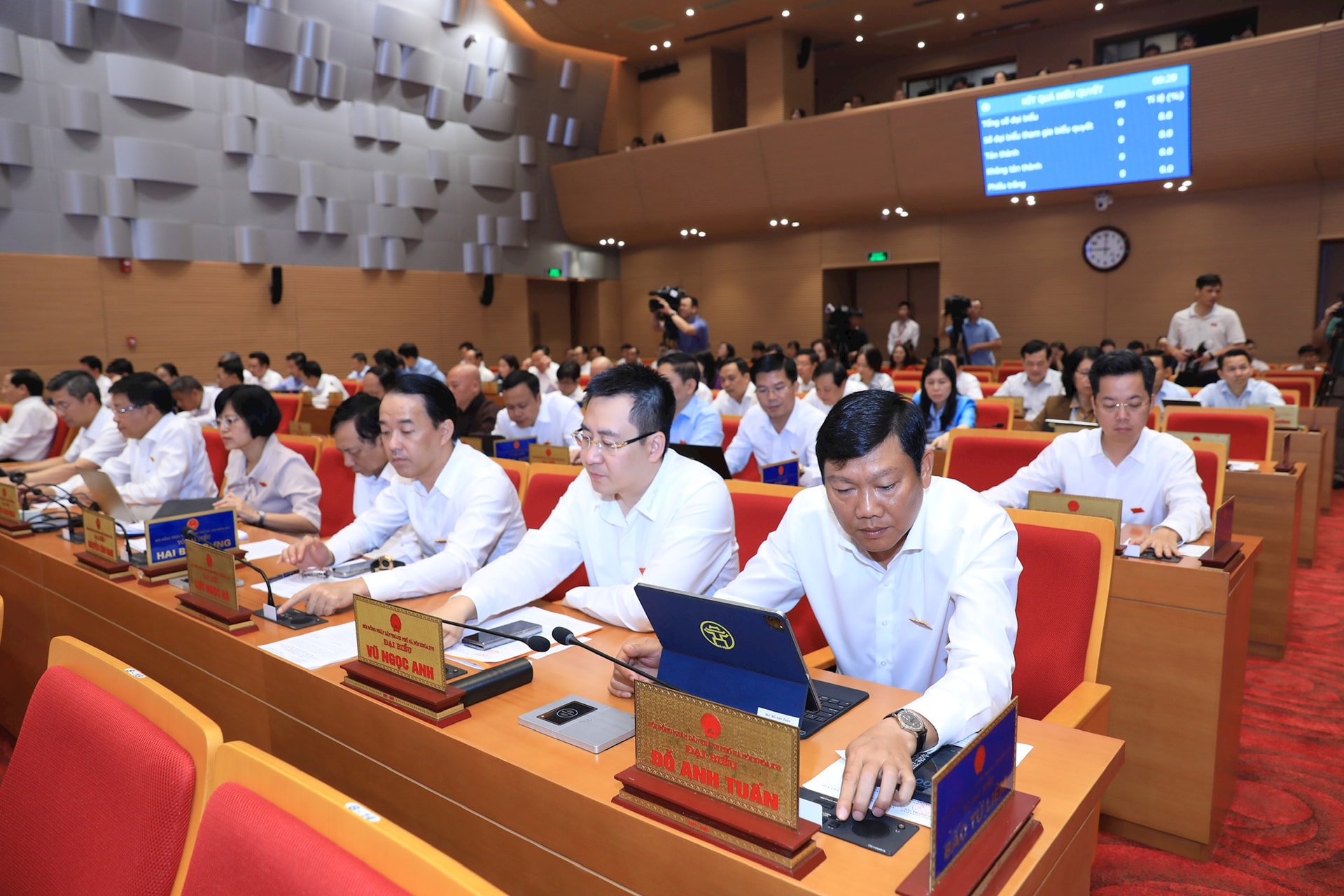
Delegates at the event.
Beyond encroachment, the Resolution targets behavior that degrades soil quality, including the removal or replacement of topsoil, actions causing erosion or nutrient depletion, or land alterations that reduce usability. Similarly, it penalizes physical alterations of land terrain that damage agricultural productivity or water retention, such as unapproved filling of wetlands, lakes, or rivers.
Failure to properly manage or register land as required by law is also penalized. Specific examples include not registering land for the first time, not updating land registration after changes, and improper transfer of agricultural land rights—particularly when legal requirements, such as ownership status or intended land use, are not met.
In summary, these two Resolutions represent a strong local regulatory step by Hanoi to tighten enforcement on environmental protection and land management. By leveraging the authority provided in the Capital Law, the city has established significantly higher fines for violations than at the national level while remaining within the legally permitted ceilings. These elevated penalties reflect the city's determination to deter unauthorized land conversion, preserve land use integrity, and improve environmental governance. Enforcement will require active coordination between government authorities and relevant agencies. The rules are also an example of the broader trend of decentralizing administrative sanctioning powers in Vietnam's major urban centers, allowing for more tailored policy implementation aligned with the local context.