Also attending were National Assembly deputies of Constituency No. 10, including Lam Thi Phuong Thanh, Party Central Committee member and Minister of Culture, Sports and Tourism, and Le Nhat Thanh, full-time member of the National Assembly's Council for Ethnic Affairs.
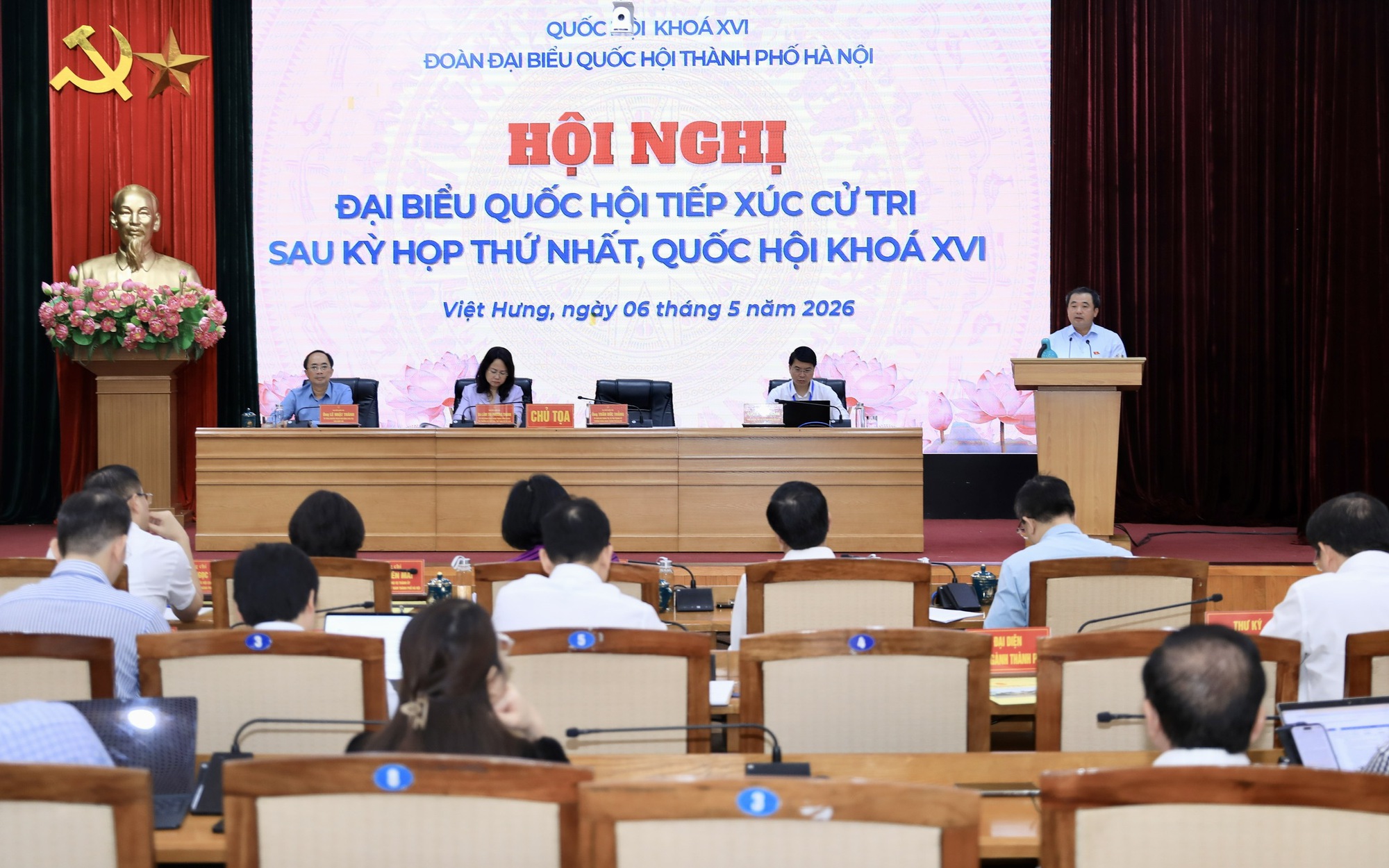 Overview of the voter meeting in Viet Hung ward
The meeting was held in person in Viet Hung ward and connected online to communes and wards under Constituency No. 10, including Long Bien, Bo De, Phuc Loi, Gia Lam, Thuan An, Bat Trang, Phu Dong, Thu Lam, Dong Anh, Phuc Thinh, Thien Loc, and Vinh Thanh.
The event was also attended by Phung Thi Hong Ha, Deputy Secretary of the Hanoi Party Committee, Chairwoman of the Hanoi People's Council, and Deputy Head of Hanoi's National Assembly deputy delegation; Bui Huyen Mai, member of the Standing Board of the Hanoi Party Committee and Chairwoman of the Vietnam Fatherland Front Committee of Hanoi; Duong Duc Tuan, member of the Standing Board of the Hanoi Party Committee and Standing Vice Chairman of the Hanoi People's Committee; and Tran Thanh Ha, full-time Deputy Head of Hanoi's National Assembly deputy delegation.
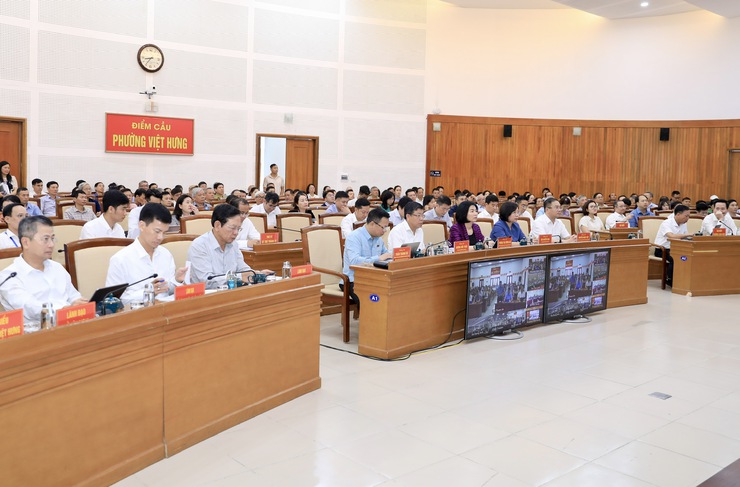 Delegates attend the meeting at the Viet Hung ward venue
At the start of the meeting, voters heard a report on the results of the first session of the 16th National Assembly and a report on responses from competent agencies to voters' proposals after the 10th session of the 15th National Assembly.
Speaking at the meeting, voters representing wards under Constituency No. 10 highly appreciated the outcomes of the first session of the 16th National Assembly, especially the passage of the 2026 Capital Law.
Voters expressed strong interest in the 2026 Capital Law, which provides Hanoi with many special mechanisms and policies. However, they noted that commune-level authorities still face limitations in authority, resources, and management tools when dealing with public concerns such as urban order, the environment, infrastructure, and public service delivery.
Voters said they hoped the 2026 Capital Law would help local governments respond more proactively and effectively to emerging issues and serve residents better.
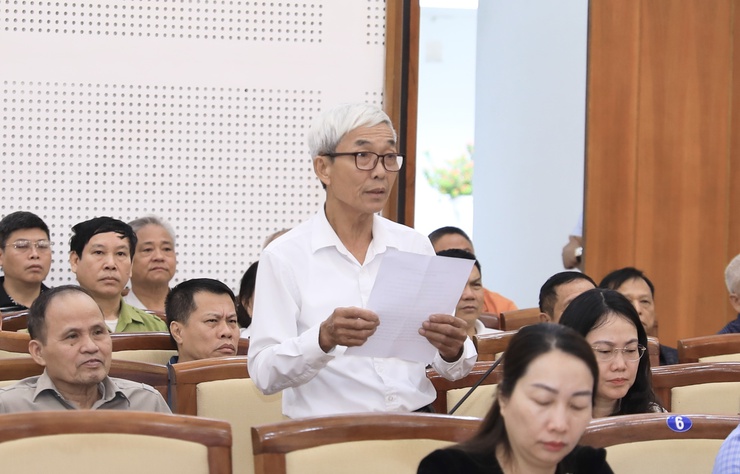 A voter from Viet Hung ward speaks at the meeting.
Voters also called for measures to ease overcrowding at central-level hospitals. They proposed that the Government and the Ministry of Health soon announce breakthrough solutions and specific resources to modernize commune and ward health stations in line with Resolution No. 72-NQ/TW.
In addition, voters asked the Government and Hanoi authorities to issue concrete mechanisms, policies, and guidance for localities and grassroots units to advance heritage digitization effectively. They also suggested piloting local participation models to gradually build digital databases and digital experience products related to heritage.
Voters also raised issues concerning the preservation and promotion of heritage linked to the development of cultural industries; citizen reception and petition settlement; inspection work at the commune level under the two-tier local government model; vehicle emissions testing methods; and improving the handling of civil status dossiers at the grassroots level.
At the meeting, Standing Vice Chairman of the Hanoi People's Committee Duong Duc Tuan discussed and clarified voters' comments and proposals within the city's authority.
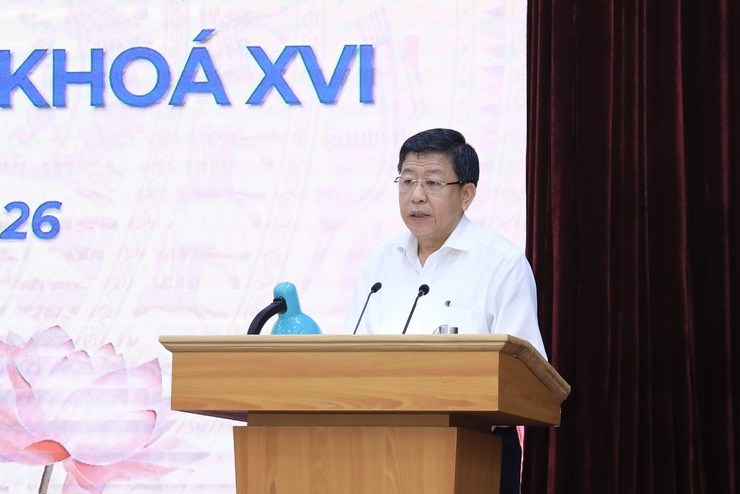 Standing Vice Chairman of the Hanoi People's Committee Duong Duc Tuan responds to voters' proposals
Speaking at the meeting, Hanoi Party Secretary Tran Duc Thang said the first session of the 16th National Assembly laid the foundation for a new term under the spirit of "Discipline – Responsibility – Innovation – Development." The National Assembly consolidated the State's senior leadership, ensuring continuity and a steady transition.
The greatest joy for voters in the capital, he said, was the National Assembly's approval of the revised Capital Law. This is not merely a law, but a "strategic lever" that addresses the special mechanisms Hanoi has long sought. The law gives the city greater autonomy in financial management, land use and investment, especially in mechanisms to attract talent.
This, he said, will serve as a launchpad for Hanoi to become not only the country's political and administrative center, but also a growth pole leading the Red River Delta and the nation, realizing the goal of double-digit growth in line with Politburo Resolution No. 02-NQ/TW on building and developing Hanoi in the new era.
Thang said that in the first quarter of 2026, despite global volatility, Hanoi maintained stability and strong development. Total budget revenue reached nearly 100% compared with the same period, while development investment spending rose sharply to more than 317%, a figure that reflected the city's determination to turn "investment capital" into a "growth driver."
The city also successfully organized elections for deputies to the 16th National Assembly and People's Councils at all levels for the 2026-2031 term.
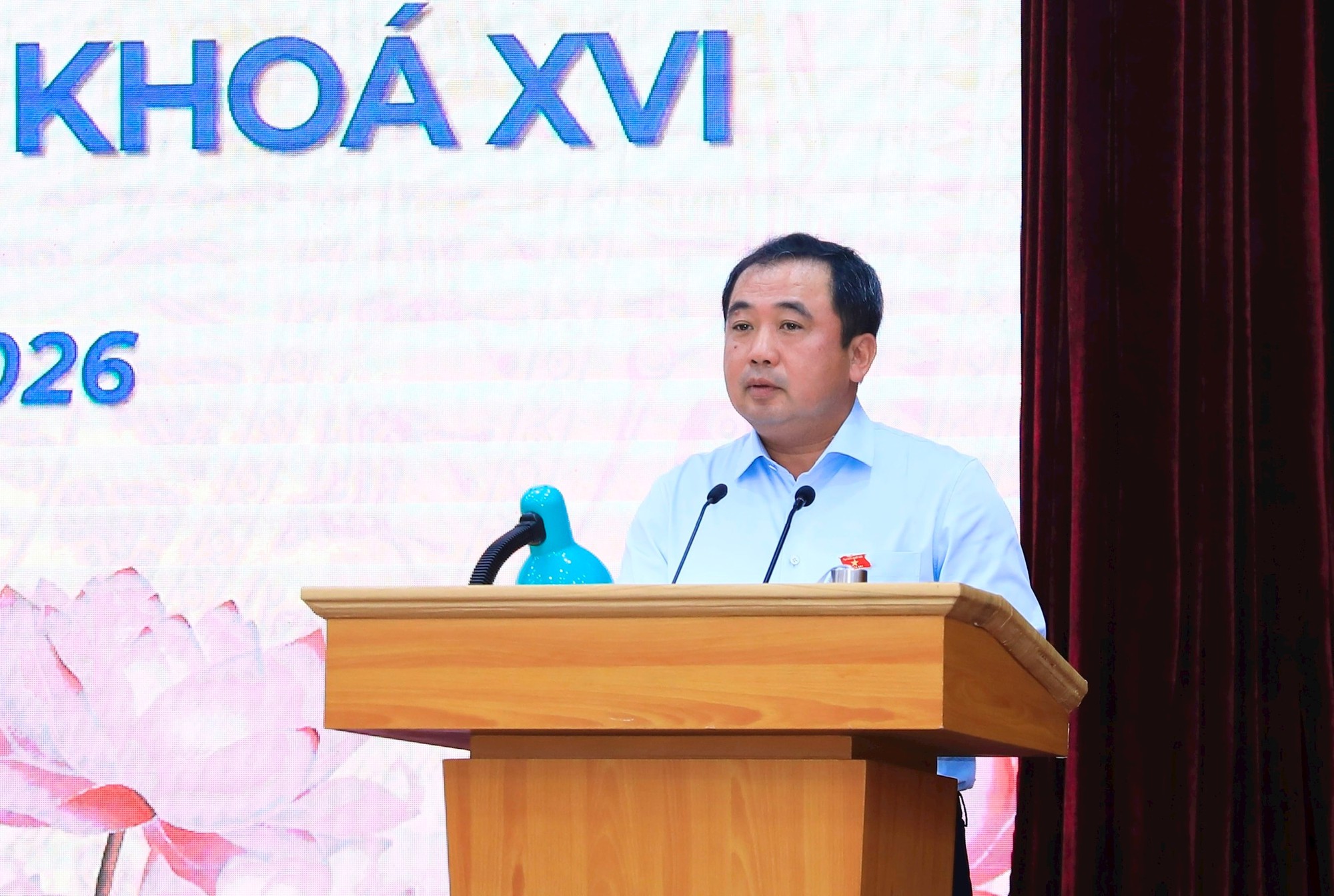 Hanoi Party Secretary Tran Duc Thang speaks at the voter meeting.
Alongside these achievements, Thang acknowledged voters' concerns about pollution in rivers, pressure on urban traffic, delayed projects, and fire and explosion risks in residential areas.
He said the city would fully absorb voters' responsible and heartfelt comments and direct competent agencies to review and resolve them in accordance with regulations, with clear responsibilities, clear timelines, and clear outcomes, under the spirit: "Whatever benefits the people must be done with full effort; whatever harms the people must be avoided with full effort."
Thang then discussed three groups of specialized issues that the Hanoi Party Committee is focusing on in the communes and wards under Constituency No. 10.
First, as for planning management and the use of development space, he said the most difficult task for riverside communes such as Vinh Thanh, Phuc Thinh, and Thien Loc, as well as wards such as Bo De and Long Bien, is to harmonize dyke protection with the development of riverbank economies. The city is urgently completing architectural management regulations and detailed planning so residents can stabilize their housing while forest parks and ecological zones worthy of the Red River and Duong River corridors can be formed.
Second, on transforming the economic model of craft villages and high-tech agriculture, he said Bat Trang should not stop at traditional ceramic production. The goal is to develop Bat Trang into an international creative design and experiential tourism center. For communes such as Phu Dong, Gia Lam, and Thuan An, as urbanization spreads, the city requires the protection of land for ecological agriculture and high-tech demonstration models, avoiding spontaneous land subdivision that could disrupt heritage spaces.
Third, on connectivity infrastructure and urban bottlenecks, he said areas such as Viet Hung, Phuc Loi, Thu Lam, and Dong Anh are under heavy traffic pressure due to rapid population growth. The city is accelerating progress on bridges across the Red River, including Tu Lien Bridge and Tran Hung Dao Bridge, as well as eastern arterial roads.
However, alongside hard infrastructure, local leaders must also pay attention to "soft infrastructure," he said. This includes domestic wastewater treatment systems in old residential areas and improving the capacity of commune-level administrations as they transition into wards.
Thang emphasized that tasks from now to the end of the year are extremely demanding. To bring the 2026 Capital Law into life and turn voters' proposals into reality, he asked all levels and sectors of the city to focus on four priorities.
On implementing mechanisms, he said the city must quickly specify the provisions of the 2026 Capital Law. Departments and agencies must proactively propose special policies through resolutions of the Hanoi People's Council, decisions of the Hanoi People's Committee, and decisions of the Chairman of the Hanoi People's Committee, with full issuance before June 15 for implementation from July 1, 2026.
Thang said Hanoi must treat this as a historic opportunity to develop faster and more sustainably. The city must also decisively address and recover long-delayed and suspended projects to release wasted land resources and prevent new delays from emerging.
On urban management, Thang said the city cannot develop or become a truly livable one if it still faces five bottlenecks: flooding, traffic congestion, environmental pollution, construction order, and food safety.
He asked commune and ward authorities, especially in fast-urbanizing areas, to work with the city to substantially address these five bottlenecks in the early months of 2026. They must also strengthen planning management and absolutely prevent illegal construction that damages the overall landscape. If violations occur, the first responsibility will lie with the Party secretary of the commune or ward and the local officials directly carrying out these duties. Communes and wards must be determined to build green, clean, and beautiful localities that bring a better life to residents.
On administrative reform, Thang called for substantive digital transformation so residents no longer have to travel repeatedly to complete procedures. He also demanded the immediate removal of officials who avoid responsibility, shift blame, or lack the ability to perform their duties.
On social welfare, he said economic development must go hand in hand with cultural preservation and care for people's lives. Localities must ensure that all residents benefit from the capital's development, especially policy beneficiaries, people with meritorious service, and disadvantaged households.
Taking time to respond to specific issues raised by voters, Thang said Hanoi's National Assembly deputy delegation would compile and classify each issue to report to the National Assembly and make recommendations to the Government, ministries, and relevant agencies for consideration and resolution. For issues under the city's authority and responsibility, he requested the Hanoi People's Committee to develop a specific settlement roadmap as soon as possible.
Regarding hospital overcrowding, Thang said the Hanoi Party Committee and Hanoi People's Committee had directed the Department of Health and relevant departments to review all preventive health facilities, grassroots health facilities, and available land sites across the city to focus on developing primary healthcare. The city will also ensure the medical workforce needed to carry out this important task.
On the settlement of petitions at commune level, Thang assigned the Chief Inspector of the city to issue general guidance for communes and wards across Hanoi before May 15, 2026.
Emphasizing that Hanoi is standing at the threshold of a new era, an era of national rise, Thang expressed confidence that with voters' unity and the determination of the entire political system, the capital will truly become a cultured, civilized, and modern city worthy of the trust and affection of people across the country.