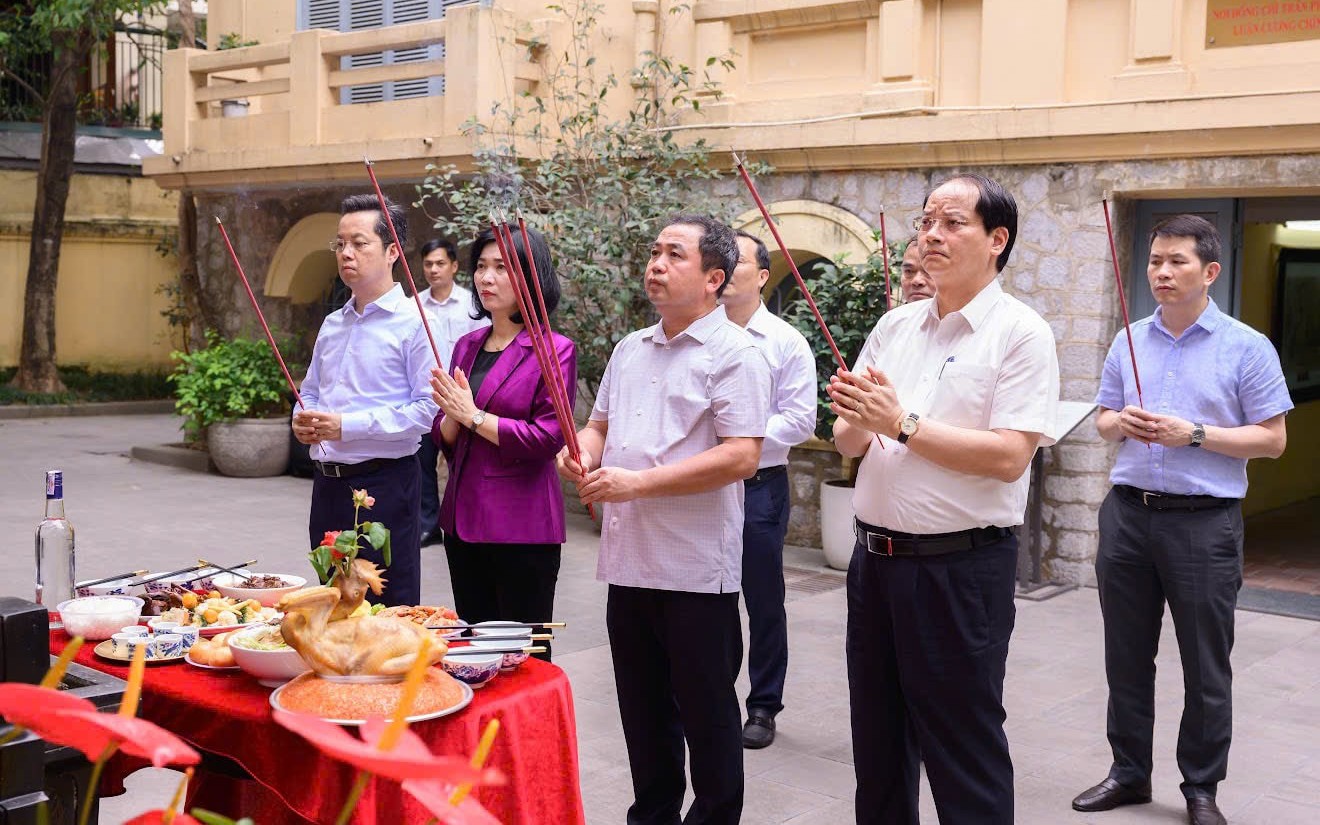
City leaders offer incense in memory of General Secretary Tran Phu.
Joining the delegation were Phung Thi Hong Ha, Deputy Secretary of the Hanoi Party Committee and Chairwoman of the Hanoi People's Council; Nguyen Doan Toan, member of the Standing Board of the Hanoi Party Committee and head of the committee's Commission for Information, Education and Mass Mobilization; and Vu Dang Dinh, member of the Standing Board of the Hanoi Party Committee, Secretary of the Hoan Kiem Ward's Party Committee and Chairman of the Hoan Kiem Ward's People's Council.
In a solemn atmosphere, city leaders and delegates laid a wreath, offered incense and observed a moment of silence to honor Tran Phu, a steadfast communist soldier, an outstanding leader of the Party, and the person who laid an important foundation for Vietnam's revolutionary line
The city delegation expressed deep gratitude and pledged to continue upholding the capital's proud revolutionary traditions while building Hanoi into a more prosperous, cultured, civilized, modern, and happy city.
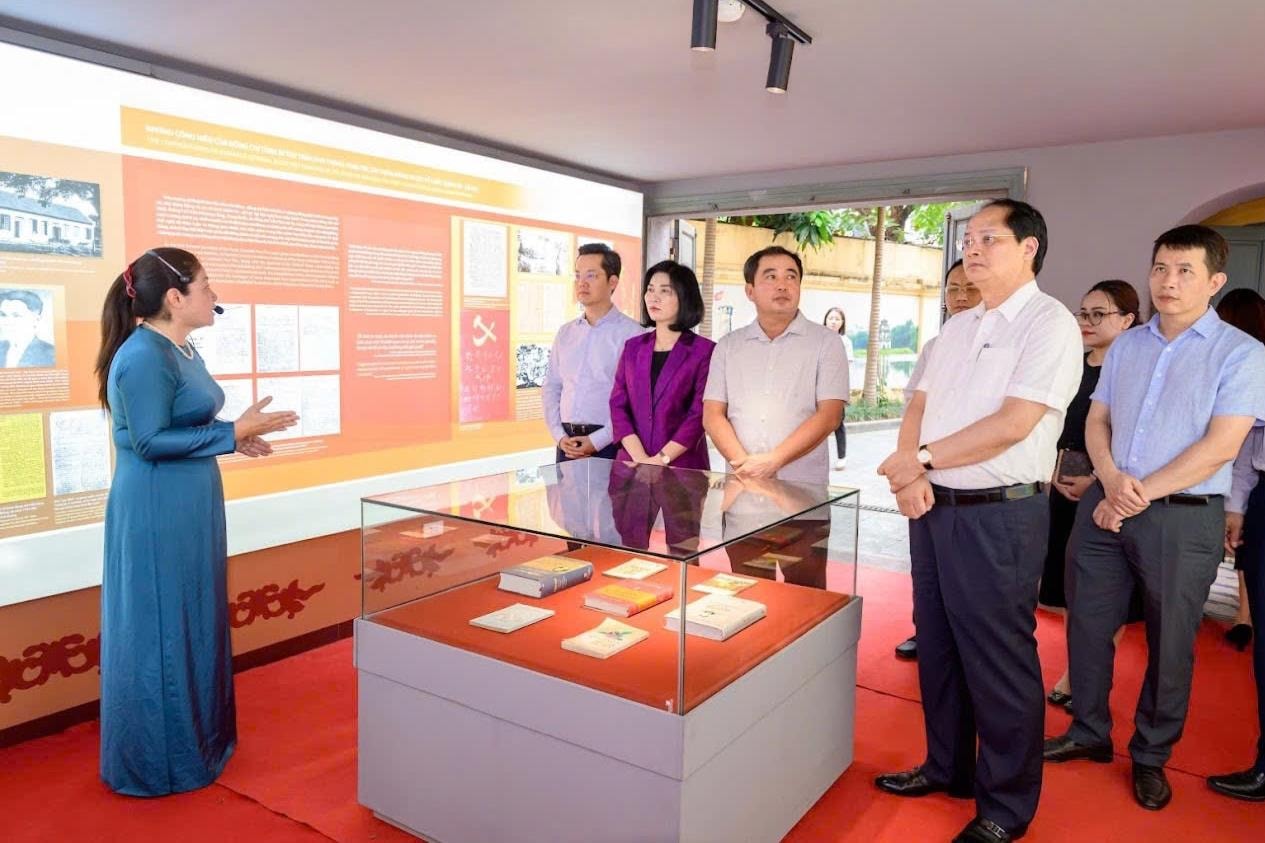 The city delegation visits the relic site at 90 Tho Nhuom Street.
Tran Phu, 1904-1931, was the first General Secretary of the Communist Party of Vietnam, an outstanding student of President Ho Chi Minh, a resilient and exemplary communist, and an outstanding son of the Party and the nation. He was born on May 1, 1904, in Tung Anh Commune, formerly in Duc Tho District, Ha Tinh Province. Orphaned at a young age, he constantly strove to overcome hardship, became politically awakened early, and soon showed the qualities of a revolutionary leader.
In October 1930, at a Party Central Committee conference, Tran Phu was elected the Party's first General Secretary. In this important position, he made major contributions to building the Party politically, ideologically, and organizationally. The Political Thesis he drafted and later adopted became an important Party document, applying Marxist-Leninist principles on national and colonial issues as well as key points from the Brief Political Platform and Brief Strategy drafted by Nguyen Ai Quoc, later known as President Ho Chi Minh.
The house at 90 Tho Nhuom Street, in Cua Nam Ward, was one of the secret bases of the Provisional Central Committee of the Communist Party of Vietnam from February 1930 to October 1930. It was here that Tran Phu drafted the Political Thesis. The site at 90 Tho Nhuom Street has been recognized by the Ministry of Culture, Sports, and Tourism as a national historical relic.
Tran Phu died on September 6, 1931, the 24th day of the seventh lunar month in the Year of Tan Mui, in solitary confinement cell A3 at Cho Quan Hospital in Saigon, now Ho Chi Minh City.
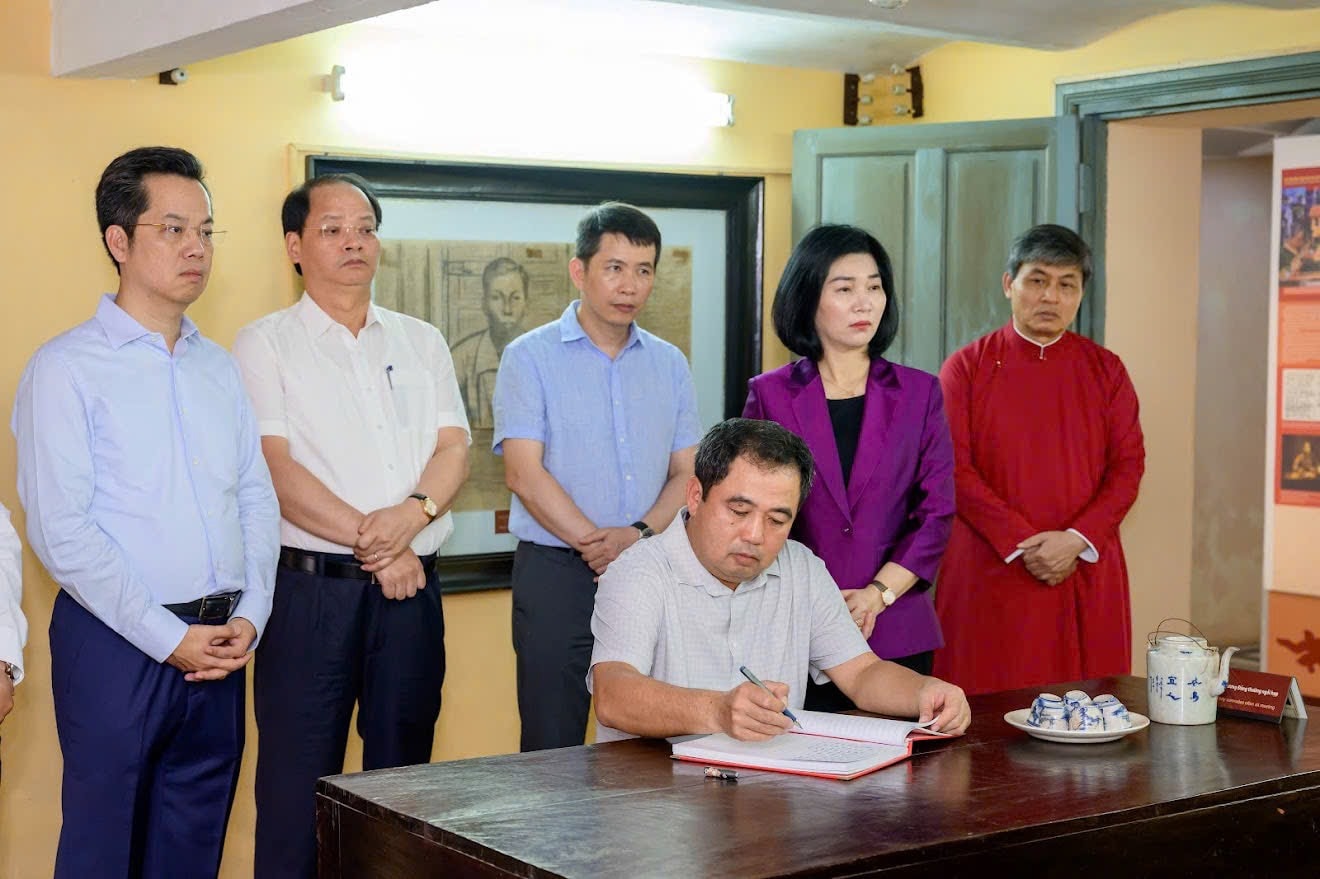 Hanoi Party Secretary Tran Duc Thang writes in the memorial book at the 90 Tho Nhuom relic site.
At the incense-offering ceremony, delegates also heard an introduction to Tran Phu's life and revolutionary career and visited the exhibition space displaying valuable artifacts and documents related to his activities at the house at 90 Tho Nhuom Street.
The images and artifacts preserved there not only vividly recreate a difficult period in history but also help educate officials, Party members, and Hanoi residents about patriotism and revolutionary ideals.
Hanoi Party Secretary Tran Duc Thang wrote in the memorial book at the relic site, expressing reverence and deep gratitude for the dedication and heroic sacrifice of General Secretary Tran Phu.
The incense-offering ceremony was an opportunity for the Party organization, authorities, and people of the capital to recall their proud revolutionary traditions and reaffirm their determination to continue the path chosen by previous generations.