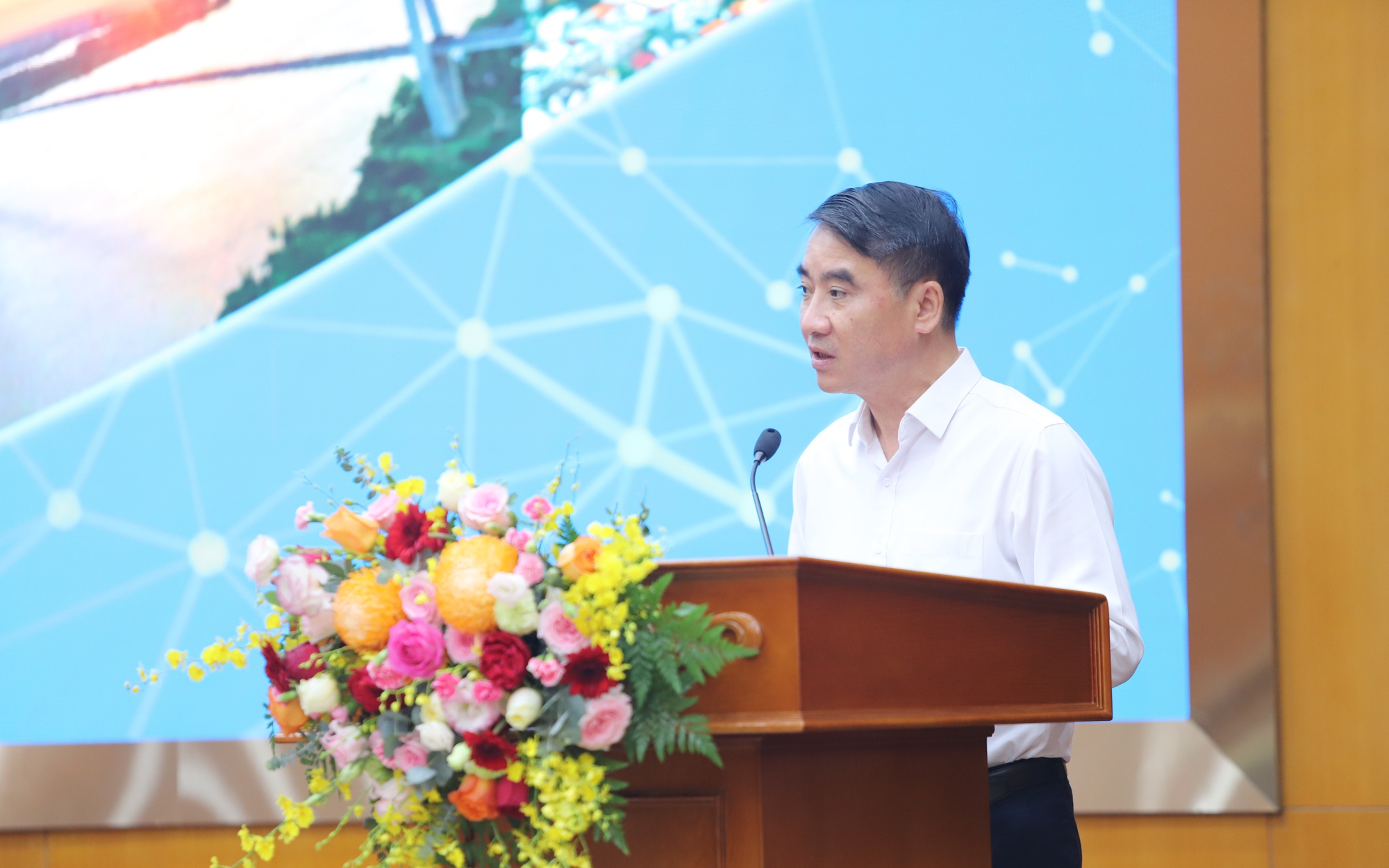
 Vice Chairman of the Hanoi People's Committee Nguyen Xuan Luu delivers a presentation at the conference
At the conference, Vice Chairman of the Hanoi People's Committee Nguyen Xuan Luu delivered an important presentation titled "Vision and Development Orientation for Hanoi Capital to Promote Its Role as a National Growth Pole and a Leading Driver of Regional Connectivity."
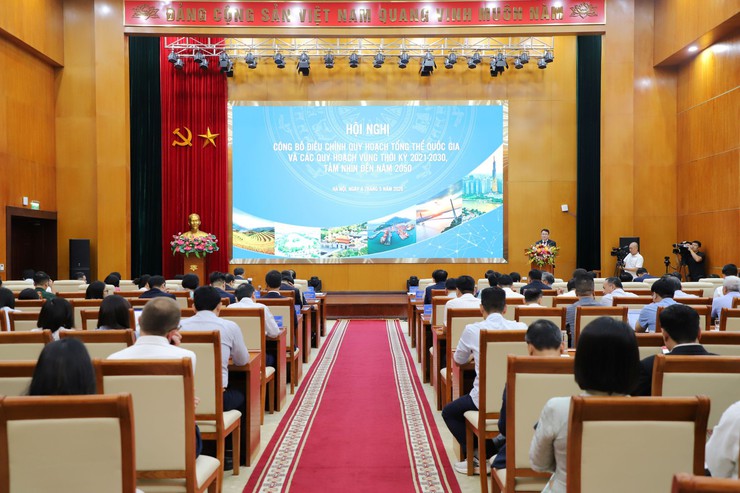 Overview of the conference
A new position for the capital in the national and regional system
Speaking at the conference, Luu said Hanoi's position and role have been defined in Politburo Resolution No. 02-NQ/TW dated March 17, 2026, and Capital Law No. 02/2026/QH16, passed by the National Assembly on March 24, 2026.
Accordingly, Hanoi is the core and central urban area of the Capital Region. It is a center, a driving force for development and connectivity, a national growth pole, and a development engine for the Capital Region, the Red River Delta, and the northern midland and mountainous region.
Within the national and regional planning system, Hanoi continues to be identified as a central growth pole, leading development not only for the region but also for the country. The city is also positioned as a core hub in the national ecosystem for innovation, science and technology, education and training, and finance.
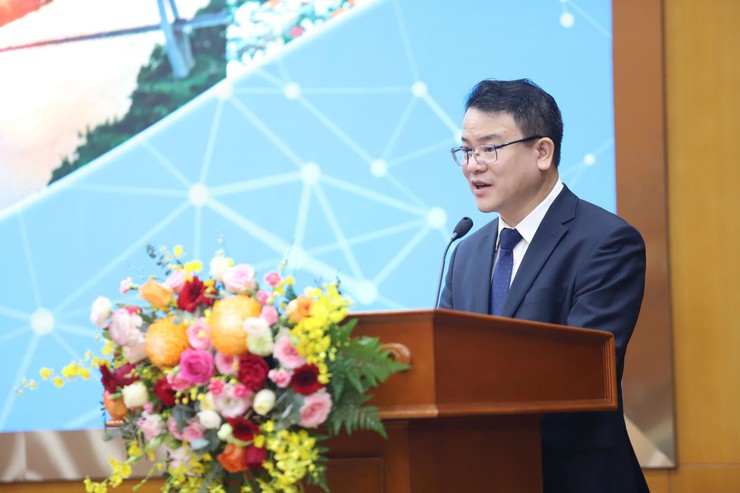 Deputy Minister of Finance Tran Quoc Phuong speaks at the conference
At the Capital Region level, a "centripetal urban cluster" model has been established, with Hanoi as the central urban area organically connected with six adjacent provinces and cities: Phu Tho, Thai Nguyen, Bac Ninh, Hung Yen, Ninh Binh, and Hai Phong. Satellite urban areas are assigned clear functions, helping form a coordinated development network.
Economic performance shows the capital's leading role is becoming increasingly clear. Hanoi's 2025 and first-quarter 2026 indicators show that its GRDP accounts for a large share of national GDP, its budget revenue ranks first nationwide, and growth remains high and stable.
To match its established position, Hanoi has developed a long-term development timeline with specific milestones. By 2065, the capital's GRDP is expected to reach about $1.92 trillion, with GRDP per capita at $95,000, aiming to join the group of capitals with high quality of life and happiness levels worldwide.
The city has also established a new growth model structured around "three pillars, five drivers, and four development spaces," linked to three major transitions: from capital-based growth to productivity-based growth; from direct public investment to public investment that leads and activates private capital; and from traditional industries to knowledge-based sectors.
For 2026-2030, Hanoi has set ambitious growth targets, with average GRDP growth of 11% a year; total factor productivity contributing 57% to growth; the digital economy accounting for 40% of GRDP; the ICOR falling to 5.5; total social investment reaching VND5 quadrillion; and FDI reaching $16 billion.
In spatial organization, Hanoi is shifting from a single-core urban model to a multi-polar, multi-center, multi-level, and multi-layered structure with nine development poles, nine major centers, and nine driving corridors. Each development pole is linked to key economic sectors and flagship projects, ensuring they can be translated into concrete investment programs.
Four action pillars to promote regional connectivity
Luu said Hanoi's role as a "leading driver of regional connectivity" is not just a slogan. The city has translated that role into four clear action pillars.
The first pillar is strategic infrastructure connectivity. The city is implementing major ring roads, developing the Capital Region railway network under a "two loops, seven lines" structure, and organizing its aviation system around a three-airport cluster. Bridges across rivers are expected to be completed before 2027, alongside the formation of an economic corridor directly connecting the capital to the sea.
The second pillar is connectivity in value chains and interprovincial production spaces. Hanoi aims to link its development poles with functional clusters in neighboring localities, forming interregional value chains in areas such as science and technology, logistics, tourism, and high-tech agriculture.
The third pillar focuses on connecting ecosystems for science and technology, innovation, human resources, and finance. Hanoi serves as the center that provides foundational inputs for the whole region, from research and development and high-quality workforce training to finance and specialized healthcare.
The fourth pillar is environmental governance connectivity and regional coordination institutions. The city is proactively taking on a coordinating role in addressing interregional environmental issues and has proposed establishing a coordination mechanism and a development fund for the Capital Region to improve the effectiveness of regional linkages.
Through these efforts, Hanoi is demonstrating its determination to realize its role as a national growth pole and development engine, making active contributions to the sustainable development of the region and the country.