The plan aims to continue promoting and widely communicating the movement while calling on Party members, officials, mass organizations and residents to follow President Ho Chi Minh's teaching that spring is the season for tree planting to make the country greener and more prosperous.
It also seeks to create a vibrant, optimistic and joyful atmosphere across the city in the early days of Spring Binh Ngo 2026, laying a foundation for Hanoi's development in 2026 and the 2026–2030 period and linking activities to celebrations of the 14th National Party Congress.
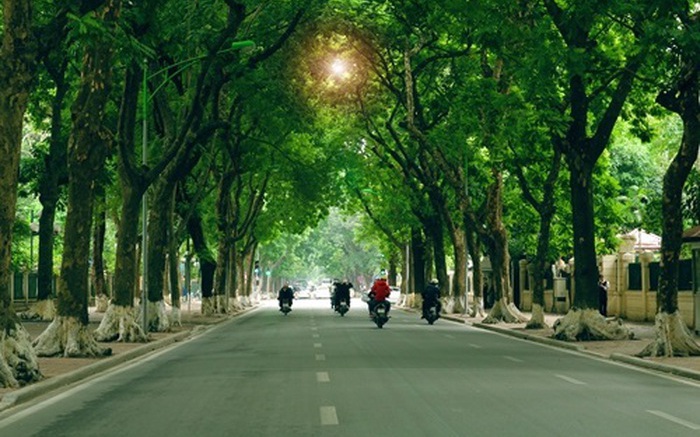
Under the plan, Hanoi aims to plant more than 400,000 new trees of various types in 2026. This includes about 200,000 shade and timber trees and around 200,000 fruit trees. Tree planting will take place along transport routes in urban areas at offices, parks, hospitals, schools and households.
The city also plans to establish about 20 to 30 hectares of new production forests while strengthening the management and protection of existing protection and special-use forests to help maintain stable forest coverage. During the initial Spring Binh Ngo 2026 campaign, Hanoi targets planting about 80,000 to 100,000 trees citywide.
The Spring Binh Ngo 2026 Tet Tree Planting Festival will be held simultaneously across the city from February 21, 2026, the fifth day of the Lunar New Year, to March 3, 2026, the fifteenth day of the first lunar month.
Localities that host annual early spring festivals are encouraged to integrate the tree planting launch into these events. Through this movement, officials, Party members and residents are expected to gain a deeper understanding of the meaning of the Tet Tree Planting Festival in gratitude to President Ho Chi Minh and to raise awareness and responsibility among authorities, communities and individuals for tree planting and forest protection.
The program also highlights the role of greenery in socio-economic development, environmental protection, climate change mitigation and the reduction of CO2 and greenhouse gas emissions toward the Net Zero goal.
Tree planting activities will be carried out at historical and cultural sites, new urban areas, public facilities, schools, hospitals, parks along transport corridors, newly opened roads, and other locations suitable for each locality or unit.
Tree species will be selected to match local climate and soil conditions, with priority given to tested species, multi-purpose trees, large timber trees, landscape trees, shade trees, and rare, valuable timber species. Trees prepared for early spring planting must meet quality standards for urban greenery and be free from deformities and pests.