
Hanoi is accelerating efforts to develop a statistical indicator framework for cultural industries.
Growing need for a cultural industry statistics framework
Experts at the workshop emphasized that cultural industries cover a broad range of sectors, are highly interdisciplinary, and often generate intangible value. As a result, accurately measuring their economic and social contributions is essential for effective management and development.
Tran Hoang, Director General of the Copyright Office of Vietnam under the Ministry of Culture, Sports and Tourism, said the initiative is being implemented in line with Politburo Resolution No. 80-NQ/TW on the development of Vietnamese culture and carries significant importance for the growth of cultural industries nationwide.
According to Hoang, while cultural statistics have been collected for many years, compiling data on cultural industries remains challenging because of the sector's broad scope and the lack of a fully unified definition and classification framework.
Based on UNESCO recommendations, the Ministry of Culture, Sports and Tourism has worked with statistical authorities to review and standardize concepts, define industry categories, and establish statistical classifications to create a unified indicator system.
The draft framework currently consists of five main groups of indicators:
Physical and technical infrastructure Cultural industry markets and product promotion Cultural industry activities and development outcomes Education and workforce development Intellectual property registration and protection
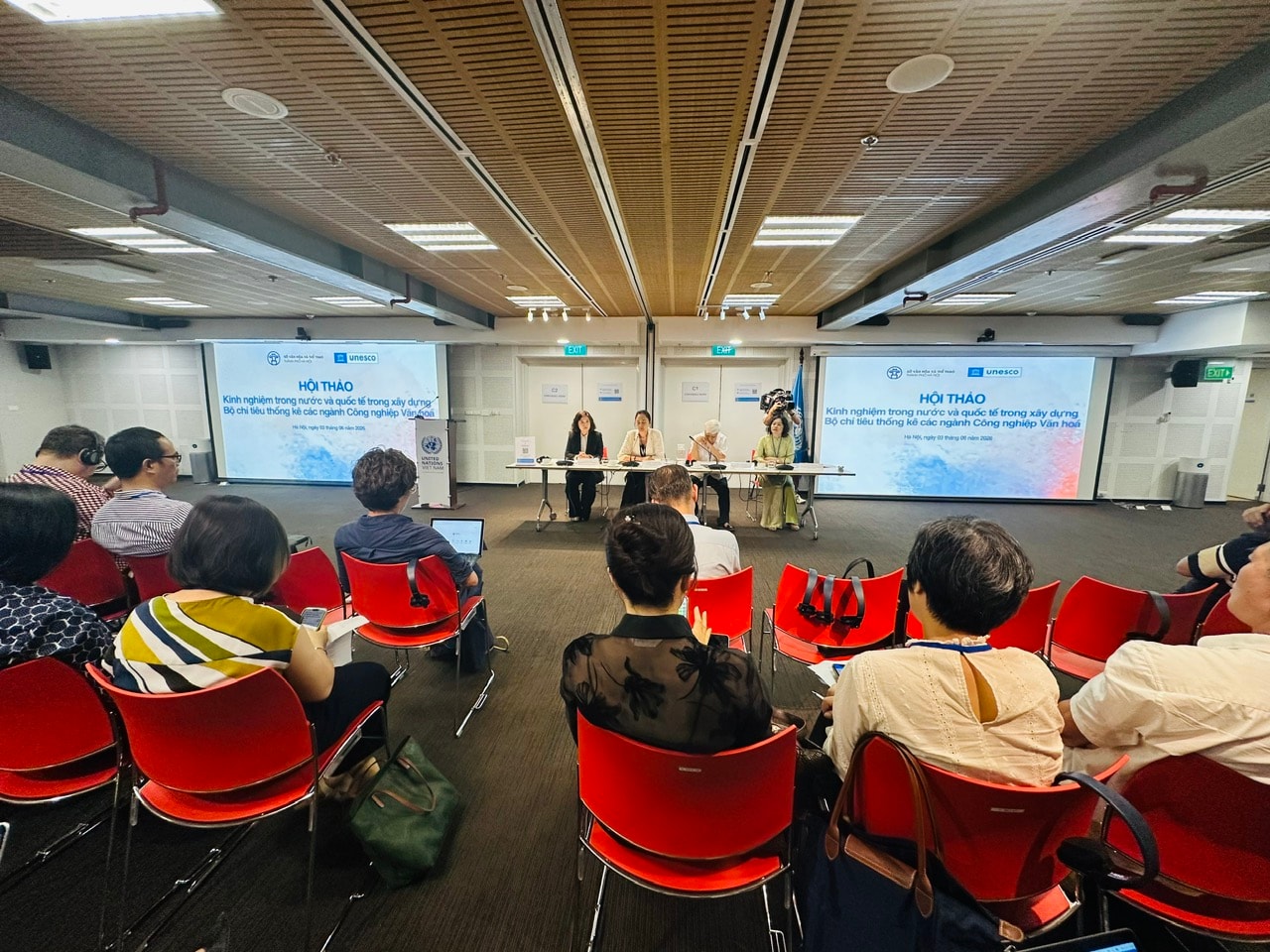 Participants at the workshop.
One of the most significant challenges is data availability. Building a comprehensive statistical system requires not only traditional surveys but also data from administrative reporting systems and other specialized sources.
Hoang suggested that the initial phase should prioritize indicators with clear definitions and data that can be collected from existing sources. If Hanoi successfully develops and implements the framework, it could serve as a valuable model for other localities across Vietnam.
Sharing a similar view, Nguyen Thi Thu Ha, Director of the Center for Assistance and Development of Contemporary Arts, said that building a comprehensive cultural industry database and statistical system is critical for policymaking and sustainable development.
Vietnam currently lacks a dedicated statistical framework for cultural industries. Existing data are fragmented, inconsistent, and difficult to compare because they are collected under separate projects and programs.
Coordination among government agencies, ministries, local authorities, and market research organizations also remains limited, contributing to fragmented information.
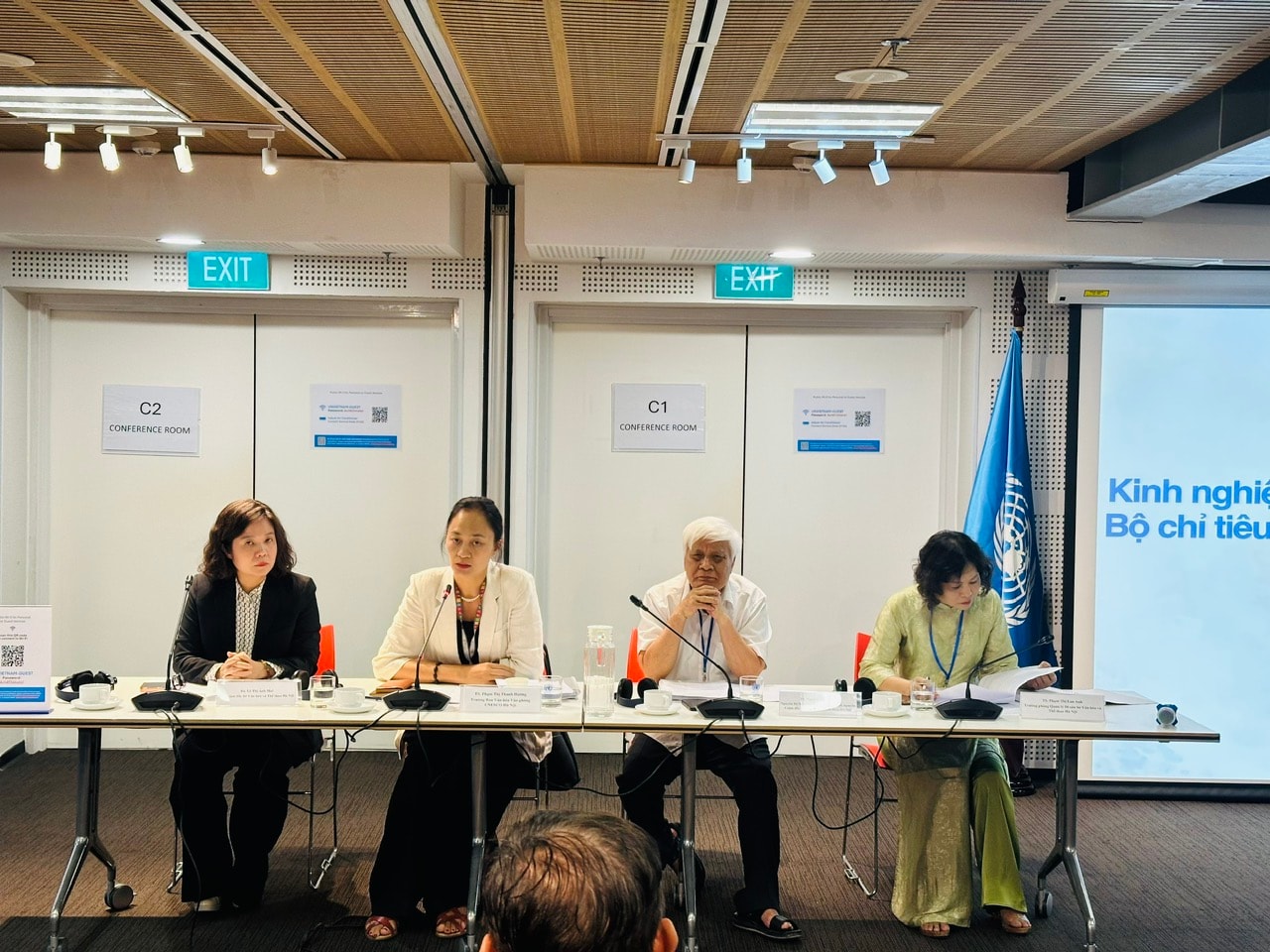 Officials chair the workshop.
Ha stressed that data form the foundation of policymaking. A reliable and comprehensive data system would help policymakers identify priority sectors, improve the competitiveness of cultural industries in attracting investment, and evaluate the effectiveness of development programs.
To address current shortcomings, she proposed the early development of a national cultural industry statistics framework, stronger coordination among relevant agencies, the establishment of a centralized digital platform for data management and publication, and enhanced capacity building for cultural statistics professionals.
International lessons and recommendations for Hanoi
International experts attending the workshop shared experiences in developing cultural industry statistical systems and offered recommendations for Hanoi.
Tom Fleming, a cultural industry consultant with the British Council, noted that inconsistent data sources remain a major obstacle, making it difficult to identify development trends accurately. He recommended creating interconnected databases to support international cooperation and improve cross-country comparisons.
According to Fleming, statistical systems should go beyond traditional economic indicators and include measures that capture the relationship between culture and other sectors such as healthcare, environmental sustainability, and social development.
For Hanoi, he said, identifying the city's unique strengths, competitive advantages, and distinctive cultural ecosystem should be a key priority. He also emphasized that indicator development should align with UNESCO standards to strengthen international integration and benchmarking.
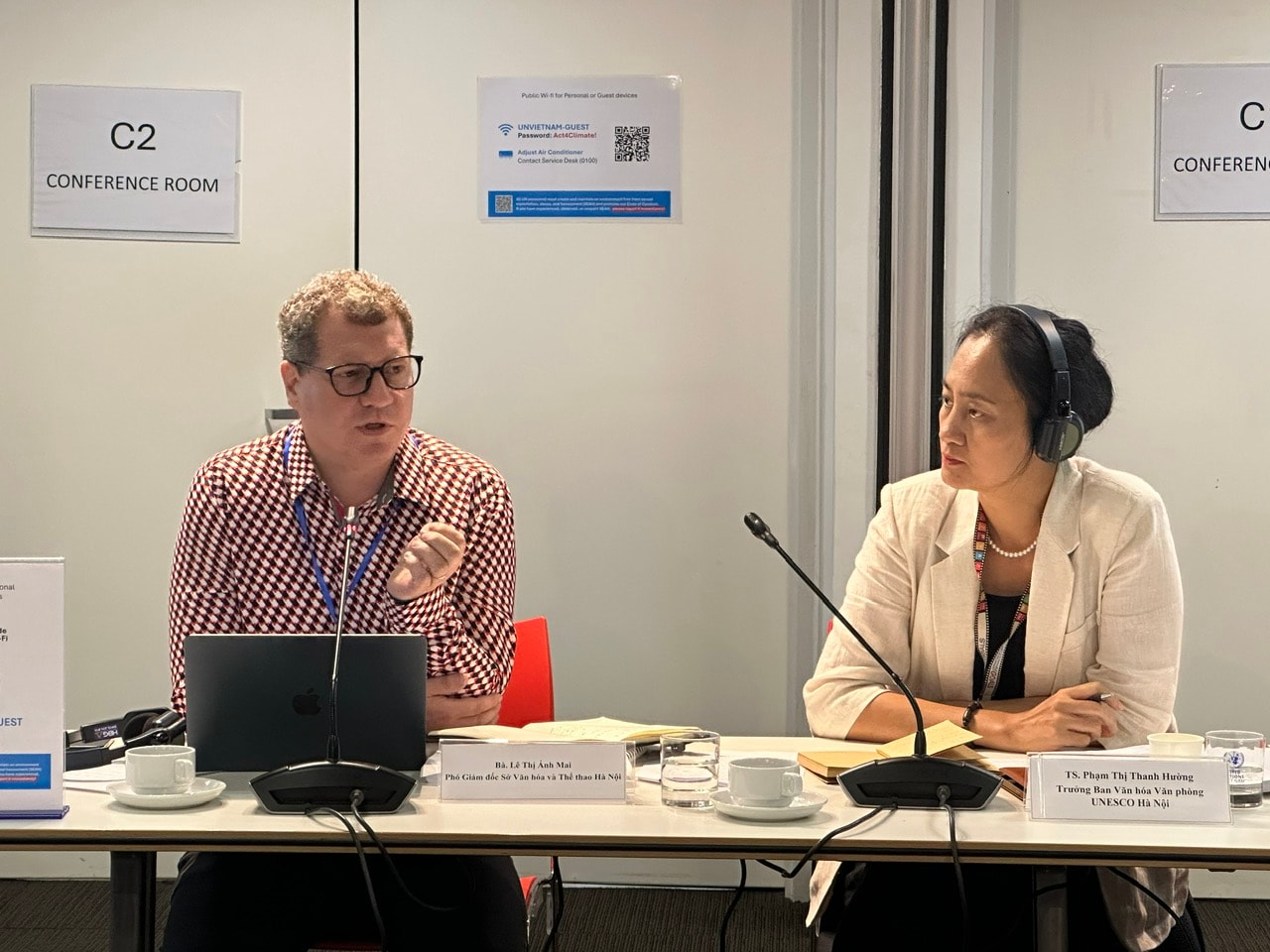 Dr. Emmanuel Cerise, Representative of the Paris Region in Hanoi and Director of the Paris Region International Cooperation Agency in Vietnam, shares international experience.
Professor Xiang Yong of Peking University argued that while cultural industry indicators should follow international standards, they must also reflect local realities.
He suggested that Hanoi develop a classification system tailored to the capital's specific conditions and align cultural activities with Vietnam's industrial classification framework.
The city should also prioritize sectors that contribute to shaping national cultural identity and capitalize on distinctive creative strengths such as water puppetry, folk music, and lacquer art.
Xiang recommended implementing the statistical framework in phases, beginning with pilot projects at selected institutions before expanding citywide.
Drawing on French experience, Dr. Emmanuel Cerise said Hanoi possesses significant potential for cultural industry development thanks to its rich heritage assets and favorable environment for creative activities.
However, he stressed that heritage should be leveraged through innovative approaches that transform cultural assets into drivers of economic and social development.
Discussions at the workshop highlighted that developing a cultural industry statistical framework is not merely a technical exercise. It is a crucial foundation for building a modern governance system based on data and evidence.
The framework is expected to become an important tool for Hanoi to measure development outcomes, refine policies, and unlock the full potential of its cultural industries in the years ahead.