At the meeting, AIIB representatives said that since early 2024, the bank has mobilized teams of experts in railways, systems engineering, procurement, environmental issues, and social safeguards to support the Hanoi Urban Railway Management Board (MRB) in preparing the extended Metro Line 2A project connecting Ha Dong and Xuan Mai.
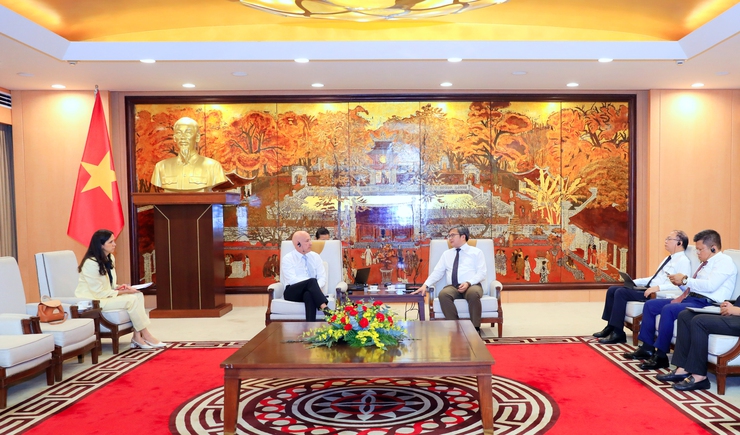 Overview of the meeting.
According to AIIB, the initial loan preparation phase has been completed. The next step is for the Vietnamese side to finalize the necessary procedures so that AIIB can officially consider the project for financing. Technical teams from AIIB and MRB are continuing to work together on appraisal documents and related materials.
Reflecting on the partnership with Hanoi, Andres Pizarro said AIIB is still a relatively new multilateral development bank but has an advantage in adaptability.
"We are a newer institution, and that allows us to be more flexible, listen closely to our clients, and adapt to the practical needs of our partners. Throughout the preparation of Hanoi's urban railway project, we have worked to ensure that AIIB's requirements are compatible with Vietnam's regulations and local conditions," Andres Pizarro said.
AIIB representatives also praised MRB's cooperation, noting that both sides share a similar approach to project development, with a common goal of optimizing investment costs, improving operational efficiency, and minimizing long-term financial burdens.
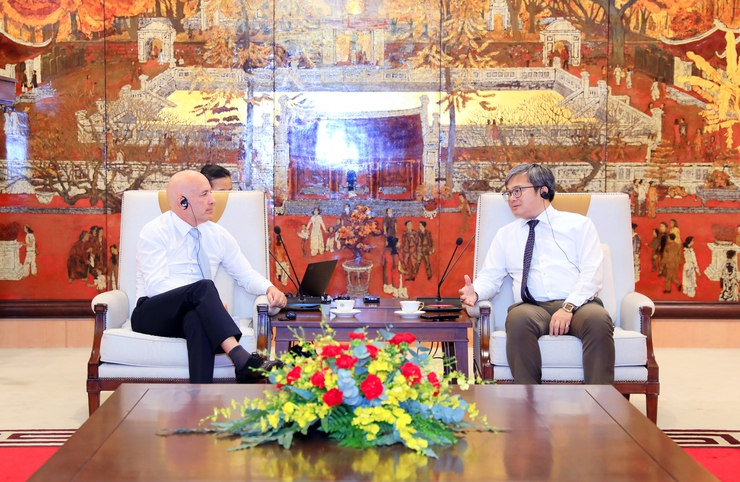 Hanoi Vice Chairman Truong Viet Dung and Andres Pizarro, AIIB Director for Southeast Asia Transport, exchange views during the meeting.
Speaking at the meeting, Vice Chairman of the Hanoi People's Committee Truong Viet Dung said Hanoi aims to develop more than 300 kilometers of urban railway lines by 2030. To achieve this goal, the city is exploring various funding sources and investment models to meet future infrastructure development needs.
Welcoming the AIIB delegation, Dung expressed appreciation for the bank's interest in Vietnam's infrastructure priorities in general and Hanoi's development agenda in particular.
For Hanoi, developing an urban railway network is a strategic task that plays a critical role in expanding public transportation, improving urban planning, reducing congestion and pollution, and enhancing residents' quality of life.
"The city highly values AIIB's proactive support in project preparation and recognizes the flexible approach of this new-generation multilateral development finance institution," Dung emphasized.
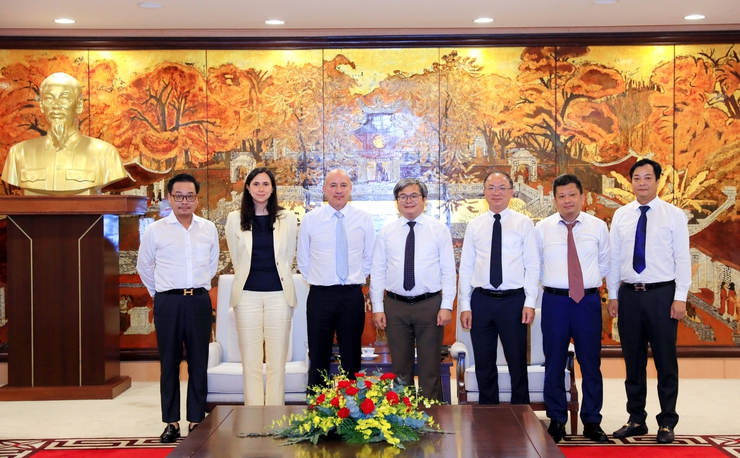 Delegates pose for a commemorative photo following the meeting.
According to the Vice Chairman, Hanoi is particularly focused on ensuring connectivity, technological compatibility, and operational efficiency across future urban railway lines.
He added that the city is gradually exploring new financing mechanisms alongside traditional ODA sources while studying more flexible financial models to support the development of a modern urban transportation system.
During the meeting, both sides also discussed ODA financing mechanisms, procurement procedures, environmental and social standards, and opportunities to expand cooperation in sustainable urban transportation development.
Concluding the meeting, Dung requested that relevant departments continue working closely with AIIB and the Hanoi Urban Railway Management Board to accelerate project preparation and finalize the documentation. He also called for timely feedback and updates on the financing of the extended Metro Line 2A project connecting Ha Dong and Xuan Mai.