According to Doan Viet Cuong, Deputy Head of the Science, Technology, and Environment Committee of the Hanoi People's Council, the draft resolution on mechanisms for managing and utilizing advertising activities in Hanoi should further clarify the special authorities granted to the city under the Capital Law.
The current draft mainly focuses on outdoor advertising on public land, while modern advertising encompasses a wide range of channels, including newspapers, television, digital platforms, online services, signage, and advertising on transportation vehicles. Therefore, the drafting agency should continue reviewing and broadening the scope to ensure comprehensive coverage and alignment with current development trends.
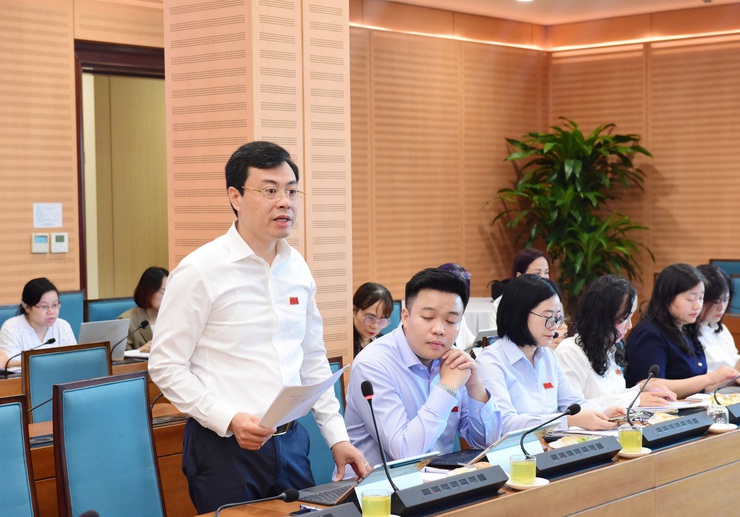 Doan Viet Cuong, Deputy Head of the Science, Technology, and Environment Committee of the Hanoi People's Council, speaks during the discussion.
Cuong also called for clearer responsibilities among agencies in developing, updating, and utilizing advertising databases. He proposed studying a roadmap for establishing a citywide digital advertising map to improve governance efficiency.
Regarding the draft resolution on investment and business activities involving products and services operating at night, aimed at maximizing urban potential and promoting economic, cultural, and tourism development, Doan Viet Cuong said the issue should be viewed as part of overall urban governance rather than simply extending business hours.
According to the delegate, the night-time economy is directly linked to transportation, environmental management, public security, fire prevention, urban space management, and residents' quality of life. Therefore, careful assessments are needed regarding decentralized management mechanisms, staffing, funding, digital technology applications, and support measures for local authorities, particularly as the new two-tier local government model has recently been introduced.
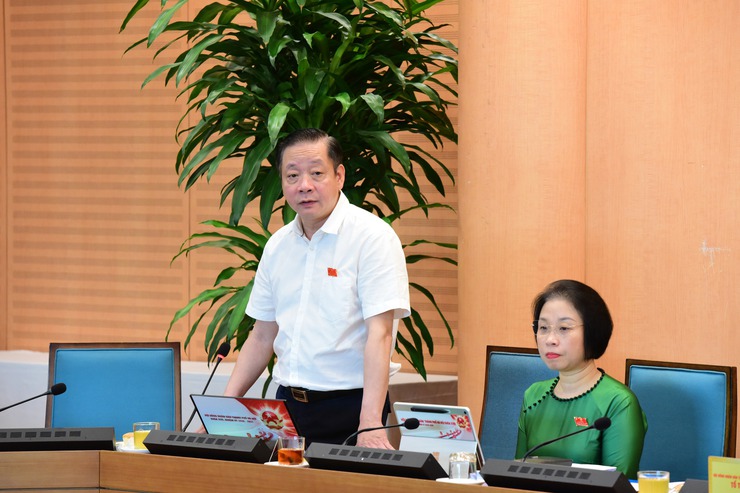 Tran Hop Dung, Head of the Urban Affairs Committee of the Hanoi People's Council, speaks during the discussion.
Sharing a similar view, Tran Hop Dung, Head of the Urban Affairs Committee of the Hanoi People's Council, stressed that the night-time economy should not be approached through a standalone resolution alone but rather within the broader framework of urban planning and governance.
According to Dung, the night-time economy is not limited to pedestrian streets or extended commercial and service activities. It is also closely connected to underground spaces, advertising, culture, tourism, technical infrastructure, and residents' quality of life. As a result, implementation should include thorough assessments of impacts on transportation, noise levels, infrastructure, public security, and the urban system's capacity.
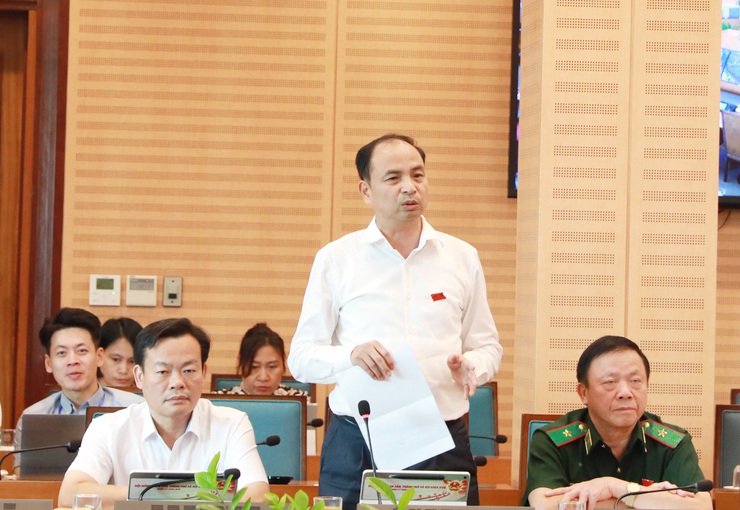 Nguyen Dinh Khuyen, Secretary of the Tay Ho Ward Party Committee and Chairman of the Ward People's Council, speaks during the discussion.
From a local perspective, Nguyen Dinh Khuyen, Secretary of the Tay Ho Ward Party Committee and Chairman of the Ward People's Council, proposed that the city develop transitional mechanisms for areas previously designated as pedestrian zones and night-time economy districts, avoiding the need to restart the entire approval process.
Khuyen noted that the West Lake area has already been identified as a future center for Hanoi's night-time economy under long-term development plans. Therefore, local authorities need early guidance to proactively move forward with implementation.
Proposing a pilot night-time economy model in Bat Trang Craft Village, delegate Ha Thi Vinh, Chairwoman of the Hanoi Handicraft and Craft Village Association, emphasized the importance of building on existing cultural, historical, and heritage values.
According to Vinh, the model could mobilize significant social resources from local residents and family clans, while the city would primarily support transportation infrastructure and public spaces. A unique feature would be the participation of elderly artisans, who could share local history, culture, and traditional craftsmanship with visitors, helping preserve cultural values while creating local livelihoods.
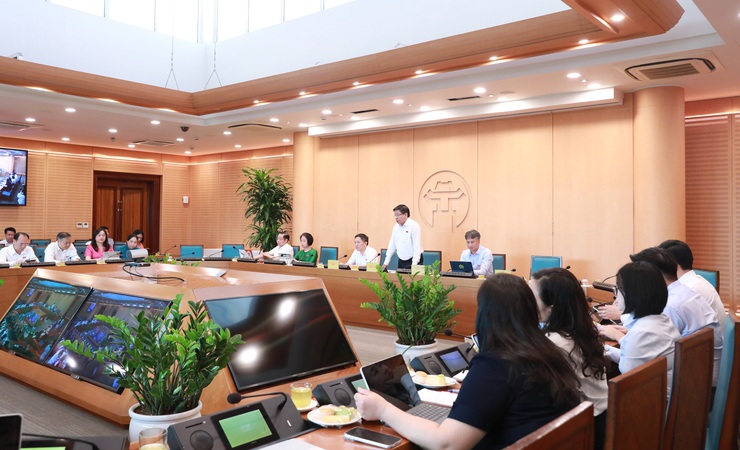 Discussion session of Group 2.
Alongside new policy mechanisms, many delegates focused on implementation feasibility, particularly resource allocation and local administrative capacity.
Dung noted that the workload associated with the proposed resolutions would be substantial. Therefore, authorities should carefully assess resource requirements for each resolution, especially in the context of expanded decentralization to communes and wards. Without thorough planning, practical challenges and implementation difficulties could arise.
Commenting on the draft resolution regarding healthcare system development policies in Hanoi, Le Ngoc Anh, Secretary of the Gia Lam Commune Party Committee, said support should go beyond workforce training and include investments in facilities, equipment, and professional coordination mechanisms with higher-level hospitals. These measures would strengthen local healthcare capacity and reduce pressure on upper-level facilities.
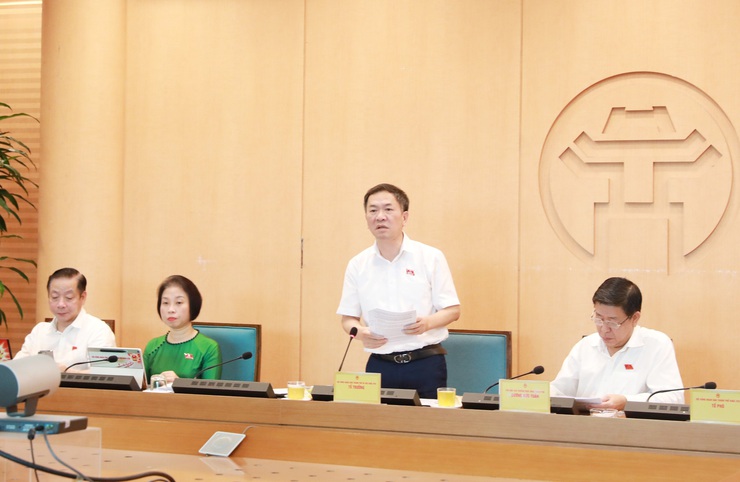 Dam Van Huan, Secretary of the Ung Hoa Commune Party Committee and Chairman of the Commune People's Council, speaks during the discussion.
In the area of land management, Dam Van Huan, Secretary of the Ung Hoa Commune Party Committee and Chairman of the Commune People's Council, said that resolutions concerning land leasing, land-use fee exemptions and reductions, compensation and support policies, and the use of riverside agricultural land are issues of great interest to voters.
Huan proposed further assessment of the impacts of new mechanisms, clearer oversight measures for land leasing without auctions, detailed regulations on compensation calculation methods, and stronger inspection and supervision to ensure transparency and accountability.
Khuyen also suggested further research into support mechanisms for private businesses, particularly those undergoing digital transformation. He proposed considering conditional land-rent exemptions for a specified period instead of merely reducing rental payments.
Regarding public investment, he said the city should continue studying appropriate resource allocation mechanisms, given that many communes and wards will face major investment responsibilities following administrative restructuring.
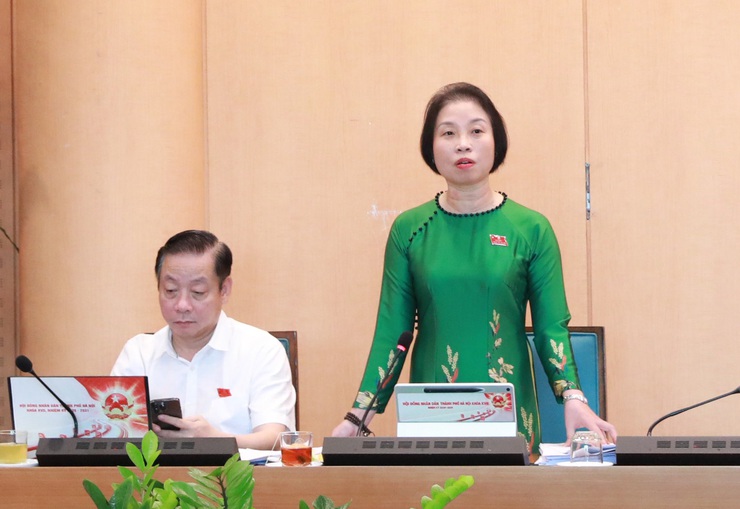 Pham Thi Thanh Mai, Vice Chairwoman of the Hanoi People's Council, speaks during the discussion.
Speaking at the discussion, Pham Thi Thanh Mai, Vice Chairwoman of the Hanoi People's Council, emphasized that Hanoi is entering a historic phase in which the City People's Council has been granted authority to decide on numerous unprecedented mechanisms and policies.
She stressed that the key challenge is identifying innovative and breakthrough policies that can drive the capital's development while ensuring that decisions remain within legal authority, comply with legal frameworks, and can be effectively implemented.
Mai also highlighted two critical factors determining the success of the resolutions: implementation capacity and resource balancing. Areas where authority has been delegated must be accompanied by comprehensive implementation guidance, while flexible mechanisms, especially in public investment, must be paired with accountability controls and clear responsibility for disbursement assigned to agency leaders.
The ultimate goal, she said, is to create breakthrough mechanisms that accelerate Hanoi's development while ensuring transparency, accountability, risk management, and the prevention of policy abuse.
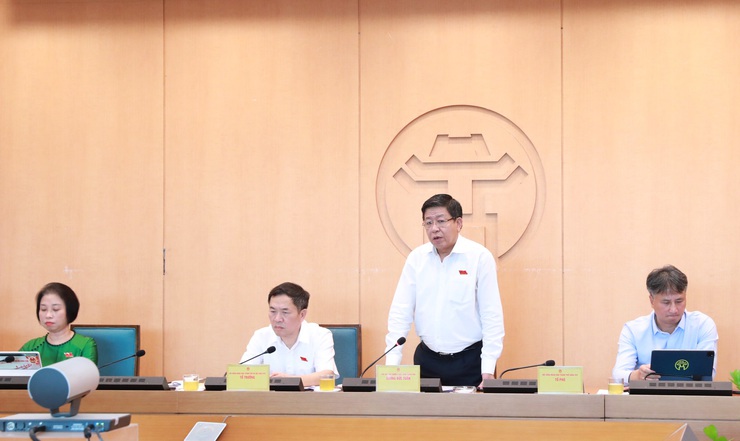 Duong Duc Tuan, Standing Vice Chairman of the Hanoi People's Committee, speaks during the discussion.
Clarifying issues raised by delegates, Duong Duc Tuan, Standing Vice Chairman of the Hanoi People's Committee, said the city has proactively proposed a comprehensive set of mechanisms and policies. However, given the large workload and limited timeframe, agencies will continue making adjustments and additions to further improve the proposals.
He noted that beginning July 1, 2026, Hanoi will implement a series of special mechanisms and policies under the 2026 Capital Law. Therefore, detailed implementation guidance following the adoption of the resolutions will be especially important.
Tuan stressed that the objective of the new mechanisms is to accelerate the implementation of major and strategic projects while maintaining a strong system of oversight and accountability to prevent management failures and ensure effective governance.