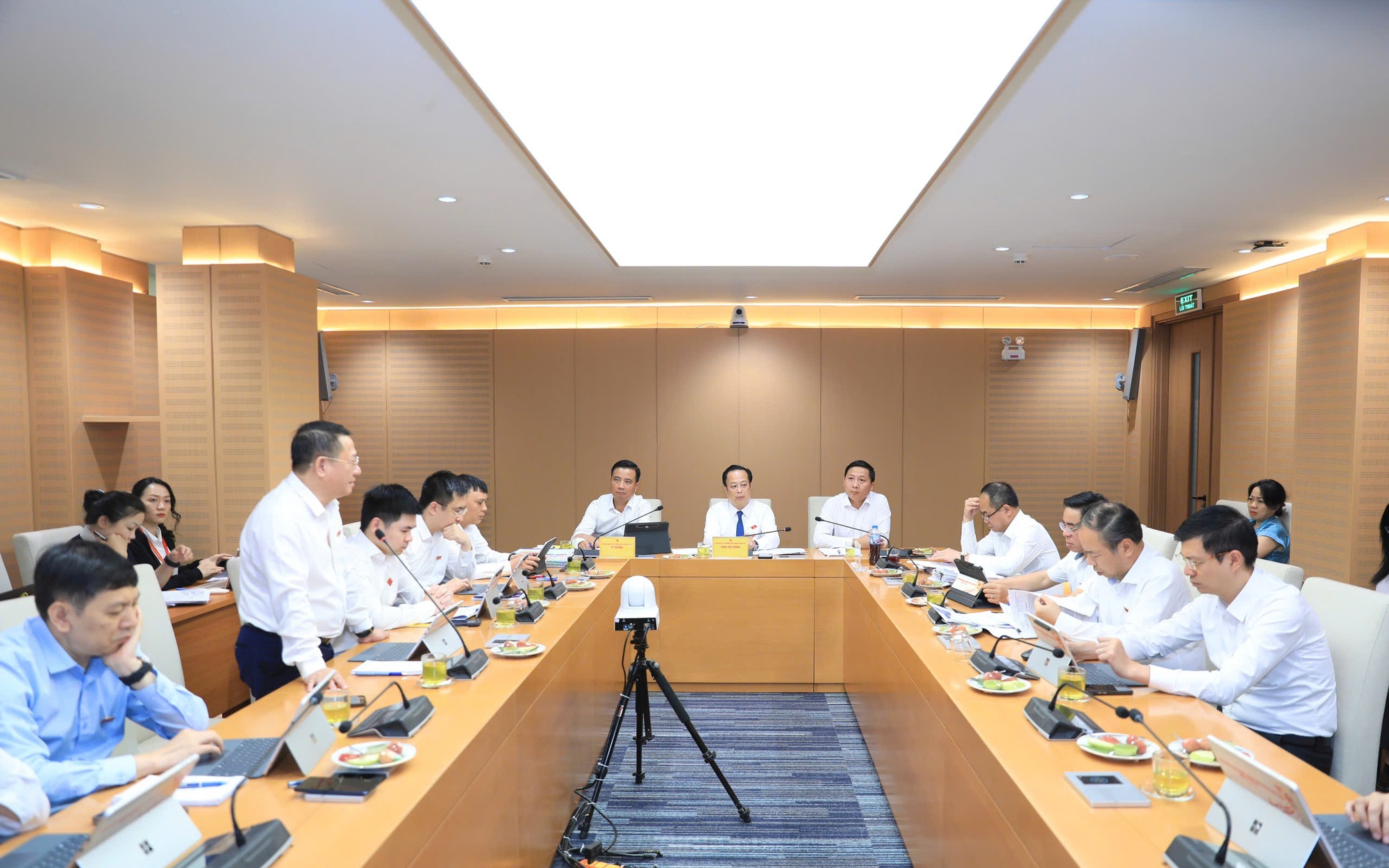
 Discussion session of Group 4.
The deputies reached a strong consensus on the proposals presented at the session, offering analyses and recommendations to ensure the practicality and effectiveness of the proposed mechanisms and policies once implemented.
Regarding preparations for the session, deputies acknowledged and highly appreciated the responsibility and proactive efforts of the drafting agencies in developing numerous policy mechanisms within a short period for submission to the City People's Council. Many deputies noted that the draft resolutions closely reflected the spirit of the Capital Law, focusing on addressing practical challenges facing the city's development while providing an important legal foundation for decentralization, delegation of authority, and greater autonomy for local governments.
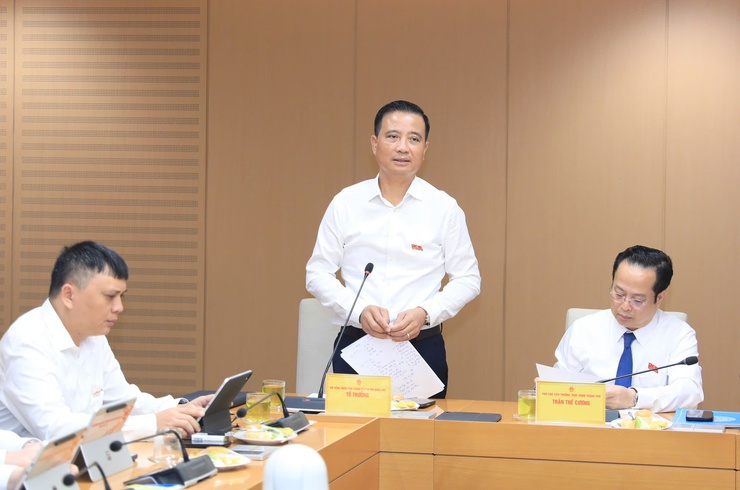 Nguyen Xuan Linh, Head of Group 4, chairs the discussion session.
Speaking at the session, Deputy Nguyen Thanh Liem praised the drafting committee's efforts in preparing the materials. He said many of the proposed resolutions directly address practical obstacles, particularly at the grassroots level.
Regarding government organization and personnel management, Liem expressed support for the establishment of specialized departments and Public Administrative Service Centers at the commune and ward levels to improve the efficiency of state administration under the new two-tier local government model. However, he suggested that specific criteria for their scale and staffing be developed to reflect local conditions and ensure effective implementation.
The deputy also welcomed greater decentralization of civil servant recruitment, allowing agencies and units greater flexibility in addressing staffing needs. He described the measure as a key step toward enhancing the quality and effectiveness of grassroots administration in the new phase.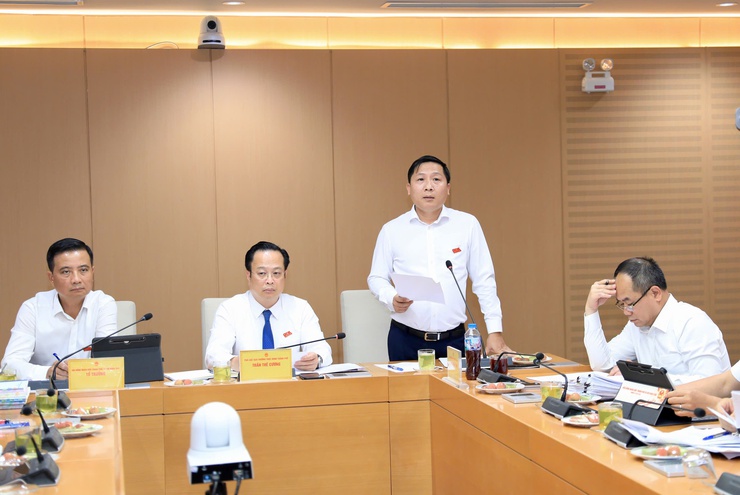 Deputy Nguyen Thanh Liem speaks during the discussion.
On additional income policies for public officials, civil servants, and public employees, Liem said the policy would provide meaningful incentives, helping officials remain committed to their work while improving public service performance. He also suggested that the city continue exploring mechanisms to recognize and reward outstanding organizations and individuals.
Regarding urban planning and development, Liem praised efforts to streamline planning procedures by reducing intermediate steps and shortening project preparation and implementation timelines.
He said that with sufficient training, guidance, and technical support from city departments, local governments would be fully capable of carrying out the responsibilities assigned to them.
For policies related to the management and use of riverside land and the development of eco-tourism, he called for clearer definitions of regulatory scope and target beneficiaries to ensure consistency in implementation.
He also recommended that the city develop appropriate mechanisms to better utilize the potential of eco-tourism and traditional craft village tourism, creating new momentum for rural economic development.
In the field of science, technology, and digital transformation, Liem proposed that support policies clearly differentiate among target groups to better address the needs of different types of businesses and stakeholders involved in the digital transformation process. He also stressed that digital asset development should be approached cautiously, with priority given to areas associated with culture, tourism, and local specialty products.
Sharing similar views on the role of science and technology, Deputy Hoang Anh Tuan called for stronger integration of digital transformation and technology applications during implementation. According to him, new policies should be built on digital data platforms and make greater use of information technology to improve governance and service quality for residents and businesses.
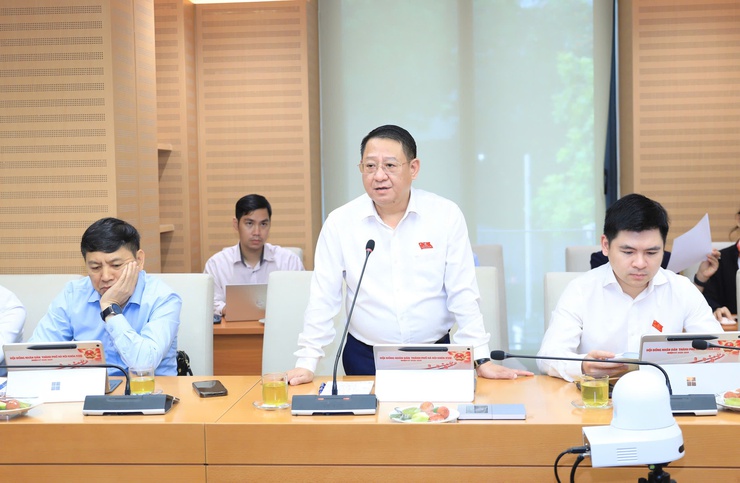 Deputy Hoang Anh Tuan speaks during the discussion.
Tuan also emphasized the importance of developing implementation plans and issuing detailed guidance immediately after resolutions are approved. He noted that many policies, despite being well-designed, often fail to achieve expected results because of insufficient guidance or unclear responsibilities among agencies. Therefore, preparing implementation conditions in a synchronized manner is crucial to ensuring policy effectiveness.
He also proposed enhancing transparency and public communication so that residents, businesses, and related organizations clearly understand the resolutions and support their implementation. In addition, he urged the City People's Council to continue strengthening its oversight role in identifying and addressing practical challenges as they arise.
Regarding urban development resolutions, Tuan called for clearer implementation roadmaps, investment resources, and organizational arrangements to enable local authorities to develop implementation plans. He said policies promoting transportation infrastructure, green spaces, and integrated urban infrastructure would provide important momentum for Hanoi's future development.
Focusing on feasibility and implementation resources, Deputy Tran Tho Hien noted that many resolutions involve large-scale investment and support measures while revenue-generating mechanisms for the city budget remain limited. He therefore recommended that Hanoi develop an appropriate implementation roadmap, establish clear priorities, and ensure sufficient resources at each stage.
Hien also called for further review and clarification of the scope, beneficiaries, and relationships among resolutions that share the same legal basis to ensure consistency and coordination during implementation.
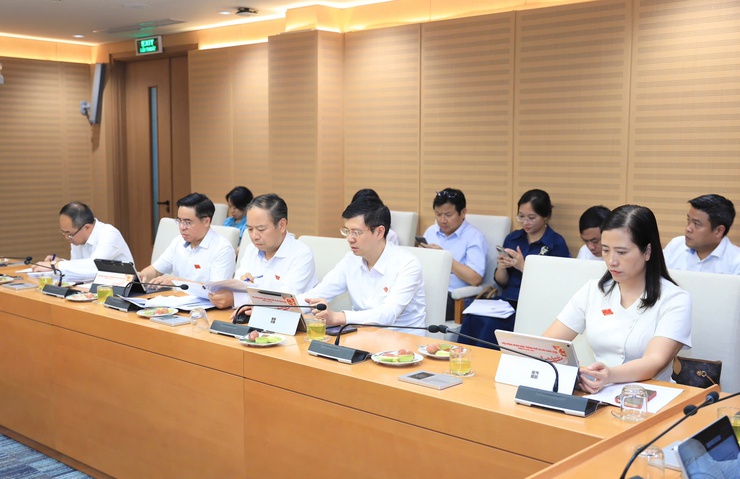 Deputies participate in the Group 4 discussion session.
Regarding rental housing development policies, several deputies expressed interest and called for a thorough assessment of actual demand and social effectiveness.
Deputy Nguyen Thi Kim Van said the feasibility of the model should be carefully assessed, particularly through lessons learned from previous student housing projects that failed to achieve the expected results. She noted that the management and operation of rental housing present distinct challenges, while the long capital recovery period should also be taken into consideration when designing the policy.
For policies supporting the transition to green transportation, deputies generally supported efforts to encourage businesses and residents to adopt environmentally friendly vehicles. However, many suggested extending interest rate support periods to better align with business investment cycles.
Deputy Nguyen Thi Kim Van proposed providing support for up to five years from the date a credit agreement is signed to create more favorable conditions for project implementation.
Regarding social welfare policies, deputies Nguyen Thi Kim Van and Nguyen Cong Anh recommended reviewing the target beneficiaries of assistance programs designed to help poor households transition to green transportation. They noted that, under current poverty standards, Hanoi has virtually eliminated poverty, making it necessary to adjust or expand eligibility criteria to improve policy effectiveness.
Speaking at the discussion, Anh also stressed the need to ensure the practicality of all mechanisms and policies after adoption, particularly regarding financial resources. He said implementation schedules should align with the city's budget capacity and development conditions while establishing clear priorities among policy groups.
In the area of legal affairs, public security, and urban management, Nguyen Thanh Tung, Director of the Hanoi Department of Public Security, called for further improvements to mechanisms that strengthen state management effectiveness. He said government structures should be designed to meet practical demands and the growing workload at the grassroots level. He also recommended considering additional deputy positions in specialized departments with heavy workloads.
Regarding administrative violations and urban order management, he proposed increasing penalties for violations to strengthen deterrence and improve urban management outcomes.
Tung particularly emphasized the need for stronger management of foreign residents amid increasingly complex developments involving transnational and cybercrime. He suggested higher penalties for violations related to residence registration, sponsorship, and accommodation regulations for foreigners, along with clearer responsibilities for housing management organizations in coordinating residency management.
On data protection, he called for stronger measures to safeguard the National Population Database and stricter penalties for unauthorized access or interference with data systems.
Concluding the discussion, deputies expressed confidence that the resolutions presented at the session would provide an important legal foundation for Hanoi to accelerate decentralization, administrative reform, science and technology application, and improvements in state management effectiveness while unlocking new development resources. They also stressed that incorporating deputies' feedback would help refine the Capital Law's special policy mechanisms and create new momentum for the capital's rapid and sustainable development.