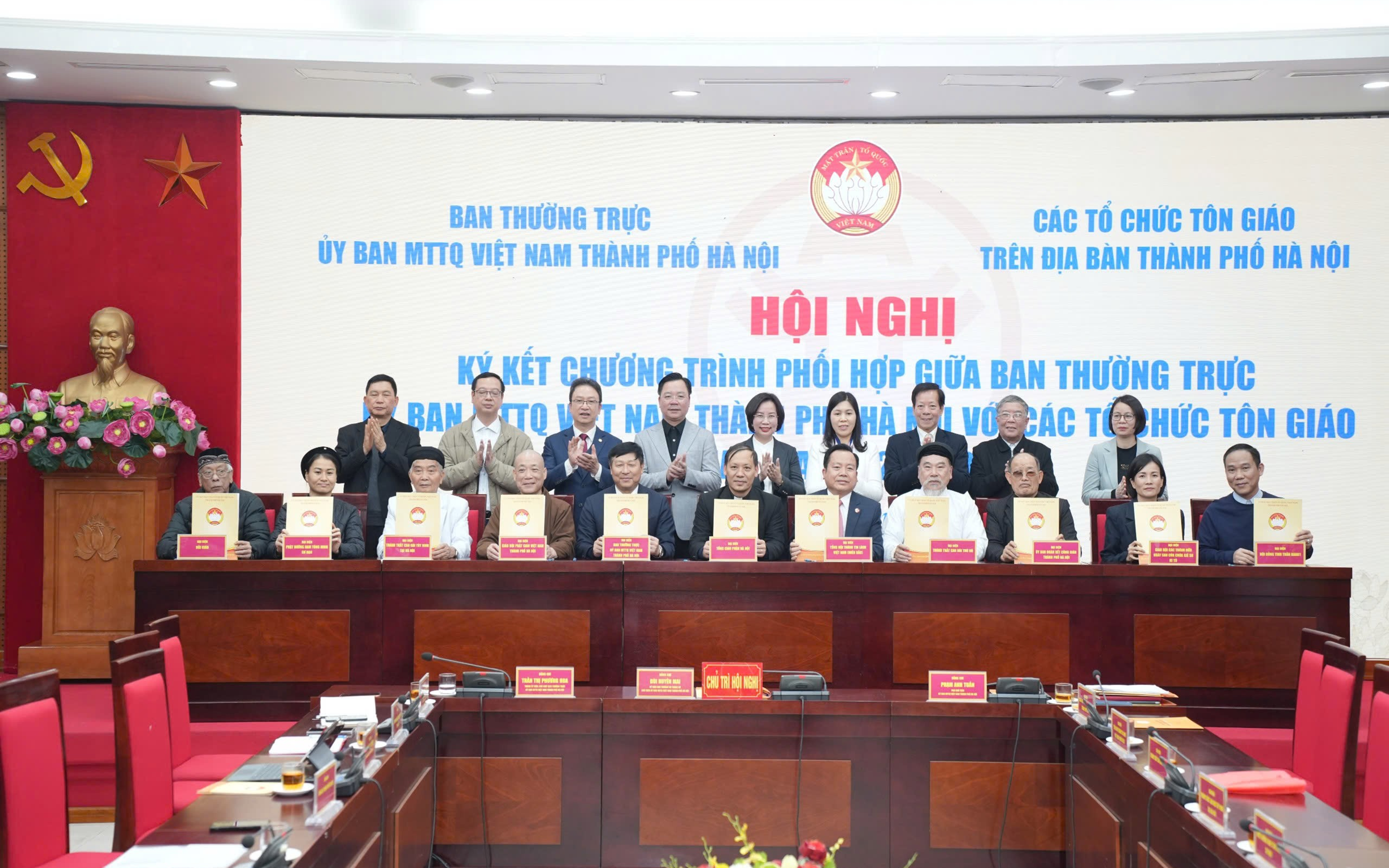
Representatives of member organizations and religious groups take part in signing the coordination program between the Standing Committee of the Vietnam Fatherland Front Committee of Hanoi and member organizations and religious groups across the city for the 2026–2030 period.
The conference was chaired by Bui Huyen Mai, a member of the Standing Committee of the Hanoi Party Committee and Chairwoman of the Vietnam Fatherland Front Committee of Hanoi; Tran Thi Phuong Hoa, Standing Vice Chairwoman of the committee; and Pham Anh Tuan, Vice Chairman of the committee.
At the conference, Vice Chairman Pham Anh Tuan said the Standing Committee of the Hanoi Vietnam Fatherland Front and religious organizations agreed to sign a coordination program for the 2026–2030 period to better promote the rights and responsibilities of member organizations and support the Party and the State’s renewal efforts.
He said the program aims to strengthen the great national unity bloc while enhancing discipline, responsibility, action and innovation in the building and development of the capital.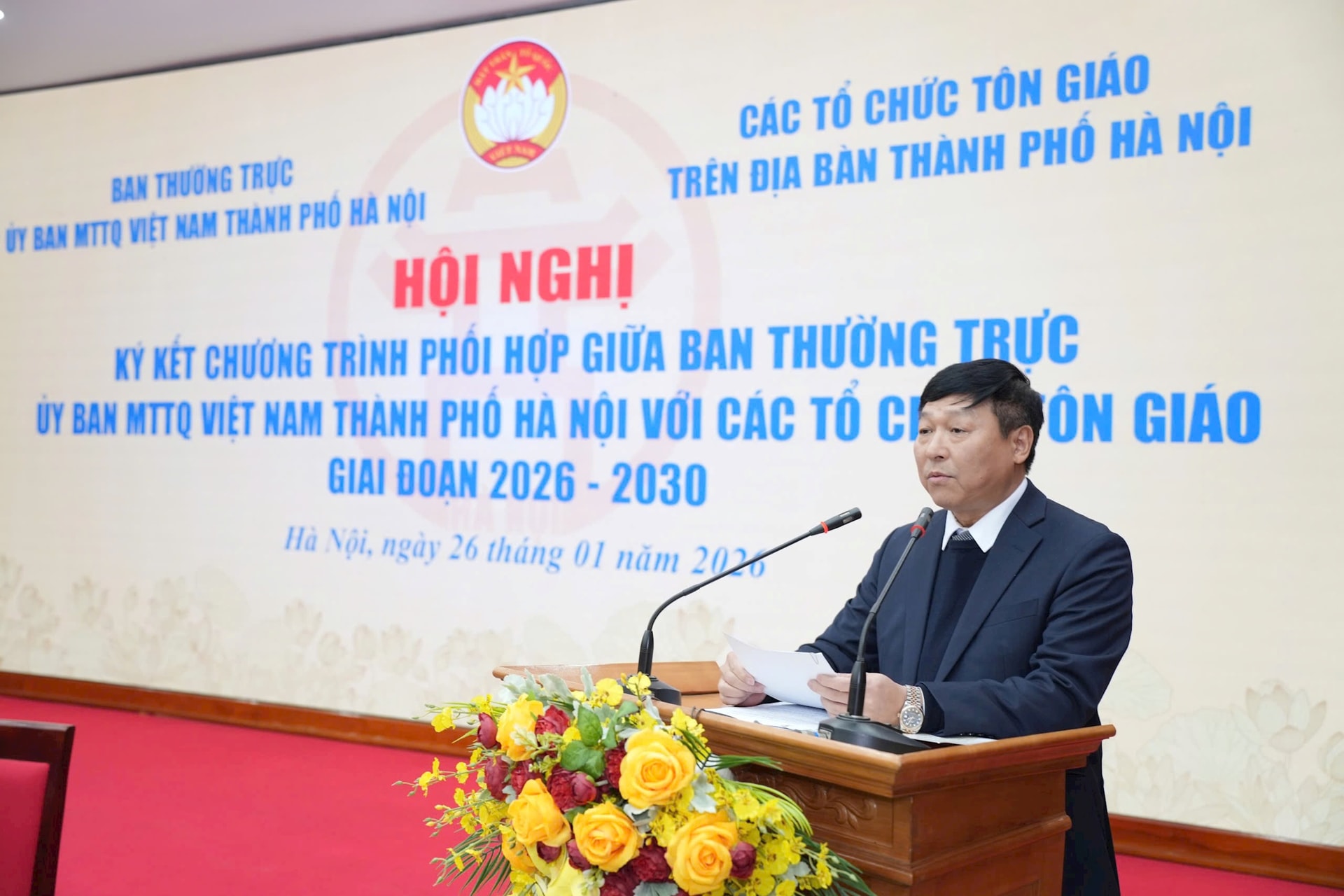 Vice Chairman of the Hanoi Vietnam Fatherland Front Committee Pham Anh Tuan presents the draft coordination program.
According to Tuan, the coordination will help strengthen ties and cooperation between the Vietnam Fatherland Front Committees at all levels in Hanoi and religious organizations in carrying out political tasks and socio-economic development of the capital.
It will promote the role and resources of religious organizations in building the great national unity bloc and encourage religious dignitaries, clerics and followers to live good lives and practice their faith in harmony with national interests. Coordination activities must be practical, effective and suited to local conditions and the characteristics of each religion.
The coordination focuses on communication and mobilization of religious dignitaries, clerics, practitioners and believers to consolidate and promote national unity and contribute to building and defending the Fatherland.
It also includes mobilizing religious organizations to work with the Vietnam Fatherland Front in emulation movements and in achieving economic, cultural and social development goals while maintaining national defense and security.
Other areas include promoting democracy, representing and safeguarding the legitimate rights and interests of religious organizations and believers, strengthening supervision and social feedback, participating in anti-corruption and anti-waste efforts and contributing to building a clean and strong Party and State.
At the conference, representatives of three religions in the city expressed their agreement with the program's contents and offered feedback to further refine and complete the coordination framework for the new period, reflecting a strong sense of unity and responsibility.
Speaking at the event, Chairwoman Bui Huyen Mai emphasized that, following the success of the 14th National Congress of the Communist Party of Vietnam, the signing of the 2026–2030 coordination program by the Hanoi Vietnam Fatherland Front and its member organizations and religious groups aims to quickly bring the Party Congress Resolution into daily life through concrete actions. This clearly demonstrates the core role of the Front in uniting religious communities to strengthen the great national unity bloc.
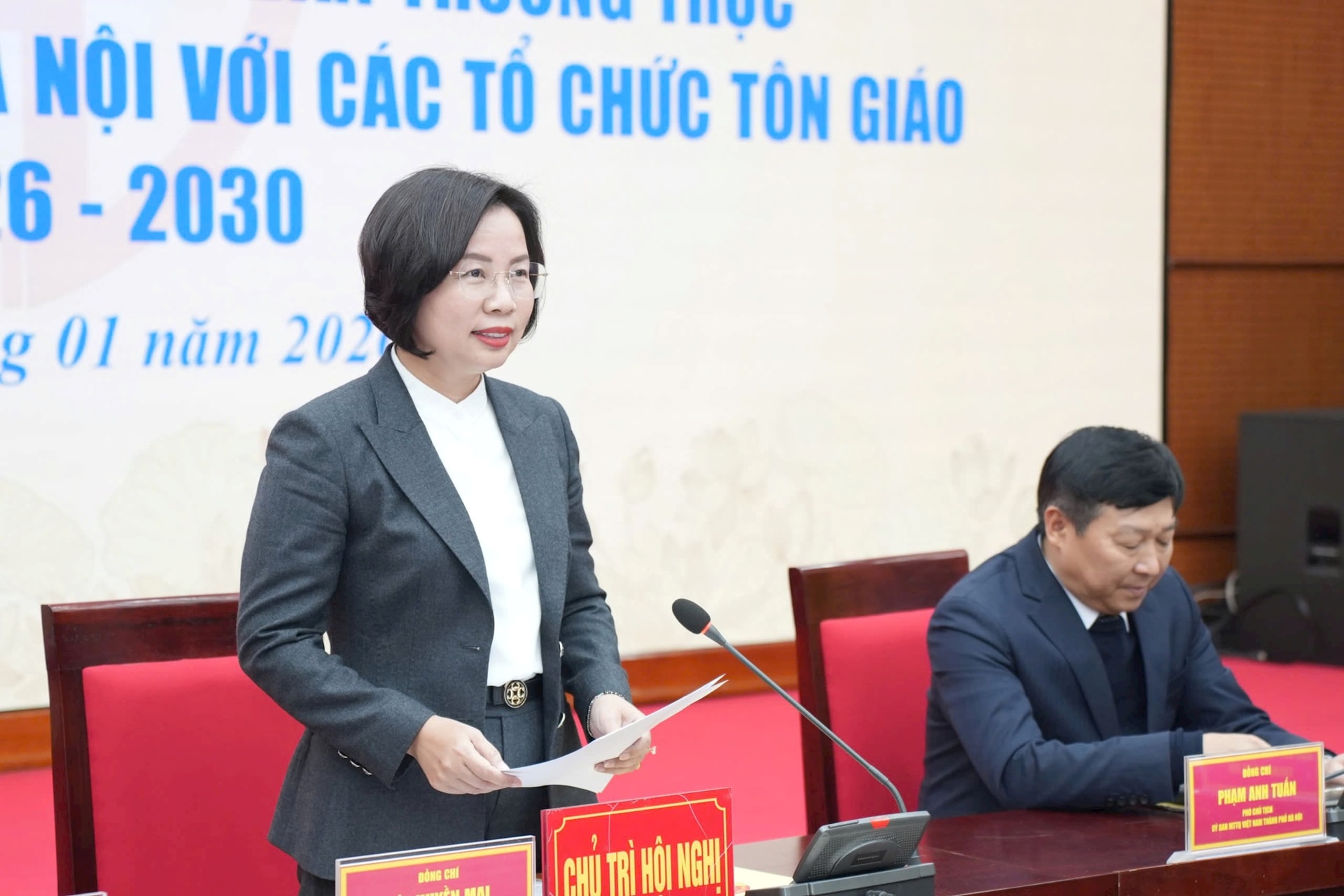 Chairwoman of the Hanoi Vietnam Fatherland Front Committee Bui Huyen Mai delivers concluding remarks at the conference.
In recent years, implementing the Party's guidelines and the State's policies and laws on religious affairs, the Hanoi Vietnam Fatherland Front Committee has worked closely with religious organizations to communicate and mobilize dignitaries, clerics and believers to promote patriotism and live good lives while practicing their faith.
Religious communities have actively participated in building the great national unity bloc and effectively carried out campaigns and patriotic emulation movements launched by the Front, leaving positive marks on social life.
Entering a new development stage, Hanoi will implement goals and tasks under the Resolution of the 14th National Party Congress, the Resolution of the 18th Hanoi Party Congress and the Resolution of the 18th Congress of the Hanoi Vietnam Fatherland Front, with increasingly high requirements for sustainable development, improved quality of life and building a capital city that is cultured, civilized, modern and happy.
In this context, strengthening coordination between the Vietnam Fatherland Front and member organizations and religious groups is of particular importance to further mobilize intellectual resources and the positive moral and cultural values of religions in building and developing the capital.
"We hope that the Hanoi Vietnam Fatherland Front and religious organizations signing this coordination program will take the lead and become a model in implementing the task groups outlined in today's framework," Mai said.
According to Mai, the coordination program has been developed with specific, practical content, objectives and solutions that align with the realities of the capital in the new period. It provides an important foundation for the Vietnam Fatherland Front and religious organizations to continue working closely together to strengthen national unity, enhance social consensus and contribute to political stability, public order and safety and the sustainable development of Hanoi.
She called on religious organizations to disseminate the program among dignitaries, clerics and followers and to develop participation plans consistent with each religion's principles and purposes, working with the Standing Committee of the Hanoi Vietnam Fatherland Front to ensure effective implementation.
She also expressed hope that religious dignitaries and clerics would take part in communication efforts to address five major bottlenecks facing the capital, with an immediate focus on two areas: tackling environmental pollution and ensuring food safety.
These efforts aim to create fundamental change and help reshape the city's appearance. At the same time, religious organizations were encouraged to further promote their role in social welfare and care for vulnerable groups, ensuring that no one is left behind.