Attending the opening ceremony were Nguyen Thi Tuyen, Member of the Party Central Committee and Deputy Secretary of the Government Party Committee; Pham Tat Thang, Member of the Party Central Committee and Standing Deputy Head of the Central Commission for Publicity, Education, and Mass Mobilization; Phung Thi Hong Ha, Deputy Secretary of the Hanoi Party Committee and Chairwoman of the Hanoi People's Council; Tran Dinh Canh, Member of the Hanoi Party Standing Committee and Head of the Hanoi Party Committee's Internal Affairs Commission; along with representatives of the Hanoi People's Council, the Hanoi People's Committee, city departments, agencies, and the Vietnam Fatherland Front of Hanoi.
Also in attendance were representatives of Ha Hoa Commune, the Management Board of the Hung Kings Historical Relic Site, the Management Board of the Au Co Mother Temple Relic Site in Phu Tho Province, former leaders of the former Thanh Oai District, and people from Binh Minh Commune who are now living, working, and serving away from their hometown.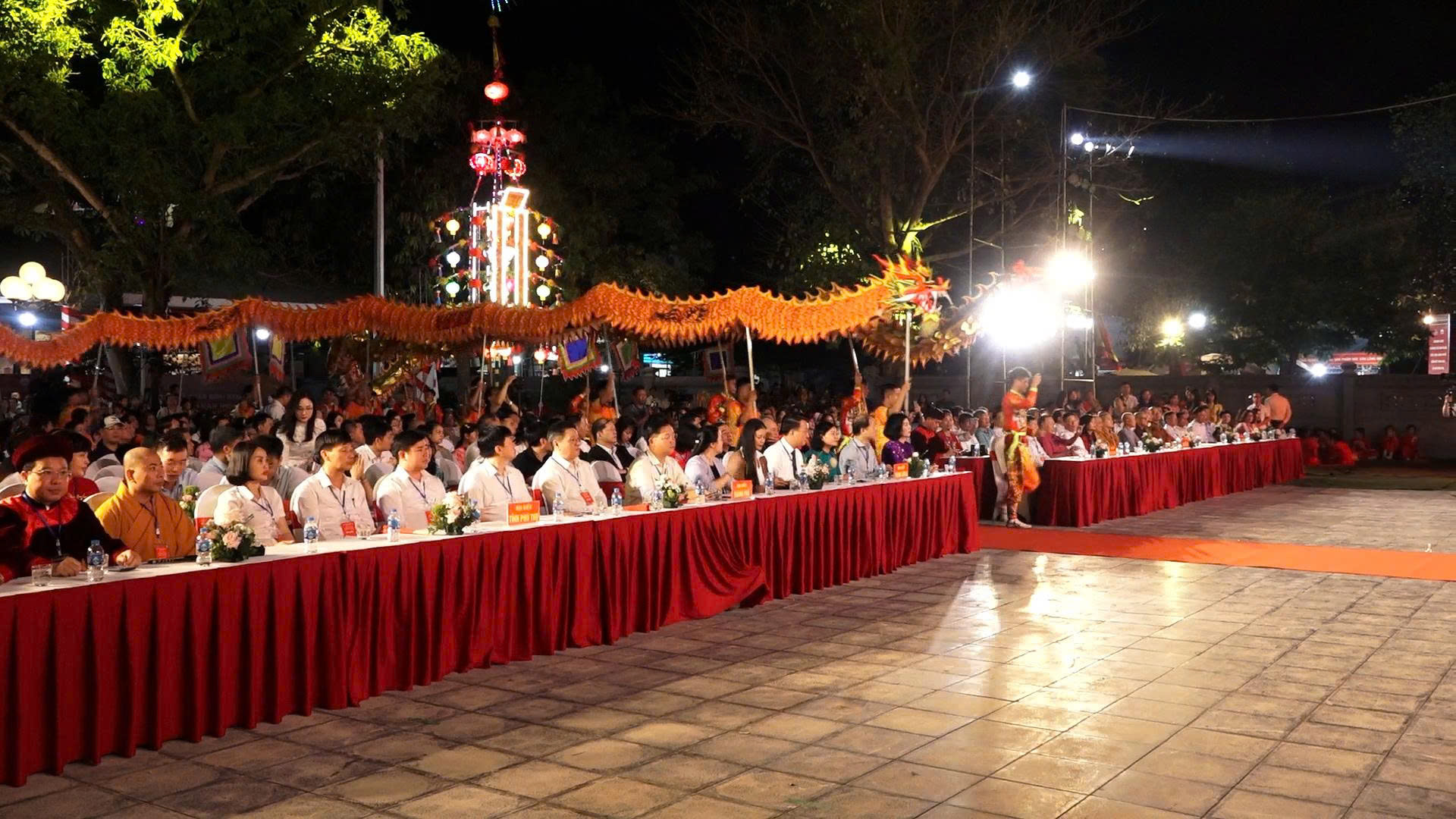 Central leaders, leaders of Hanoi, and commune representatives attend the ceremony
In a solemn and reverent atmosphere, with hearts turned toward the nation's roots, leaders, distinguished guests, local residents, and visitors from across the country took part in an incense-offering ceremony in memory of the National Ancestor Lac Long Quan. This ceremony also marked the first ritual and the official opening of the 2026 Binh Da Festival, Spring of the Binh Ngo Year.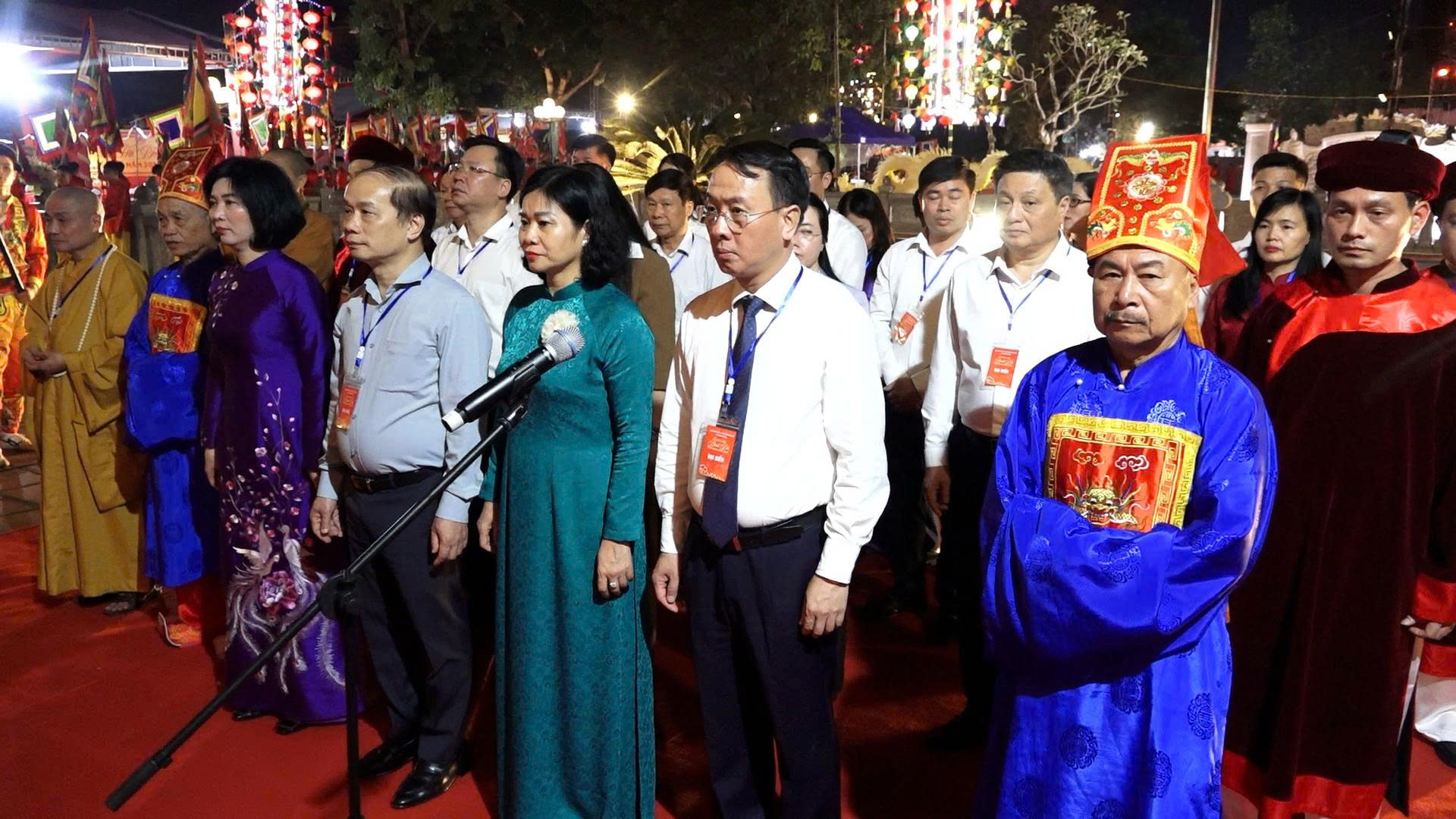 Central leaders, leaders of Hanoi, and commune representatives offer incense at the Dinh Noi relic site in Binh Minh Commune
Delivering the opening remarks after the incense-offering ceremony to the National Ancestor Lac Long Quan, Nguyen Dang Viet, Deputy Secretary of the Party Committee, Chairman of the Binh Minh Commune People's Committee, and Head of the Festival Organizing Committee, said it is an honor not only for Binh Minh but for the whole country that for thousands of years the commune has preserved the communal house, a historical relic dedicated to the National Ancestor Lac Long Quan, a legendary founding figure of the nation.
The communal house still preserves many valuable ancient artifacts, including steles from the Ly Dynasty and the Later Le Restoration period, numerous genealogical records and royal decrees, bronze bells, ritual objects, horizontal lacquered boards, and parallel inscriptions.
In particular, it houses a unique bas-relief altar statue of Lac Long Quan, the only one of its kind in Vietnam, together with the communal house's distinctive artistic architecture. Because of these historical values, in 1985 the Ministry of Culture recognized the communal house as a historical and artistic relic. In 1990, Dinh Noi in Binh Da was further recognized by the Ministry of Culture as a national historical and cultural relic.
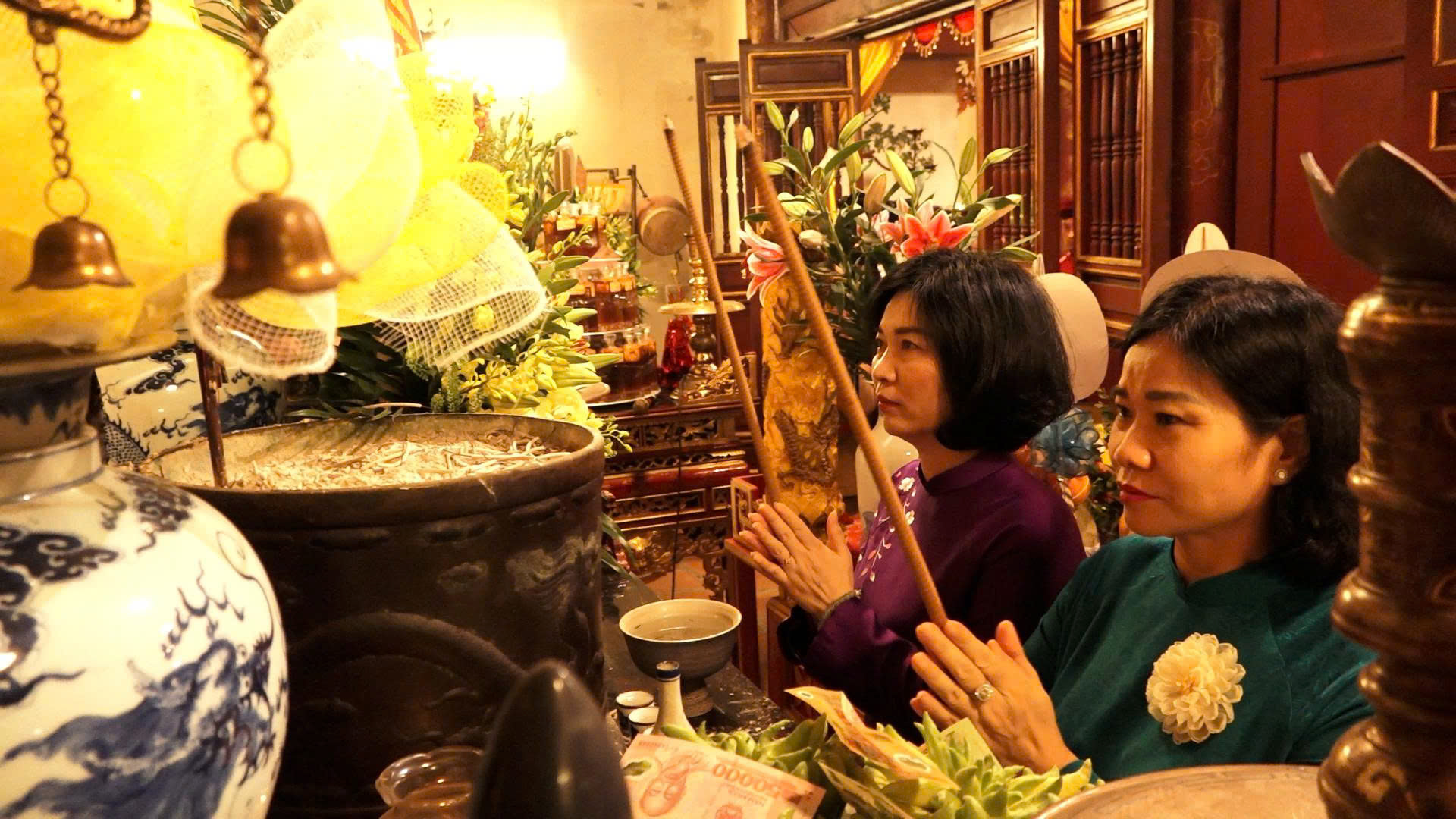 Central leaders and leaders of Hanoi offer incense at the Dinh Noi relic site in Binh Minh Commune
The Chairman of the Binh Minh Commune People's Committee also shared that Dinh Noi is closely tied to the legend of Lac Long Quan and Au Co, who gave birth to 100 eggs that hatched into 100 children, with 50 following their mother to the mountains and 50 following their father to the sea.
When Lac Long Quan arrived in Bao Da, now Binh Da Commune, not far from the sea, he told his children to settle there. Recognizing the land’s favorable feng shui, fertile terrain, winding waterways, and elevated ground shaped like dragons paying homage and tigers crouching, he chose it as the place to lay the foundation for early settlement. He taught the people how to grow rice, plant mulberry trees, raise silkworms, weave cloth, reclaim land from the sea, build houses, drive away wild beasts, cultivate the land, and expand the territory.
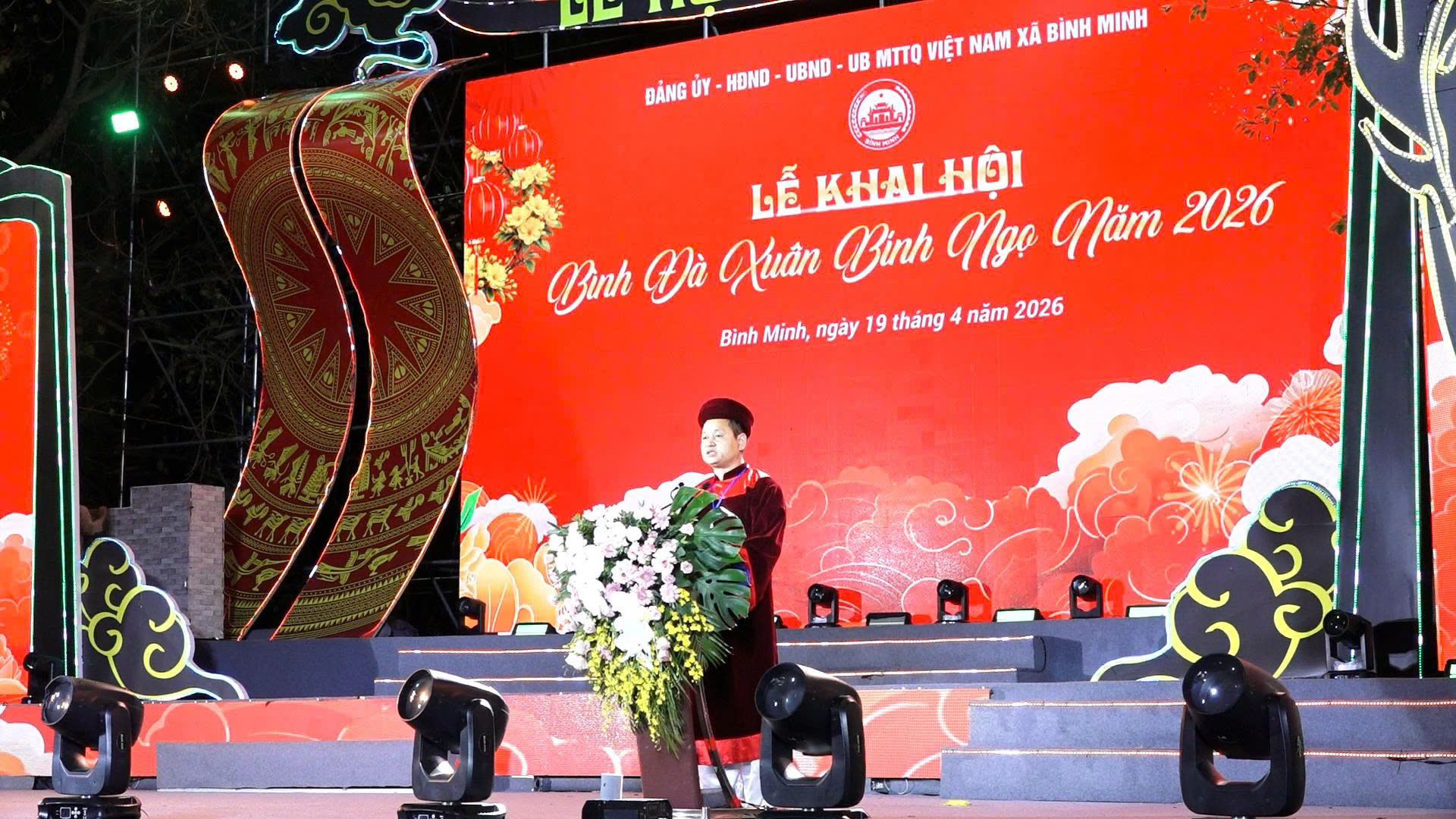 Nguyen Dang Viet, Deputy Secretary of the Party Committee and Chairman of the Binh Minh Commune People's Committee, speaks at the festival opening ceremony
Before long, the entire Co Noi area, regarded as fertile and auspicious land, became prosperous. People from all over came to this sacred land to pay homage to Lac Long Quan, forming some of the earliest villages in the Red River Delta. On a day at the end of the second lunar month, Lac Long Quan passed away during the night.
To honor the merits of the National Ancestor Lac Long Quan, the people of Bao Da village built Dinh Noi Temple and placed the great inscription “Vi Bach Viet To,” meaning “Ancestor of the Hundred Viet Peoples.” Since then, every year in the early days of the third lunar month, the people of Binh Da have held their village festival in a solemn manner to remember and express gratitude to the National Ancestor Lac Long Quan.
With its historical, cultural, and spiritual values, the Binh Da Festival is closely associated with the unique significance of the Dinh Noi relic site. On April 1, 2014, the Binh Da Festival was officially recognized by the State as Hanoi’s first national intangible cultural heritage element. In particular, the bas-relief altar statue preserved in Dinh Noi, carved with the image of the National Ancestor Lac Long Quan together with Lac generals and Lac officials, vividly recreating life in the Hung Kings era, was recognized by the Prime Minister as a National Treasure in 2015.
The Binh Da Festival is an ancient traditional festival and one of the major festivals of the region. It carries the strong cultural identity of the Vietnamese people, recalling the memory of the nation’s earliest origins and settlement, and honoring the National Ancestor Lac Long Quan, who is regarded as the “Ancestor of the Hundred Viet Peoples,” for his role in founding the nation, opening rivers, reclaiming land from the sea, expanding the territory, and laying the foundation for the country.
As part of a long-standing custom, every festival season a delegation from the Management Board of the Hung Kings Temple relic site in Phu Tho returns to offer incense to the National Ancestor and ceremonially receive sacred incense ashes from the primary altar of Dinh Noi for worship, as a respectful way of inviting the National Ancestor to attend the Hung Kings Temple Festival with his descendants on the 10th day of the third lunar month.
The Chairman of the Binh Minh Commune People’s Committee also said that the Binh Da Festival is an occasion for every person from Binh Minh to remember the merits of their ancestors and express deep gratitude to the National Ancestor Lac Long Quan, while also praying for peace and prosperity for the nation, favorable weather, abundant harvests, and a warm and happy life for the people.
“With pride in the traditions of our Binh Minh homeland, the land of ‘Children of Lac and Grandchildren of Hong,’ this sacred ancestral land, and with our sincere reverence for the National Ancestor Lac Long Quan, we believe that the Binh Da Festival, Spring of the Binh Ngo Year, will be a great success and leave a deep impression on local residents and visitors from all directions,” Chairman of the Binh Minh Commune People’s Committee Nguyen Dang Viet said.
After the opening ceremony, Le Van An, Standing Deputy Secretary of the Binh Minh Commune Party Committee, officially beat the drum to open the 2026 Binh Da Festival. The drum ritual was followed by an impressive artistic performance, launching a series of rich cultural and sporting activities.
Previously, the Binh Da Festival was held at the district level once every five years. After the implementation of the two-tier local government model, Binh Minh Commune was officially established on July 1, 2025. This year’s festival is being held at the commune level as the country celebrates the successful election of deputies to the 15th National Assembly and People’s Councils at all levels for the 2026–2031 term, while moving toward the goal of building Binh Minh into a greener, more civilized, and more modern homeland where people live happily.