Attending the meeting were members of the Standing Committee of the Hanoi Party Committee, including Bui Huyen Mai, Chairwoman of the Vietnam Fatherland Front Committee of Hanoi, and Duong Duc Tuan, Standing Vice Chairman of the Hanoi People's Committee; along with Vu Thu Ha, Member of the Hanoi Party Committee and Vice Chairwoman of the Hanoi People's Committee, and representatives from city departments and agencies. The meeting was held online from the headquarters of the Hanoi People's Committee and connected to 126 commune and ward-level People's Committees.
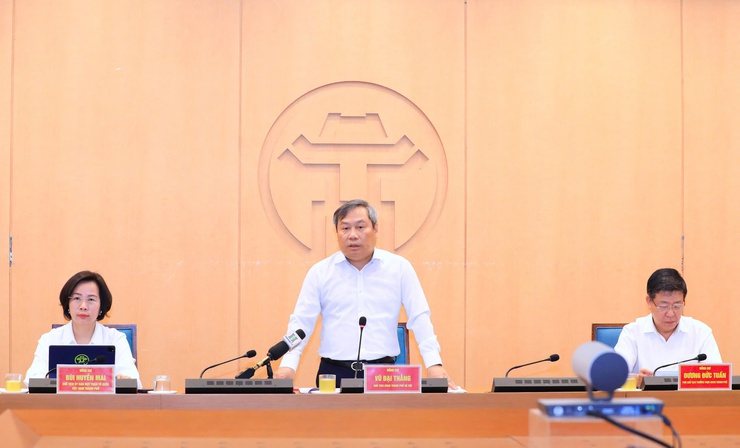 Chairman of the Hanoi People's Committee Vu Dai Thang chairs the April 17 meeting. Photo: Le Hai
Building a "3 pillars – 4 spaces – 5 drivers" growth model
At the meeting, participants discussed and provided input to finalize the Capital's new growth model proposal, aimed at achieving double-digit growth in the coming period. The draft is structured into three main sections: an assessment of current economic growth; strategic solutions to drive growth under a new model; and implementation arrangements. It also includes an introduction, conclusion, and appendices.
The core focus is on strategic solutions to reshape the growth model, shifting from extensive to intensive development, driven by productivity, science and technology, and innovation. The proposal sets a target for Hanoi to become a green, smart, and modern city by 2035, with strong competitiveness and deep international integration, while serving as a major regional center for education, healthcare, finance, trade, and innovation.
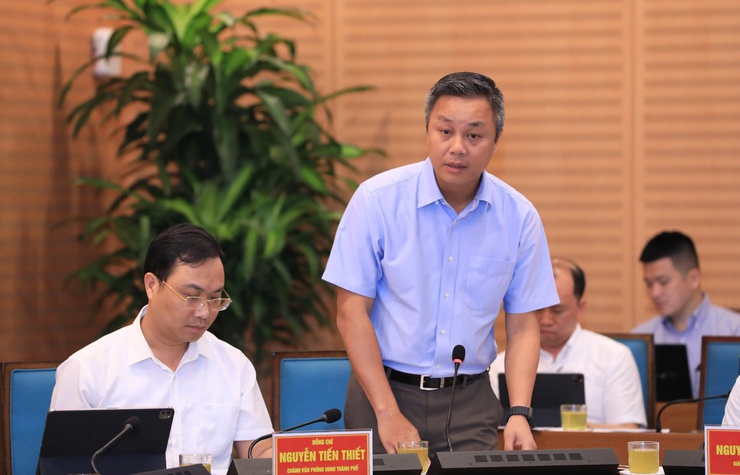 Nguyen Trong Minh, Deputy Chief of Office of the Hanoi People's Committee, presents the draft proposal. Photo: Le Hai
For 2026–2030, the city targets average GRDP growth of over 11 percent per year, with total GRDP exceeding $113 billion by 2030 and per capita GRDP reaching at least $12,000. The digital economy is expected to account for at least 40 percent of GRDP, while cultural industries are projected to contribute around 9 percent.
For 2031–2035, Hanoi aims to maintain growth above 11 percent, targeting a GRDP of around $200 billion and per capita income of nearly $19,000, approaching levels seen in developed cities in the region.
The proposal also outlines a long-term vision aligned with the Capital's master plan over a 100-year horizon. By 2045, marking the 100th anniversary of the founding of the Socialist Republic of Vietnam, Hanoi is expected to become a key innovation hub in the Asia-Pacific, with a high quality of life and modern urban governance.
By 2054, marking the 100th anniversary of the Liberation of the Capital, and with a vision to 2065, Hanoi aims to become a "global city" with a high level of sustainable development and per capita income of around $95,000.
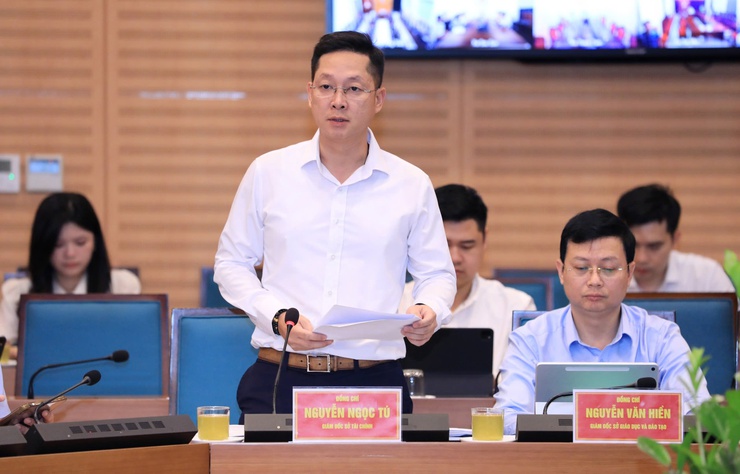 Nguyen Ngoc Tu, Director of the Hanoi Department of Finance, speaks at the meeting. Photo: Le Hai
A key element of the proposal is the new growth framework built on a "3 pillars – 4 spaces – 5 drivers" structure. The three pillars include innovation and the digital economy; green growth and the circular economy; and regional connectivity supported by modern infrastructure and multi-center urban development.
The five growth drivers are identified as institutions and governance; science, technology, innovation, and digital transformation; cultural industries; unlocking the potential of economic sectors; and effective use of spatial planning.
The four development spaces include innovation and knowledge hubs; high-tech industry and logistics; green urban areas linked to transit-oriented development; and regional linkages and economic corridors.
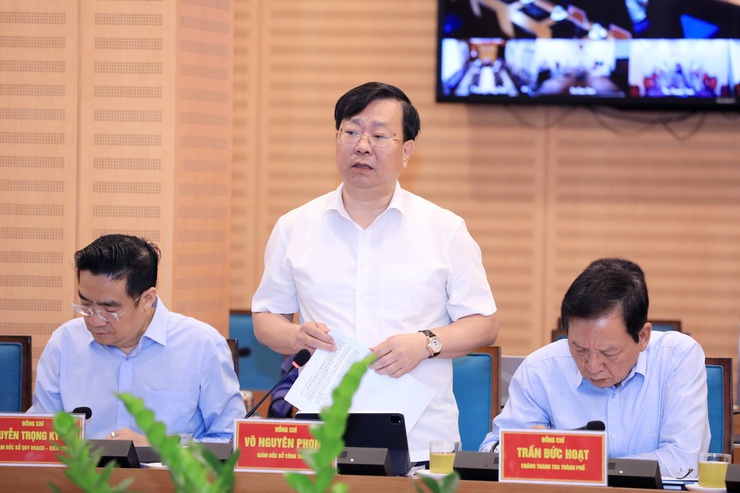 Vo Nguyen Phong, Director of the Hanoi Department of Industry and Trade, speaks at the meeting. Photo: Le Hai
Participants agreed that the proposal's overarching approach is to improve growth quality, ensure green and sustainable development, and enhance climate resilience. Hanoi also identified modern, transparent, data-driven urban governance, centered on people and businesses, as a critical factor in achieving its development goals.
The proposal will be implemented in three phases. Phase one, from the second quarter to the end of 2026, focuses on launching and building the foundation. Within 30 days of approval, the city will issue an action plan with clear task allocation under the principle of "six clear points, one consistent approach," along with a KPI monitoring system. A notable change is that implementation will be assessed based on actual outcomes rather than administrative timelines.
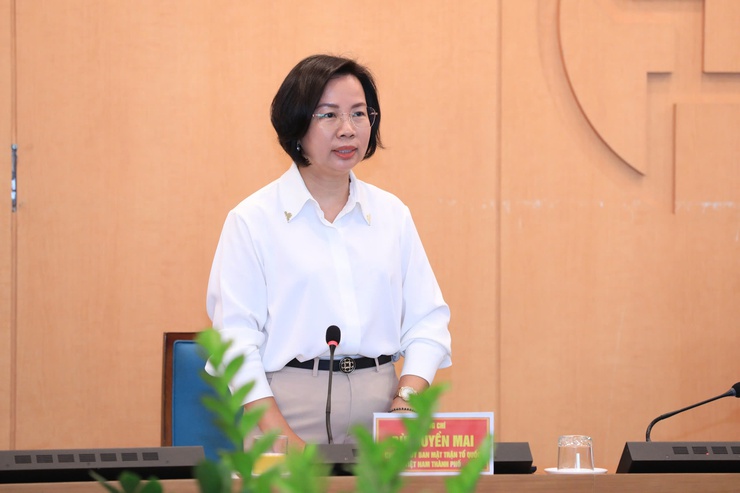 Bui Huyen Mai, Chairwoman of the Vietnam Fatherland Front Committee of Hanoi, provides comments at the meeting. Photo: Le Hai
Committed to double-digit growth
Concluding the meeting, Chairman Vu Dai Thang said the city leadership had reached a strong consensus on the new growth model proposal, with a focus on achieving double-digit growth in the 2026–2030 period. He noted that the proposal had been carefully prepared and aligned with major strategic directions, and was ready for approval as a foundation for implementation.
Emphasizing the urgency for 2026, Thang said the immediate priority is to implement the double-digit growth model. He described this as a critical task requiring strong commitment and coordinated action from all levels and sectors.
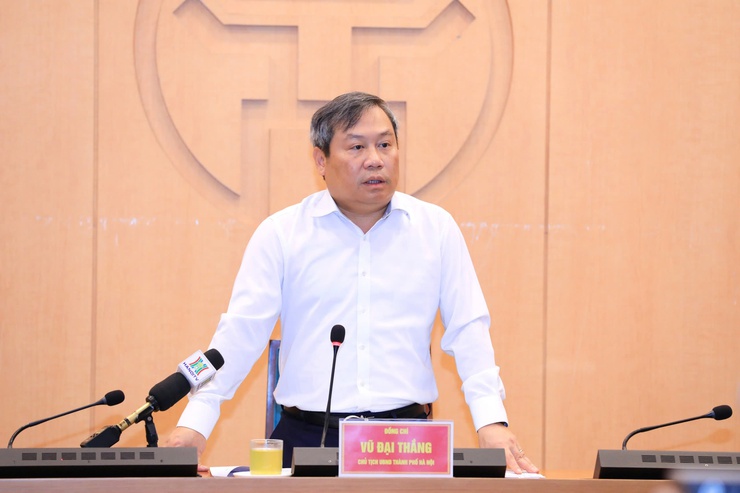 Chairman Vu Dai Thang speaks at the meeting. Photo: Le Hai
According to the Chairman, current conditions are favorable, with central authorities issuing major resolutions and strategic directions, alongside the Capital's 100-year master plan approved by the City People's Council and ongoing efforts to finalize specific policy mechanisms. These provide a solid foundation for socio-economic development, national defense, and security.
However, first-quarter 2026 results show that, while performance has improved compared to previous years, growth remains below target. Some sectors, particularly new growth drivers, have yet to be fully leveraged. The city will therefore need to adopt stronger and more flexible measures to accelerate growth in the remaining months of the year.
"We remain committed to the 11 percent growth target, viewing it as both an honor and a responsibility of the city government to the Party organization and the people," Thang said, calling for full use of policy tools, stronger government leadership, and greater participation from businesses and citizens.
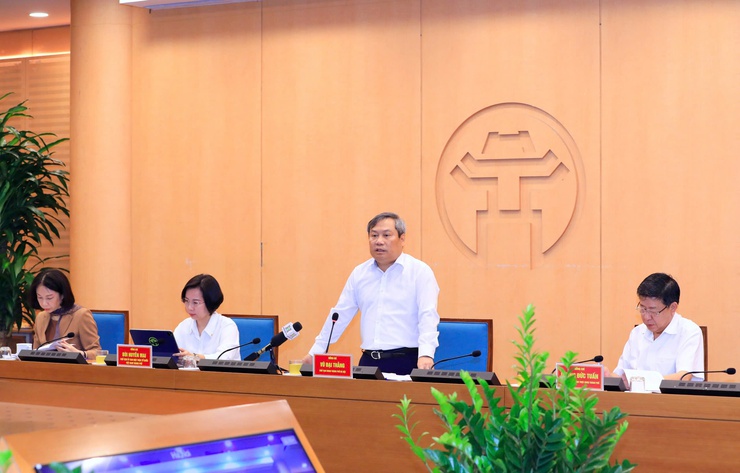 Chairman Vu Dai Thang emphasizes the need to develop new sectors such as the digital economy, green transition, and high technology. Photo: Pham Linh
On specific measures, the Chairman directed agencies to accelerate the institutionalization of special mechanisms, issue action programs with clear responsibilities, and align legal documents to ensure immediate implementation once policies take effect. Notably, the revised Law on Capital will come into force on July 1, 2026, immediately after being passed by the National Assembly.
In investment, public investment is expected to play a leading role in mobilizing private capital, acting as seed funding to unlock broader social investment. Projects with cleared land must be accelerated, while new project pipelines should prioritize regional connectivity and key infrastructure, particularly transport and urban rail.
To mobilize private and foreign investment, the city will continue to improve the business environment, remove bottlenecks, and promote new mechanisms. Strategic projects should be fast-tracked, with flexible implementation to allow eligible components to begin early.
Hanoi will also focus on developing new economic models, including the digital economy, green transition, and high-tech sectors, while completing infrastructure for high-tech parks and innovation zones to attract investors. At the same time, the city will support businesses, address market and cost challenges, stimulate consumption, and boost tourism and services, leveraging holidays and major events to drive growth.
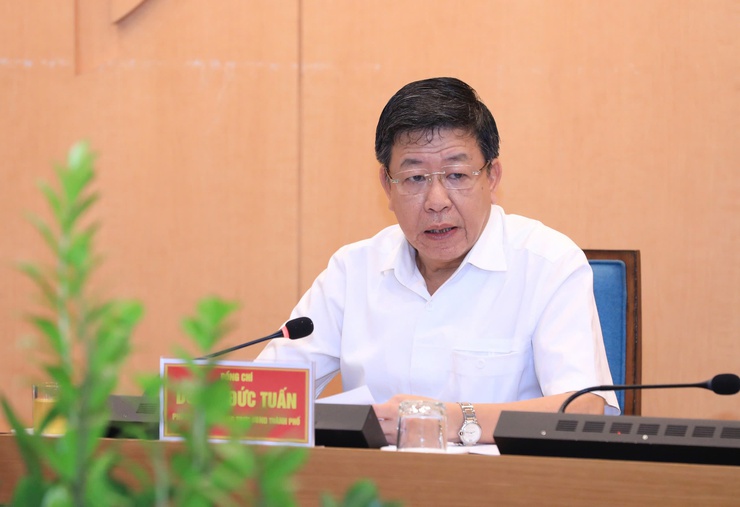 Standing Vice Chairman Duong Duc Tuan speaks at the meeting. Photo: Le Hai
In state management, Thang called for deeper administrative reform, improved public services, and stronger decentralization, following the principle that local authorities decide, implement, and take responsibility.
He stressed that achieving double-digit growth in 2026 and beyond is a shared responsibility across the political system, from city to grassroots levels, with the support of the business community and the public.
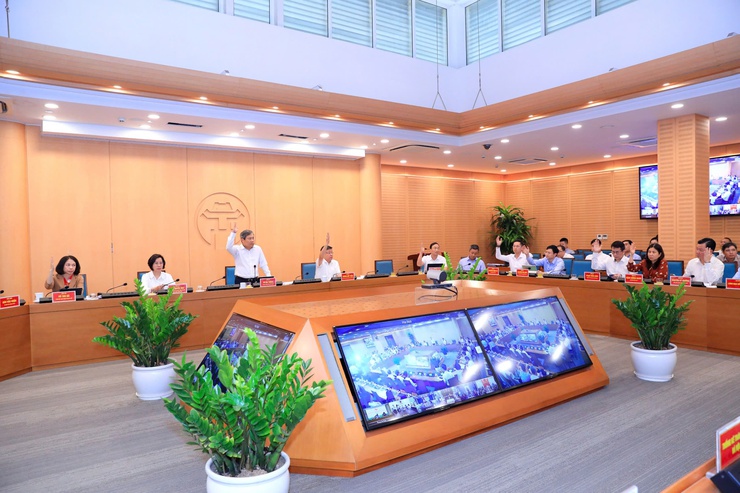 Members of the Hanoi People's Committee vote to approve the meeting contents. Photo: Pham Linh
Following the meeting, the city will issue a resolution assigning tasks clearly under the "six clear points, one consistent approach" framework, with strict monitoring and supervision. "If we address the shortcomings of the first quarter, we have a solid basis to achieve the 2026 growth target," the Chairman said.
At the meeting, the city leadership also approved a decision to transfer fire prevention and fighting inspection responsibilities from construction authorities to commune-level People's Committees across Hanoi.