The annual Ngoc Hoi - Dong Da Victory Festival, held on the fifth day of the first lunar month, today (February 21) at the Dong Da Mount National Special Monument in Hanoi with the attendance of central and Hanoi city leaders, residents and visitors.
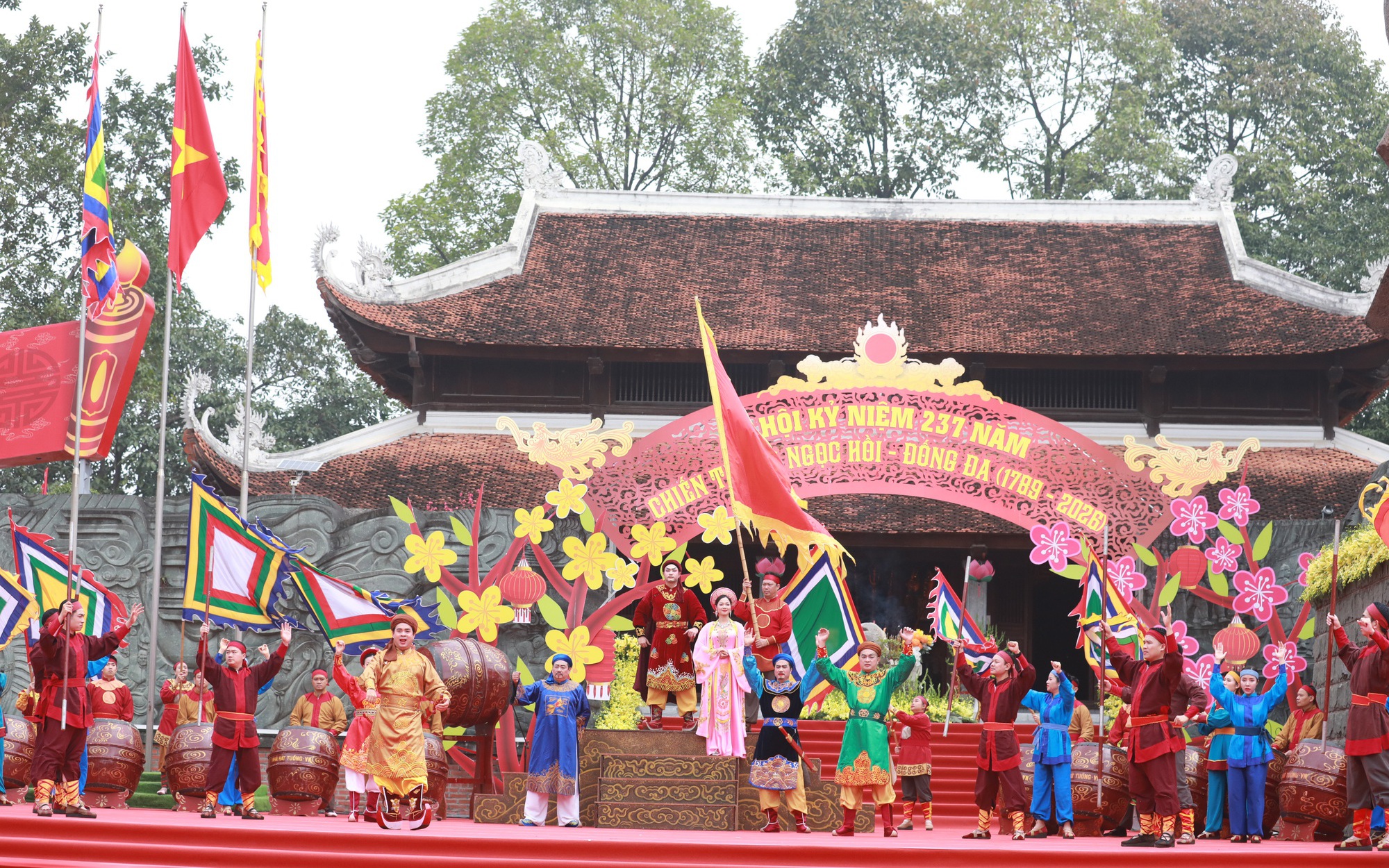
Overview of the event.
The commemoration honors national heroes who sacrificed for the country’s sovereignty and prosperity.
Historical records that in October 1788, the Qing court dispatched about 290,000 troops in three columns to invade Dai Viet.
Facing a national crisis, the Tay Son leader Nguyen Hue ascended the throne on December 22, 1788, in Phu Xuan, central Vietnam, proclaiming himself Emperor Quang Trung. He swiftly mobilized his forces northward after allowing troops to celebrate the Lunar New Year early.
In a rapid campaign, Quang Trung’s army defeated Qing positions at Ha Hoi before advancing toward Dong Da, southwest of the imperial capital.
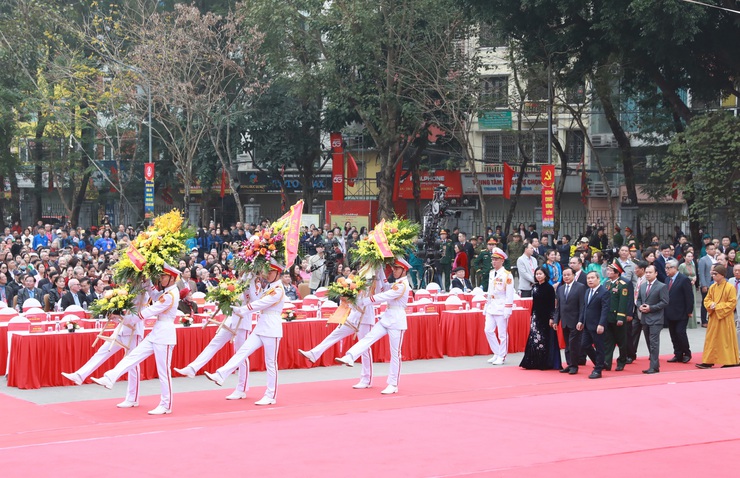
Overview of the event.
On the night of the fourth lunar day, Tay Son forces under Admiral Dang Tien Dong launched a surprise assault on the Khuong Thuong fort, dealing a decisive blow to Qing troops.
The Ngoc Hoi - Dong Da campaign ended the invasion and restored national independence.
The victory, now associated with modern-day Hanoi, is widely regarded as one of the most significant military achievements in Vietnamese history, underscoring the country’s enduring aspiration for peace and self-determination.
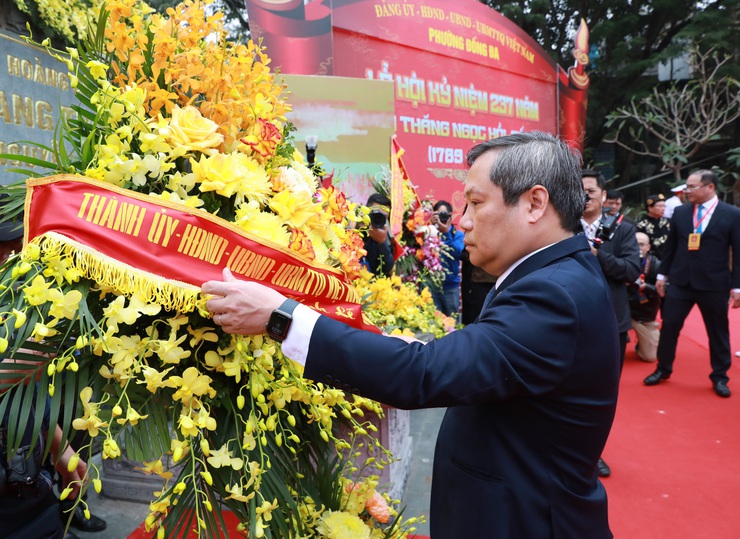
Chairman of the Hanoi People's Committee Vu Dai Thang.
To commemorate Quang Trung and the Tay Son commanders and soldiers, the Ngoc Hoi- Dong Da Victory Festival, also known as the Dong Da Mound Festival, has been held annually for centuries.
Beyond remembrance, the event serves as a focal point of Hanoi’s cultural life and a vehicle for educating younger generations about the legacy of their forebears.
This year’s festival features traditional rituals and performances, including an incense-offering ceremony by local delegations, a palanquin procession, lion and dragon dances, martial arts display from Binh Dinh, Chinese chess and human chess competitions, calligraphy demonstrations and other folk art presentations.