Sharing an overview of Hanoi's development, Tuan said the capital, together with the country, is entering a new phase of growth with a pioneering and leading orientation. The city aims to build a solid foundation for breakthrough growth, implement key resolutions, and move toward more sustainable economic growth models.
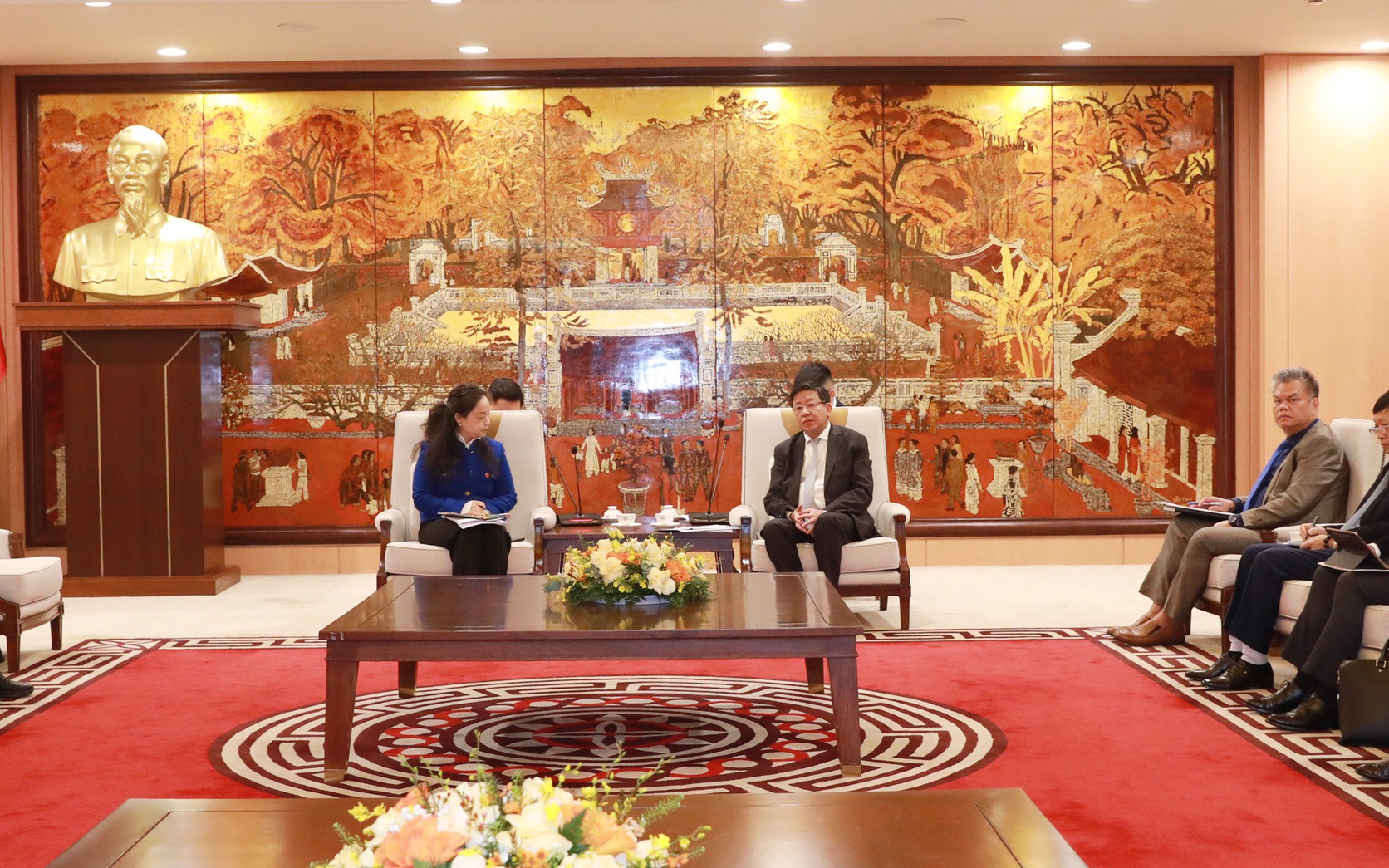
Overview of the meeting.
He emphasized Hanoi's priorities in science and technology development and digital transformation, particularly in urban governance, smart transport, smart cities, and the application of artificial intelligence.
These areas are seen as core pillars for transforming the city's economic model. In this process, Hanoi places great importance on mobilizing external resources and actively seeks cooperation with international partners, including those from China.
Tuan noted that Hanoi already has experience working with Chinese localities such as Beijing, Guangzhou, and Shanghai. He highlighted several promising areas for cooperation, including environmental pollution control, air quality management, artificial intelligence, smart city development, and big data digitization.
He added that building on the strong friendship between Vietnam and China and the positive cooperation between Hanoi and Chinese partners, both sides can develop practical and results-oriented partnerships.
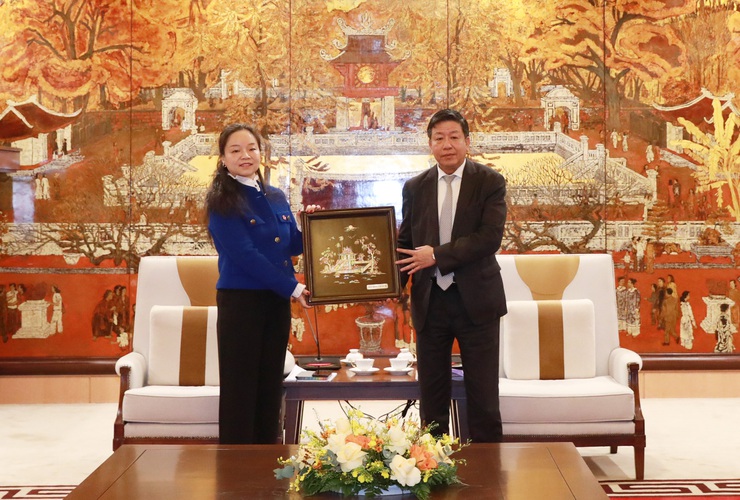
Vice Chairman of the Hanoi People's Committee Duong Duc Tuan and Chief Executive Officer of PCI Group Chen Qiao.
Chen Qiao expressed appreciation for the warm reception by the Hanoi People's Committee and congratulated Vietnam and Hanoi on their recent development achievements.
Introducing PCI Group, she said the company has 34 years of experience since its establishment in 1992, with core strengths in smart cities, intelligent railways, and smart transportation.
PCI is present in 46 out of 53 Chinese cities with urban rail systems, has participated in the construction of more than 16 rail lines, and has been involved in operations for 15 years. The group has extensive experience delivering rail projects in major Chinese cities such as Shanghai.
Beyond construction, PCI also provides rail services, infrastructure, and integrated rail management systems, making it the only group in China with a fully comprehensive and integrated railway project system.
On that basis, Chen Qiao said PCI hopes to introduce its modern digitalized operation and management systems to railway projects in Vietnam, including those in Hanoi. She welcomed Hanoi's vision and expressed a strong interest in bringing advanced digital solutions to projects in the capital.
She also affirmed PCI's commitment to working with local partners for local development. The group plans to establish joint ventures in Vietnam and hopes to engage Vietnamese partners, while committing to technology transfer and workforce training.
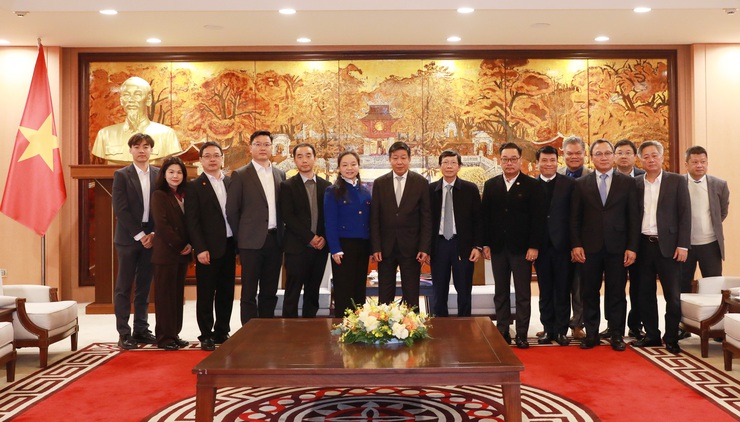
Delegates at the meeting.
Tuan welcomed these views and stressed the critical role of urban railway infrastructure in the overall urban transport system. He expressed confidence that Chinese companies, with their extensive experience, could offer solutions well-suited to Hanoi's needs.
He agreed on a development approach in which successful implementation in Hanoi could serve as a basis for expansion across Vietnam and the wider region. He emphasized that proposed solutions must be comprehensive, ensure safety and security, and be well integrated with the city's broader transport infrastructure.
At the meeting, Tuan assigned relevant city agencies to work directly with PCI Group to further discuss and concretize the proposed directions for cooperation.