The resolution was issued to concretize the pilot special mechanisms and policies for the capital and to establish a unified and transparent legal framework to accelerate the preparation and implementation of projects of strategic importance to Hanoi's development.
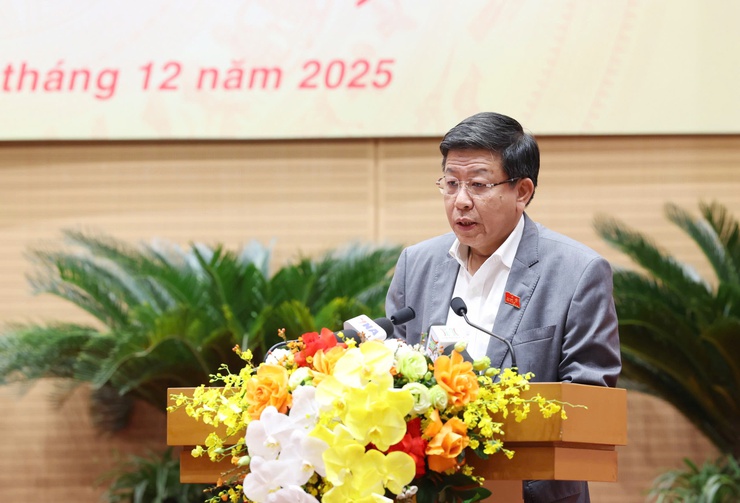
Vice Chairman of the Hanoi People's Committee Duong Duc Tuan at the session.
Under the resolution, the scope of application focuses on special category projects as defined by the National Assembly, including public investment projects, public-private partnership projects and investment projects under the Investment Law that fall under the city's authority to decide or approve investment policy.
The resolution emphasizes overarching implementation principles, requiring correct application to eligible projects and purposes in line with National Assembly provisions and relevant laws. It also requires transparency, feasibility and strict prevention of corruption, losses, waste and misconduct while avoiding complications related to security and public order.
The preparation, appraisal, decision and adjustment of investment policy must be aligned with administrative reform objectives, including simplified procedures and shorter processing times compared with standard regulations, to meet the need to accelerate the city's key projects.
For public investment projects, the resolution clearly defines procedures from the preparation of pre-feasibility study reports to appraisal and decision on investment policy. The Chairman of the Hanoi People's Committee assigns specialized agencies or subordinate units to carry out investment preparation, with dossiers centrally submitted to the Department of Finance for appraisal through the City Appraisal Council.
The appraisal covers key elements including investment necessity, consistency with planning, location, land use demand, site clearance plans, preliminary total investment, financing arrangements, implementation schedule, environmental impacts and applicable special mechanisms and policies. Based on appraisal results, the municipal People's Committee submits the project to the City People's Council for consideration and decision on investment policy.
For public-private partnership projects, the resolution regulates procedures for preparing investment policy proposals, appraisal and decision on investment policy, with strict requirements on project selection conditions, mobilization of social resources and risk sharing mechanisms, particularly revenue reduction sharing. Appraisal is conducted through the municpal Appraisal Council and may involve domestic and international experts to ensure objectivity and depth.
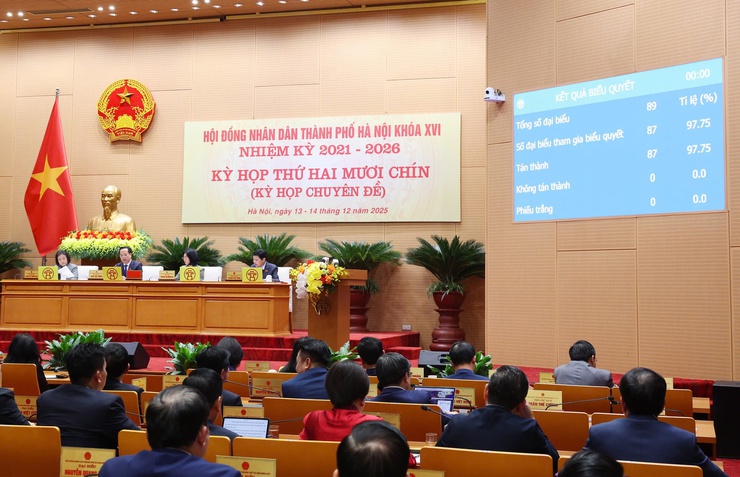
Overview of the session.
For investment projects under the Investment Law that fall under the authority of the Chair of the municipal People's Committee to approve investment policy, the resolution provides detailed requirements on dossiers and procedures for project proposals, appraisal and approval. Appraisal focuses on investment necessity, consistency with planning and land use plans, housing development programs where applicable, environmental impacts, the investor's financial capacity and market access conditions.
The resolution also fully regulates cases and procedures for adjusting investment policy for each type of project, allowing adjustments only when there are major changes in objectives, scale, location, total investment or other significant factors as prescribed. It clearly defines the responsibilities of organizations and individuals involved in appraisal and adjustment decisions, ensuring accountability within assigned mandates.
The resolution will remain effective through December 12, 2030, in line with the pilot period for the special mechanism under National Assembly Resolution No. 258/2025/QH15. It is expected to bring clear improvements in investment preparation and promote effective implementation of major projects, creating momentum for sustainable development of the capital in the coming period.