At the meeting, ward leaders presented comprehensive reports on political task performance. The reports covered key areas such as socio economic development, urban management, construction order, public investment disbursement, complaint handling, mass mobilization and Party building.
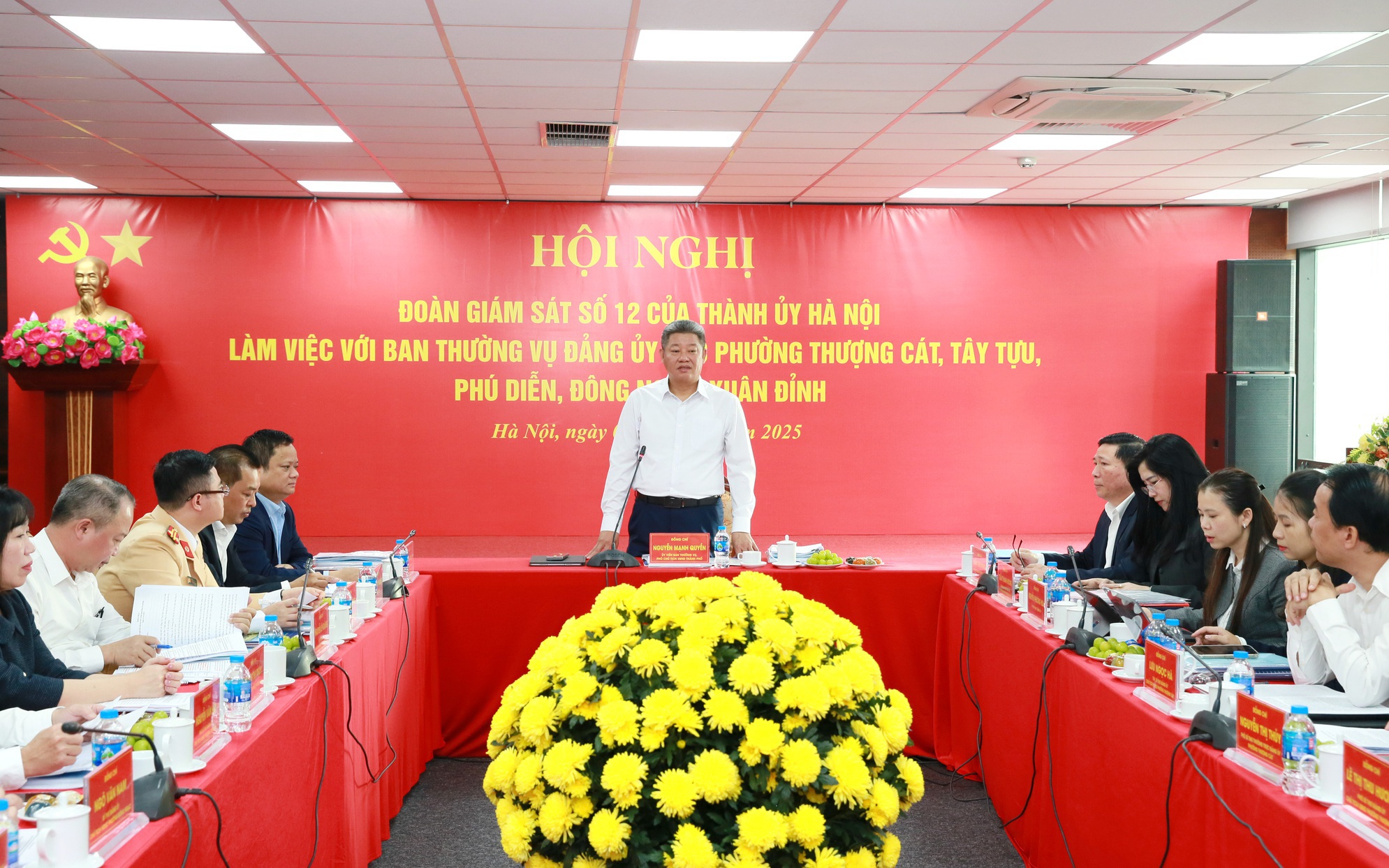
Vice Chairman of the Hanoi People's Committee Nguyen Manh Quyen.
Along with progress made, the wards also pointed out long standing challenges.
Several issues have persisted for years including planning and land related problems, site clearance delays, slow public investment projects, localized flooding after heavy rain, unresolved construction violations and densely populated neighborhoods lacking public space and basic infrastructure. Some matters exceed ward authority and require city level mechanisms for resolution.
After the reports, representatives from the city's departments discussed and responded directly to the wards' proposals. Their comments focused on strengthening delegated authority, accelerating public investment disbursement, addressing delayed projects, improving urban management and enhancing coordination among agencies. Responsibilities, timelines and solutions were clarified for many issues.
During the discussion, Vice Chairman Nguyen Manh Quyen emphasized that the five wards have unique advantages in land availability, urban space, university clusters and potential for service, education and technology based economic development. Along with these strengths are long standing obstacles that have slowed growth across the area.
He asked ward leaders to clearly understand their responsibilities, especially as the city aims for economic growth of at least 11 percent in 2026. He said that without strong, coordinated efforts from the grassroots level, the city will find it difficult to meet its overall goals.
He noted that the city is now reviewing weekly performance as a new governance method to ensure steady progress. He said ward leaders, who work closest to residents, must change their mindset, modernize work methods and act proactively, flexibly and responsibly.
He also asked the wards to align with the nine major resolutions of the Central Government, which serve as strategic guidance for socio economic development and Party building. Implementation must be consistent from the central to the local level to avoid gaps between policy and practice.
During the meeting, the head of the supervisory team stressed that the wards must focus on organizing and carrying out the eight priority topics set by the City Party Committee for 2025–2026. These topics address core areas that shape local development.
For delegated authority and digital transformation, the wards must review current conditions and identify obstacles that affect task execution after decentralization, particularly in administrative procedures and workflow. Digital transformation should advance quickly to streamline processes and better serve residents.
For public investment disbursement, he said this is a mandatory task and urged the wards to coordinate closely to speed up progress from the first days and first months of 2026. The city expects full completion of the annual disbursement plan and wants to avoid last minute pressure at the end of the year.
On site clearance, he requested stronger and more decisive actions. The wards must review and summarize delayed projects and propose solutions to competent authorities. Industrial clusters that no longer fit planning requirements must be relocated according to a clear schedule.
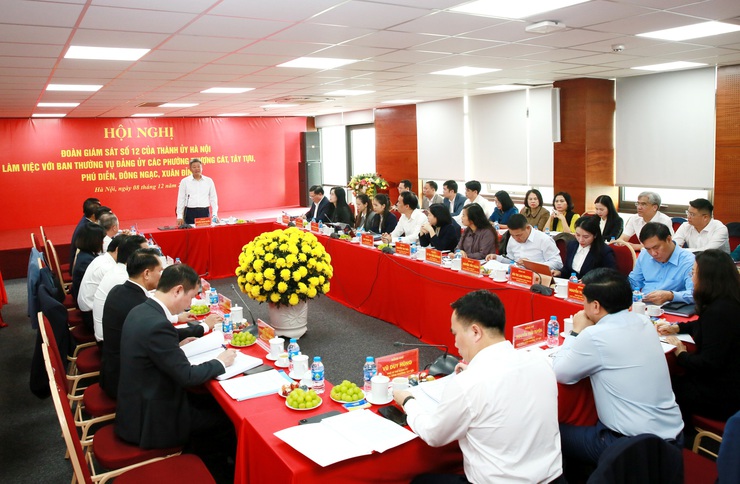
Overview of the meeting.
He also asked the wards to address five pressing issues identified as bottlenecks by the Secretary of the municipal Party Committee: localized flooding, traffic congestion, urban order, environmental sanitation and food safety.
"Flooding must be resolved completely since it has caused prolonged frustration in many wards, and construction order must be managed with consistency and persistence," said Quyen.
For local economic development, he encouraged the wards to identify specific advantages to guide their growth paths from urban agriculture to services, commerce, education and research. The ultimate goal is to improve living standards for residents.
For year end reviews and preparations for the New Year and Lunar New Year holidays, he said assessments must not only summarize results but also create a unified and feasible action plan for 2026 with clear priorities and measurable targets. He asked the wards to ensure festive, safe and inclusive celebrations so that all households can enjoy the holiday season.
In closing, Vice Chairman Quyen asked the five wards to finalize their official reports and fully reflect the eight supervisory topics.
"The reports must present a systematic assessment of achievements, shortcomings and detailed solutions and must be submitted to the team's secretariat no later than December 1," said Quyen.
He said the guiding principle is to act proactively, decisively and consistently, and that long standing issues must be resolved to avoid obstructing local development.