Attending the conference were Politburo member and Secretary of the Hanoi Party Committee Nguyen Duy Ngoc; Party Secretary and Chief Prosecutor of the Supreme People's Procuracy Nguyen Huy Tien; Standing Committee member of the Hanoi Party Committee and Permanent Vice Chairman of the Hanoi People's Committee Duong Duc Tuan, along with other Standing Committee members and representatives of relevant agencies.
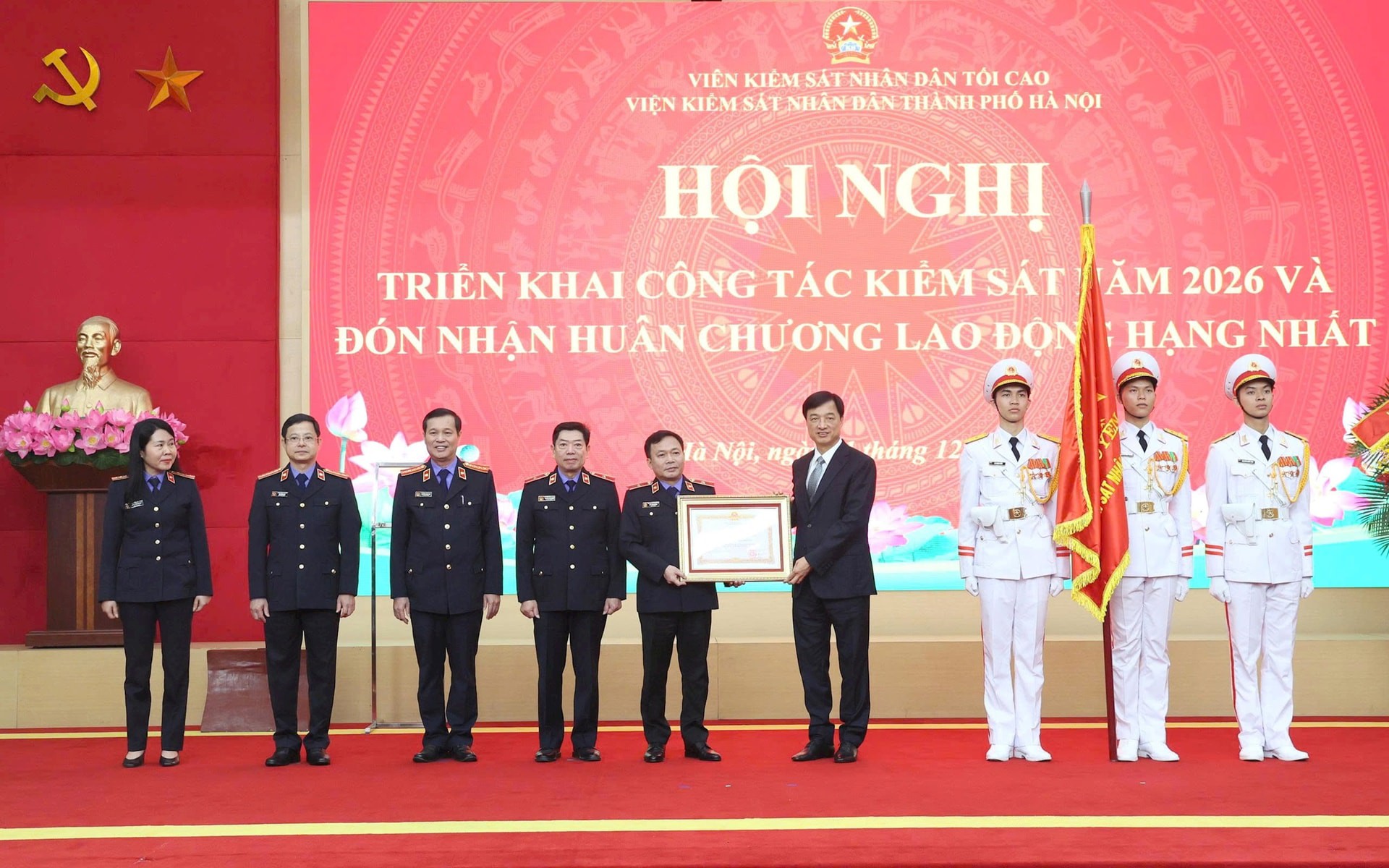
Overview of the event.
In 2025, the two-level Hanoi People's Procuracy continued to promote unity, creativity, proactiveness and discipline in implementing tasks assigned by the sector and the city. Results were highly positive with 133 out of 135 targets met or exceeded, including full completion of all targets required under National Assembly resolutions.
Several indicators recorded strong performance. All cases were prosecuted on time and under the correct charges. About 12.7 percent of cases were classified as key cases. The rate of resolving complaints and denunciations within the jurisdiction reached 100 percent. The acceptance rate of prosecutorial appeals in criminal, civil administrative and commercial cases exceeded 85 percent.
Notably, the number of cases returned for additional investigation and cases annulled due to prosecutorial responsibility declined compared with the same period last year and surpassed sector targets. The role of heads of agencies and units continued to be strengthened through direct oversight of key stages of work, ensuring accountability and overall performance across both levels of the procuracy.
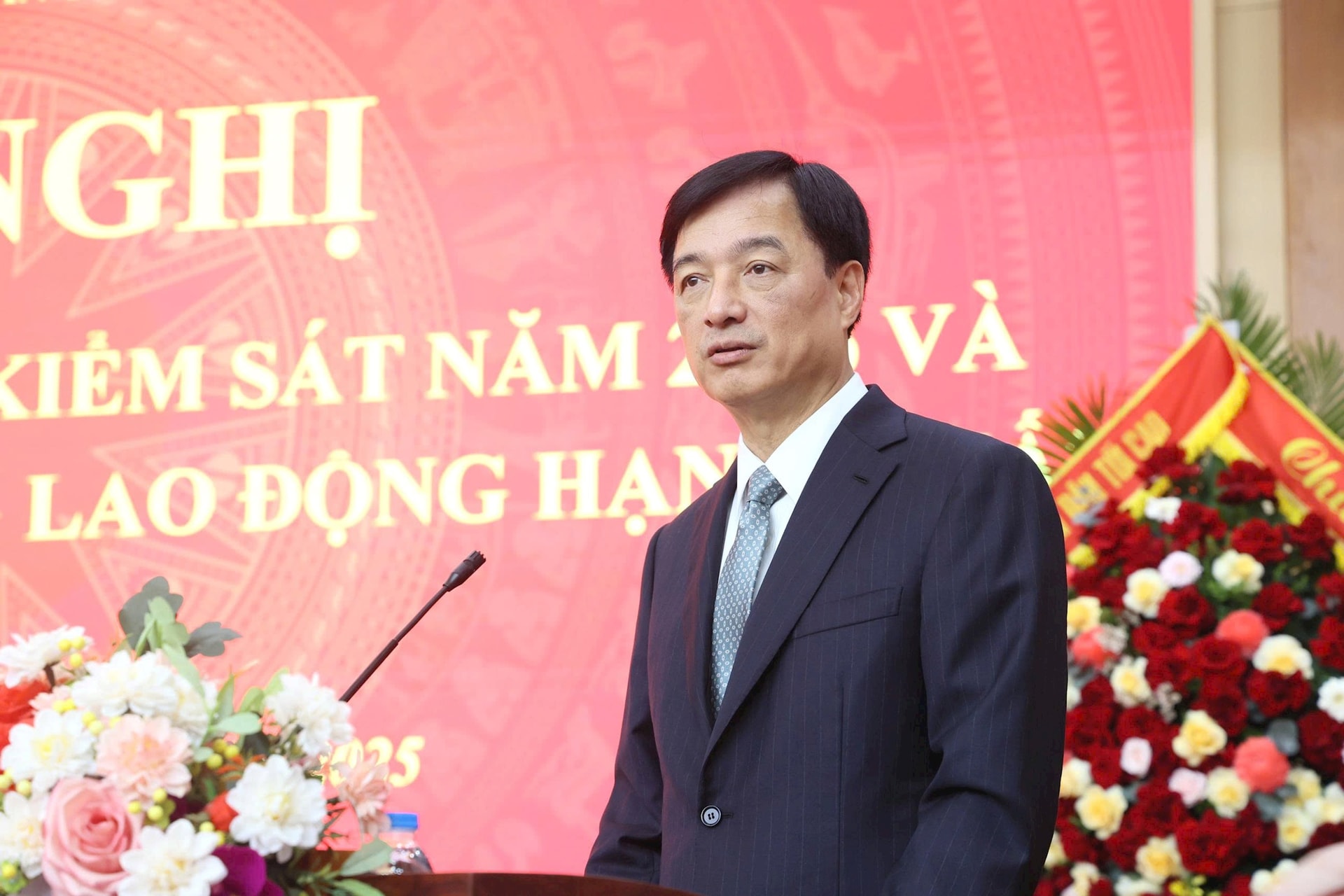
Hanoi Party Chief Nguyen Duy Ngoc at the event.
Specifically, the two-level procuracy exercised prosecutorial authority and supervised first-instance trials in 7,840 cases involving 16,857 defendants and appellate trials in 1,179 cases involving 1,807 defendants. In coordination with the courts, 436 review hearings were held along with 182 hearings using digitized case files and 318 online hearings. These efforts contributed to advancing digital transformation and meeting judicial reform requirements.
The Hanoi People's Procuracy also focused on effectively handling 53 cases involving 578 defendants assigned by the Supreme People's Procuracy for prosecution and trial supervision. This helped ensure proper handling of complex high-profile cases under public scrutiny or subject to oversight by the Central Steering Committee and the Hanoi Party Committee on anti-corruption waste and negative practices. Notable cases included those involving Phuc Son Group, Thuan An Group and the second phase of the "rescue flight" case.
Efforts to recover misappropriated and lost state assets were stepped up. More than VND1 trillion (US$40 million) was recovered out of a total VND1.8 trillion (US$72 million) subject to recovery, achieving a rate of 56 percent. During investigations, many assets were also seized or frozen, including foreign currency, gold, real estate, vehicles and valuable jewelry. In the case involving Pho Duc Nam and accomplices charged with fraud, authorities seized and restrained assets worth more than VND5.3 trillion (US$212 million).
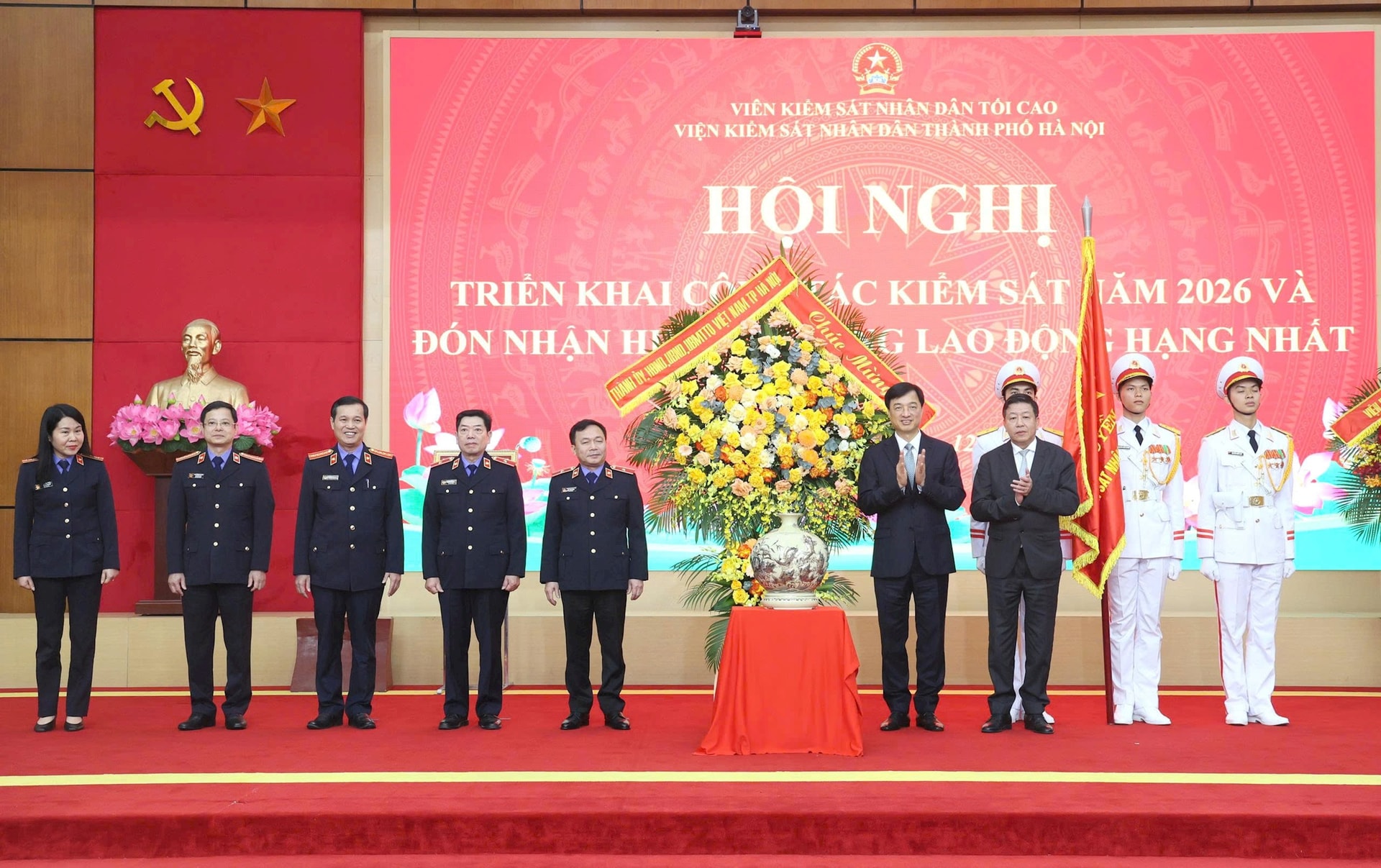
Delegates at the event.
Addressing the conference, Hanoi Party Secretary Nguyen Duy Ngoc said 2025 was a pivotal and historic year for the capital as it simultaneously implemented major tasks related to restructuring the administrative apparatus, organizing Party congresses at all levels and laying the groundwork for a new development phase targeting double-digit growth from 2026.
Against this backdrop, the city emphasized the need to unlock resources, pursue substantive decentralization and delegation of authority, improve institutions and accelerate digital transformation as key pillars for fast and sustainable development. Initial assessments show that the two-tier local government model is operating smoothly, though some bottlenecks remain, particularly in aligning decentralization with resource allocation.
Delegates at the event.
Ngoc noted that the number of tasks assigned to the commune level has increased by 176, bringing the total to more than 860. However, he said authority procedures and budget arrangements still need further review to ensure smooth operations and avoid situations where responsibilities are assigned without sufficient powers or resources.
He added that Hanoi is implementing the resolution of the 18th City Party Congress with the core goal of achieving double-digit economic growth from 2026 onward. To meet this goal, the city must transform its growth model, shifting from labor and resource-based development to a knowledge-based economy driven by science, technology and digital transformation while improving labor productivity and human resource quality.
The Hanoi Party Secretary said the Politburo has approved Hanoi's proposal to introduce and implement breakthrough mechanisms through revisions to Resolution 15 issued in 2022 and the amended Capital Law passed in 2024. In particular, National Assembly Resolution 258 has created an important legal framework allowing Hanoi to proactively decide on and implement a series of major projects.
Reviewing key achievements in 2025, Ngoc said that to realize the 2026 action theme of "Discipline and professionalism, breakthrough and creativity, efficiency and sustainability," all levels and sectors must thoroughly implement and effectively carry out 12 major strategic directions.
These include focusing on resolving five major bottlenecks: traffic congestion, urban order, environmental pollution, flooding and food safety, with the requirement that conditions must improve month by month, quarter by quarter, year by year and within a long-term strategy.
Ngoc praised the contributions of internal affairs agencies, including investigation, prosecution, trial and enforcement bodies in maintaining legal discipline, preventing violations without hindering development. He stressed a consistent approach of prioritizing asset recovery and administrative handling first, with criminal measures as a last resort to create a safe and transparent environment for residents and businesses.
He also candidly pointed out shortcomings in digital transformation within the internal affairs and judicial sectors and called for stronger data connectivity, case file digitization and a gradual end to manual processes. Agencies were urged to move toward shared data systems and avoid fragmented and wasteful investments.
He asked internal affairs agencies to remain vigilant, proactively prevent profiteering and safeguard the city's image and development environment.
Also addressing the conference, Supreme People's Procuracy Chief Prosecutor Nguyen Huy Tien said that in 2025, the internal affairs and justice sectors implemented a decisive and methodical shift from a four-tier to a three-tier organizational model in line with a central plan. As a result, 921 management units were reduced, including 18 department-level units, 29 provincial-level units, 338 district-level units and 533 divisions within procuracies nationwide.
Along with this, leadership and management positions were sharply reduced, with 1,468 deputy positions eliminated and nearly 2,000 management titles streamlined in total. This restructuring has resulted in a leaner apparatus with clearer functions, fewer intermediate layers and improved operational and professional efficiency.
Delegates at the event.
Tien emphasized that Hanoi is a key area and the political and economic engine of the country, with a very heavy workload. Each year, judicial agencies in the city handle around 22,000 crime reports, 9,000 criminal investigation cases and more than 30,000 civil administrative and economic cases. These figures account for over 10 percent of the national total, requiring exceptional effort from the two-level Hanoi procuracy and judicial agencies.
He noted that in many complex and sensitive cases, Hanoi has handled matters in strict accordance with the law and central anti-corruption guidance, helping maintain political stability, social order and a favorable environment for development.
Regarding tasks ahead, Tien called on the two-level Hanoi People's Procuracy to focus on several key priorities. These include continuing to renew working approaches, prioritizing economic, civil and administrative handling first, using criminal measures as a last resort, accelerating digital transformation in judicial activities, implementing unified digital case processing and management from 2026, reviewing and reallocating resources effectively, focusing on strategic tasks and avoiding dispersion. He also urged closer coordination among internal affairs agencies, maintaining unity and preventing the emergence of new hotspots.
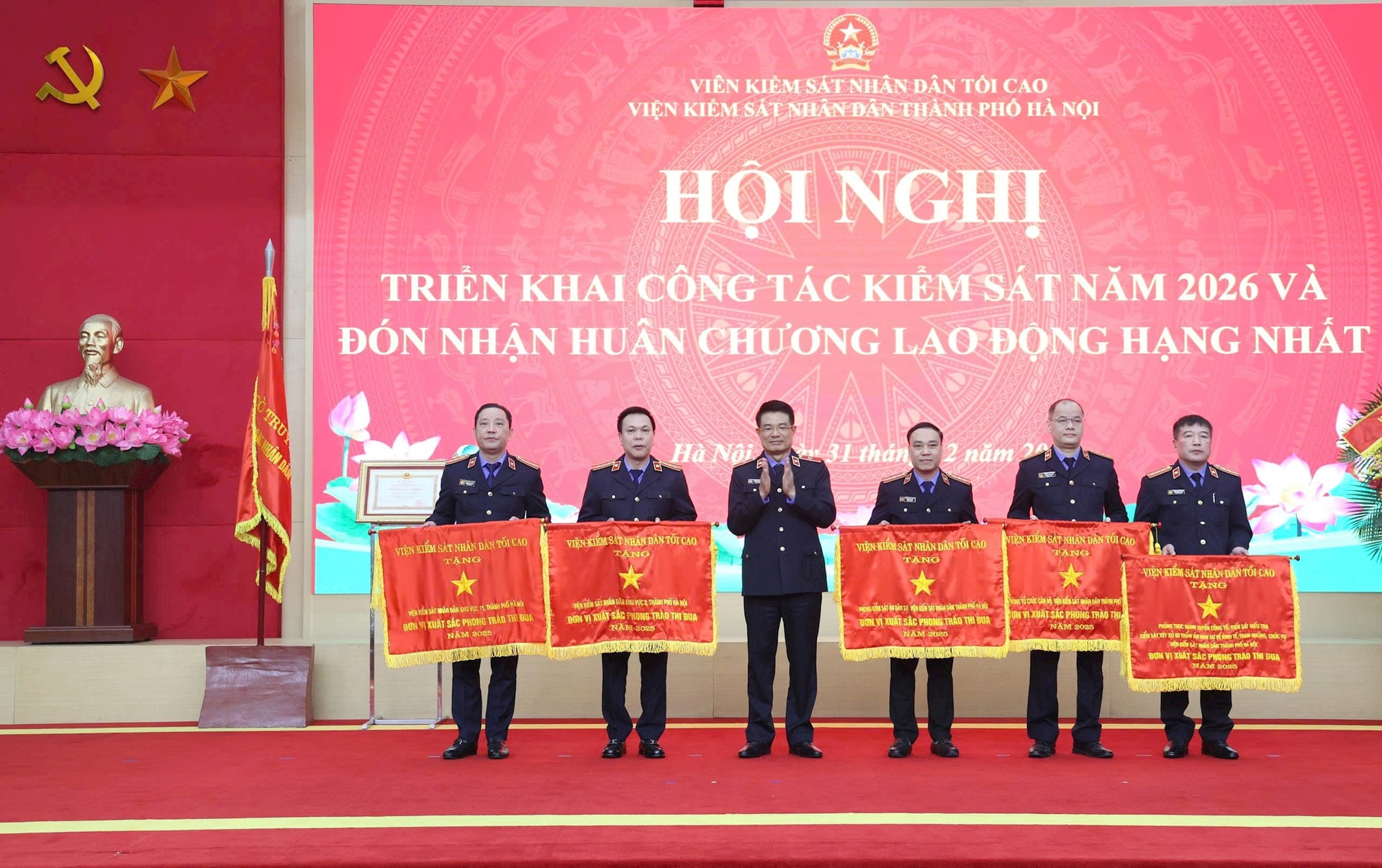
At the conference, Ngoc, on behalf of the State President, presented the First-Class Labor Order to the Hanoi People's Procuracy. Supreme People's Procuracy Chief Prosecutor Nguyen Huy Tien awarded the Prime Minister's certificates of merit and sector emulation flags to outstanding collectives and individuals in 2025.
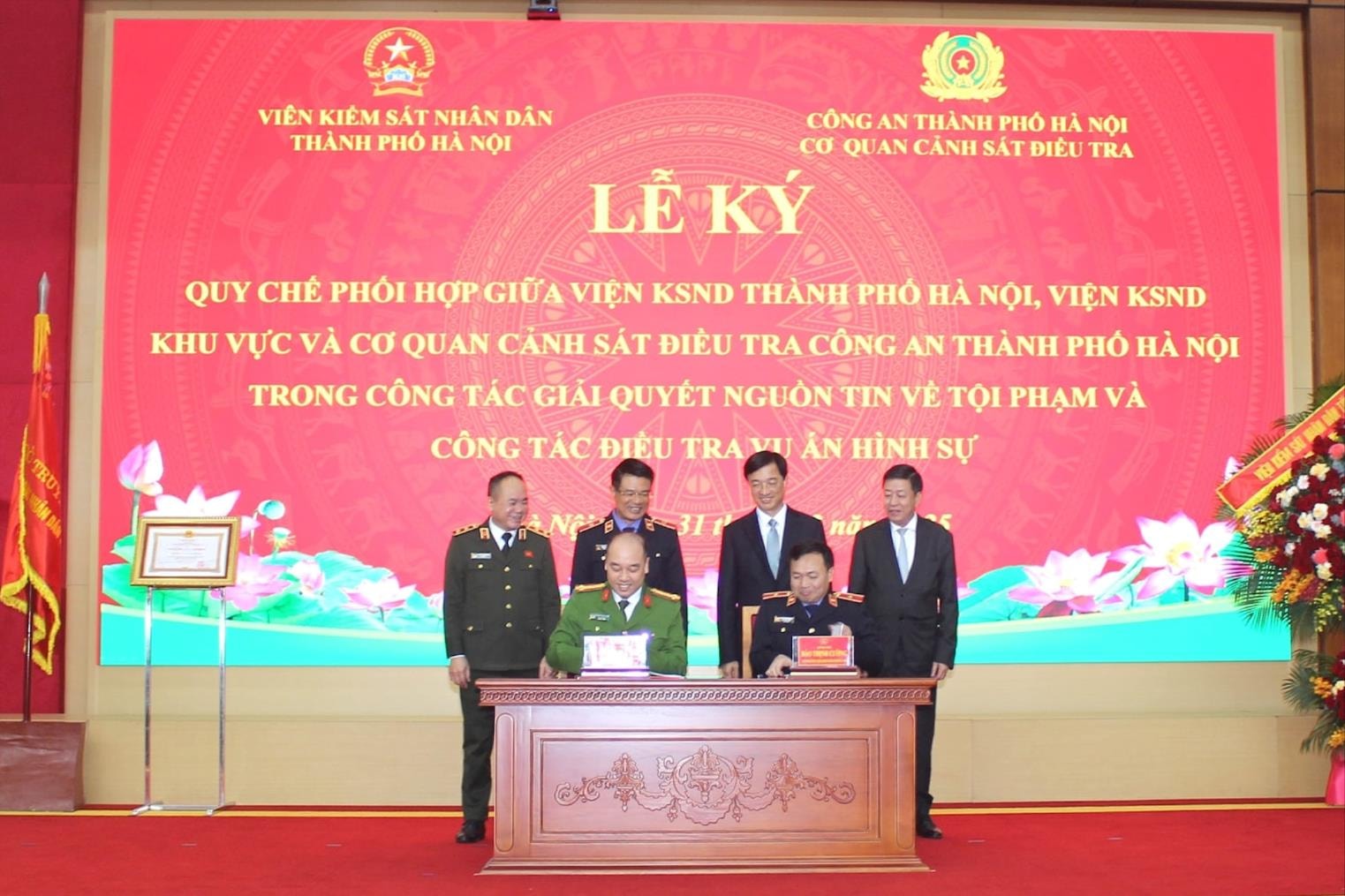
Leaders also witnessed the signing ceremony of an inter-agency coordination regulation between the Investigation Police Agency and the Hanoi People's Procuracy.