The ceremony was attended by Deputy Secretary of Hanoi Party and Chairman of municiple People's Committee Nguyen Duc Trung; Government Deputy Inspector General Duong Quoc Huy; Standing Committee Member and Chairman of the Municipal Inspection Commission Do Anh Tuan; Municipal Party Committee Member and Vice Chairman of the Hanoi People’s Council Pham Qui Tien; along with leaders of city departments, sectors, and generations of inspection officials.
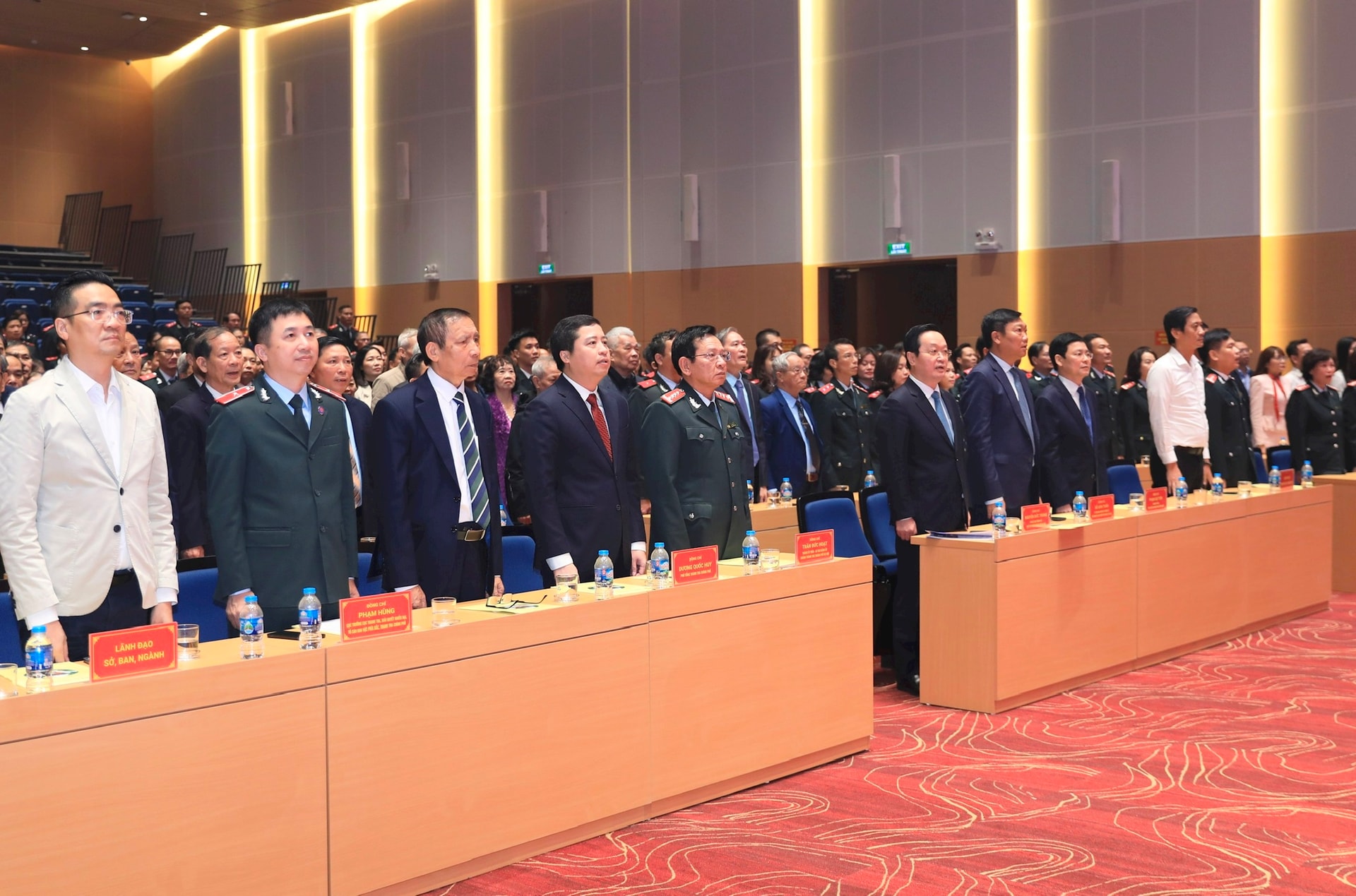 Delegates conduct a flag-salute ceremony at the anniversary.
Hanoi Inspectorate grows in capacity and performance
Hanoi Chief Inspector Tran Duc Hoat noted that exactly 80 years ago, on November 23, 1945, President Ho Chi Minh signed Decree No. 64/SL, establishing the Special Inspection Bureau—the first inspection agency of the Democratic Republic of Vietnam.
This historic milestone marked the start of a sector tasked with a unique mission: safeguarding discipline, protecting citizens’ lawful rights, and contributing to the development of a clean and strong state apparatus.
Since then, under the leadership of the Party and the guidance of the State, the Vietnam Inspectorate has continually matured, playing a key role in building a socialist rule-of-law state, upholding discipline, and protecting the lawful rights and interests of the people.
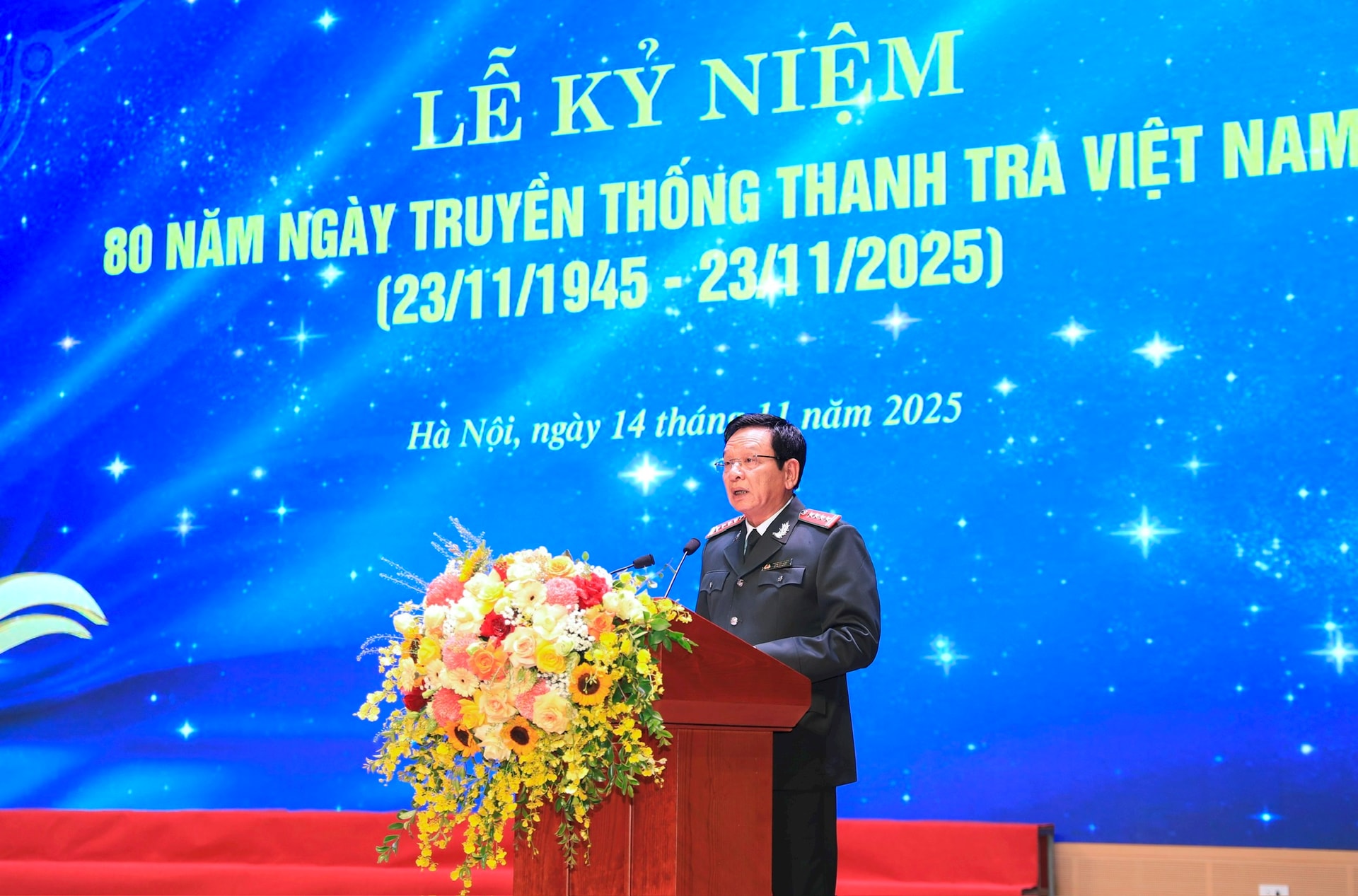 Hanoi Chief Inspector marks 80th anniversary of the Vietnam Inspectorate.
Alongside the national development of the Inspectorate sector, Hanoi Inspectorate has also made strong progress over the past 80 years. Its organizational structure has been reinforced, with improved personnel and operational methods, enabling the municipal Inspectorate to expand in both quantity and quality.
The municipal Inspectorate has advised the Hanoi Party Committee and the Hanoi People’s Committee on preventive measures, contributing to maintaining administrative discipline; detecting and proposing the handling of violations worth thousands of billions of dong; protecting citizens’ lawful rights; and reducing prolonged and escalated complaints.
Notably, Hanoi Inspectorate has built a team of competent, principled, and courageous officials who “speak frankly, act decisively, and do not avoid challenges.”
According to the Chief Inspector, in the new development phase, Hanoi Inspectorate will continue renewing inspection content and methods while strengthening grassroots-oriented activities and enhancing its role in serving socio-economic development.
The sector will also improve citizen reception and complaint resolution to prevent emerging hotspots, adhering to the principle of “being close to the people, understanding the people, and resolving issues from the grassroots.”
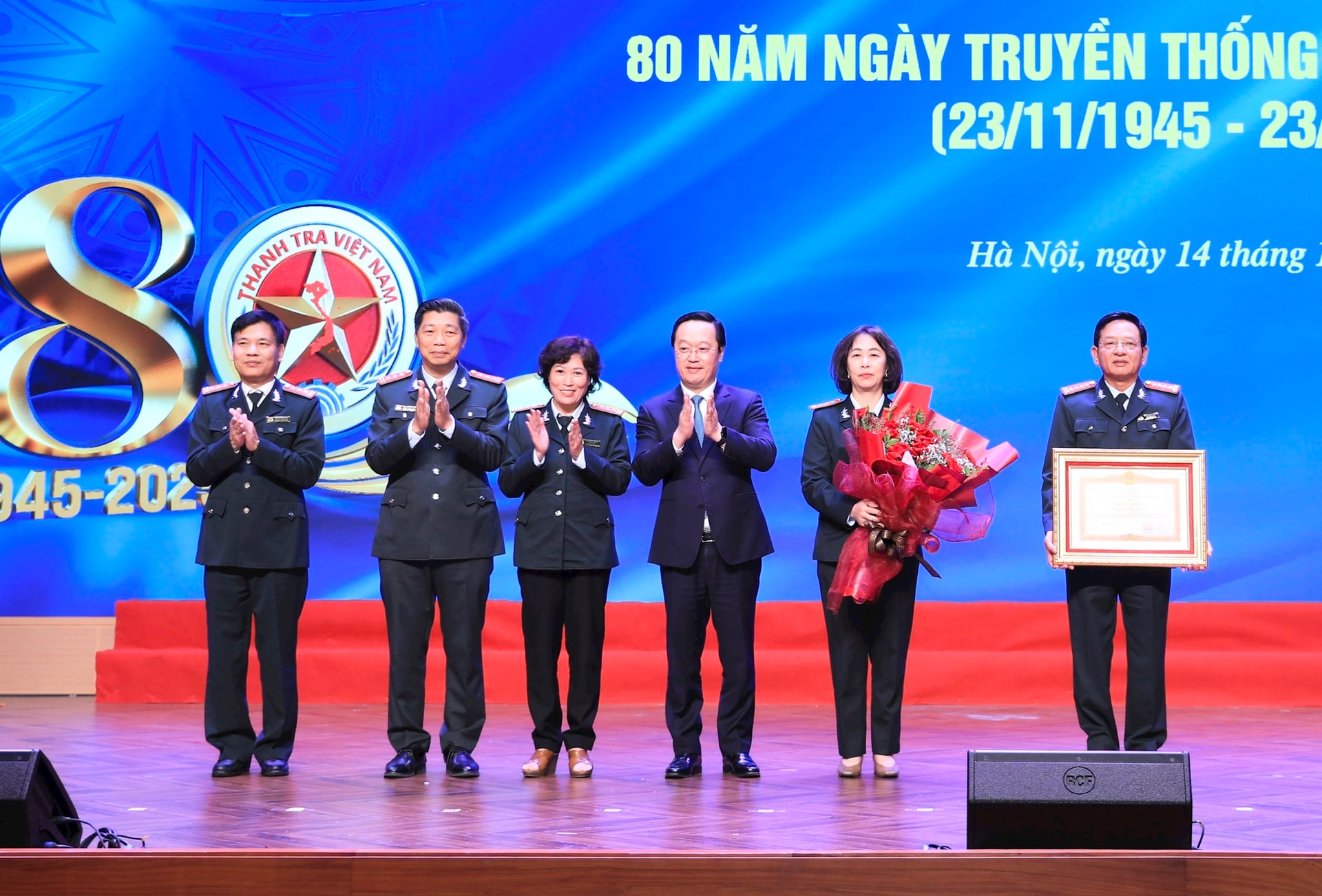 Chairman of Hanoi People's Committee Nguyen Duc Trung, third from right, presents Prime Minister’s Certificate of Merit to the city's Inspectorate.
On this occasion, Hanoi Inspectorate received a Certificate of Merit from the Prime Minister and the Emulation Flag for outstanding achievements in the 2021–2025 period from the Government Inspectorate. The Chairman of the Hanoi People’s Committee also awarded Certificates of Merit to five collectives and 17 individuals.
Meeting new requirements and responsibilities
Hanoi Chairman, in his remarks, emphasized that as the capital continues to grow, the role and position of the Inspectorate have become increasingly significant, serving as a “shield” that protects discipline and state order.
The Chairman expressed appreciation for the outstanding achievements and the silent yet immense contributions of generations of Hanoi inspection officials throughout the years.
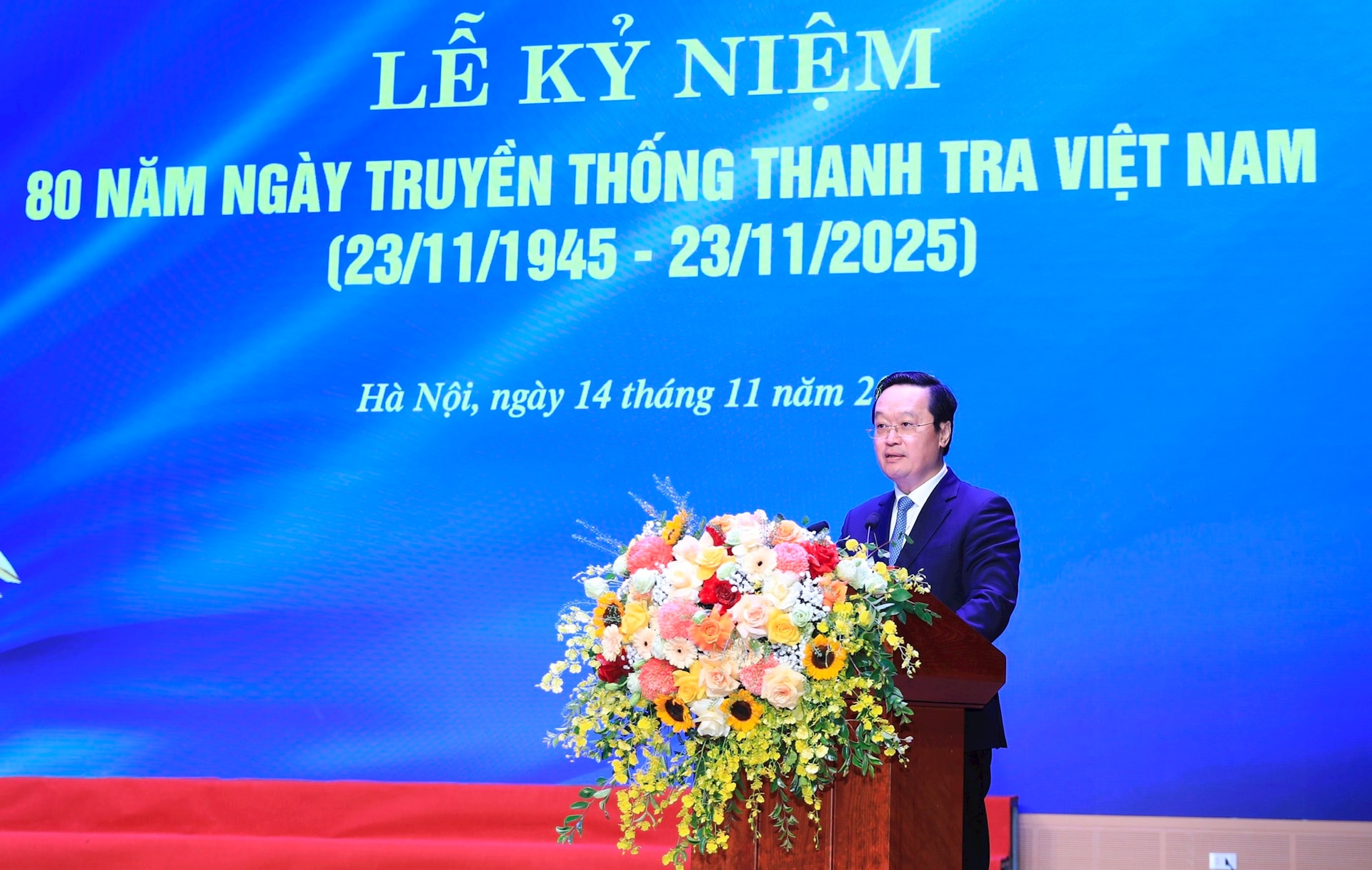 The Hanoi Chairman delivers directives at the ceremony.
Trung said the Inspectorate plays a critical role in ensuring discipline, upholding public trust, safeguarding public interests, and creating a transparent environment for development.
He noted that the sector must transition from a passive “inspect–detect–handle” approach to a proactive model focused on prediction, risk analysis, and early prevention; from punitive inspection to supportive, enabling inspection that accompanies citizens and businesses.
The Inspectorate should become the government’s “early-warning sensor,” promptly identifying policy shortcomings and emerging risks requiring institutional refinement.
Entering a new phase, the Chairman outlined five key tasks for Hanoi Inspectorate:
First, Hanoi Inspectorate must thoroughly grasp and effectively implement the Party’s guidelines on comprehensive national renewal, carrying out strategic missions and breakthrough orientations to advance national development in the new era.
The inspectorate must strengthen its advisory role in state management, thereby contributing to building and refining legal regulations and institutional frameworks for the capital’s and the nation’s development.
It must also uphold and reinforce the Party’s leadership over inspection activities, ensuring that the inspectorate remains steadfast in its development goals and places the interests of the people above all else. Hanoi Inspectorate must truly become a guiding beacon of integrity in the capital’s governance.
Second, the inspectorate must innovate inspection methods and mindsets.
It must proactively detect and address violations with an emphasis on prevention; enhance citizen reception and complaint resolution; ensure cases are handled thoroughly and responsibly to prevent emerging hotspots; and prioritize dialogue and conciliation at the grassroots level to strengthen the effectiveness and efficiency of law enforcement.
Third, the inspectorate must accelerate digital transformation and apply science and technology—particularly digital technologies, big data, and risk-based analysis—in selecting inspection subjects and areas.
Fourth, the inspectorate must proactively participate in developing and refining legal institutions to ensure a coherent legal system. Conclusions from inspections and complaint resolution must become valuable recommendations for lawmakers to complete legislation.
Fifth, the most important requirement is strengthening organizational development, particularly building a contingent of inspection officials who meet the demands of the new period.
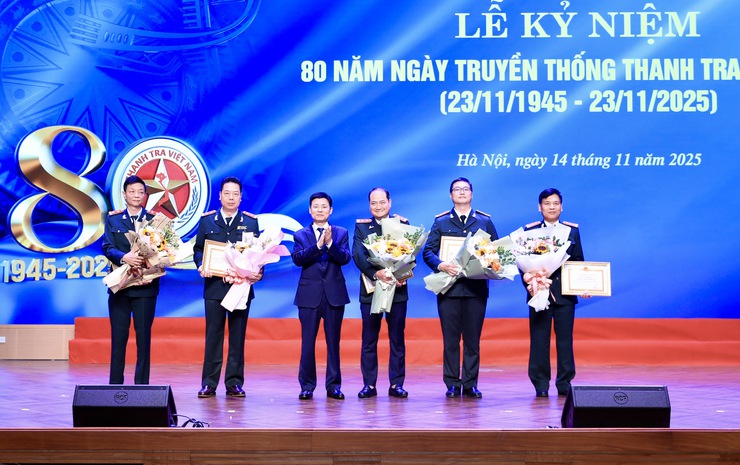 Vice Chairman of the Hanoi People’s Council Pham Qui Tien presents awards to collectives.
To ensure effectiveness, Chairman Trung said that for seamless and efficient operations under the two-tier local government model, Hanoi must immediately equip its inspection officials with strong professional skills, political integrity, and a continuous commitment to learning, ethics, and career development.
Each official must embody the five guiding principles—“Impartiality – Integrity – Objectivity – Prudence – Modesty”—to meet the growing demands placed on the capital’s inspectorate in the new phase.