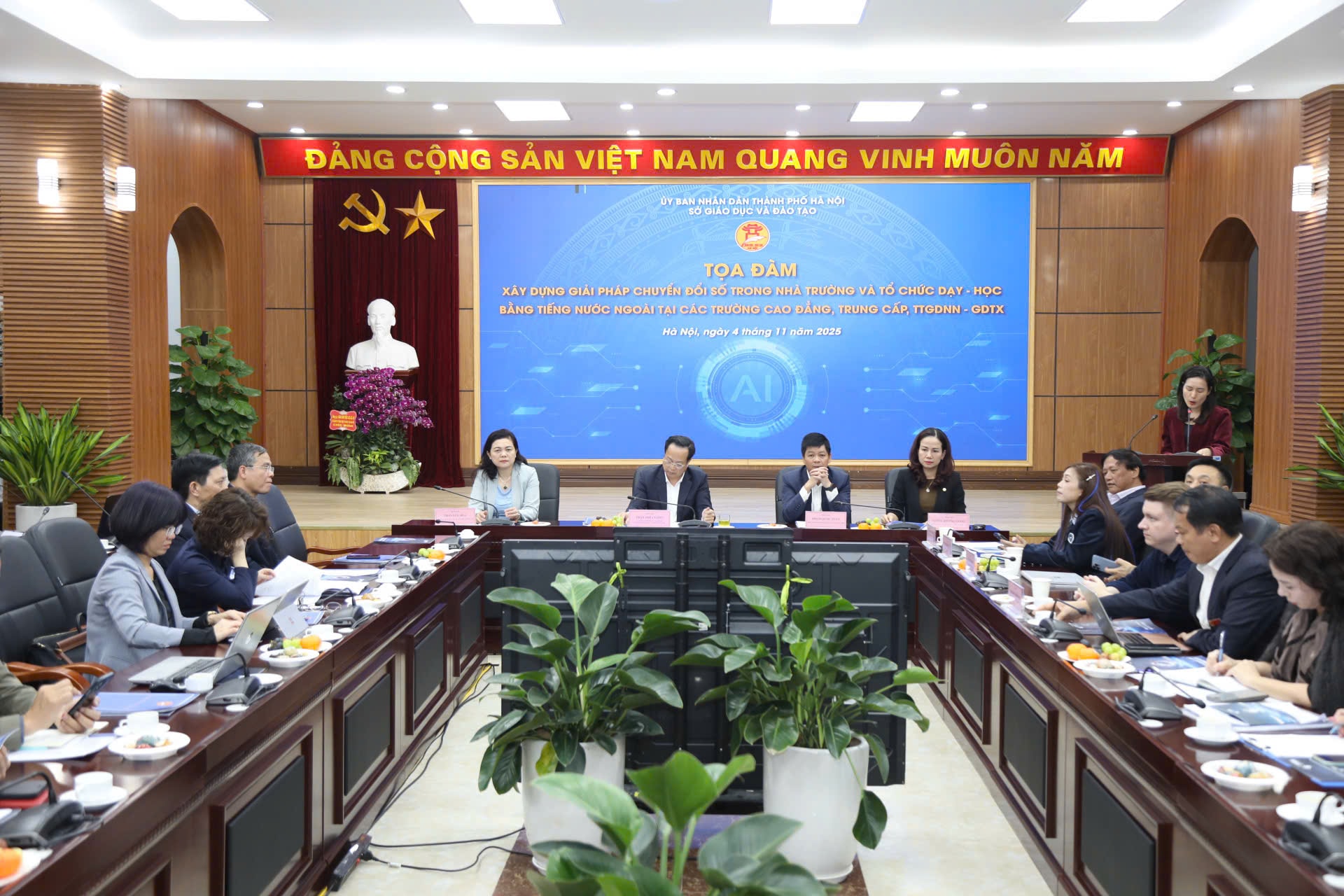
 Overview of the seminar.
Hanoi Department of Education and Training on the afternoon of November 4 held a seminar on developing digital transformation solutions in schools and implementing teaching in foreign languages at colleges, intermediate schools, and vocational education and continuing education centers.
The event was chaired by Tran The Cuong, Member of the Standing Committee of the Hanoi Party Committee and Director of the Hanoi Department of Education and Training.
Emphasizing the importance of applying information technology, promoting digital transformation, and expanding teaching in foreign languages, Director Cuong noted that, given the leading role of the capital’s education system, these initiatives must be further strengthened across vocational education institutions.
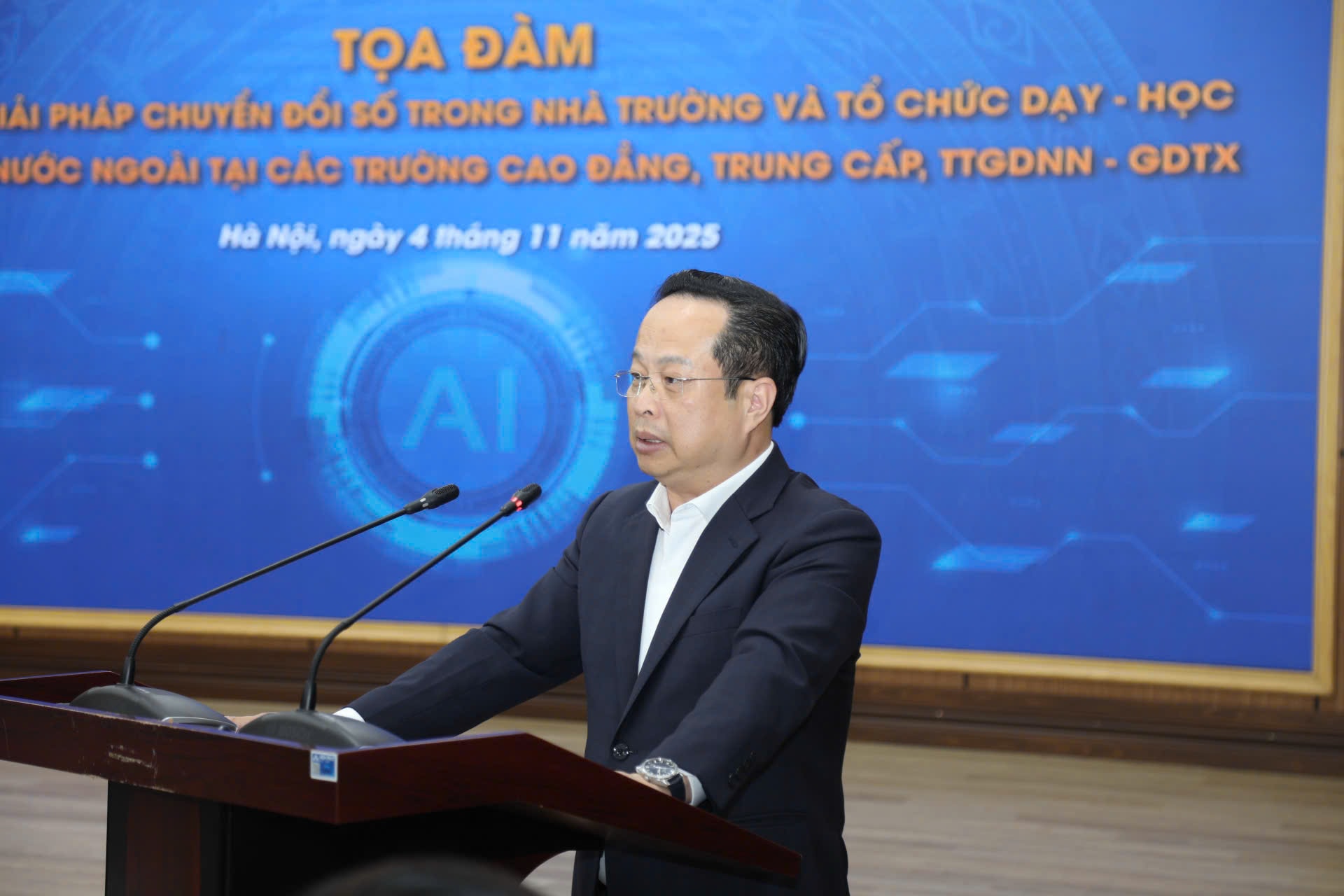 Director of Hanoi Department of Education and Training delivers remarks.
The seminar aimed to concretize the objectives of the Government’s project “Turning English into the Second Language” and implement the municipal plan for the “Digital Literacy for All” movement, as well as the Government’s Decree No. 222/2025/ND-CP on teaching and learning in foreign languages.
It also provided a platform for educational institutions to share experiences and effective models for advancing digital transformation and organizing teaching in foreign languages.
According to Director Cuong, as digital transformation becomes an inevitable global trend, promoting digital literacy for all citizens plays a vital role in narrowing the digital gap, enhancing national competitiveness, and ensuring that no one is left behind.
The “Digital Literacy for All” movement is being actively launched and widely spread across the city. This requires the capital’s education sector to accelerate digital transformation and adopt a “digital education and training model.”
To meet modernization goals, the capital’s education sector must pursue comprehensive digital transformation — shifting from traditional learning materials to open, multi-disciplinary digital resources, while developing digital training processes that allow personalized learning experiences.
Currently, Hanoi has 68 colleges, 85 intermediate schools, and 29 vocational education and continuing education centers, within a total of 352 vocational education institutions and establishments offering vocational programs.
Over 70% of colleges and intermediate schools have implemented online learning management platforms and digital training administration systems, while also digitizing student records, teaching materials, and electronic lesson plans.
Several institutions have taken the lead in applying technology and artificial intelligence (AI) in teaching. Many teachers have begun using AI tools to design lessons, conduct assessments, and utilize online learning platforms to expand learning opportunities.
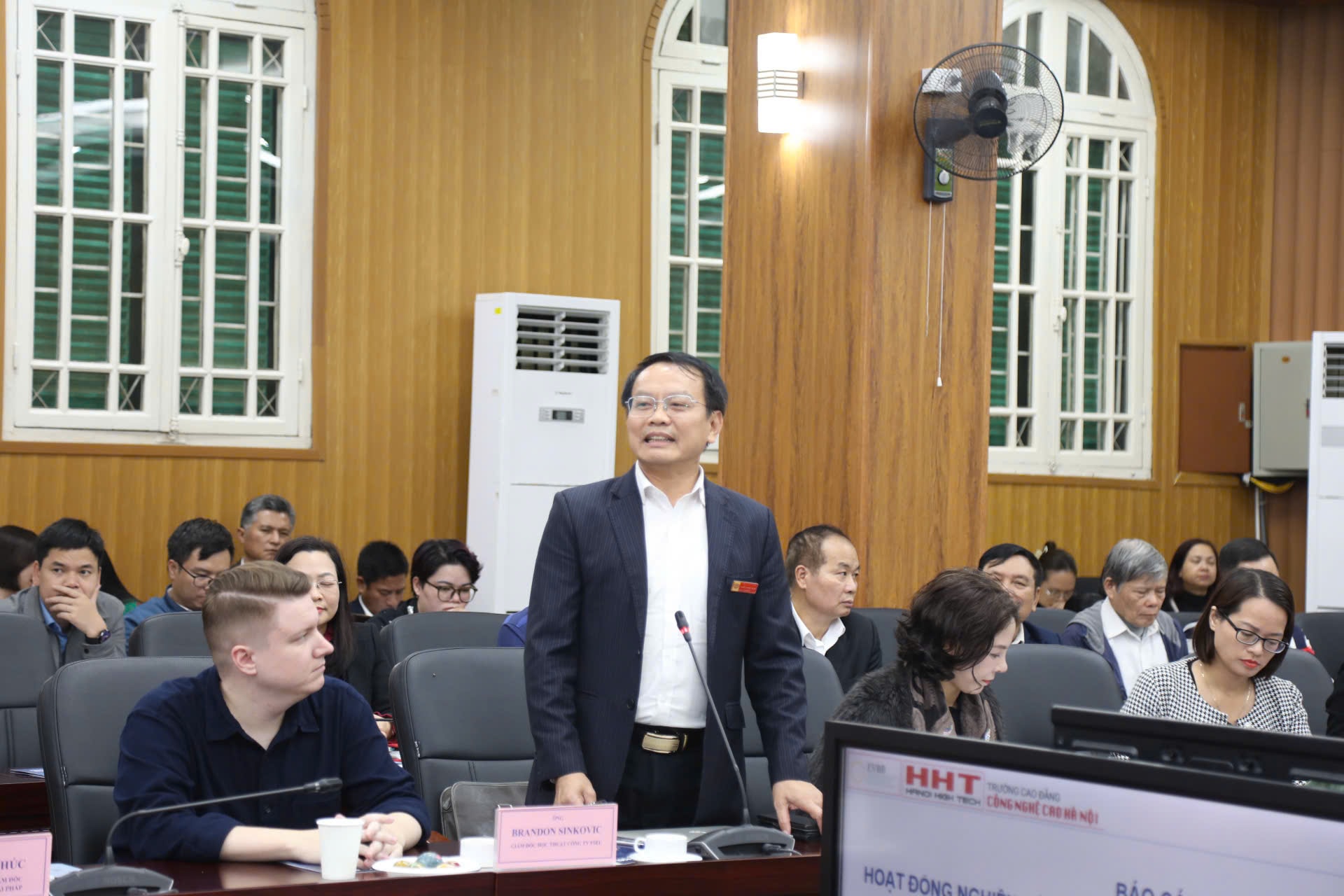 Representatives of vocational education institutions share experiences in digital transformation.
Discussions at the seminar focused on analyzing existing bottlenecks in data management, system operation, and the development of digital learning materials.
Delegates also proposed feasible models and solutions to build effective digital training processes and organize teaching in foreign languages, with AI and digital technologies considered essential tools.
From practical challenges, participants recommended that the city invest in upgrading information technology infrastructure, develop shared digital platforms and learning material repositories, and support research and development of AI applications.
They also suggested completing regulations on online training operations and providing clear implementation guidelines.
Representatives from technology enterprises participating in the seminar affirmed their commitment to accompanying and supporting the capital’s education sector in accelerating digital transformation across the vocational education system.