The Hanoi People's Court in the morning of December 10 held a conference to launch the work plan of the two-level city court system for 2026. Politburo Member and Secretary of the Hanoi Party Committee Nguyen Duy Ngoc attended and delivered instructions.
Also present were Central Party Committee Member Nguyen Van Quang, Secretary of the Party Committee and Chief Justice of the Supreme People's Court, together with members of the Standing Board of the Hanoi Party Committee, including Tran Dinh Canh, Head of the Internal Affairs Commission, and Tran The Cuong, Permanent Vice Chairman of the municipal People's Council.
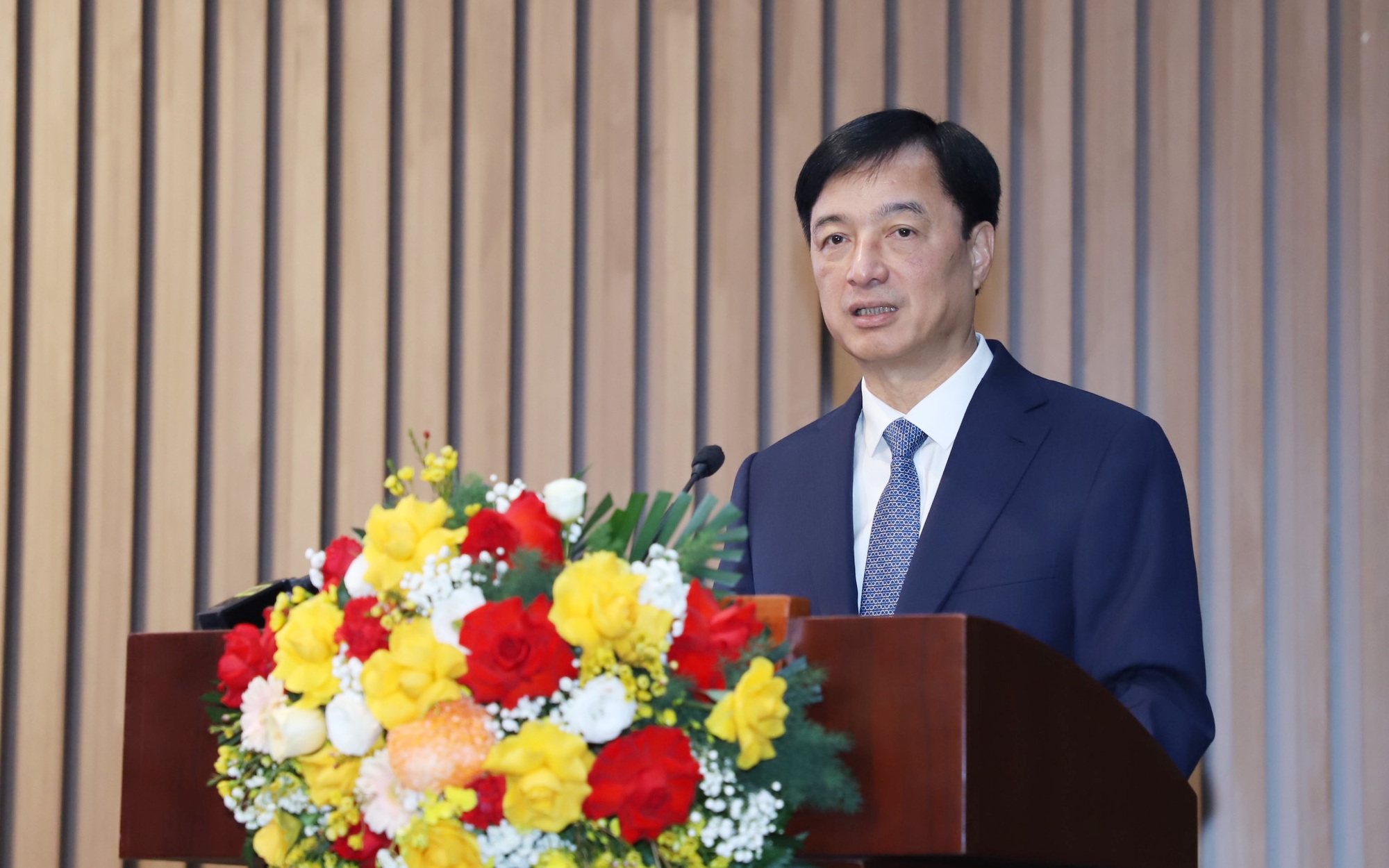
Secretary of the Hanoi Party Committee Nguyen Duy Ngoc.
The year 2025 marked a challenging period for the two-level Hanoi court system as crime became more complex, major corruption and economic cases were brought to trial, and civil, commercial, and administrative disputes increased in both volume and complexity.
On July 1, 2025, Hanoi reorganized its system by merging 30 district-level courts into 12 regional courts, creating new requirements for management, operations, and personnel allocation.
With close guidance from the Supreme People's Court and support from the Hanoi Party Committee, People's Council, and People's Committee, along with strong efforts from all judges and staff, the city courts completed their tasks with excellence.
From October 1, 2024 to September 30, 2025, the two-level Hanoi court system received 50,355 cases and resolved 45,678 cases, reaching a rate of 90.71 percent and increasing by 8,902 and 8,143 cases, respectively, compared with the same period in 2024.
All performance targets exceeded the plan and the requirements assigned by the National Assembly.
A notable achievement was the significant improvement in trial quality. The rate of cases annulled or amended due to subjective errors dropped sharply compared with the same period in 2024.
The courts coordinated closely with the Police and the Procuracy to ensure timely and strict handling of criminal cases, especially major economic and corruption cases, earning public approval and trust.
Judgments emphasized fairness and humanitarian considerations while ensuring deterrence and recovery of corrupt assets.
In civil and administrative matters, the courts strengthened mediation and dialogue, helping resolve many disputes swiftly and effectively, reducing litigation costs and stabilizing community life.
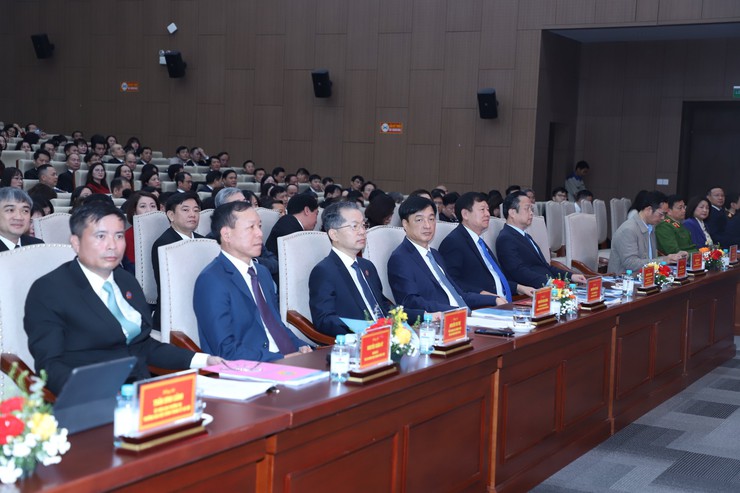
Overview of the meeting.
Judicial reform and digital transformation were implemented actively through the wider use of software tools in trials and management, the expansion of online hearings, the publication of electronic judgments, the digitization of case files, and the development of a unified data system.
At the conference, the two-level Hanoi court system outlined key directions for 2026 with a spirit of determination and renewal. The sector reaffirmed its action motto of "Innovation, Solidarity, Responsibility, Discipline, Quality, For Justice" and emphasized political education, ethics, and discipline for its personnel.
A breakthrough task is the decisive effort to resolve 100 percent of first-instance cases still pending at the Hanoi People's Court before July 1, 2026, in line with the Party Committee's Resolution. This goal is considered essential for removing bottlenecks and addressing public concerns.
The courts will also accelerate and improve the quality of case settlement across all areas, aiming to meet and surpass the targets set by the National Assembly and the Supreme People's Court. The sector will work to eliminate delays caused by subjective reasons, ensure fairness and strictness in trials, and keep the rate of annulled or amended judgments due to subjective errors below 1.5 percent.
The courts identified timely and strict handling of criminal cases as a top priority, especially those monitored by the Central and Hanoi Steering Committees for Anti-Corruption. They will also expand mediation and dialogue and uphold adversarial procedures in civil and administrative trials to protect human and citizen rights.
In his remarks, Politburo Member and Secretary of the Hanoi Party Committee Nguyen Duy Ngoc commended the remarkable achievements of the Hanoi court system in 2025. He stressed that as Hanoi advances its development goals under the theme "A cultured, modern, and happy capital," the courts play a crucial role in safeguarding justice, political stability, and social order.
He noted the ambitious target of resolving all pending first-instance cases by mid-2026 and emphasized its significance in removing institutional bottlenecks and creating a foundation for a more modern and dynamic capital. He also praised the courts for their important role in the fight against corruption and negative practices, contributing to building a clean and strong Party and government.
The Secretary highlighted the city's ongoing institutional reforms, including proposals to revise Politburo Resolution 15-NQ/TW of May 5, 2022 and the 2024 Capital Law, along with long-term planning visions and the promotion of science and technology as a pillar of growth. He requested the two-level Hanoi court system to continue advancing digital transformation and strengthening coordination among judicial agencies.
The city confirmed its commitment to providing resources and support to help the courts operate effectively and meet the demands of the new period.