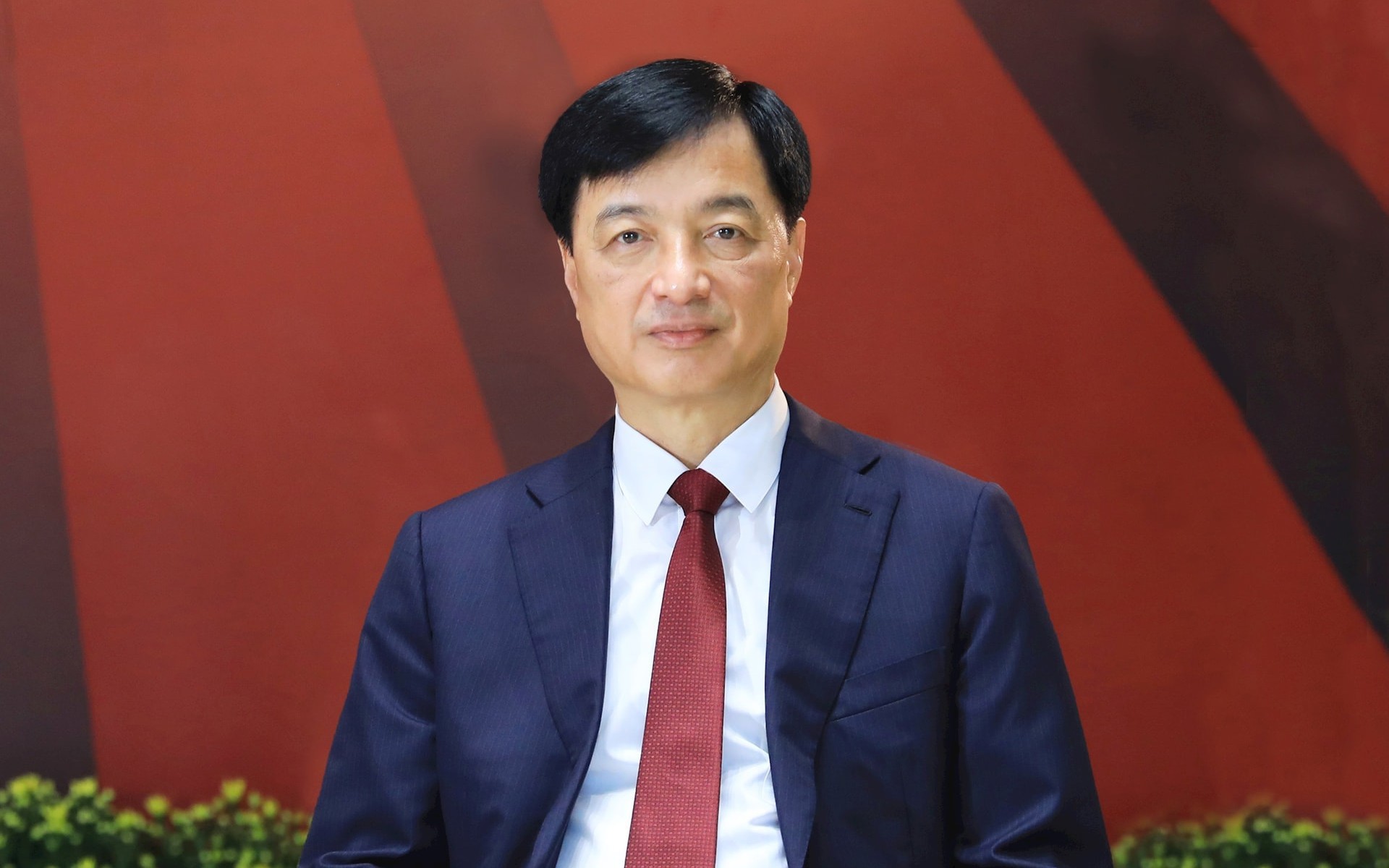
 Member of the Politburo and Secretary of the Hanoi Party Committee Nguyen Duy Ngoc. Photo: Quang Thai
Building on a proud and heroic tradition, Hanoi is now mobilizing and unlocking new resources to realize its aspiration to rise, pioneer, and lead, working with the entire country to shape a prosperous, civilized, and happy future, advancing firmly toward socialism in a new era of development.
I - The leadership core behind all victories of the capital
Hanoi, a land of talent and sacred heritage, embodies a thousand years of culture and heroism. It is the cradle of revolutionary movements and the political and administrative center of the nation. At 5D Ham Long Street in March 1929, the first communist cell in Vietnam was established, marking the beginning of the formation of a proletarian political party in the country.
Hanoi was also the first locality to establish a Party organization shortly after the founding of the Communist Party of Vietnam on February 3, 1930.
On March 17, 1930, at 42 Hang Thiec Street, the provisional Executive Committee of the Hanoi Party Committee was established, including Do Ngoc Du as Secretary, Nguyen Ngoc Vu, and Lieu Tho Nam. This date marked a historic milestone, opening a proud journey for the Hanoi Party Committee.
From then on, the capital's revolutionary movement had a unified leadership organization, directly under the Central Committee, with the capability, intelligence, and determination to mobilize and lead the masses in the struggle for independence and freedom.
Over 96 years, the Hanoi Party Committee has proven its outstanding leadership role, serving as the political core and a center of unity, bringing together the collective strength of the political system and the people of the capital. It has been a source of trust and hope for people nationwide.
From the revolutionary movements of 1930–1931, the democratic movement of 1936–1939, and the victory of the August Revolution in 1945 in Hanoi; from the 60 days and nights of resistance in the winter of 1946 to the "Dien Bien Phu in the air" victory in 1972; from post-1954 reconstruction to today's reform, integration, and development journey, every step has carried the imprint of Party leadership.
These 96 years affirm a clear truth: in every period, the Hanoi Party Committee has been the central leadership force and the decisive factor behind the capital's achievements, while making significant contributions to the country's overall success.
Hanoi has consistently taken the lead across sectors and historical stages, from the struggle for independence to national defense, and now in development and integration.
As the capital, it is both a place where major national decisions are made and where Party policies and state laws are first implemented and tested through concrete development outcomes that create momentum for the entire country.
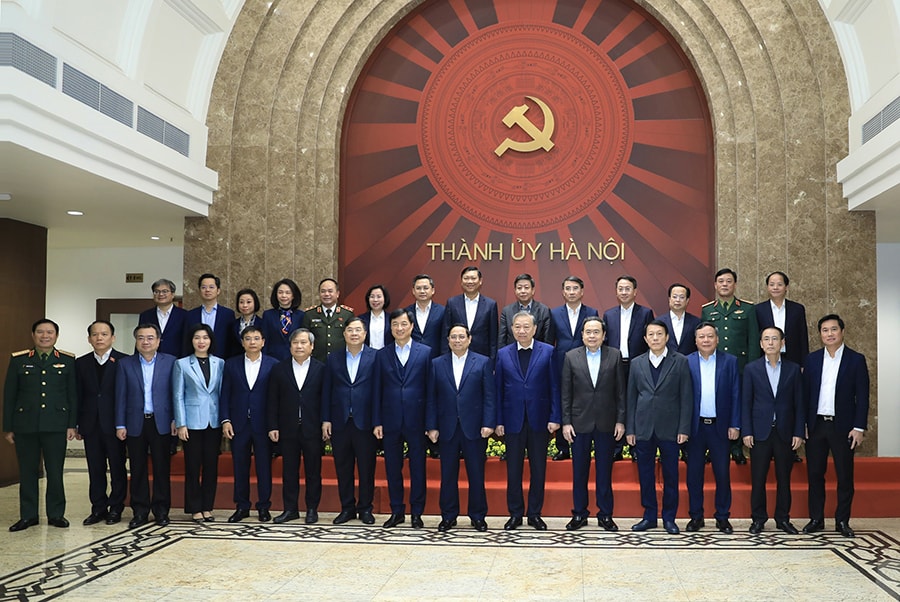 General Secretary To Lam, Prime Minister Pham Minh Chinh, National Assembly Chairman Tran Thanh Man, and central and Hanoi leaders at a working session between General Secretary To Lam and the Standing Committee of the Hanoi Party Committee, January 10, 2026. Photo: Quang Thai
Forty years of reform have marked a period of strong breakthroughs for the Party Committee and people of the capital. Pioneer spirit, resilience, and innovation define Hanoi's progress. The Party organization has grown stronger, the political system has become more solid, and governance capacity continues to improve. Despite challenges, Hanoi has achieved historically significant milestones, contributing greatly to national development.
Since 1986, the capital's economy has maintained impressive growth, with labor productivity increasing steadily at over 7 percent annually.
In 2025, Hanoi's economy grew by 8.16 percent, reaching approximately VND1,587 trillion ($63.5 billion), ranking second nationwide. State budget revenue reached VND711,000 billion ($28.4 billion), the highest in the country, accounting for more than one quarter of total national revenue. Average income reached nearly VND180 million ($7,200) per person per year. Living standards have continued to improve, while social security remains firmly ensured.
Today, Hanoi, the heart of the nation, is rising strongly as a key growth pole and a driving force for regional and national development. Its reform and innovation efforts have been widely recognized. During a Lunar New Year visit in 2026, General Secretary To Lam affirmed that Hanoi has clearly demonstrated its leadership role in the country's new development era.
In the first two months of 2026, the city recorded positive socio-economic signals. The industrial production index rose 9.4 percent. Total retail sales and service revenue reached VND171.5 trillion ($6.86 billion), up 13.2 percent. Exports reached $3.329 billion, up 17.4 percent.
State budget revenue reached VND190.6 trillion ($7.62 billion), equal to 29.3 percent of the annual estimate and up 9.5 percent year-on-year. The city welcomed more than 1.5 million tourists, up 36 percent, including 1.1 million international visitors, up 38.7 percent. Key sectors are expected to meet first-quarter GRDP growth targets.
Pride in nearly a century of tradition is not only about honoring history, but also about strengthening determination and inspiring aspiration. From this foundation, Hanoi is entering a new development phase with confidence, vision, and responsibility, working alongside the nation toward a strong, sustainable, and ambitious future.
II - Affirming a pioneering and leading role
Vietnam is entering a pivotal stage of development. The 14th National Party Congress has set the goal of rapid and sustainable growth, aiming for high-income status by the mid-21st century. In his article "Moving forward, victory will be ours," General Secretary To Lam emphasized the need to fully mobilize national self-reliance, development aspirations, innovation, and strong political determination.
In this context, Hanoi, as the capital and a major center of economy, culture, science, technology, education, and international integration, clearly recognizes its pioneering and leading responsibility. The city is committed not only to its own development but also to driving progress across regions and the nation.
This vision is reflected in a target of average GRDP growth of 11 percent or higher for 2026–2030, demonstrating strong political commitment and ambition. This is not only a growth figure but also a commitment to improving productivity, economic scale, and competitiveness.
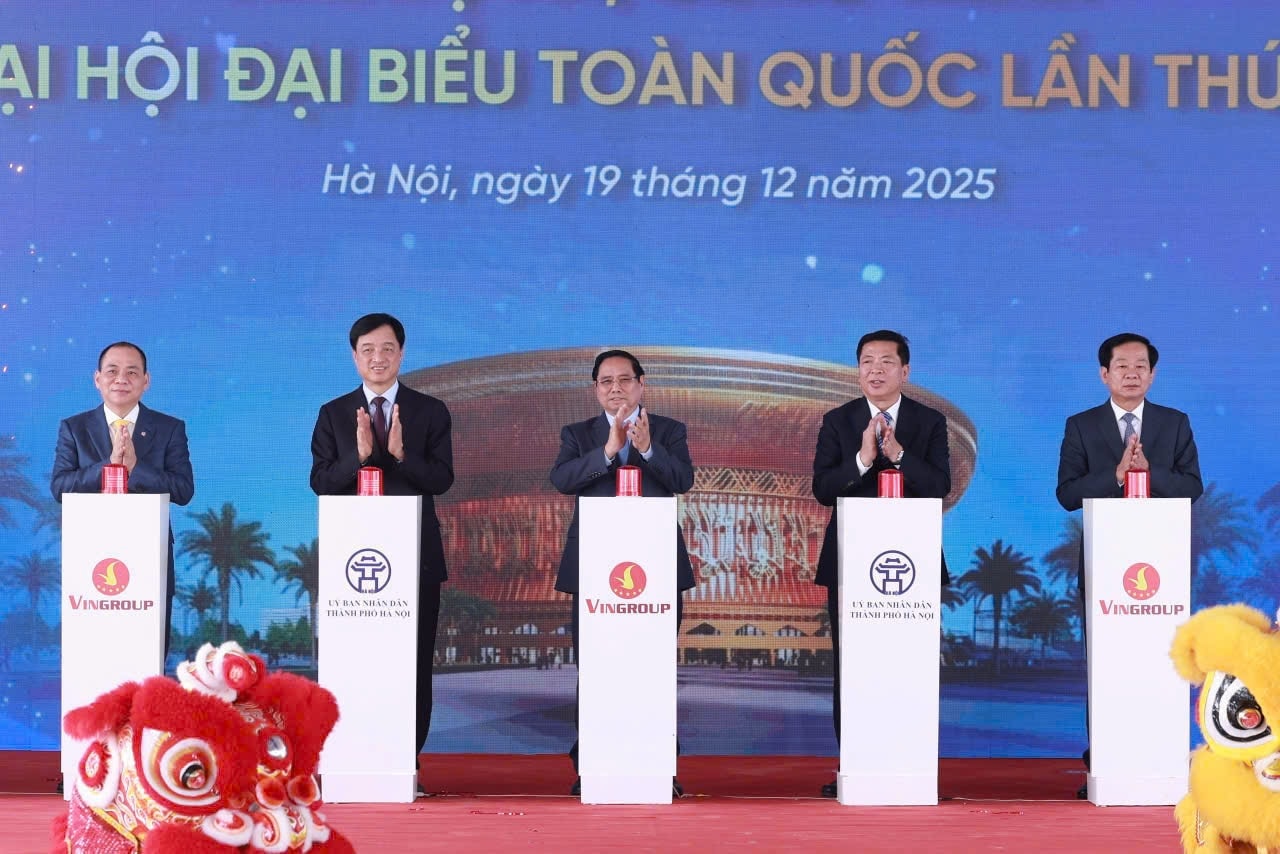 Prime Minister Pham Minh Chinh, Hanoi Party Secretary Nguyen Duy Ngoc, and delegates attend groundbreaking and inauguration ceremonies for projects marking the 14th National Party Congress. Photo: Quang Thai
To achieve this vision, Hanoi is focusing on three strategic pillars: planning, institutions, and development model. Planning must lead, defining a multi-centered, green, smart, and sustainable development space linked to the capital region and national economic corridors. Institutions must create breakthroughs, enabling decentralization, mobilizing resources, and improving the investment climate. The development model must shift toward knowledge, technology, innovation, digital transformation, high-quality human resources, and green and circular economy approaches.
Hanoi's vision goes beyond a single term or five-year plan, aiming for a 100-year strategic outlook. This requires strong political resolve, innovative thinking, and effective implementation.
In this process, the Party Committee remains the decisive factor, shaping strategies while reforming leadership methods, strengthening the political system, promoting democracy and discipline, and encouraging responsibility and creativity among officials and Party members.
III - Unity and determination to realize development aspirations
Experience shows that unity creates strength, and unified action leads to achievements. For every organization, unity is both a principle and a development resource.
The 96th anniversary of the Hanoi Party Committee is an occasion for officials, Party members, and residents to reflect on their responsibilities in a new era. Aspirations must be measured through concrete actions, effective policies, tangible projects, and improved living standards.
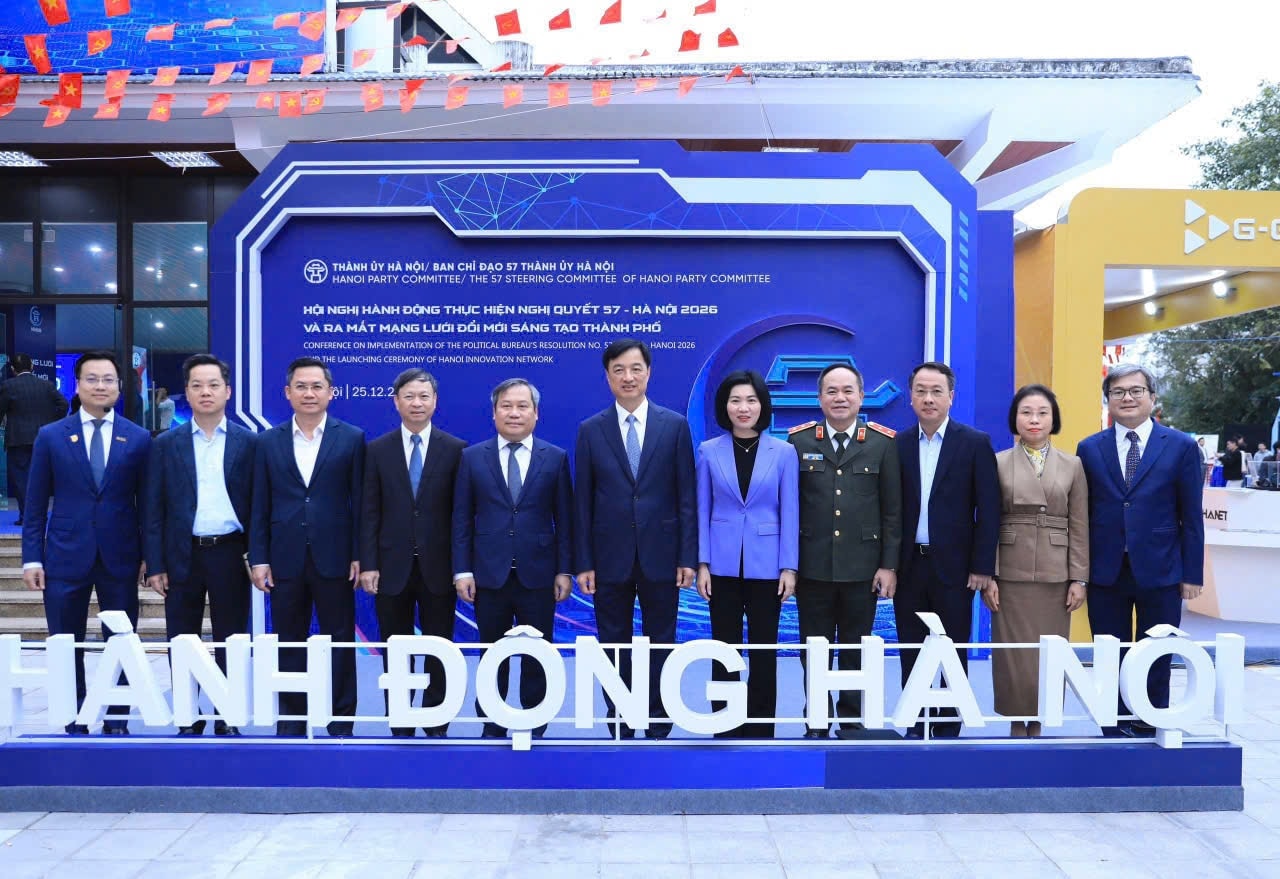 Member of the Politburo and Hanoi Party Secretary Nguyen Duy Ngoc with leaders of the Ministry of Science and Technology and Hanoi at the Hanoi Innovation Network exhibition. Photo: Quang Thai
Challenges remain, including urbanization pressure, infrastructure overload, climate change, global competition, and digital transformation demands. Yet history shows that at every turning point, Hanoi has led with determination and action.
Entering a new phase, the city adopts the mindset of discipline and professionalism, innovation and creativity, efficiency and sustainability. It emphasizes leadership responsibility, especially among key officials, and focuses on building Hanoi into a national development hub and a strong economic growth pole.
The city is committed to implementing the 14th Party Congress action program, the 18th Hanoi Party Congress resolution, and key strategic directives, ensuring clear tasks, responsibilities, timelines, and measurable outcomes.
Hanoi will accelerate major infrastructure projects, including seven Red River bridges, ring roads 1, 2.5, 3, 3.5, and 4, radial routes, and urban railways. The city also aims to resolve five major bottlenecks: urban order, traffic congestion, environmental pollution, flooding, and food safety.
At the same time, Hanoi will prioritize science, technology, innovation, and digital transformation as key growth drivers, developing sectors such as semiconductors, artificial intelligence, and digital data ecosystems, while strengthening human resource development.
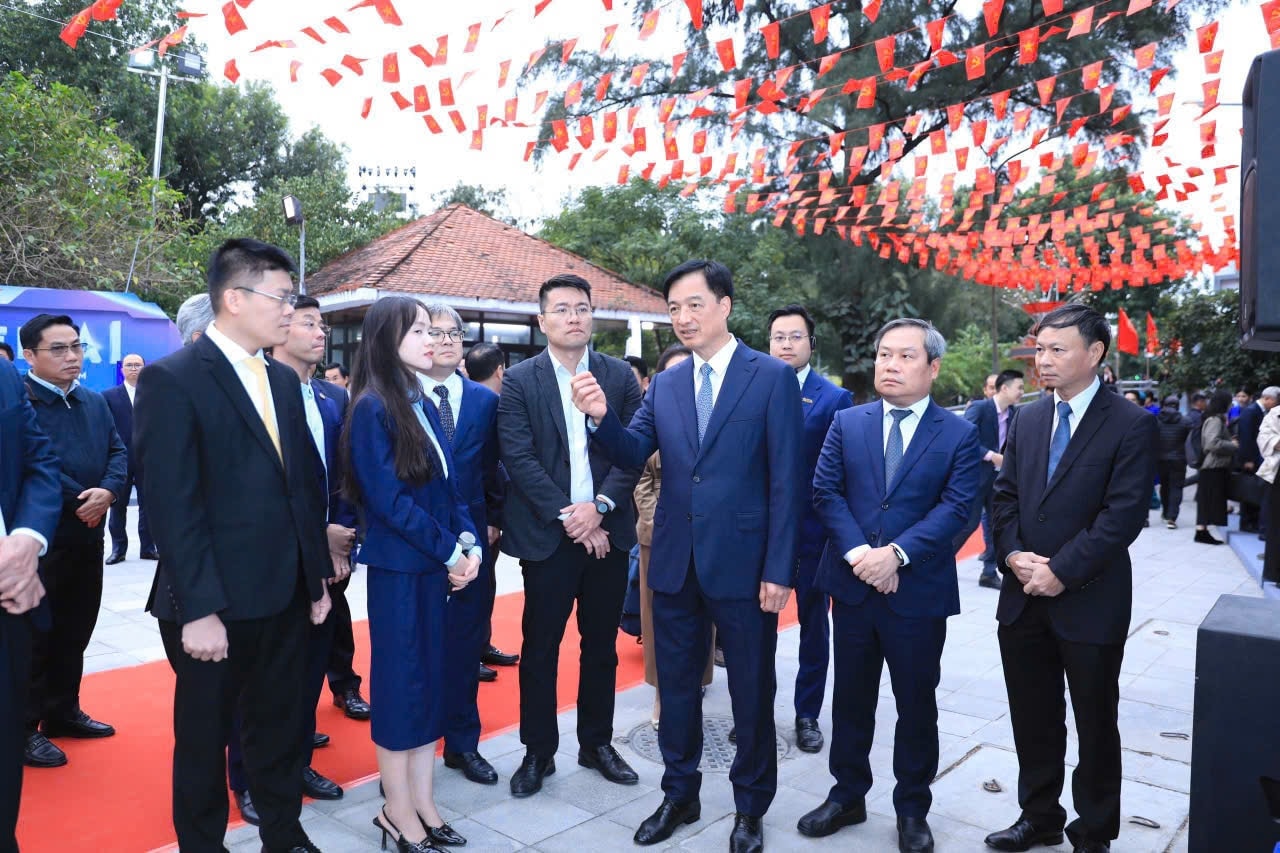 Hanoi Party Secretary Nguyen Duy Ngoc and city leaders attend the Hanoi Innovation Network exhibition. Photo: Viet Thanh
Culture remains the foundation, innovation the driving force, and integration the path to higher global positioning. Hanoi is promoting cultural industries, expanding creative spaces, and enhancing the value of its heritage linked to tourism and the creative economy.
Education and healthcare are identified as strategic pillars, aiming to build Hanoi into a leading knowledge center while ensuring high-quality, accessible healthcare for all citizens.
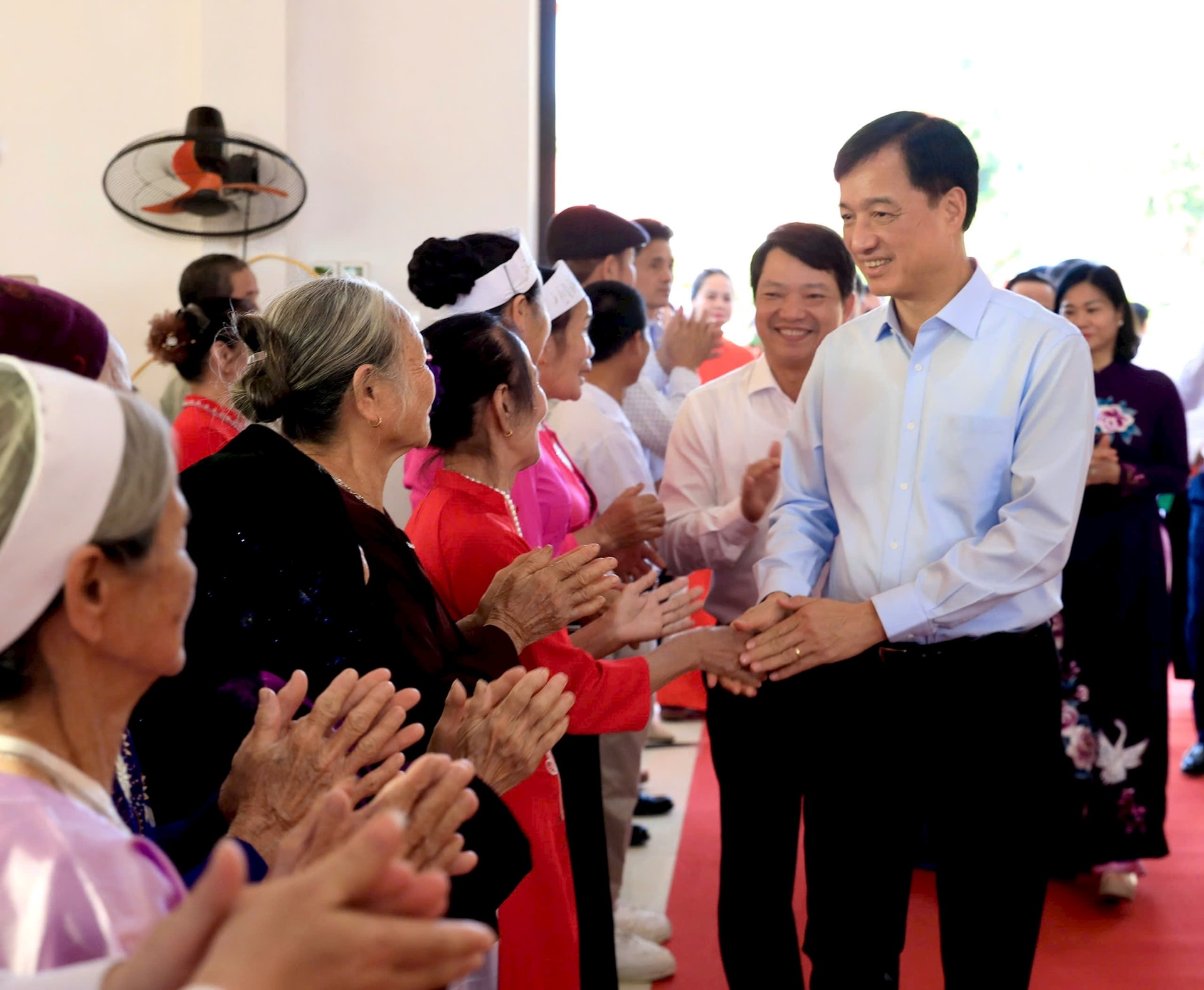 Hanoi Party Secretary Nguyen Duy Ngoc meets residents in Ba Vi commune. Photo: Viet Thanh
At the same time, national defense, security, and foreign affairs remain essential to ensure stability and development. Hanoi will strengthen proactive security measures and expand international cooperation, enhancing its global standing as a "City for Peace," "Creative City," and "Learning City."
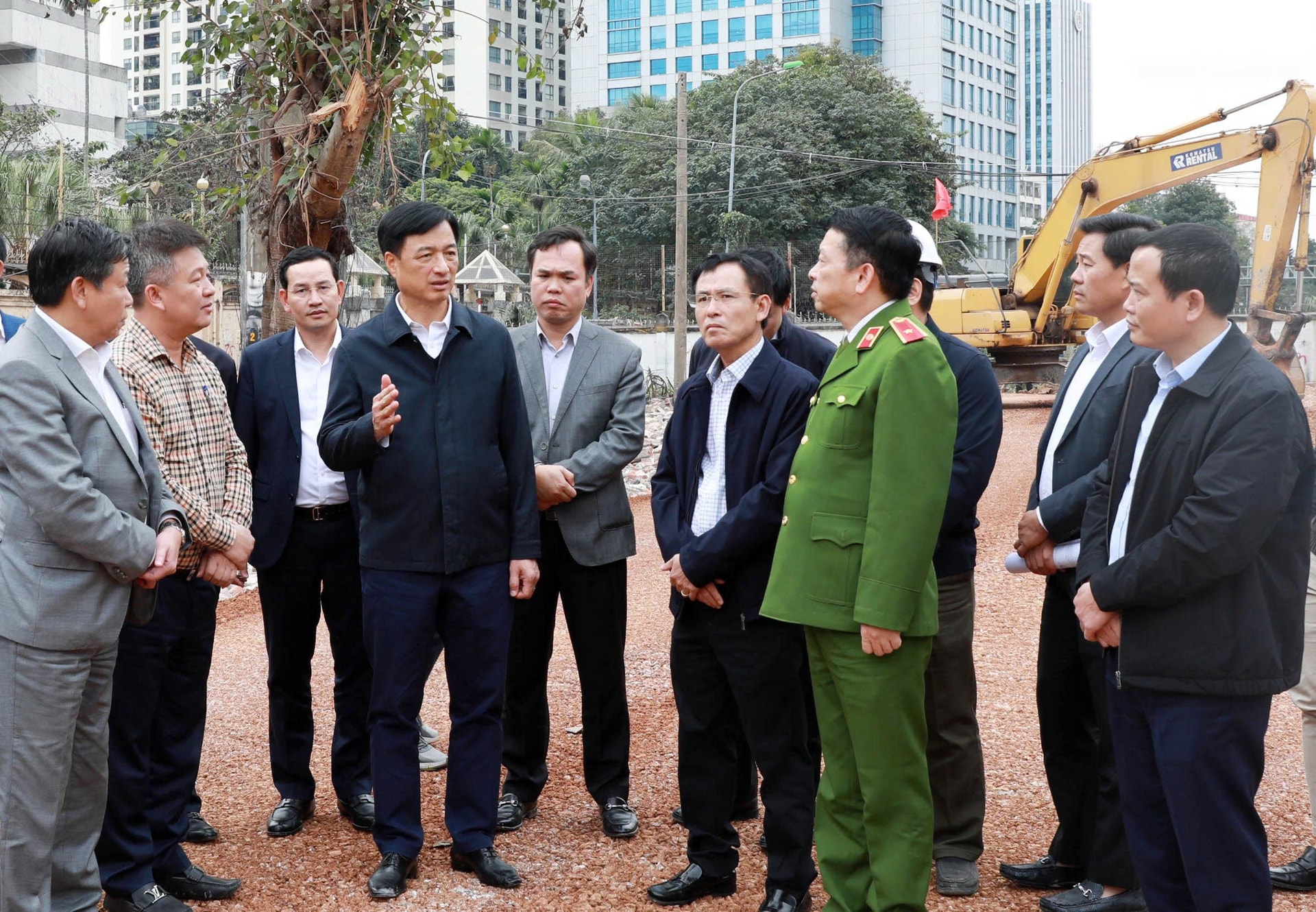 Hanoi Party Secretary Nguyen Duy Ngoc and Standing Deputy Secretary Nguyen Trong Dong inspect the progress on Ring Road 1 project, Hoang Cau - Voi Phuc section. Photo: Viet Thanh
Ninety-six years may be short compared to Hanoi's thousand-year history, but it is a proud and heroic journey. From 42 Hang Thiec Street in 1930 to today's 100-year vision, Hanoi continues to transform pride into responsibility, responsibility into aspiration, and aspiration into action.
With its strong tradition, proven resilience, and unity of its Party, government, and people, Hanoi is confident that its vision of becoming a cultured, civilized, modern, and happy capital, and a national development hub, will become a reality.