During the preparatory session of the 18th Congress of the Hanoi Party Committee for the 2025–2030 term, Nguyen Doan Toan, Member of the Standing Committee and Head of the Propaganda and Mass Mobilization Commission of the Party Committee, on the afternoon of October 15 presented a summary report synthesizing feedback on the draft documents for the 14th National Party Congress.
Toan stated that, in line with Politburo Directive No. 45-CT/TW and the Central Committee's guidance, the Hanoi Party Committee organized an extensive and methodical process to collect public input on the draft documents.
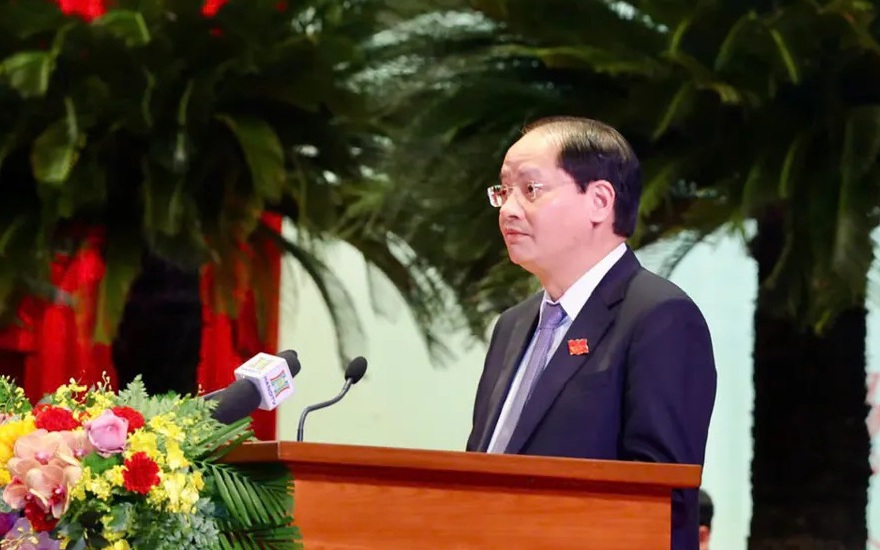
Head of the Propaganda and Mass Mobilization Commission of the Party Committee Nguyen Doan Toan.
The effort was conducted comprehensively, promoting democracy and mobilizing contributions from Party organizations, the Vietnam Fatherland Front, political and social organizations, and people from all walks of life across the capital.
Based on the feedback from subordinate units, the 17th Hanoi Party Committee compiled and finalized a comprehensive report submitted to the congress.
The results showed strong consensus with the draft content, which was praised as thoroughly prepared, scientifically structured, and reflecting the Party's strategic vision and innovative thinking.
The documents were assessed as coherent, well-organized, and consistent in upholding the principles of national independence and socialism as the Party's ideological foundation.
The draft documents were described as the culmination of theory and practice drawn from 40 years of national renewal, demonstrating strong political will and the aspiration to build a prosperous, happy Vietnam in the new era.
They also expressed the will, belief, and determination of Party members and citizens, while fostering national solidarity. The drafts identified limitations, analyzed their causes, and proposed appropriate directions and solutions for the coming period.
Regarding the congress theme, most opinions commended its depth and clarity, reflecting the collective wisdom, vision, and political resolve of the Party, people, and armed forces in building and defending the nation.
Some suggested adding elements such as "national defense and security," "human development," or "freedom" to highlight humanistic and democratic values in the country's development path.
Delegates agreed that five years of implementing the 13th Congress Resolution and four decades of renewal proved the correctness of the Party's leadership.
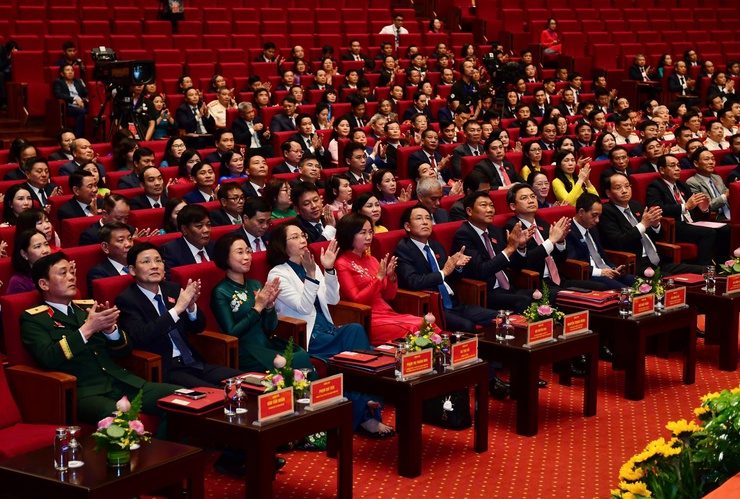
Delegates at the event.
The country has achieved remarkable and comprehensive progress, notably in economic growth, living standards, social welfare, defense and security, and international integration. Party-building, political system reform, and organizational restructuring have seen unprecedented breakthroughs, reflecting the Party's strong commitment to fundamental and comprehensive reform.
Many participants attributed these achievements to the Party's ability to harness patriotism, self-reliance, and the creativity of the people, combining national strength with global trends to generate powerful momentum for development.
Several suggested the documents include more specific data on labor productivity, social investment, and environmental indicators, while emphasizing the growing importance of the digital economy, green economy, circular economy, and innovation as key drivers of sustainable growth.
Delegates also supported the draft's frank acknowledgment of shortcomings, such as incomplete institutions, underdeveloped infrastructure, environmental degradation, and the ideological and ethical decline among a portion of officials and Party members.
Some stressed the need to further clarify the accountability of leaders and decisively eliminate "short-term thinking" and "vested interests," considering these as breakthroughs in Party building for the new era.
Toan added that most contributors agreed with the five guiding principles outlined in the draft, viewing them as the compass for national development and defense.
These principles reaffirmed Marxism-Leninism and Ho Chi Minh Thought, and called for fostering patriotism, solidarity, self-reliance, and the national aspiration to rise.
They also underscored the need for a comprehensive institutional framework for sustainable growth, breakthroughs in science, technology, digital transformation, innovation, talent development, and the creation of a clean, strong, and effective Party and political system.
The development goals set for 2030 and the vision to 2045 were regarded as clear and realistic, reflecting steady progress under the Party's leadership.
Some suggested quantifying cultural, happiness, and competitiveness indicators and adding specific metrics on Party-building to enable a more comprehensive evaluation of national progress.
Regarding orientations, tasks, and solutions, delegates agreed that the draft thoroughly covered 13 strategic orientations, six key tasks, and three breakthroughs.
However, they emphasized the need for more action-oriented measures—such as promoting new economic models, reforming education and training, developing culture and human values, advancing sustainable and smart urban planning, accelerating digital transformation in governance, and strengthening national and non-traditional security capacities.
On Party-building, Toan highlighted the consensus that the Party must continue focusing on cadre development, exemplary leadership, and persistent anti-corruption and anti-waste efforts.
The Party should renew its leadership methods, enhance its governance capacity and vitality, deepen the principle that "the people are the root," and promote the role of citizens and national unity.
In discussing the Action Program for implementing the 14th Congress Resolution, contributors praised its strong practical orientation but recommended prioritizing key strategic goals and avoiding dispersion.
They also suggested establishing specific timelines, measurable criteria, and strict monitoring mechanisms to ensure effective implementation.
For the report summarizing 40 years of theoretical and practical lessons from the renewal process under socialist orientation, delegates called for deeper analysis of the subjective causes of ideological decline, "self-evolution," and "self-transformation."
They proposed measures to revitalize culture, develop well-rounded Vietnamese citizens, advance theories on digital governance and society, and use modern technology to enhance public consultation mechanisms.
Regarding the 15-year review of the Party Charter's implementation, opinions recognized the progress achieved and recommended continued renewal of political theory education linked to real-world practice, strengthening autonomy and accountability at the grassroots level, revising certain provisions to fit streamlined organizational models, improving internal feedback mechanisms, and enhancing the roles of the Fatherland Front and socio-political organizations in Party-building.