The meeting was also attended by Standing Members of the Hanoi Party Committee, including Standing Vice Chairman of the Hanoi People's Committee Duong Duc Tuan and Lieutenant General Nguyen Thanh Tung, Director of the Hanoi Department of Public Security.
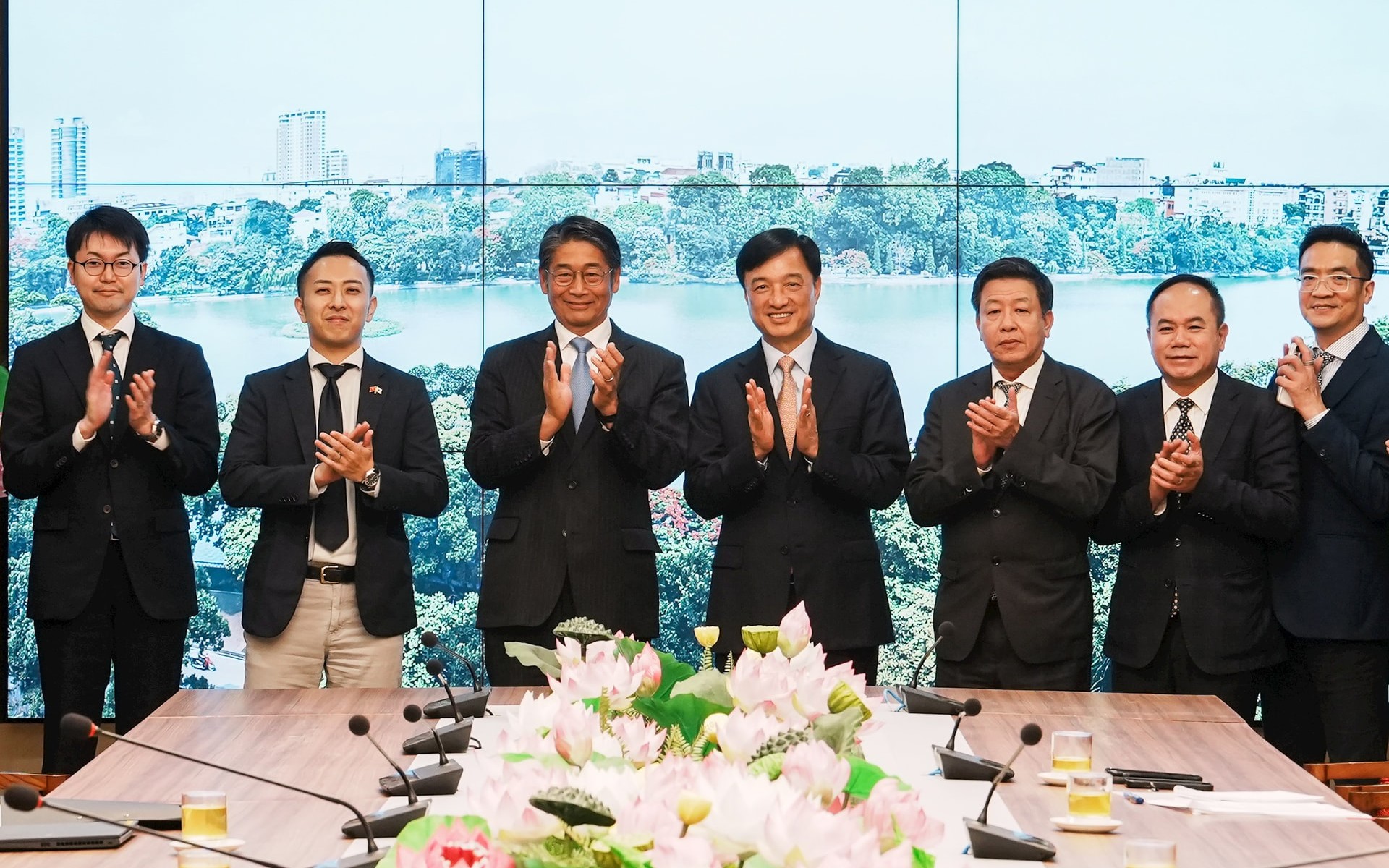
Delegates at the meeting.
At the meeting, Hanoi Party Secretary Nguyen Duy Ngoc praised Ambassador Ito Naoki's contributions to Vietnam–Japan relations and to cooperation between Hanoi and Japanese localities.
Reviewing key milestones in bilateral cooperation, Ngoc said the relationship between the two countries has contributed positively to peace and prosperity in the region and globally. He expressed confidence that Ambassador Ito Naoki would continue to serve as an effective bridge between Hanoi and Japan as well as between Vietnam and Japan.
Thanking the Hanoi Party Secretary for his remarks, Ambassador Ito Naoki said Vietnam and Japan are strengthening ties more than ever under their Comprehensive Strategic Partnership. He affirmed that Japan attaches great importance to expanding relations with Vietnam, including cooperation between Hanoi and Japanese localities.
The two sides discussed specific cooperation projects, including the North Hanoi smart city project, for which Ambassador Ito said participating companies are actively completing procedures, with construction expected to begin in January 2026.
Regarding Hanoi Metro Line No. 2 with the participation of the Japan International Cooperation Agency, the ambassador said Japan is determined to complete the project based on Japanese technology.
On the Yen Xa Wastewater Treatment Plant project, Ambassador Ito expressed confidence that it will enhance the city's wastewater treatment capacity and said Japan hopes to continue cooperation in the project's second phase.
For the Vietnam-Japan University project, Ambassador Ito said relevant parties are implementing necessary tasks to enable groundbreaking in fiscal year 2026.
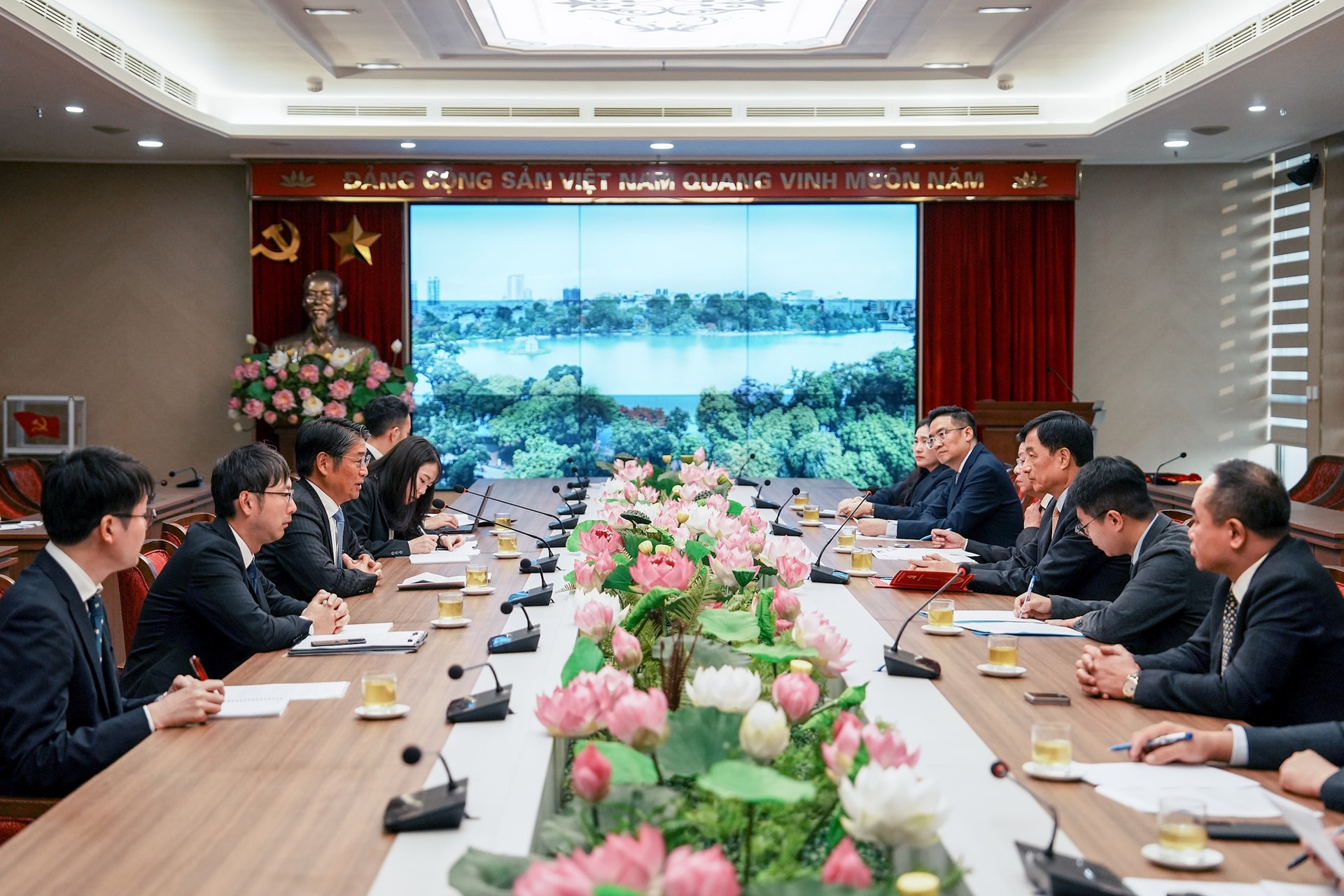
Overview of the meeting.
He also raised several issues faced by Japanese enterprises during project implementation and asked the city to pay attention and provide support to address them.
On measures to restrict gasoline-powered motorcycles in Hanoi, Ambassador Ito welcomed the municipal People's Council resolution adopted on November 26, 2025, that establishes low-emission zones with time-based restrictions on gasoline motorcycles on a pilot basis from July 1, 2026, in some areas within Ring Road 1.
He expressed support for Hanoi's air pollution control efforts while noting the need to avoid negative impacts on residents' lives and manufacturing businesses.
Ambassador Ito affirmed that Japan prioritizes cooperation with Vietnam and Hanoi in areas such as innovation and cultural industries to promote comprehensive economic development. He expressed confidence that under the leadership of Hanoi Party Secretary Nguyen Duy Ngoc, the city will further advance its development, and said he and the embassy will actively contribute to this shared effort.
Thanking the ambassador for his views, Ngoc outlined Hanoi's recent development achievements, noting that the city has completed all 24 development targets for 2025.
He said Hanoi aims for double-digit growth of around 11 percent in the coming years and is developing a capital master plan with a 100-year vision covering underground space, low-altitude space, and surface development while strengthening links with neighboring provinces.
"Hanoi identifies science and technology and digital transformation as key growth drivers in its new economic model. With this vision and favorable policies, the city is positioned for strong progress in the next decade," said Ngoc.
Based on this direction, Ngoc asked Ambassador Ito to continue supporting and connecting Hanoi so the city can learn from Japan's experience in these fields.
Addressing the ambassador's concerns, Ngoc said the city supports the next steps for the North Hanoi smart city project between BRG and Sumitomo and will pursue solutions for land clearance as soon as possible. He added that Hanoi will also push to resolve land clearance issues for the Vietnam-Japan University project at the earliest opportunity.
Regarding vehicle transition to protect the capital's environment, Ngoc said Hanoi will carefully study the recommendations from the Japanese ambassador and relevant associations to develop a roadmap aligned with Vietnamese government directives.
On Metro Line No. 2, he shared the difficulties faced by the Japanese side and called for continued coordination to identify solutions.
Emphasizing that Hanoi's upcoming planning will develop transport systems, including urban railways, in a comprehensive and coordinated manner, Ngoc said the city seeks to advance development while effectively addressing infrastructure challenges.
He asked the ambassador to share initiatives to help solve these issues and tasked city agencies with continuing coordination with Japanese consultants to align solutions in the coming period.
He expressed hope that Ambassador Ito Naoki and the Japanese government will continue to support Hanoi and voiced confidence that bilateral relations and cooperation between Hanoi and Japan will continue to develop effectively.
Ngoc also stressed the importance of sharing difficulties and jointly reviewing each other's proposals carefully, and asked the ambassador to pay attention to Hanoi's development plans from early 2026 to shape timely and appropriate cooperation, especially in science and technology, innovation, and digital transformation.