He affirmed that, with 95 years of proud tradition, the Hanoi Party Committee has always remained united, intelligent, steadfast, exemplary and at the forefront of the nation's efforts to build and defend the country.
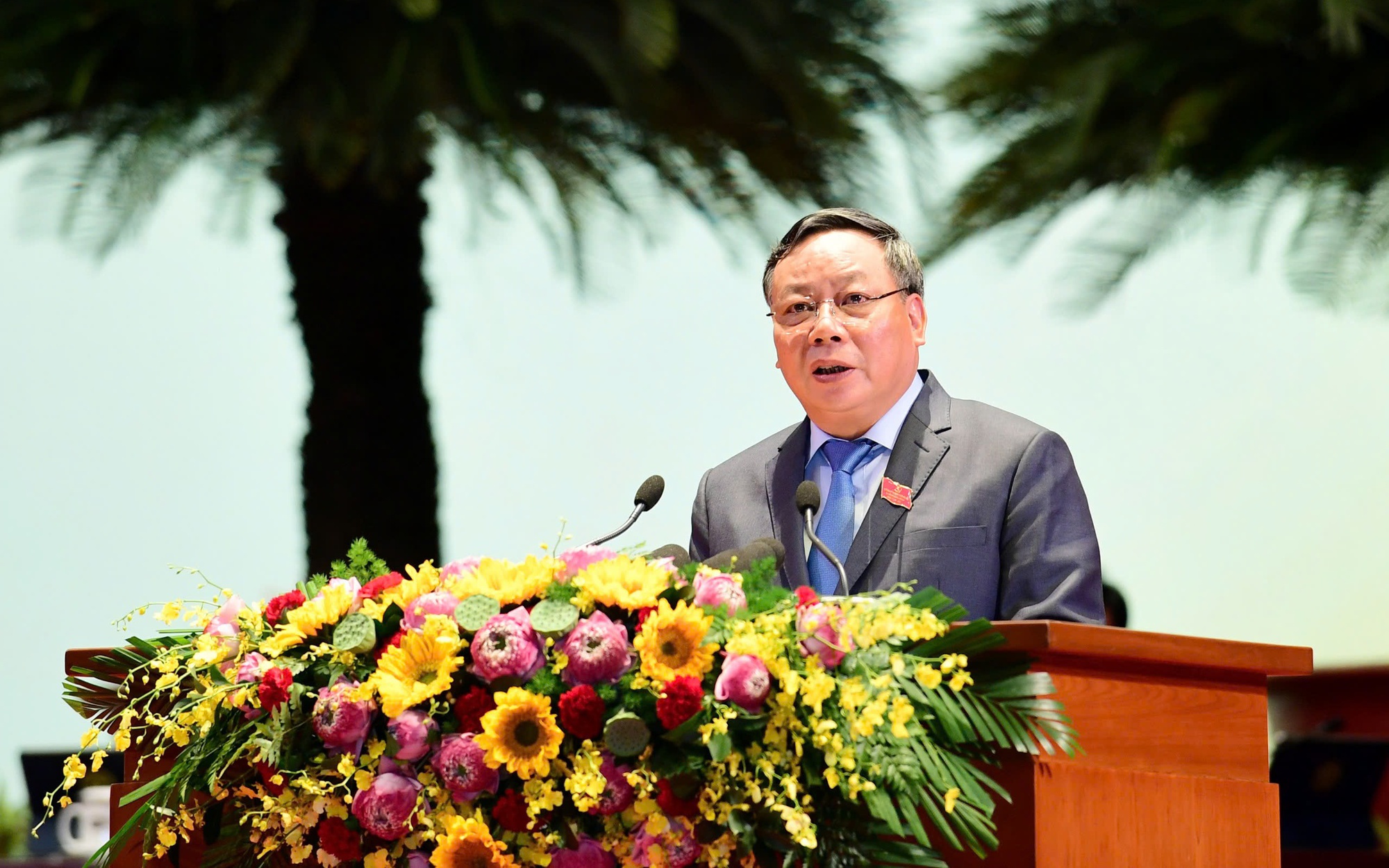
Deputy Secretary of the Hanoi Party Committee Nguyen Van Phong.
Building on the achievements of 40 years of national renewal, Hanoi's Party, government, and people have worked tirelessly to overcome challenges and successfully implement the Resolution of the 17th Congress.
The city has met and surpassed most of its targets, with four completed one to two years ahead of schedule. Fourteen key areas of progress were highlighted.
First, the Party Committee focused on strengthening Party building and developing a clean and strong political system, setting an example in implementing the Central Party's resolutions and conclusions on Party rectification.
Ideological, political, and ethical education, along with mass mobilization, organization, personnel, and inspection work, were carried out comprehensively, enhancing the Party's leadership capacity and combat strength.
Leadership methods were renewed in both thought and action, addressing complex and unexpected issues such as the COVID-19 pandemic, natural disasters, and environmental pollution.
The city completed major institutional and policy frameworks that laid the foundation for sustainable growth, including the Politburo's Resolution No. 15 on Hanoi's development direction, the Capital Law, and two major city planning documents.
Hanoi also led the country in administrative restructuring, reducing commune and ward-level units from 526 to 126 with more than 97% public approval.
The Party implemented administrative reform initiatives and pioneered digitization by introducing eight shared digital platforms and four online Party procedures on the national public service portal.
Second, Hanoi's economy continued to grow strongly with a positive structural shift. The average GRDP growth rate reached 6.57%, 1.1 times the national average, with total economic output of about VND1.6 quadrillion (US$63 billion), 1.4 times higher than in 2020 and accounting for 12.6% of national GDP. GRDP per capita was estimated at VND175 million (US$7,200). Tourism boomed, welcoming 31 million visitors, including seven million international tourists, in 2025.
Budget revenue reached VND2.2 quadrillion (US$88 billion), 1.8 times higher than the previous term, while total social investment amounted to VND2.5 quadrillion (US$100 billion), and FDI inflows reached US$11.5 billion. Total factor productivity (TFP) contributed about 53% to growth.
Third, science, technology, innovation, and digital transformation advanced rapidly. Several digital tools were introduced effectively, such as the iHanoi app, electronic health records, and online criminal record verification via VNeID.
The Hoa Lac High-Tech Park began emerging as an innovation hub connecting enterprises, research institutes, and universities.
Fourth, urban planning, construction, and management were strengthened, with 100% of zoning plans completed. Major infrastructure projects were completed, including the Cat Linh–Ha Dong metro, Nhon–Hanoi Station elevated line, the elevated Ring Road 2, Vinh Tuy Bridge Phase 2, and the Vietnam Exhibition Center.
The city also commenced the Ring Road 4 project and several Red River bridges such as Tu Lien, Tran Hung Dao, Ngoc Hoi, and Thuong Cat. Hanoi's urban landscape has transformed toward a smarter, greener, and more sustainable model.
Fifth, the new rural development program was completed two years ahead of schedule, improving the material and spiritual life of farmers and giving the countryside a modern new look.
Sixth, Hanoi promoted cultural values and the spirit of its people, inspiring pride and aspiration for growth. The "All People Unite to Build a Cultural Life" movement was implemented effectively, and major cultural-political events such as the 70th anniversary of Capital Liberation and the 80th anniversary of the August Revolution and National Day were celebrated successfully.
Seventh, education and training remained a strategic breakthrough. The city expanded its education network, maintained national leadership in academic excellence, and achieved 81% rate of public schools meeting national standards.
Vocational and high-tech training programs were strengthened, and 75% of the workforce received formal training. Hanoi ranked first nationwide in labor training quality.
Eighth, social welfare, public health, and living standards continued to improve. By 2024, the city had completely eliminated temporary and dilapidated housing and achieved zero poverty based on its own standards.
Hanoi maintained the highest human development index (HDI) in Vietnam, with an average life expectancy of 76.5 years and an urban unemployment rate reduced to 2.54%.
Ninth, the city strengthened resource management, environmental protection, and disaster prevention.
Two waste-to-energy plants in Soc Son and Son Tay and the Yen Xa wastewater treatment plant were commissioned, and pollution in the To Lich River was largely resolved.
Tenth, national defense, political security, and social order were maintained, ensuring absolute safety for key political, diplomatic, and cultural events.
Eleventh, Hanoi expanded foreign relations, deepened international integration, and strengthened cooperation with domestic and foreign partners, enhancing its global position as a dynamic, attractive destination for investors and friends worldwide.
Twelfth, the two-tier local government model operated smoothly, with improved efficiency and responsiveness in governance and public service delivery.
Thirteenth, the Fatherland Front and socio-political organizations renewed their activities and strengthened their supervisory and social feedback roles, contributing to a more participatory political system.
Fourteenth, anti-corruption, anti-waste, and anti-negative campaigns achieved concrete results. The city addressed obstacles in 712 delayed projects, unlocking development resources.
Deputy Secretary Nguyen Van Phong also pointed out six major limitations, mainly stemming from subjective causes, and summarized five key lessons learned.
First, consistently apply and creatively adapt Party and State policies to Hanoi's context, proactively proposing special mechanisms for the capital.
Second, strictly uphold Party organizational principles, especially democratic centralism and self-criticism, while promoting innovation and decisive, practical leadership.
Third, focus on developing capable, integrity-driven cadres aligned with real-world demands, ensuring fair and objective evaluations.
Fourth, maintain close ties between the Party and the people, emphasizing the principle that "the people are the root," using citizen satisfaction as the core measure of performance.
Fifth, continuously review practical experience, apply theoretical insights to real governance, and promptly correct shortcomings to ensure sustained progress.