He said the program sets out five overarching goals. These include building a truly clean and strong Party Organization, improving leadership capacity and governance and strengthening the effectiveness of Party organizations at all levels, beginning with the role of example set by senior leaders.
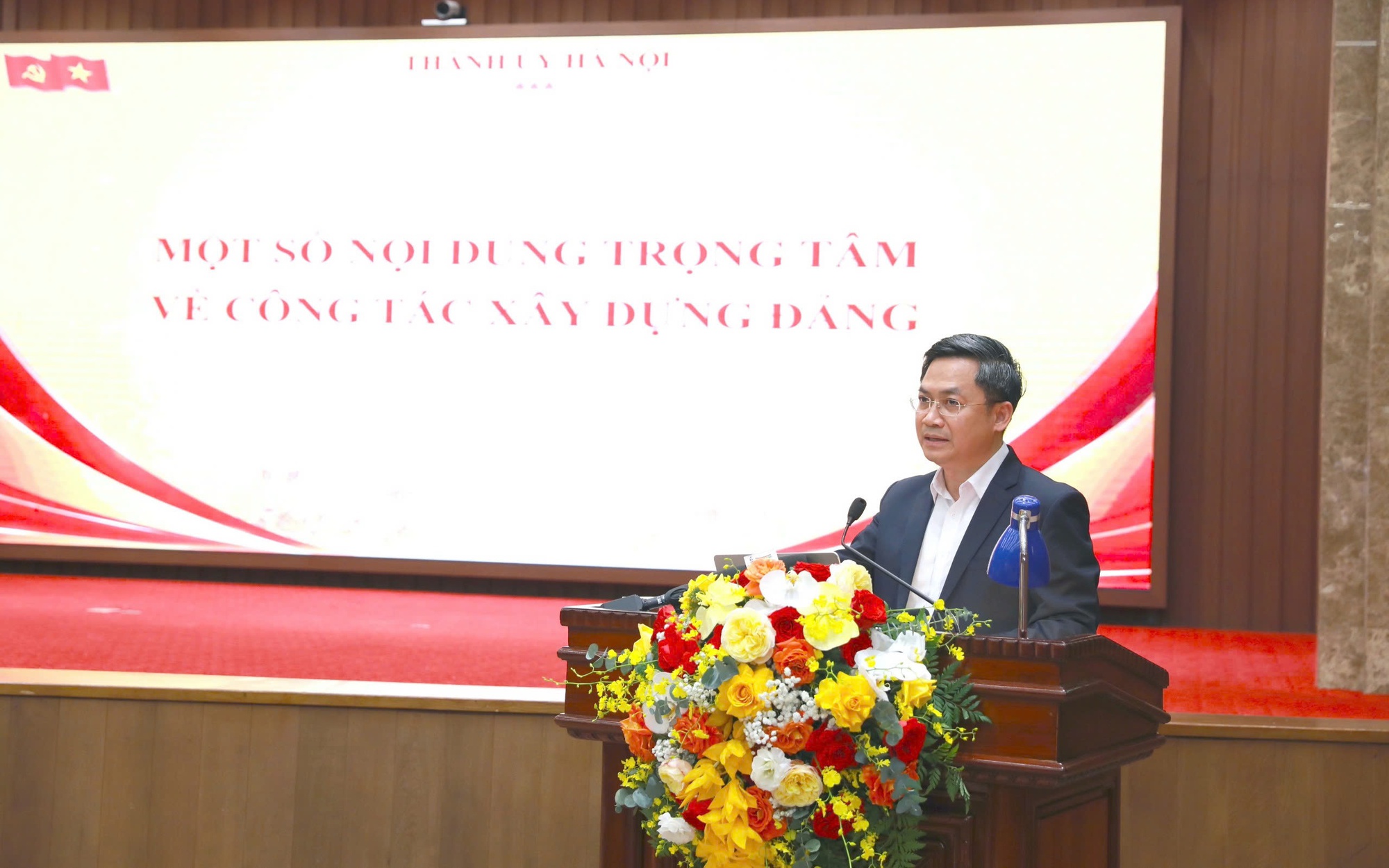
Standing Committee member and Head of the Party Organization Commission Ha Minh Hai.
He said the program aims to improve leadership methods in the spirit of development oriented and modern governance based on data, digital transformation and innovation, while ensuring democracy with discipline, transparency and accountability.
It seeks to consolidate the streamlined, efficient two tier political system and shift from administrative management to service oriented administration with results and public satisfaction as the main measures of success.
It also aims to strengthen public trust, promote unity and social consensus and safeguard the Party's ideological foundation while maintaining political security and social order.
He said the city will form a digital Party Organization and digital Party membership built on unified processes, data and standards. He added that Hanoi aims to be a model in advancing science, technology, innovation and digital transformation and in developing smart, transparent and effective leadership that contributes to building a cultured, creative, green and smart capital with global connectivity and a high quality of life.
Specific targets include admitting at least eleven thousand new Party members each year and reaching three percent of total membership by 2030, maintaining a rate of over 90 percent of Party members rated as performing well or better each year and a rate of over 90 percent for Party organizations performing well or better.
He said the program identifies two main tasks in Party building: developing institutions, governance and resource mobilization and continuing to strengthen and improve the Party Organization and the city's streamlined, effective political system.
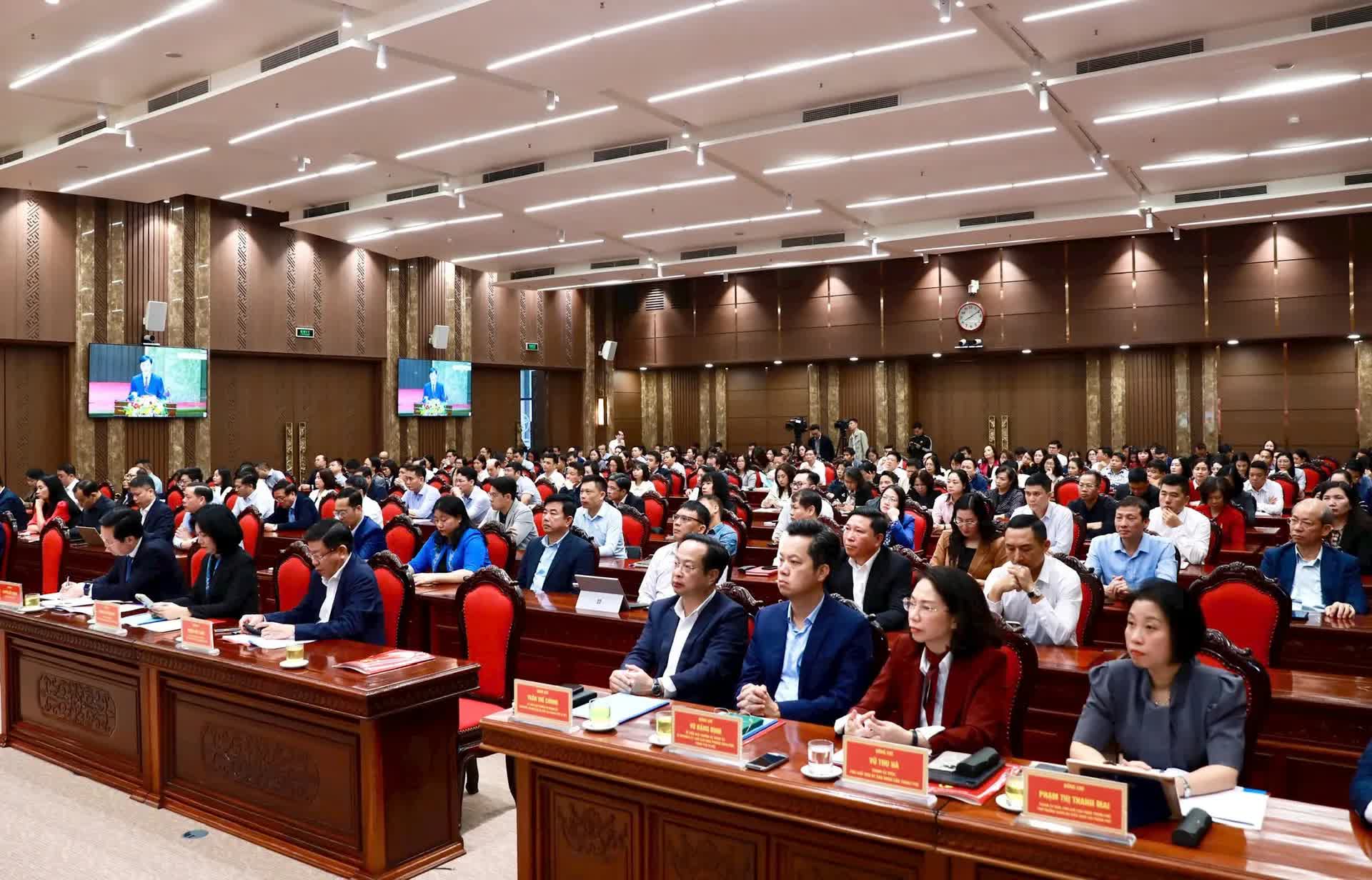
Overview of the meeting.
He said the action program follows the resolution closely and is designed using the OKR approach with strong goals and measurable key outcomes.
It selects programs, projects and initiatives that are comprehensive and focused and capable of driving breakthroughs. It follows three pillars of institutions, technology and markets, three creative foundations of heritage, knowledge and technology, three breakthroughs in institutions, infrastructure and human resources, four bottlenecks and seven resolutions and is aligned with the three strategic development pillars of the capital. The program will be digitized and integrated into the IOC system.
He said the action program sets out ten key tasks and includes three detailed appendices on priority programs, projects and initiatives. In Party building and political system development, it includes eight groups with fifty four tasks.
In socioeconomic development, national defense and security, it includes nine groups with one hundred twenty three tasks.
It identifies four priority investment areas: transportation and urban infrastructure with five groups of projects, culture, healthcare and education with four groups of projects, science, technology and innovation with five groups of projects and the environment with four groups of projects.
He said the full term work program of the Executive Committee will include twenty seven scheduled meetings and thematic sessions covering one hundred seventeen agenda items and forty resolutions and directives.
In 2026, five Executive Committee meetings and thematic sessions are expected with twenty eight agenda items and twenty four Standing Committee meetings with one hundred eight agenda items.
He said the action program reflects the Party Organization's strong political determination to renew leadership methods, promote sustainable and people centered development and put the resolution of the eighteenth Congress into practice quickly and effectively.