Attending at the city site were Nguyen Duy Ngoc, Member of the Politburo and Secretary of the Hanoi Party Committee; Nguyen Khac Dinh, Member of the Party Central Committee and Vice Chairman of the National Assembly; and Phung Thi Hong Ha, Deputy Secretary of the Hanoi Party Committee and Chairwoman of the Hanoi People's Council.
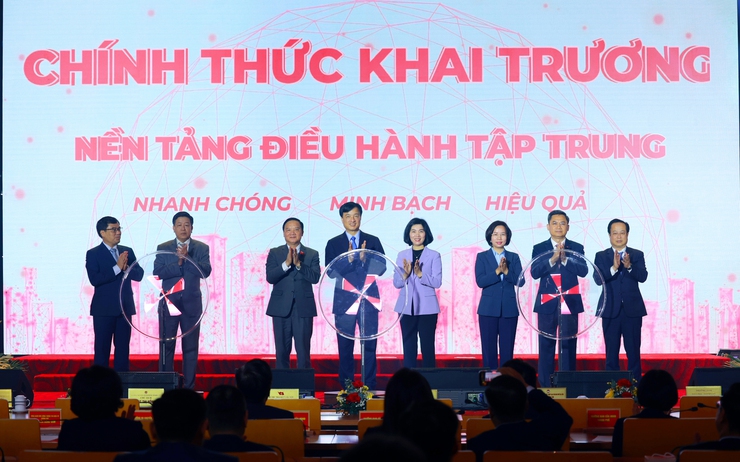 Central and city leaders perform the launch ceremony for the centralized operations platform at the event.
After years of computerization, numerous software systems have been developed. At present, the Hanoi National Assembly Delegation and People’s Council use multiple platforms, including document management, task monitoring, the H-Cabinet paperless meeting system, voter petition handling, complaints and denunciations, official email, and other applications.
Users must access different systems with separate accounts and passwords, while data remains fragmented and disconnected. This results in time-consuming use and the underutilization of many features.
The centralized operations platform for the National Assembly Delegation and two-tier People’s Councils is among the platforms announced by the Ministry of Information and Communications as part of the comprehensive governance platform.
It is issued under Document No. 186 dated February 11, 2022, which approves a program to promote the development and use of national digital platforms serving digital transformation and the growth of the digital government, digital economy, and digital society. It is also guided by Document No. 2224 dated June 9, 2022 on accelerating the use of digital platforms.
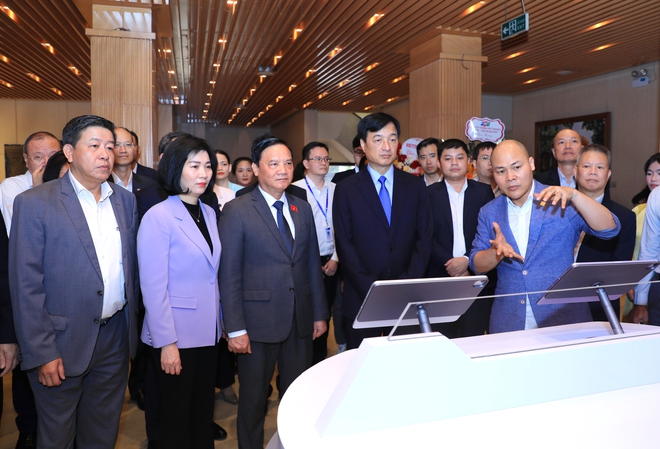
Central and city leaders are introduced to the software and experience its features.
With the motto "One destination for every task," the centralized operations platform for the National Assembly Delegation and two-tier People's Councils integrates nine core modules, creating a breakthrough in management and operations, including:
The system comprises several key platforms. These include a document management system and a city task monitoring system, which features a dedicated module to track recommendations from supervision reports, notices, and resolutions from questioning and explanation sessions.
It also includes a KPI monitoring and evaluation system for collectives and individuals, along with an electronic information portal for the City’s National Assembly Delegation and People’s Council.
Additional components are the H-Cabinet paperless meeting system, a platform for receiving and monitoring voter petitions, the Government Inspectorate’s complaints and denunciations management system, the official email system, and an internal communication platform for the two-tier People’s Councils.
The deployment of the centralized operations platform brings significant practical benefits, including time savings and improved connectivity in tracking and evaluating task performance.
It also shortens processing time and ensures timely, transparent disclosure of reports and documents from People’s Councils at all levels to voters and residents. This enables the public to follow city policies and monitor how authorities implement them, fulfill commitments, and handle citizens’ petitions through integrated data sharing between the document management system and the electronic information portal.
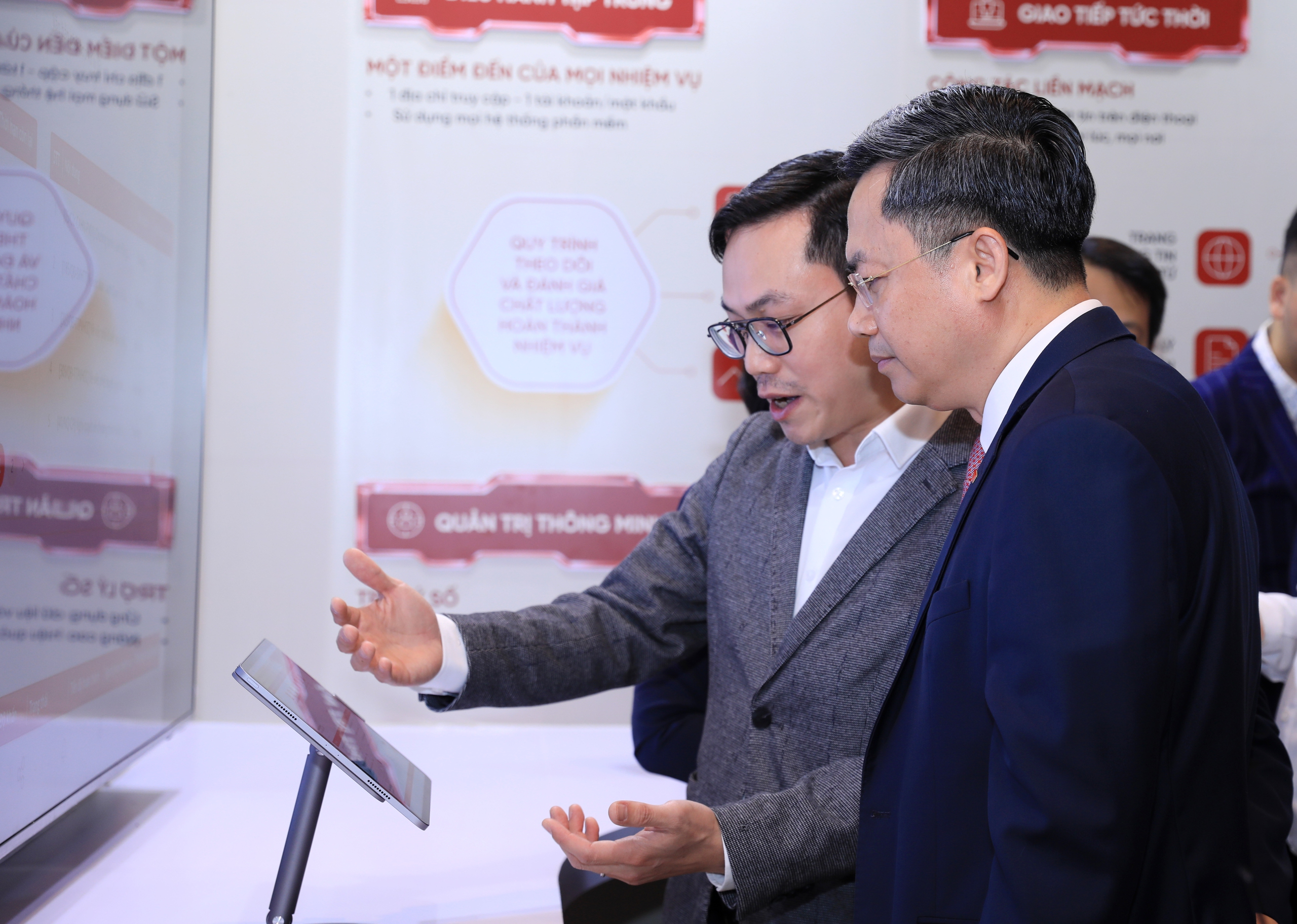
Delegates experience the software.
In addition, the reception and handling of voter petitions are monitored in a closed process, ensuring unified data and public disclosure to voters through system data integration among the document management software, the electronic information portal, official email, the iHanoi social platform, and the voter petition reception software.
Notably, the most groundbreaking feature of the centralized operations platform is the integrated application of the AI data aggregation and analysis platform. Data from other systems is used as input for the AI data aggregation and analysis platform to support operations management and task processing for the Standing Committees of People's Councils at all levels, civil servants, public employees, and workers.
At the same time, the platform establishes an official internal communication channel linking the National Assembly Delegation and the two-tier People’s Councils. It replaces third-party applications, enabling urgent instructions and emergency documents to be transmitted quickly from the Standing Committee of the municipal People’s Council to communes, wards, departments, and sectors.
In turn, local authorities and agencies can promptly report recommendations and request guidance from the Standing Committee for timely resolution of difficulties.
The system not only ensures legal validity but also strengthens direction and administration through traceability and accurate data aggregation. It completes the “one destination for every task” approach in the digital era.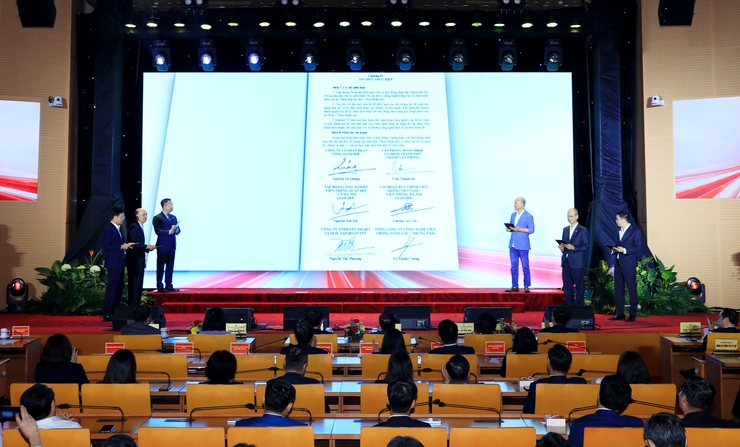 At the program, a cooperation agreement was signed between the Office of the National Assembly Delegation and the Hanoi People's Council and several partners and businesses in the technology sector.
Driven by practical demands, the digital transformation plan targets two key goals: defining a clear, distinctive digital architecture model for the People’s Council, and setting out a roadmap for long-term technology development in line with digital government trends.
It aims to build a digital ecosystem that meets three core criteria: sustainability, flexible scalability, and adaptability to future technological changes.
The orientation of the digital architecture framework for the National Assembly Delegation and the Hanoi People's Council is built on a combination of Gartner's international standards on digital government maturity and the national digital architecture framework.
At the same time, the plan closely follows the distinctive functions and tasks of an elected body, aiming to form a modern digital ecosystem that effectively serves decision-making, supervision, and voter connectivity.
The digital ecosystem of the Hanoi's National Assembly Delegation and People's Council is designed under a multi-layer architecture, including infrastructure, operations, data, applications, and technology.
In this structure, data plays the central role, forming the foundation for the comprehensive digitization of core activities such as organizing sessions, issuing resolutions, conducting supervision, and receiving voter petitions.
The development roadmap is set for 2026, 2030, 2035, 2045, and a vision to 2065, aiming to build a digital People's Council and a smart People's Council, where data and technology become the foundation for governance, supervision, and decision-making.