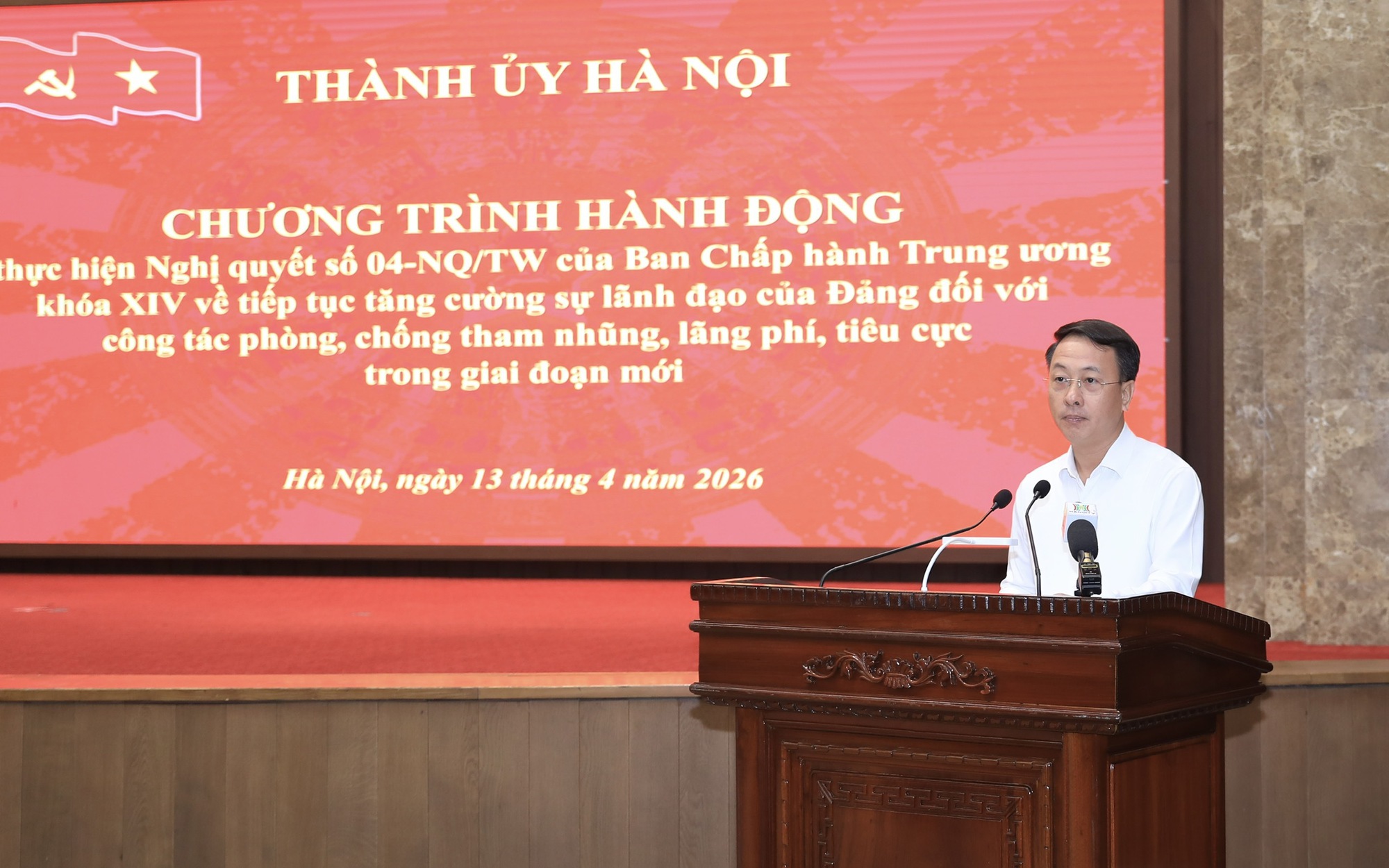
 Head of the Hanoi Party Committee's Internal Affairs Commission Tran Dinh Canh presented the core contents of the Action Program that aims to implement Resolution No. 04-NQ/TW.
Attending the conference were Politburo Member, Secretary of the Hanoi Party Committee, and Head of the Hanoi National Assembly delegation Tran Duc Thang; Party Central Committee Member and Standing Deputy Secretary of the Hanoi Party Committee Nguyen Trong Dong; and Party Central Committee Member, Deputy Secretary of the Hanoi Party Committee, and Chairman of the Hanoi People's Committee Vu Dai Thang.
Also present were Deputy Secretary of the Hanoi Party Committee and Chairwoman of the Hanoi People's Council Phung Thi Hong Ha; members of the Standing Committee of the Hanoi Party Committee; and officials of the People's Council, People's Committee, and the Vietnam Fatherland Front Committee of Hanoi.
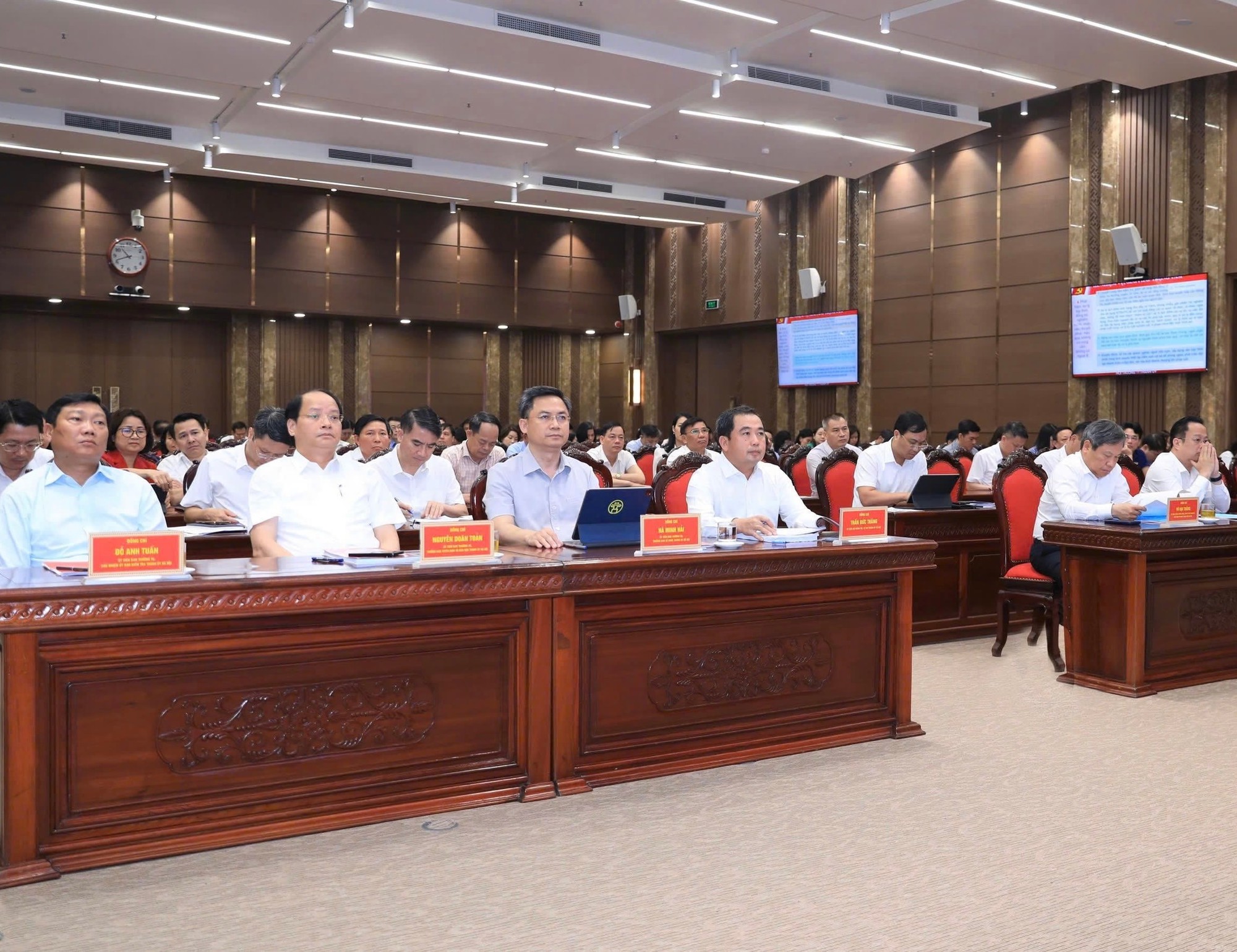
City leaders attend the conference at the Hanoi Party Committee venue.
The conference was held in person at the Hanoi Party Committee venue and connected online to 3,757 grassroots sites, including Party committees under the city Party Committee, communes, wards, and grassroots Party cells, with more than 175,000 participants.
At the conference, delegates were briefed on and guided through the Standing Committee's action programs on strengthening inspection and supervision, regulations on Party inspection, supervision, and discipline, and the implementation of Resolution No. 04-NQ/TW of the 14th Party Central Committee on further strengthening Party leadership in anti-corruption, anti-wastefulness, and prevention of negative practices in the new phase.
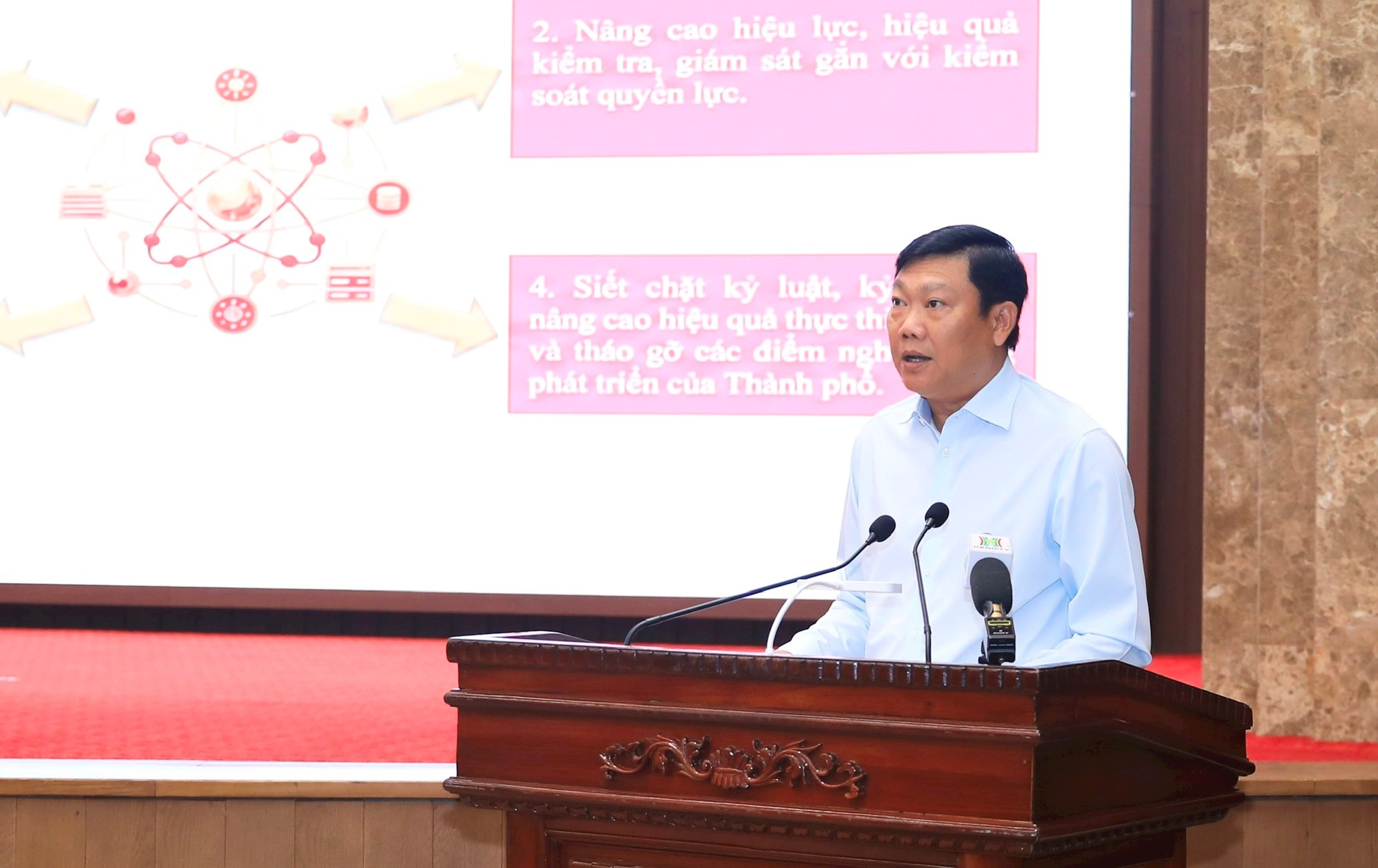
Chairman of the Inspection Commission of the Hanoi Party Committee Do Anh Tuan presents the Action Program at the conference.
At the conference, Standing Committee Member and Chairman of the Hanoi Party Committee's Inspection Commission Do Anh Tuan presented the Action Program on strengthening inspection, supervision, and Party discipline.
According to Tuan, in implementing Resolution No. 05-NQ/TW dated April 7, 2026, the Standing Committee of the Hanoi Party Committee has developed an action program with specific measures, emphasizing innovation in inspection and supervision methods tailored to the characteristics of the Capital.
The program aims to create clear changes in awareness and action among Party committees, Party organizations, and Party members, while improving the effectiveness of inspection and supervision linked to power control, early prevention, timely detection, and the handling of violations. It is considered a key solution to strengthen discipline, enhance public administration effectiveness, and remove bottlenecks in the city's development.
A notable new feature is the city's effort to translate central directives into concrete policies, while adding perspectives suited to a large urban center. Inspection and supervision will be organized in a modern way, based on data, with analytical and early warning capabilities, meeting the demands of urban governance with large workloads and sensitive sectors.
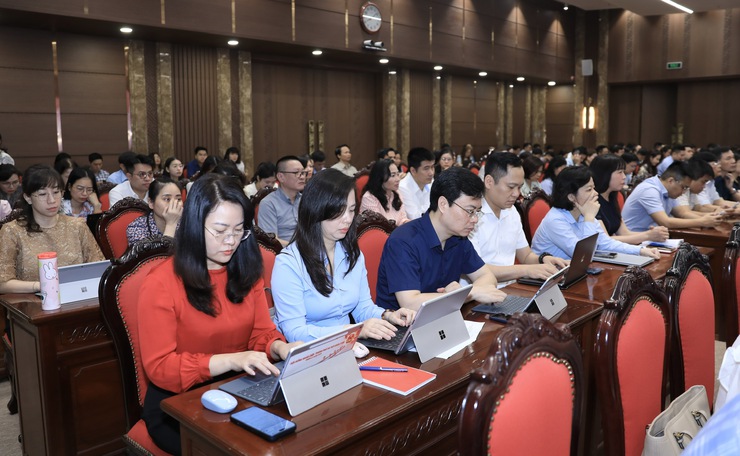
Delegates attend the conference at the Hanoi Party Committee venue.
In terms of tasks and solutions, Hanoi clearly defines inspection and supervision as a core leadership function of the Party, a tool for controlling power, and a "frontline of early and remote prevention." A key focus is to eliminate avoidance, leniency, and reluctance to confront issues in task performance. Inspection and supervision are closely linked to anti-corruption, anti-wastefulness, and prevention of negative practices, with a focus on promptly identifying and addressing signs of group interests and stagnation.
The city will focus inspections on key and sensitive areas prone to violations, including personnel work, land management, planning, public investment, finance and budget, management of public assets, administrative reform, site clearance, delayed projects, and major development bottlenecks. At the same time, building a regular monitoring mechanism based on data and risk signals is identified as a breakthrough step to detect and prevent violations early.
Hanoi is also accelerating the application of information technology and modernizing technical infrastructure, aiming for 100% of inspection agencies at all levels to operate in a digital environment. This will be accompanied by building a professional, ethical, and innovative inspection workforce capable of meeting new requirements.
In terms of implementation, the program follows the principle of "six clear points, one consistent direction," with clearly assigned responsibilities, accountability of leaders, and measurable outcomes. All 51 tasks have defined lead agencies, timelines, and deliverables to ensure feasibility and effectiveness.
Immediately after the conference, the Standing Committee of the Hanoi Party Committee will issue the Action Program and request subordinate Party committees, agencies, and units to organize implementation in a synchronized and effective manner, quickly translating it into specific tasks and solutions suited to their conditions and responsibilities. They will also coordinate with the Inspection Commission and relevant agencies to monitor, review, and evaluate implementation.
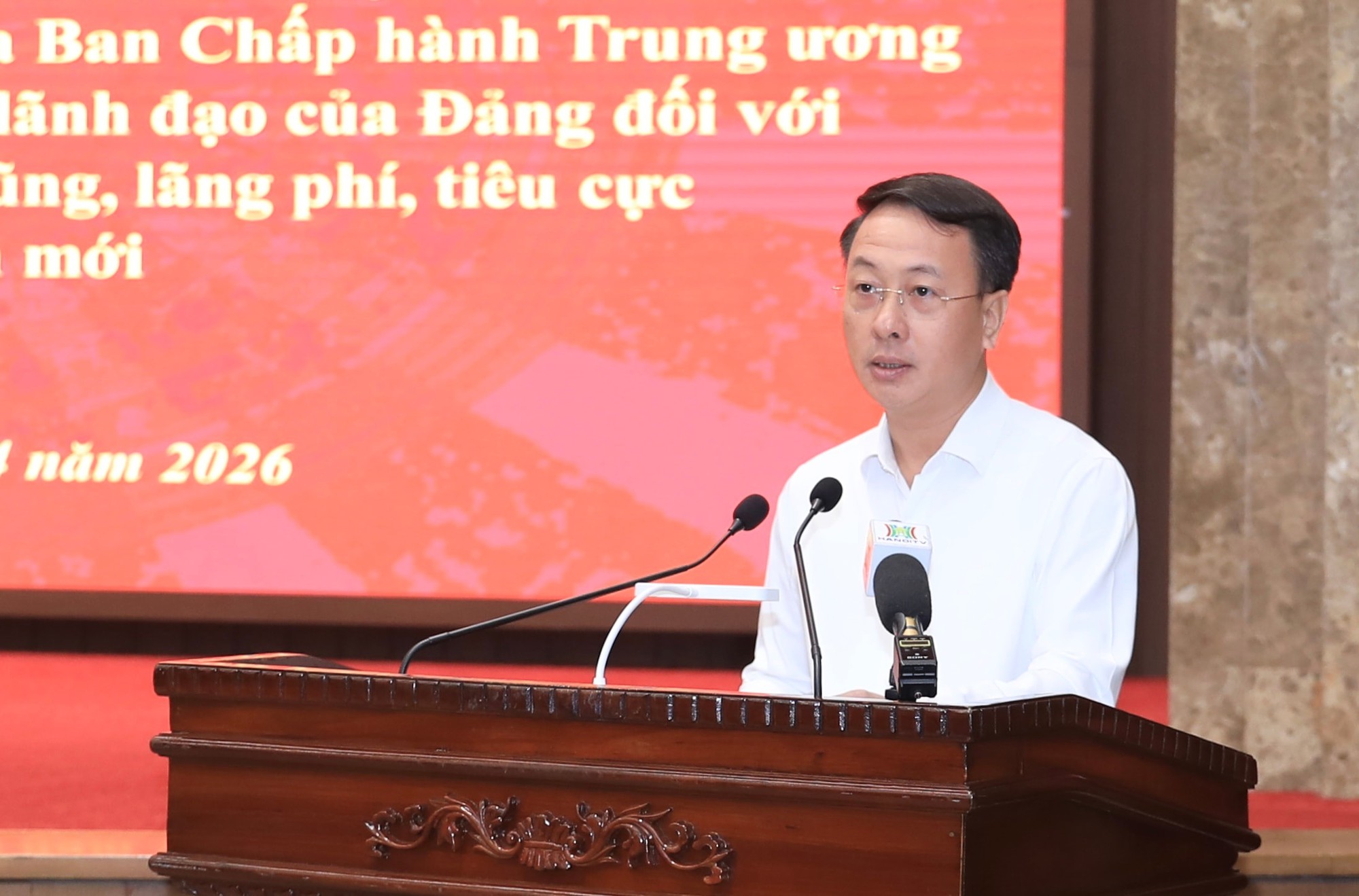
Standing Committee Member, Head of the Hanoi Party Committee's Internal Affairs Commission Tran Dinh Canh presents key contents of the Action Program implementing Resolution No. 04-NQ/TW.
Following this, Standing Committee Member and Head of the Internal Affairs Commission Tran Dinh Canh presented key contents of the Action Program implementing Resolution No. 04-NQ/TW, emphasizing the need for consistent implementation to create strong changes in awareness and action across the political system, and to resolutely prevent, control, and push back corruption, wastefulness, and negative practices, with strict control of power and no tolerance for violations.
According to Canh, the program clearly establishes that anti-corruption, anti-wastefulness, and prevention of negative practices are critical tasks that must be placed under the direct and comprehensive leadership of the Party, implemented regularly and continuously from the grassroots level, while promoting the supervisory role of the public.
In this approach, "prevention at the root is fundamental, power control is core, and the application of science, technology, and digital transformation is the key solution," enabling early identification and warning to prevent minor violations from escalating.
Canh also stressed the need to enhance the role, responsibility, and exemplary conduct of Party committees, organizations, officials, and Party members, especially leaders; to build and practice a culture of integrity; and to strengthen self-criticism, criticism, and supervision of Party members, thereby preventing corruption and misconduct from an early stage. At the same time, it is essential to improve policies and regulations to ensure transparency, clear accountability, and ease of monitoring and enforcement.
A key focus is strengthening power control alongside inspection, supervision, and auditing; reforming personnel work; advancing digital governance; controlling assets and income; and enhancing accountability. Inspection and supervision will shift toward proactive prevention, with increased regular and ad hoc inspections in sensitive areas, and strict handling of violations, with no exceptions or restricted zones.